arteexpuesto.com es un proyecto de arte en pantallas digitales que difunde arte actual en el espacio público. La ruta expositiva recorre 15 pantallas digitales que se encuentran en puntos estratégicos del área metropolitana de Monterrey, NL, México.
(+_+) (+_+) (+_+) (+_+) (+_+) (+_+) (+_+) (+_+)
CONCEPTO de colaboración:
Alquilo estos anuncios privados en el espacio público para elevar el volumen de mi voz como ciudadano, no como vendedor. Hago mi pequeñísima campaña de discurso político público al mero estilo de las penosísimas campañas políticas multicolor que sufrimos los mexicanos cada tres años.
Este proyecto costó mucho para un artista, pero nada para cualquier jugador del mercado de necesidades. Un pequeño disturbio visual en tu camino a casa o a donde sea te dirijas en las vías de la Sultana del Norte. Intento detonar un diálogo contigo sobre lo más básico que tenemos en común, la sociedad en la que coexistimos.
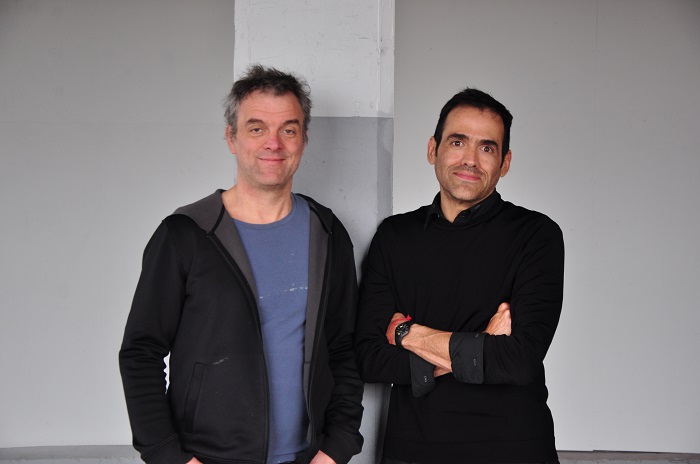
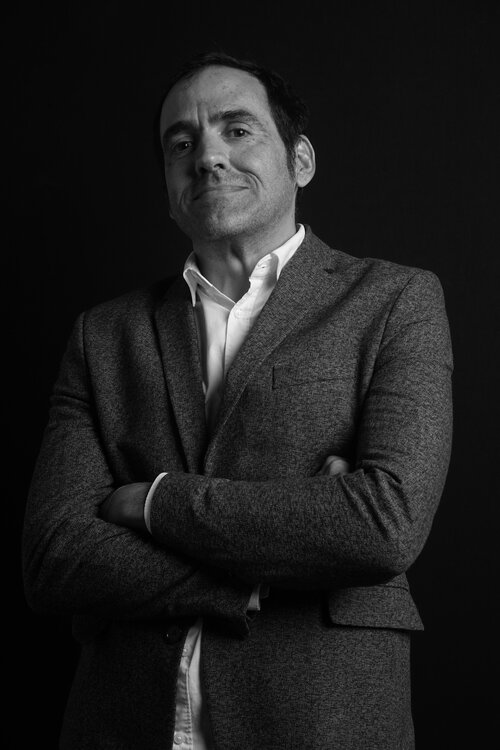
Dos ideas esenciales, lo que me alcanzó financiar. En una, hago una pregunta que condiciono con mi postura personal, pa ́que sepas de dónde vengo. En otra, expreso lo evidente, lo que todos sabemos, lo que creo así. Firmo esto con mi identidad superficial, unos retratos en blanco y negro por el fotógrafo: Josué Castro; pero mi nombre es Daniel, mexicano de 46 años, auto-empleado, casado-sin hijos, vivo en Tijuana.
RUTA EXPOSITVA
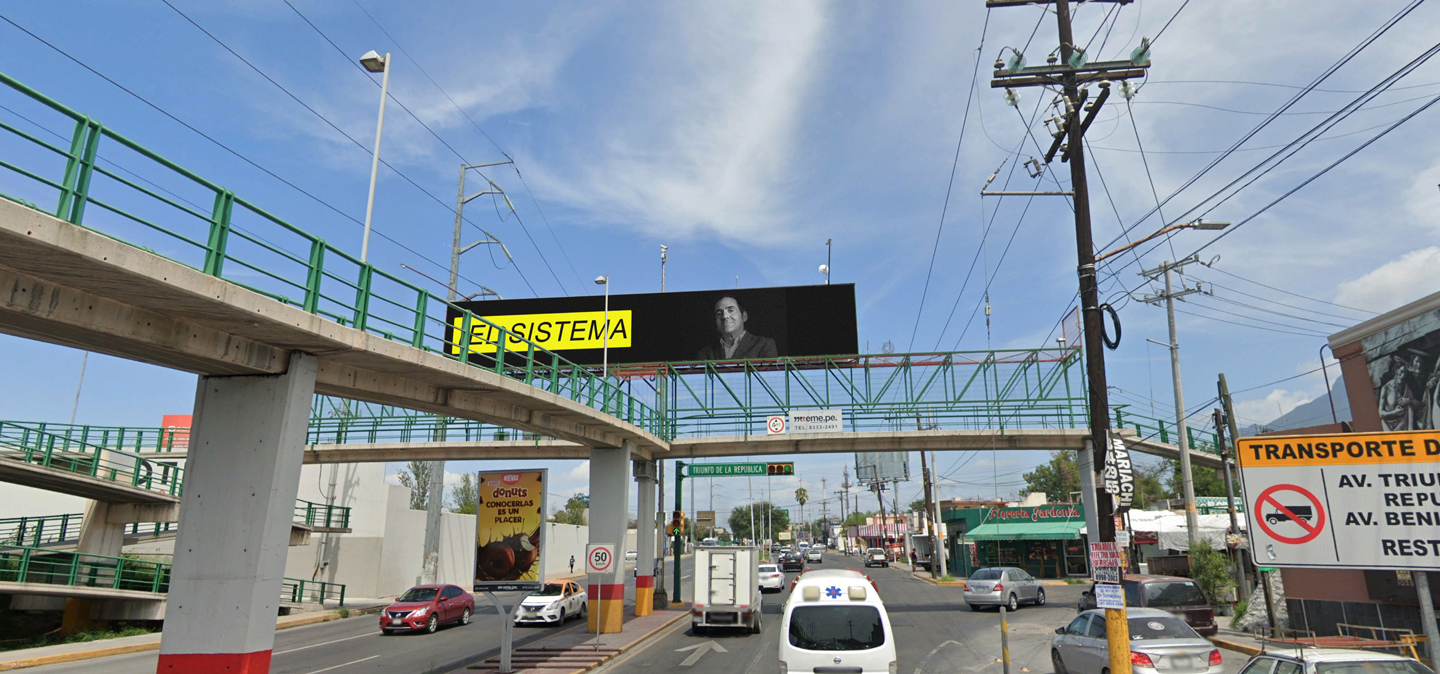
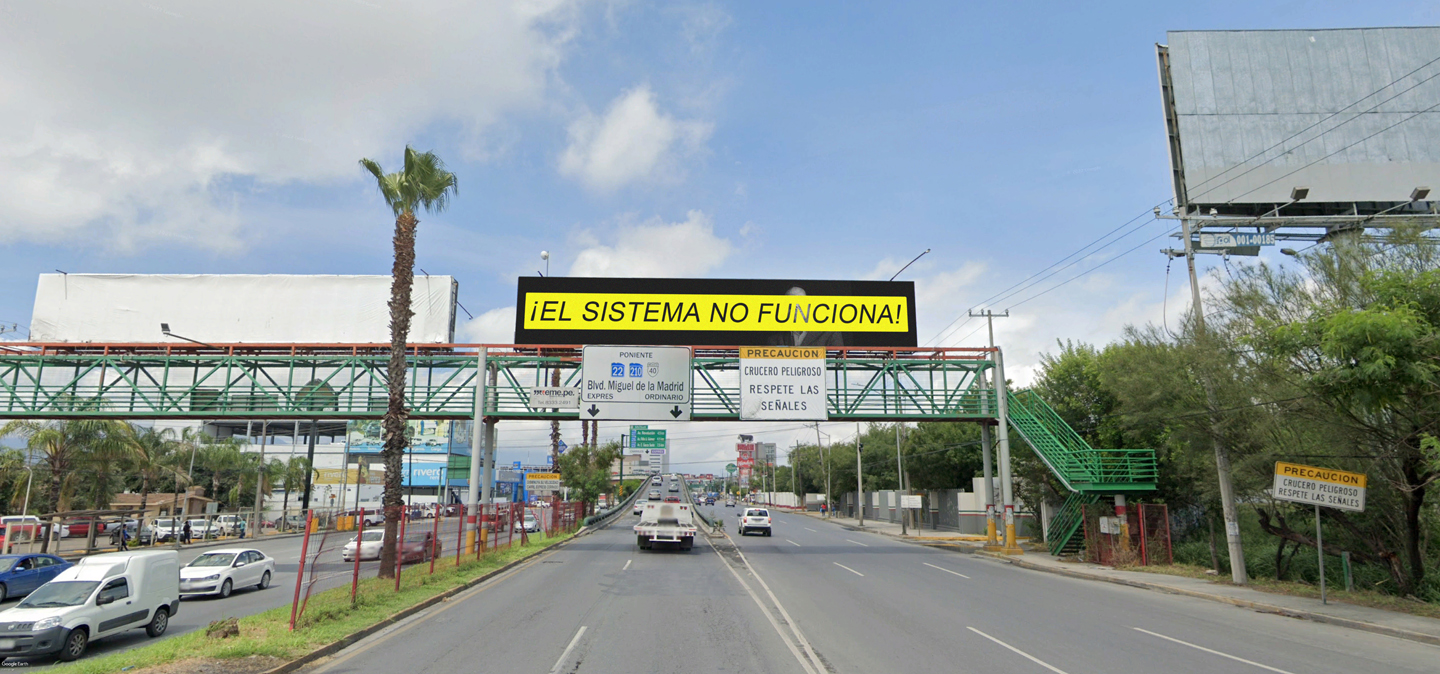
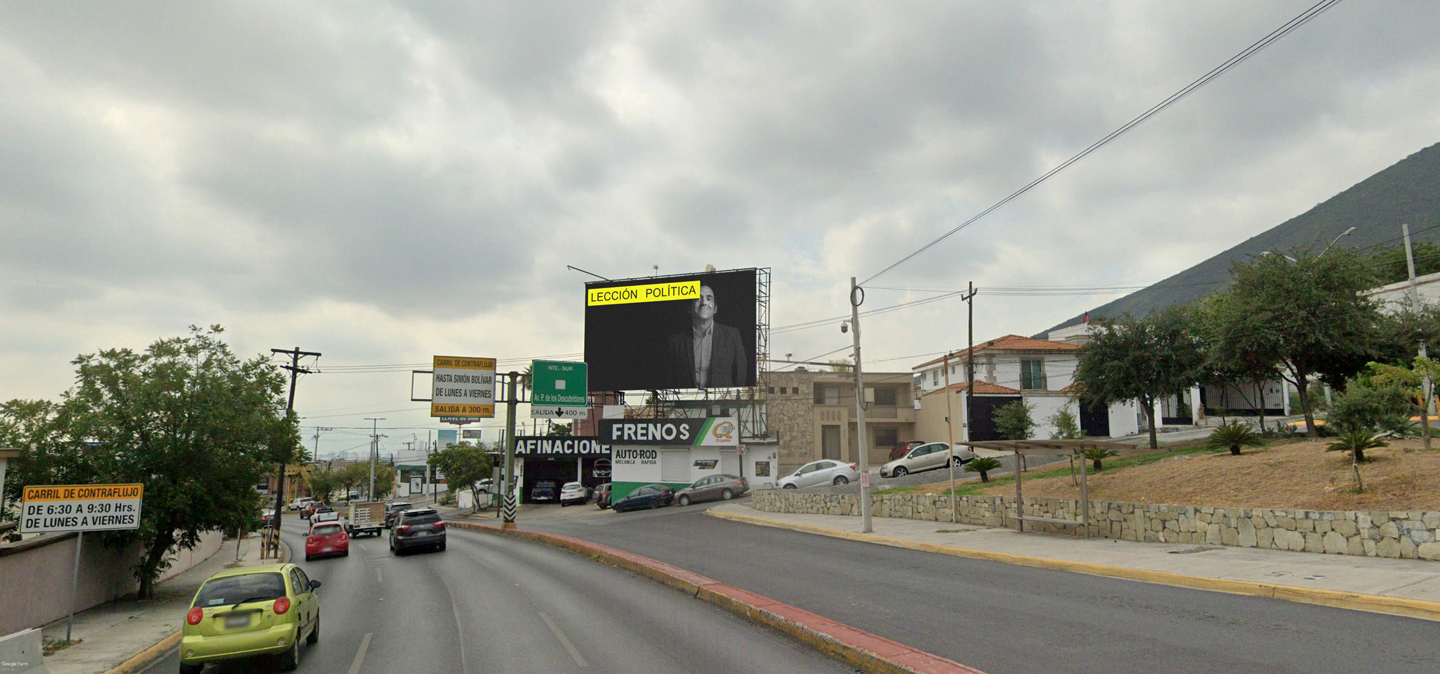
RENDERS (fotomontajes de algunos sitios):
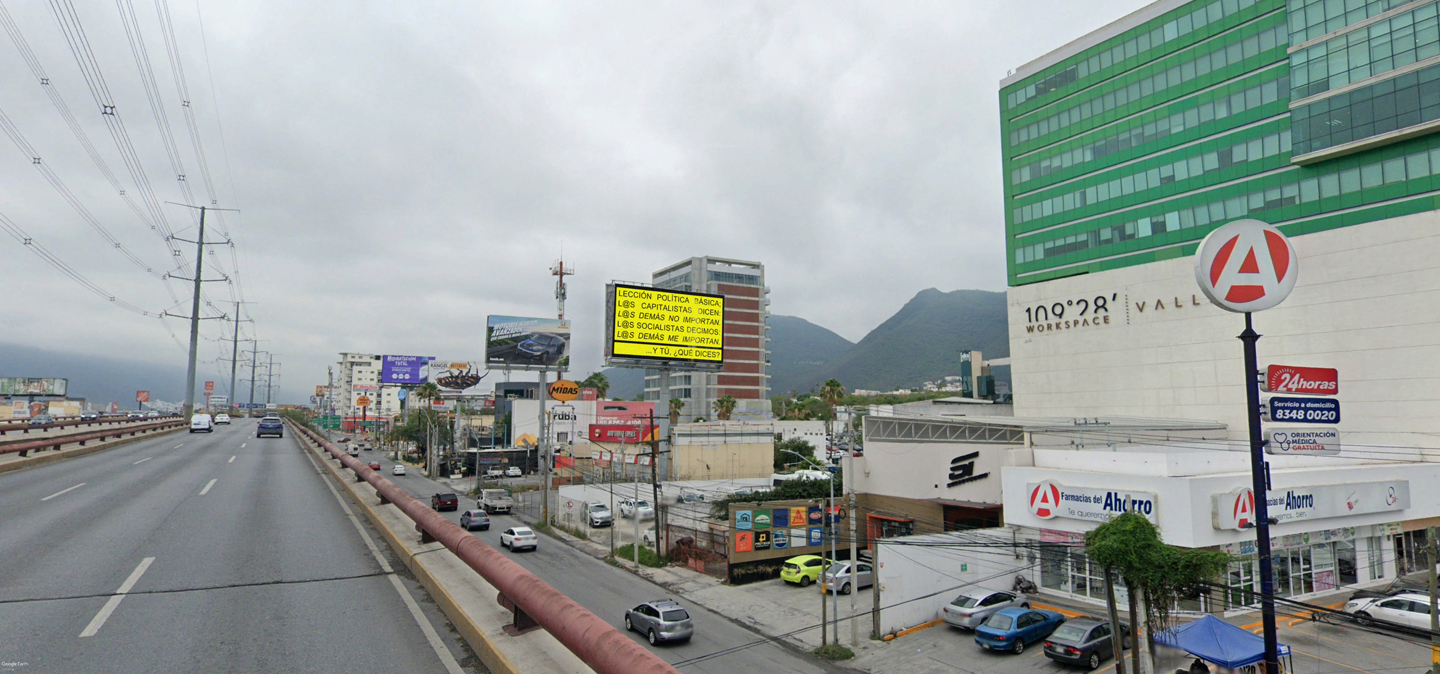
ubicación: Benito Juárez y Triunfo de la República
ubicación: Miguel Alemán y 14 de Mayo
ubicación: Paseo de los Leones y Navegantes
ubicación: Lázaro Cárdenas y Alfonso Reyes
ELEMENTOS:
espacios / soportes
+ textos
+ imagen de fondo
= animación 10 seg.
(+_+) (+_+) (+_+) (+_+) 1 (+_+) (+_+) (+_+) (+_+)
PANORÁMICO DIGITAL
templete del proveedor:
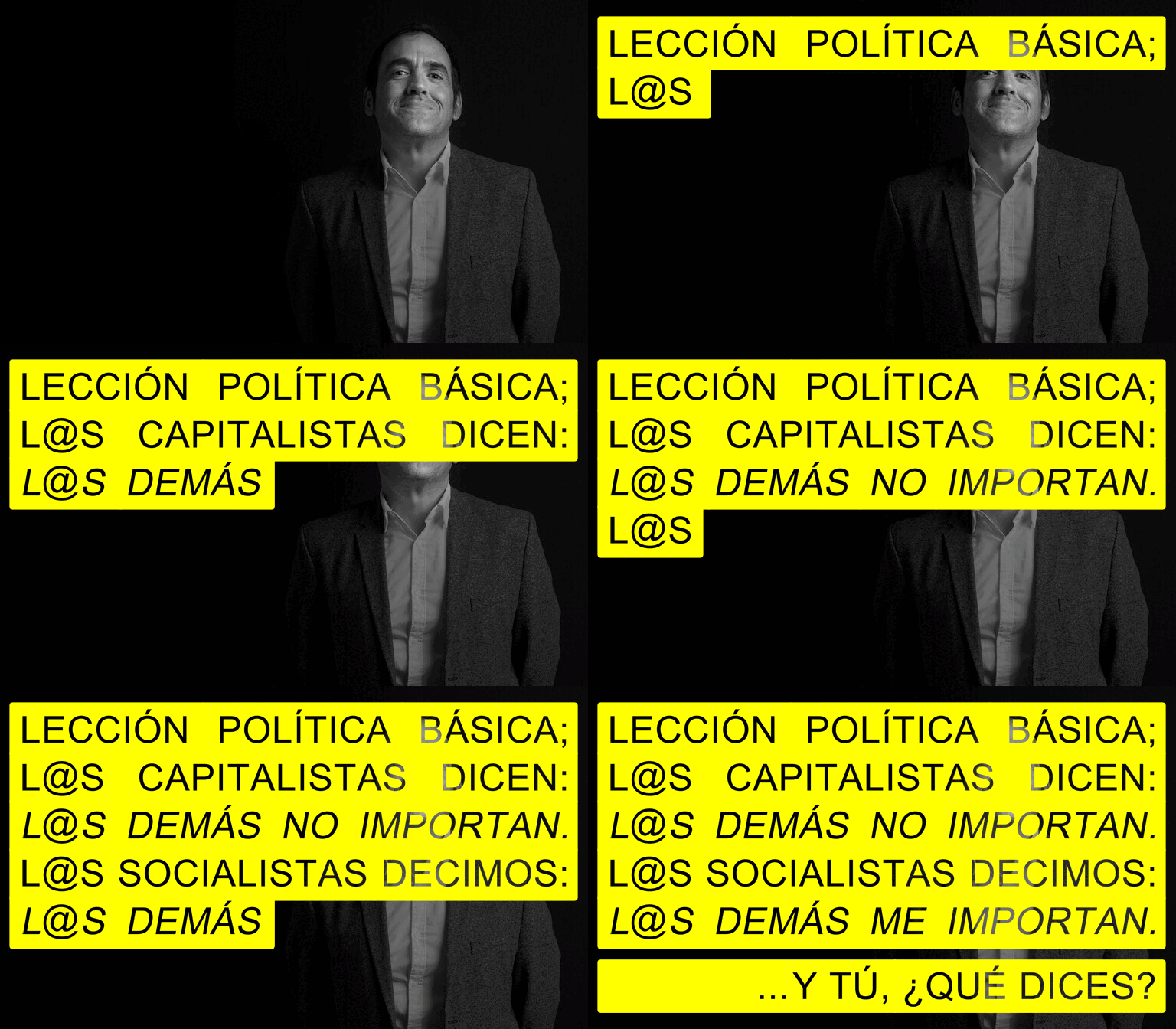
texto/fondo:
LECCIÓN_POLÍTICA_BÁSICA;
L@S_CAPITALISTAS_DICEN:
L@S_DEMÁS_NO_IMPORTAN.
L@S_SOCIALISTAS_DECIMOS:
L@S_DEMÁS_ME_IMPORTAN.
_…Y TÚ,_¿QUÉ DICES?
+
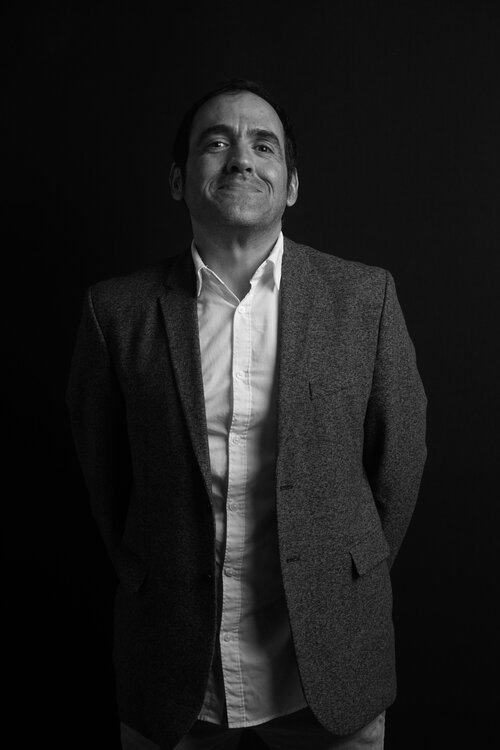
foto: Josué Castro / retratos para el público en San Diego Art Institute, circa 2018
=
Archivo original: GIF con secuencia 20 imágenes convertido en un MP4 de 10 seg.
(+_+) (+_+) (+_+) (+_+) 2 (+_+) (+_+) (+_+) (+_+)
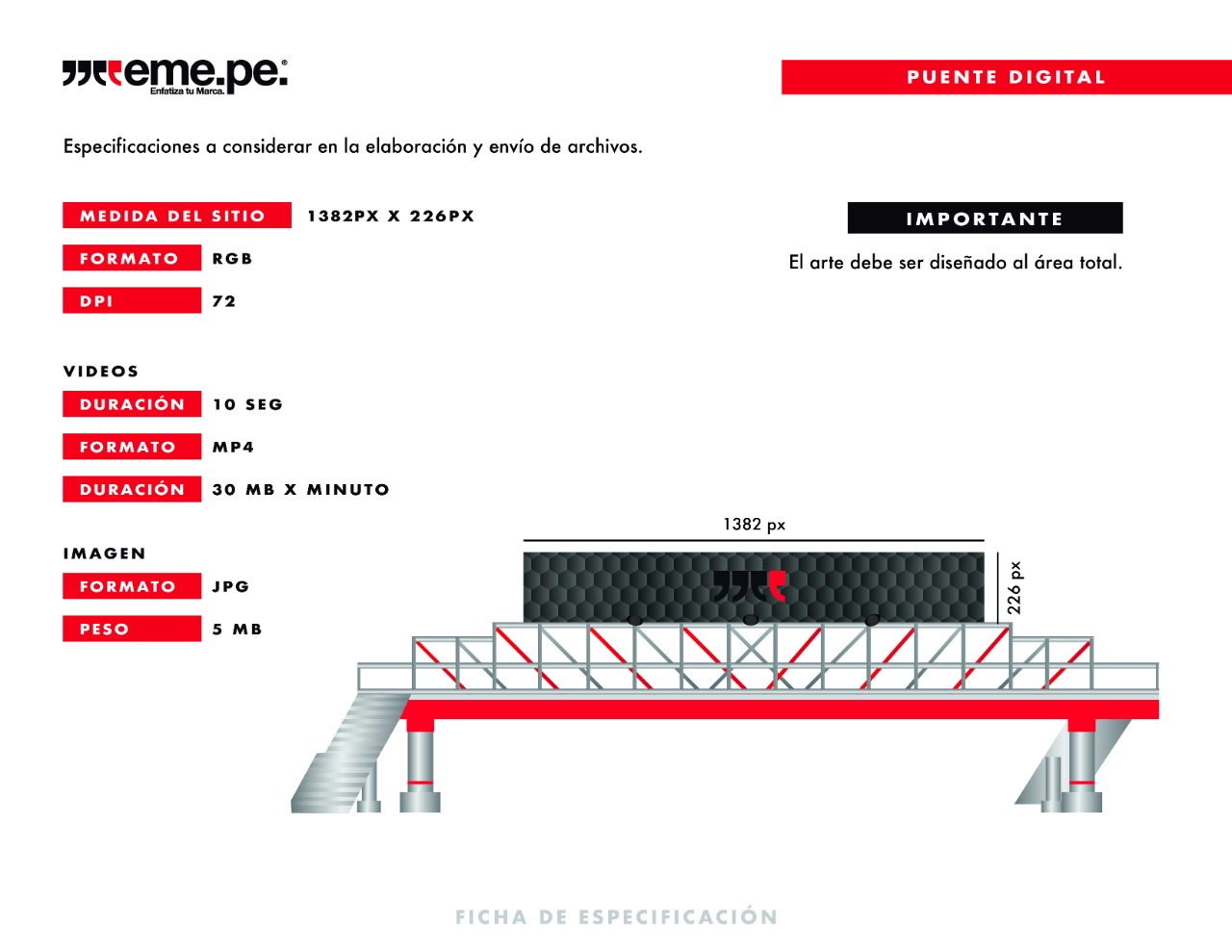
PUENTE DIGITAL
templete del proveedor:
texto/fondo:
¡EL_SISTEMA_NO_FUNCIONA!
+
foto: Josué Castro / retratos para el público en San Diego Art Institute, circa 2018
=
Archivo original: GIF con secuencia 18 imágenes convertido en un MP4 de 10 seg.
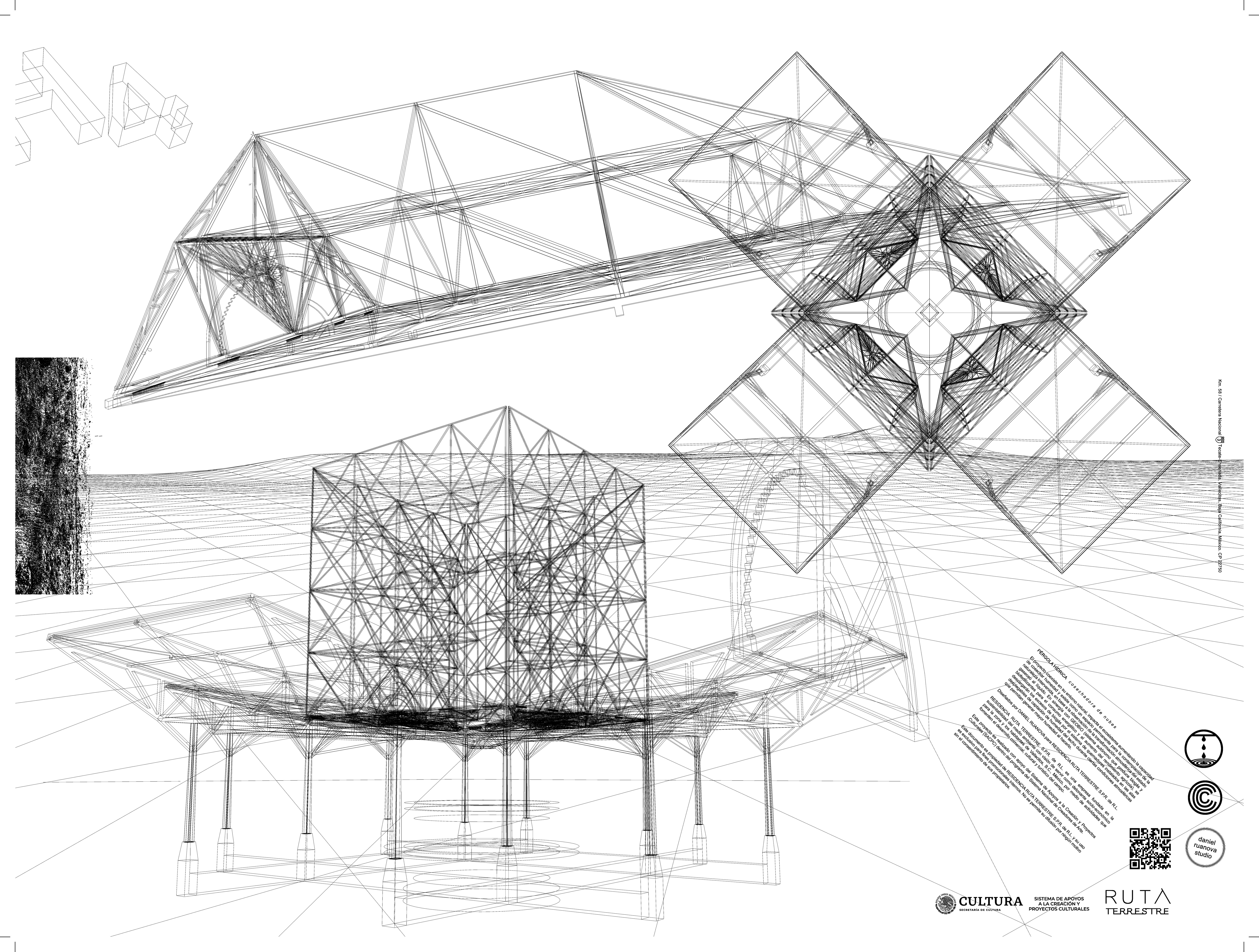
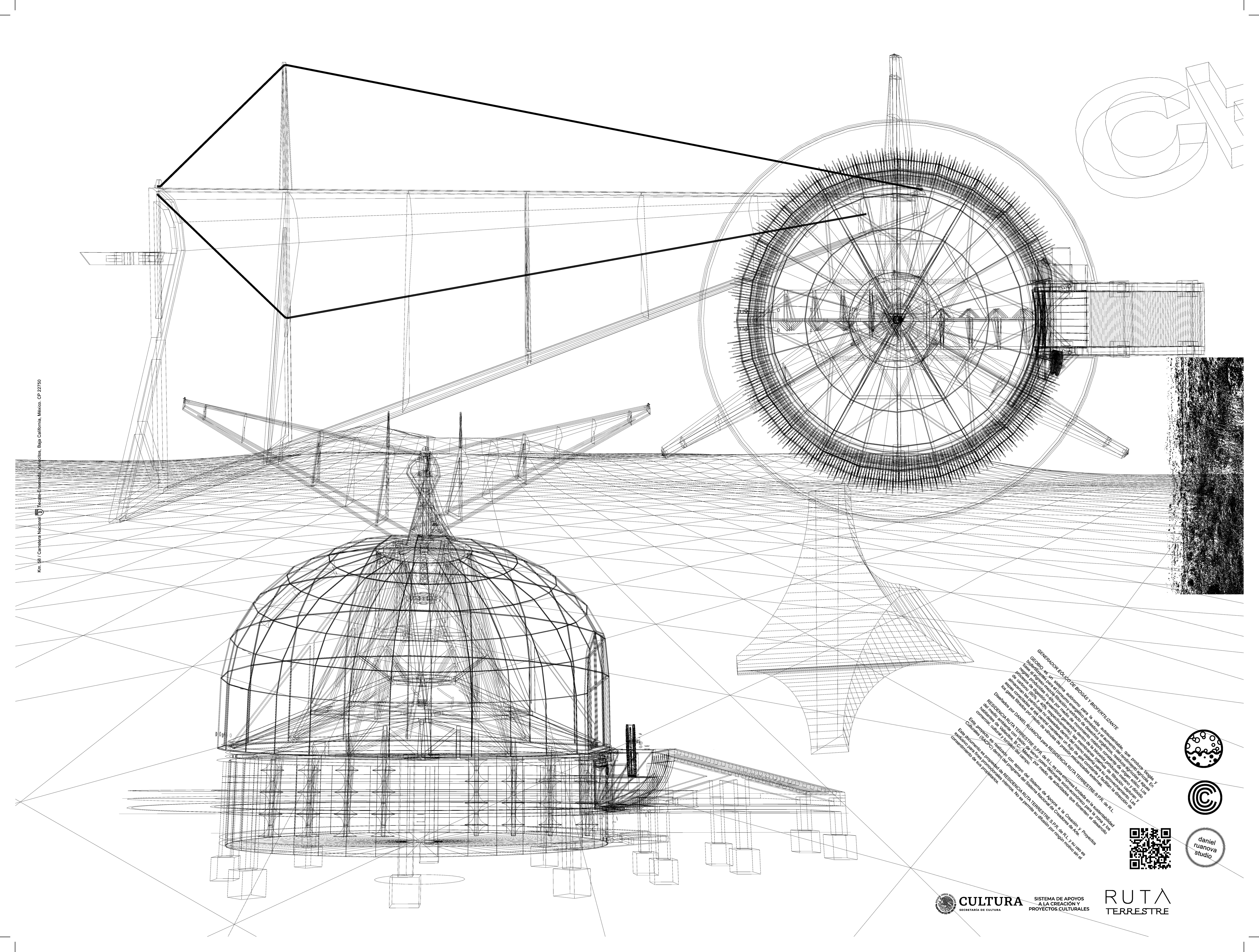
• GEOBIO Sistema autónomo para la vida campestre autosustentable, que produce biogás y biofertilizantes para el consumo energético doméstico y el aumento del rendimiento agrícola.
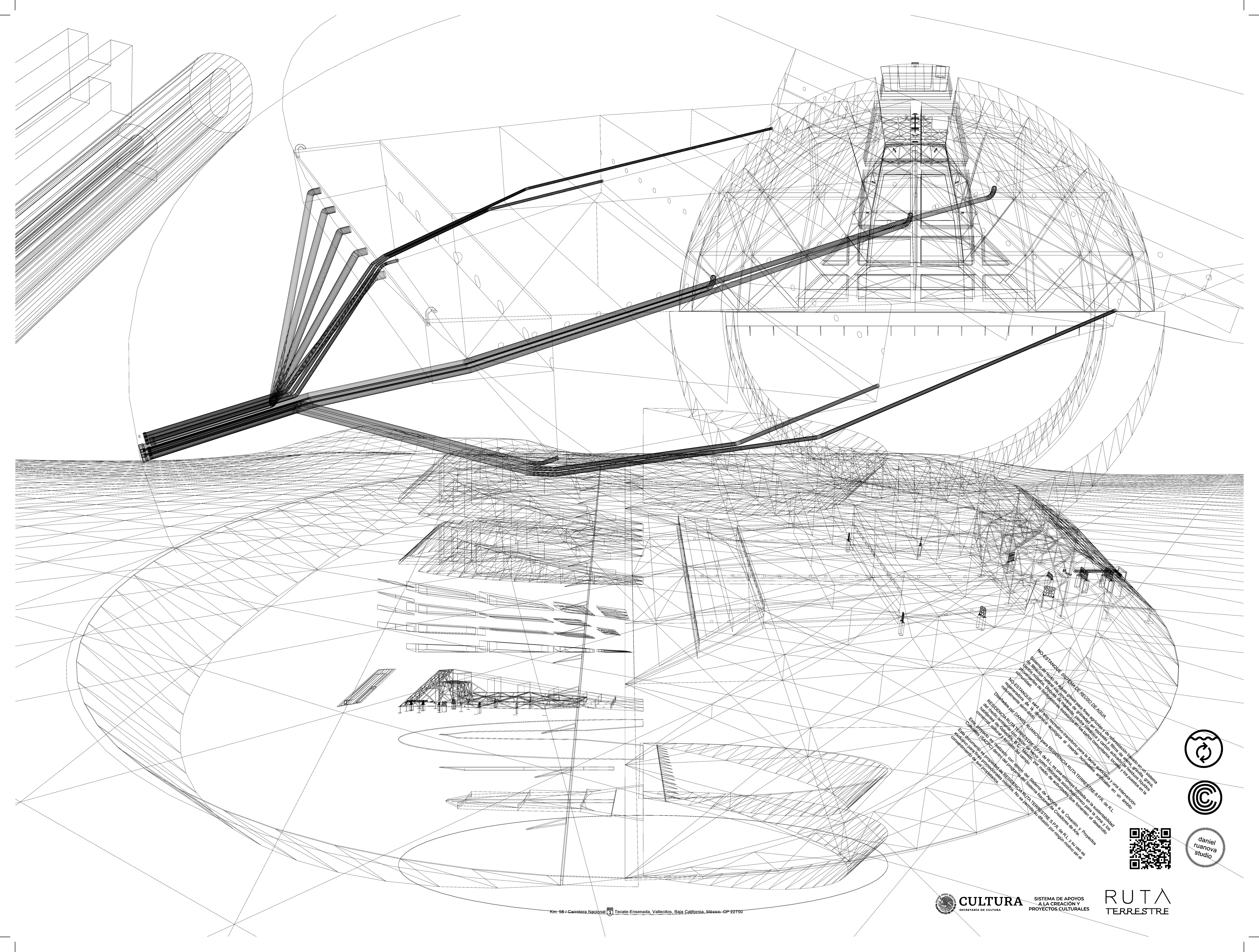
• NO-ESTANQUE Proyecto de reúso de aguas grises para fines recreativos y agrícolas basado en un sistema de filtración natural por bombeo de residuos líquidos provenientes de biodigestores instalados en baños, locales y puestos de comida cercanos.
• OBSERVADOR torre centinela Observatorio de cultivos y detractor de especies invasivas instalado en sitios específicos como aumentador de las habilidades perceptivas del ser humano en el campo.
• PÉRGOLA hídrica Espacio de contemplación en base a la observación de la transformación atmosférica de estado gaseoso a líquido por medio de la captación de bruma.
• INVERNADEROS MODULARES REGENERADORES Espacio encapsulado y semi-sombreado para la investigación y experimentación en el germinado y propagación de especies endémicas de los chaparrales bajacalifornianos.
Since the first time I saw those photographs, I was in awe. There, right in front of me, framed by amazing craftsmanship, inside a beautiful vessel, housed in the most prestigious of institutions and guarded by the hierarchies of knowledge and power, was the evidence I was looking for to start contributing to a much needed source of symbols and imagery of peoples and their legacy in a land and its fruits of their labor: the Mexican diaspora in the Empire.
Nacho, mi socio, was the man who unlocked the gate, opened the door and unsealed the documents: a group of mid twentieth century photographic prints from the famous and honorable Ernesto Galarza´s not so famous collection in the Library’s Special Collections Department. At the time Nacho was working inside that most prestigious of institutions, and still is. Yet, I doubt he’s ever considered the hierarchies he’s had to obey as his Superiors or whatever. Quite the contrary, being made in una familia that was made in the land he so fiercely represents, Steinbeck’s East of Eden. He is a people’s scholar, an activist and academic that traversed the paths set before him by reaching plateaus he wasn’t supposed to.
Don Ernesto commissioned those photographs (photographer’s credits are still unknown) to evidence the damages guest worker programs were doing to labor rights movements in the US after the war. Images of hordes of Mexicans coming to steal American jobs. Yet, the Bracero Program was an opportunity for at least four million of these job stealing opportunists to earn an honorable living and eventually bring along their families into their new adopted Patria. No doubt Mr. Galaraza´s views on the program were very different than ours are now, nevertheless these images capture something very different than what he was looking for: New-Americans on their TRANSBORDER journey into their and their future families destiny. Witness to many more millions of Americans origins, eternalizing those men with a very long and strong future in their gaze.
We began making this story – his – story a collaborative transnational project around 2016, gaining momentum immediately because what these images represent just needed the light of day. He knew, and I learned, that almost every individual with Mexican heritage around California has ties to this history. In my case, my wife’s grandpa was one of these men and this was the nerve I’ve been looking to hit. Me atrevo a decir que we all have feelings for our elders of the utmost respect and many times of the highest dignity one could hope to achieve as a person. They were all beings of the times they lived through, shaped, hardened and made into the rooted trunks they were to most of us (hopefully still are to some of you).
As a borderrat, living life zigzagging a line, there was always an inconceivable feeling of separation between the story of millions of americans who were once mexicans and my clan´s bunkered down nationalism (natural emotional reactions after losing their geography and enduring years of unequal treatments from our northern neighbors). Yet, during my lifetime, things have changed dramatically, or maybe I’m just realizing that everything is always changing, evolving and continuously balancing itself out. The truth is that I changed. It took me some time to understand some knowledge one of my padrinos passed on to me at least two decades ago: chicanos and tijuanenses are complementary and derivative cultures, mirroring themselves while contrasting their distinct features. An ever expanding Mexican diaspora forged into an American cultural appropriation machine that offers individuals a better guarantee of safety, property and future. Eventually, when these two cultures merge, a cyclical force will appear from a centuries long mutation… already happening though. Either by rejecting the patriarchal ways of nationalist thought or wishing that real democracy takes over and does its thing, the borders that once stood are gone, as the borders that stand now will unequivocally shift, change, disappear or multiply.
All of these ideas rushed through my body when we initially began this Art & History venture back in Salinas, those lands that have provoked so much social change. From the valley’s market arranged marriage between nature and technology, through the influx of all origins of peoples who’ve put their hands in that soil as a means to and ends, to the crossroads of culture that penetrate through the fields on rubber wheels. Nacho and I knew what needed to be done with defining and uniting imagery such as the TRANSBORDER journey of the Braceros in all their hopeful stoicism, forever captured in The Galarza collection photographs.
We intentionally contribute in dissolving the mischievously curated historical narrative that these men were modern day slaves, pawns for polliticians or growers and anything that made them lesser beings. We stand with hard facts that state the opposite: a plurality of lifelong growth, experiences and agency that immensely shadows any minutes of shame imposed on by others some time ago. The images that we made public will eventually become collective memories for millions of families and anyone who welcomes all peoples who once immigrated to this land, everybody.
It took us more than a half dozen years to get the first major public project going, not everybody wants to revisit history, especially if their role isn’t as the good guy. A small collection of huge reproductions of the Galarza photographs became the stellar protagonists in a beautifully aging Californian surfing town during September. The local Museum put their money where their mouth was and helped us produce wandering billboard sized images on wheels that were shown to hundreds of locals at their neighborhood farmers markets around the region. Generating so much attention in town with cover stories in local papers, interviews on the local radio and television airwaves with all the current buzz that feeds everybody’s pocket size apparatus.
They came with flowers, fruits, families and stories, so many stories. All these offerings for those faces on the huge prints. Faces in places they’ve never been seen before. Not one or two, but large groups of able bodied men, ready for whatever that opportunity would bring and knowing that they have everything to gain. No shame, no bowing down, just proud Hombres Mexicanos. These images can define and unify millions of memories, these faces can be placed on any of those other images of crouched down sombreros with feet in the field, that ‘are’ very true and ‘are’ very much the norm like on the job pics of full blown (or blooming) capitalism, not portraits of people.
History is BIG, history is HEAVY, this project taught us that. History shouldnt be easy to handle nor comfortable to install. It also taught us that power always has a place at every inflection point in history, specifically its resources. It takes many initiatives and a fortuitous conjuncture to crack any well built structure. We did that, by organizing a good team on a solid foundation, batos unidos on a collective journey of historical recognition disguised as an art project.
Daniel Ruanova, Tijuana, B.C., MX, OCT MMXXII
_ _ _ _ _ _ _ _
AUDIO: listen to the stories of men who entered the US as Braceros and stayed.
Bracero Legacy Testimonials, produced by Ignacio “Nacho” Ornelas Phd. during 2013-2104.
The project, puts mid-fifties borderlands archival images on wheels, turning them into an orderly wall type succession of wandering billboards that translocate from the local Museum to different Farmers Markets in the region, while transmitting audio testimonies of Braceros and their descendants & creating temporary installation-spaces for cultural community dialogues where there weren’t any.
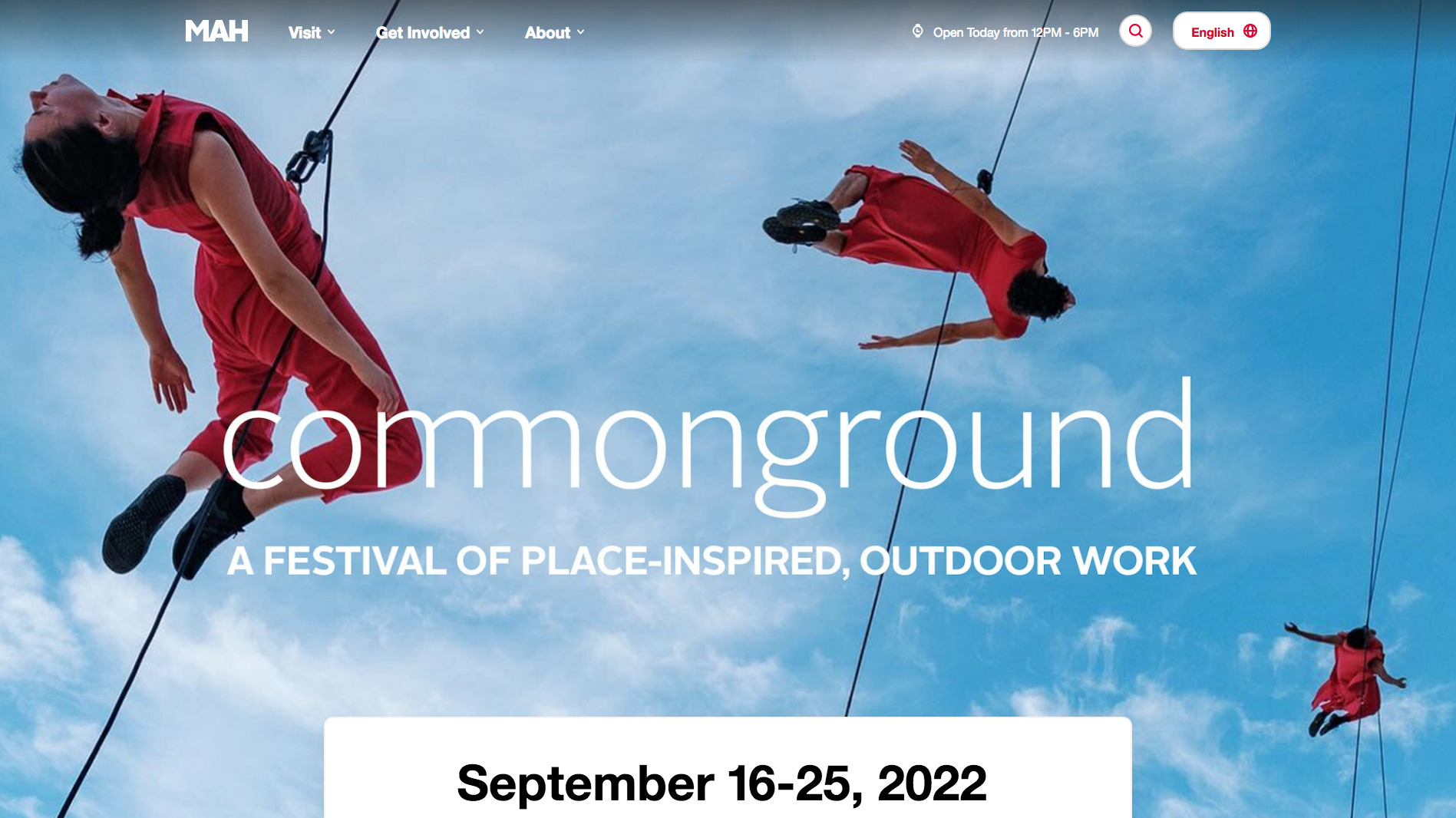
Produced by the Santa Cruz Museum of Art and History for their CommonGround Biennial: (click on the image to visit the MAH’s website)
_ _ _ _ _ _ _ _
TRANSBORDER / The Bracero Legacy Project* (Daniel Ruanova & Ignacio “Nacho” Ornelas)
Courtesy of the Stanford University Libraries Special Collections (Ernesto Galarza Collection)
Special thanks to Roberto Trujillo, Associate University Librarian and Director of Special Collections
Project Collaborators:
SPONSOR / The Santa Cruz Museum of Art and History, special thanks to Marla Novo
PRINTERS / Community Printers Santa Cruz, special thanks to Ross Newport
FABRICATION / Santa Cruz Barrios Unidos, special thanks to Nane Alejandrez
ENCORE SPONSOR / Luis Alejo, Monterey County Supervisor
SANTA CRUZ BARRIOS UNIDOS Team:
Nane Alejandrez, Spiritual and Community Advisor
Aaron Chermak, Production and Logistics Coordinator
SERIO, Production and Logistics support
Kalikata Umbula, Artist in Residence Advisor
*The Bracero Legacy Project was founded in Salinas CA. in 2016 by D.Ruanova & I.Ornelas as a multidisciplinary approach for creating new dialogues about Americans by engaging the Mexican farm labor experience through Art & History.
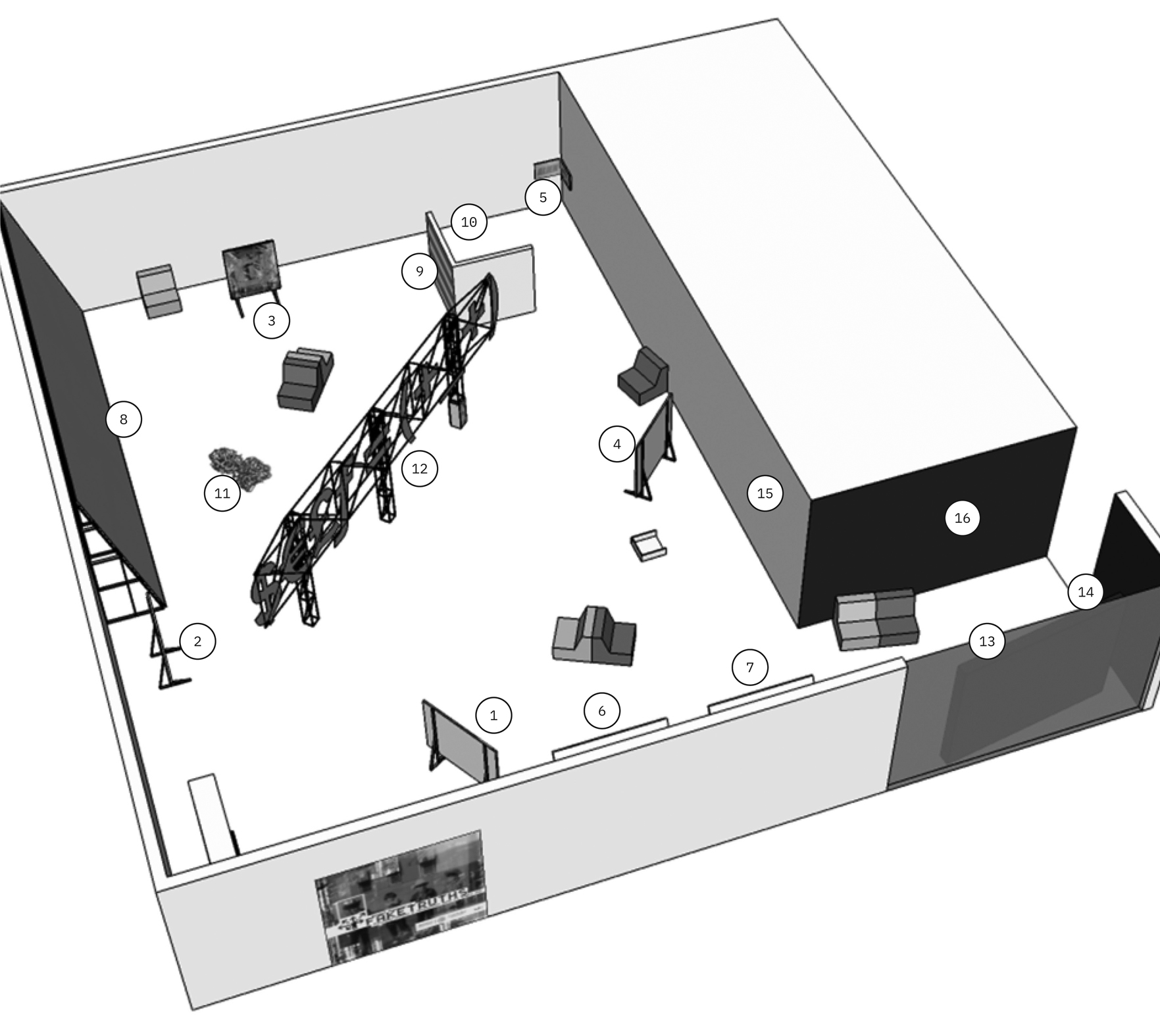
A partir de su experiencias con las culturas de la frontera Daniel Ruanova ha dispuesto para el visitante este espacio cuya característica es expandir la narrativa del cubo blanco expositivo. Los contenidos y las formas se desprenden de sus muros y se proyectan sobre el transeúnte. El no-lugar nos compele a tomar asiento y navegar por la exposición.
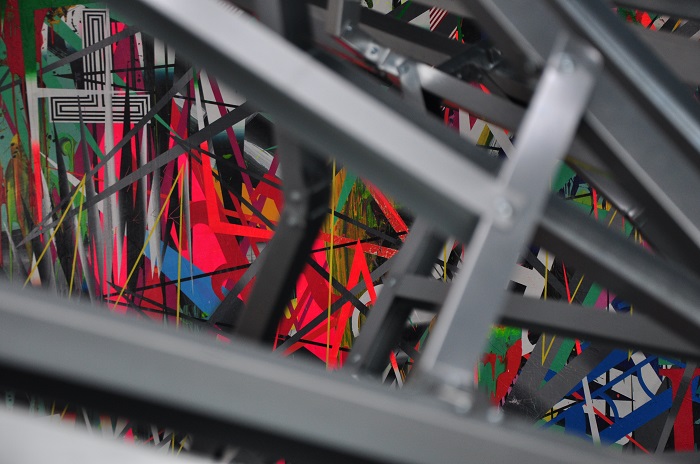
Las pinturas devienen en pantallas que reflejan la superposición de lenguajes digitales, buzzwords y frases anidadas en el inconsciente. Imágenes evanescentes y fórmulas algorítmicas conforman el cyber art que envuelve al usuario. Declarativa y procesual, la exposición ofrece la experiencia de una urbe postnacional; un laberinto de iconos de los poderes fácticos, saturado por la omnipresencia de billboards y pantallas esplendentes.
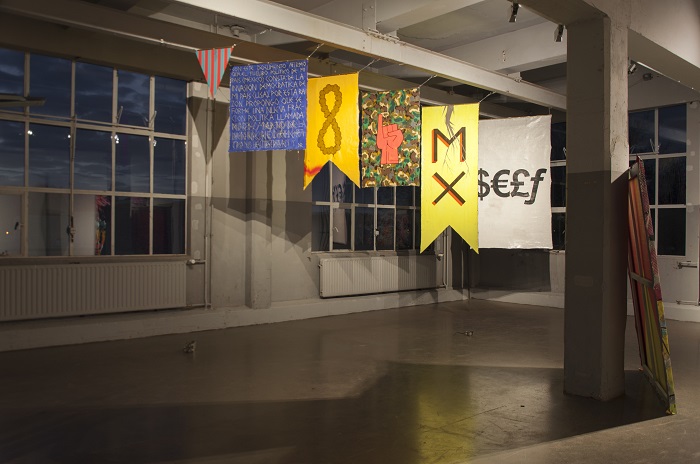
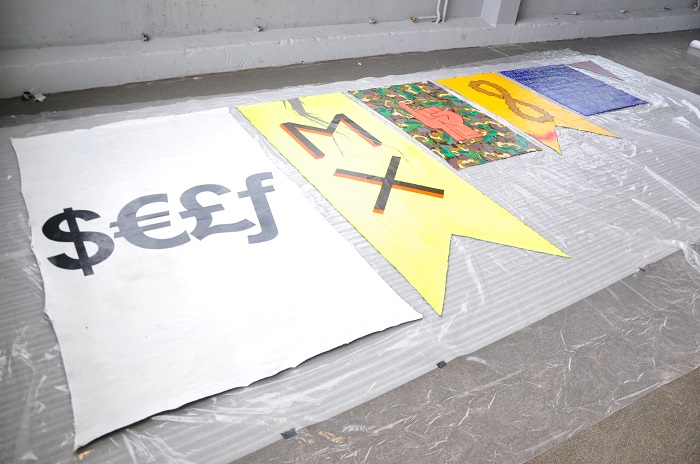
Esta muestra es un fragmento de una realidad paralela producto de las hegemonías de Google, Trump, Fox News. Construida con los mismos recursos que promueven la especulación financiera con bitcoins, avatares necesariamente alienados ($ € £ f), y promovida desde la interconectividad fascista de las redes digitales.
El espacio de exposición es un dispositivo de arte-ficción en el que se disuelven las fronteras entre mundo real y las fake truths que construyen los rituales para habitar el siglo XXI.
José Manuel Springer
Curador
___________ (+_+) ___________
Este proyecto es una enunciación sobre el acaecimiento neo-fascista de una sociedad voluntariamente cegada por rituales cotidianos que sirven a una inteligencia artificial que apenas vislumbramos. Obligando a un recorrido visualmente físico, el proyecto es una “puesta en sala” que ocupa el espacio con señalizaciones de un devenir distópico.” (in Spanish)
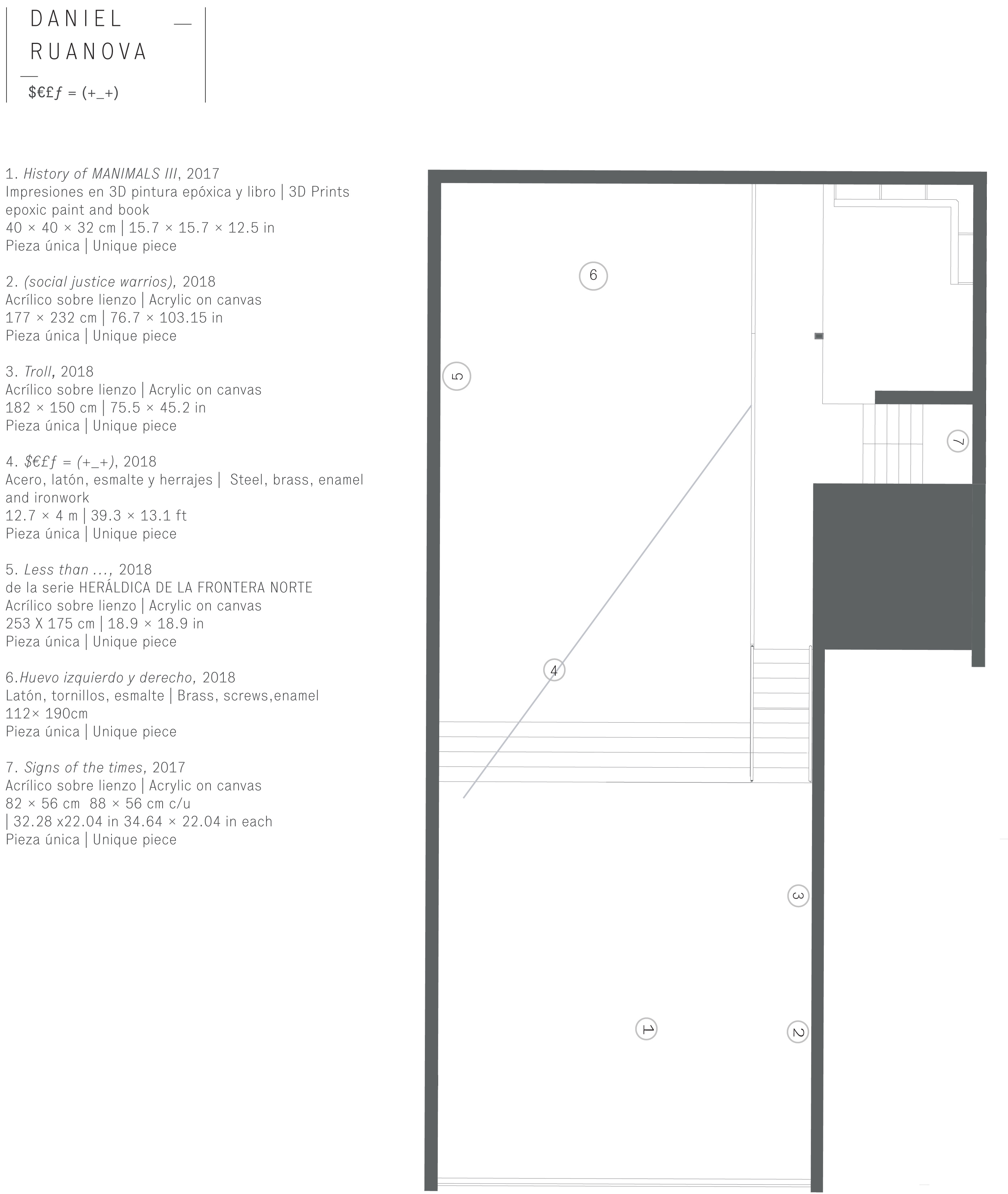
(social justice warrior) / Acrílico sobre lienzo, 2018
troll / Acrílico sobre lienzo, 2018
Bliss II / Acrílico sobre lienzo, 2018
Grand Old Putz / Acrílico sobre lienzo, 2018
Signs of the times (ALIEN METH) / Acrílico sobre lienzo, díptico, 2017
Old Immigrant Scum / Acrílico sobre lienzo, 2016 (Colección de Raul Rosado)
CERDO / Acrílico sobre lienzo, 2016 (Colección Elias+Fontes)
LEOS (oposición complementaria) / Acrílico sobre muro falso, 2018
stripes / Acrílico sobre muro falso, 2018
Extinction of the free and the brave* / de-construcción de la última estrofa del himno nacional de los Estados Unidos de América: The Star Spangled Banner. Bocina y reproductor.
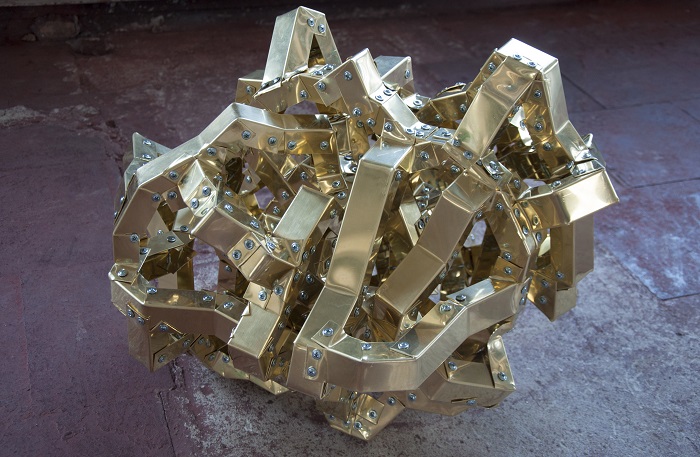
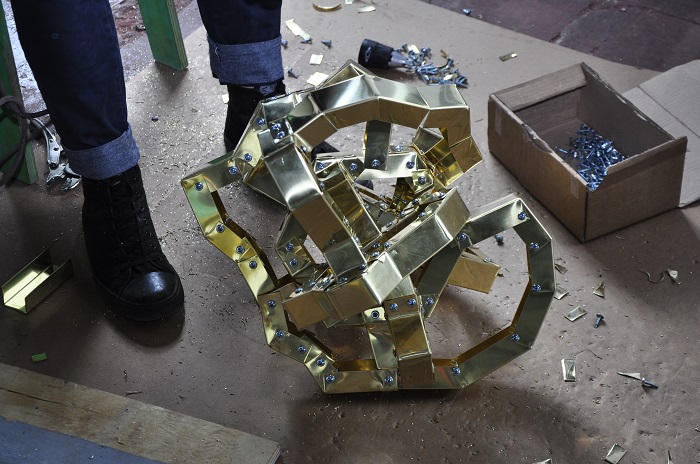
Huevo izquierdo y derecho / Latón, tornillos de acero inoxidable y esmalte, 2018
Video-Documental de Saulo Cisneros con el “fantasma digital” de Daniel Ruanova.
about fascists / 3000 piezas en dos ediciones (1500 negras / 1500 rosas)
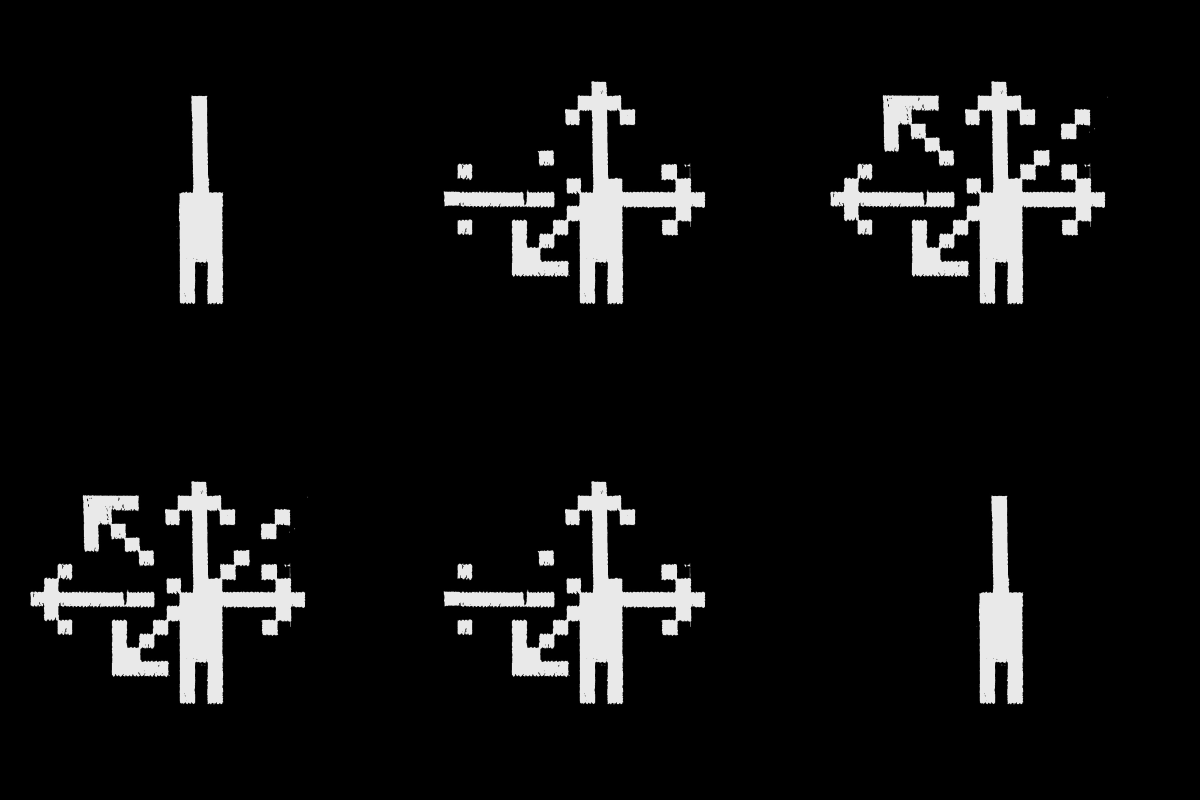
LITTLETHINKER** / Proyección de animación digital en loope ∞, 2018
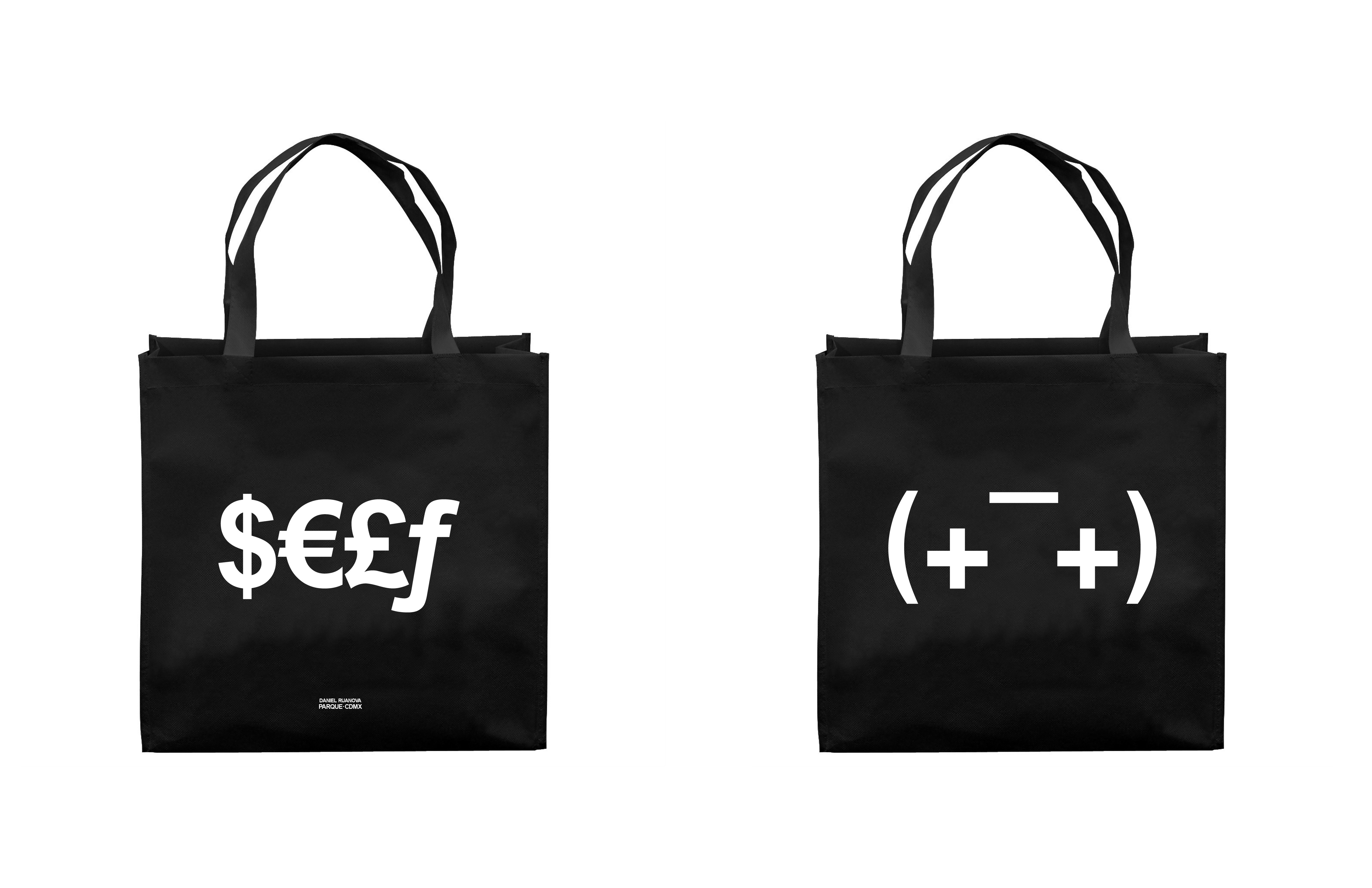
AHÍ_VIENEN / (+_+) (+_+) (+_+) (+_+) (+_+) (+_+) (+_+) (+_+) (+_+) (+_+) (+_+) (+_+) serigrafía sobre bolsa-tote (ambos lados) sobre cabeza de millenniales. 12 participantes durante inauguración, duración de la acción: 30 minutos. 2018
+ 8 sillones de hule espuma diseñados y producidos por Daniel Ruanova, 2018
___________ (+_+) ___________
*Escucha / Listen:
La carrera de Daniel Ruanova (Tijuana, 1976) es un recorrido ecléctico por diferentes formatos y plataformas en la que se cruzan géneros artísticos y mundos visuales. Los puentes que unen transversalmente a estas manifestaciones son los temas de la migración y la cultura de la fronteridad.
Motivado por la evolución de Tijuana entre el vaivén de la necesidad y su estratégica posición geopolítica y cultural, el aporte artístico de Ruanova se enfocó en la capacidad de adaptación de la cultura tijuanense a las condiciones políticas y económicas de la región Pacífico, así como el modelo de integración a contrapelo de modos de consumo y tecnologías del Norte con formas de producción y vida al Sur de la frontera.
El modelo de creación del artista ha pasado por varias etapas en dos décadas: desde la consideración histórica del trabajo de los braceros e indocumentados, a las realidades que genera la violencia y la inseguridad; Tijuana lo abarca todo: ser el lugar de adaptación de modelos económicos (como la televisión de paga), el asiento de la vida disipada para el visitante y el viajero, lugar de comercio de medicina de patente y servicios médicos para el visitante hasta ser la plaza de cárteles delictivos propios y foráneos que continúan disputándose su control.
El cruce fronterizo más transitado de todo América, destino temporal de grupos de migrantes procedentes de todo el mundo, le ofreció a Daniel Ruanova al inicio de su carrera en los 90 un extenso abanico de posibilidades interpretativas sobre el significado del ser tijuanense: el individuo que cruza fronteras, que abre horizontes, distinguible por su capacidad de apropiación y asimilación de los lenguajes visuales, musicales, tecnológicos y culturales en boga.
Más adelante, con la explosión económica de China, Ruanova se estableció en Beijing donde participó en la escena cultural como artista y gestor cultural del éxodo foráneo, abrió vetas para su carrera profesional que lo llevaron a reafirmar su convicción de que el migrante es el ciudadano modelo del mundo contemporáneo.
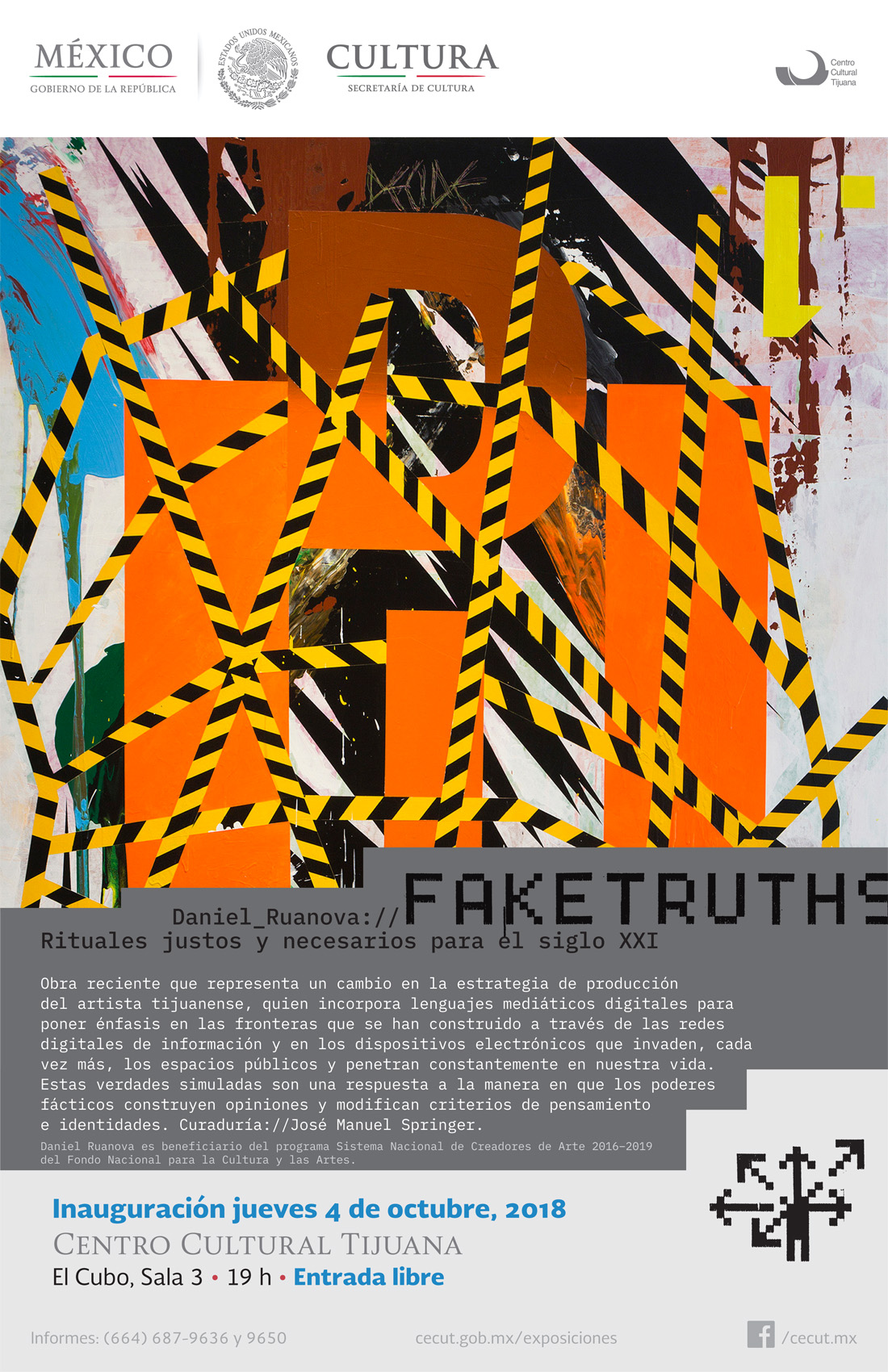
Fake truths, verdades ilusorias, es una mirada retrospectiva a los años recientes de la producción del artista. La obra incluida en esta exposición resume los diferentes aspectos que han marcado la cultura de la fronteridad, en los que se da una paradójica deconstrucción de las fronteras virtuales unida a la intención de levantar muros físicos.
Para el artista, el Internet y las grandes corporaciones surgidas de esta red (Google, Facebook, Microsoft) han fabricado los nuevos territorios y fronteras, con sus correspondientes lenguajes tecnológicos, subculturas e hitos culturales, enfocados hacia el consumo, pero también hacia la manipulación de los comicios electorales a través de la manipulación de las opiniones de cientos de millones de usuarios y sus datos personales.
La obra pictórica incluida en la exposición expresa las metáforas de las palabras usadas para denostar a migrantes. También se incluyen ejemplos gráficos que forman parte de las plataformas Facebook, Whattsapp, Twitter y similares. La sala es una simulación del espacio virtual, donde colisionan emoticones, imágenes digitales (bitmaps) y animaciones, que forman parte de los códigos de identidad de la generación millennial.
La exposición es testimonio de las habilidades interpretativas del artista, que sabe leer oportunamente las tendencias y las historias de las redes digitales, que se han convertido en el origen y destino del mundo hiperdesarrollado, sobre informado y multipolar en que vivimos.
En ese mundo virtual expositivo conviven las fórmulas que la generación de jóvenes postnacionales manipula todos los días para construir sus propias identidades, con las que expresan sus visiones sobre el futuro de la tecnología, y de las que emergen las formas de convivencia que habrán de convertirse en rituales de paso, necesarios para entender la era en la que vivimos.
La obra de Ruanova se dirige a esas generaciones que harán de éste un mundo líquido imposible de contener y definir en términos de paradigmas culturales y políticos únicos. La lógica cultural de esta época es la exposición ininterrumpida de la gente a flujos y ráfagas de datos que desplazan velozmente a las plataformas tecnológicas efímeras, y en las que las nociones de territorio, cultura, cuerpo o idioma son continuamente intercambiables.
Integrada por una docena de obras en técnicas pictóricas, escultóricas y digitales, Fake Truths ofrece un recorrido por los años más recientes de la obra de Daniel Ruanova, que busca redefinir el concepto arte fronterizo, como zona virtual donde se ejerce la cultura como performance (demostración a través de la acción), y se recrea la estética informática, al grado de que la misma biografía del artista es una pieza de la exhibición.
La exposición fue seleccionada y co-diseñada por José Manuel Springer, crítico y curador independiente.
/////// English translation ///////
The career of Daniel Ruanova (Tijuana, 1976) is an eclectic journey through different formats and platforms in which artistic genres and visual worlds intersect. The bridges that cross these manifestations transversally are the themes of migration and the culture of the border.
Motivated by the evolution of Tijuana between the oscillation of necessity and its strategic geopolitical and cultural position, Ruanova’s artistic contribution focused on the ability of Tijuana to adapt to the political and economic conditions of the Pacific region, as well as the integration model against the grain of consumption modes and technologies from the North with forms of production and life south of the border.
The model of creation of the artist has gone through several stages in two decades: from the historical consideration of the work of braceros and undocumented, to the realities generated by violence and insecurity; Tijuana covers everything: being the place of adaptation of economic models (such as pay television), the seat of life dissipated for the visitor and the traveler, a place of trade in patent medicine and medical services for the visitor to be the square of own and foreign criminal cartels that continue to dispute their control.
The busiest border crossing in all of America, temporary destination of groups of migrants from all over the world, offered Daniel Ruanova at the beginning of his career in the 90s an extensive range of interpretative possibilities about the meaning of Tijuana being: the individual who It crosses borders, that opens horizons, distinguishable by its capacity of appropriation and assimilation of the visual, musical, technological and cultural languages in vogue.
Later, with the economic explosion of China, Ruanova settled in Beijing where he participated in the cultural scene as an artist and cultural manager of the foreign exodus, opened veins for his professional career that led him to reaffirm his conviction that the migrant is the citizen model of the contemporary world.
Fake truths, illusory truths, is a retrospective look at the recent years of the artist’s production. The work included in this exhibition summarizes the different aspects that have marked the culture of the border, in which there is a paradoxical deconstruction of the virtual borders together with the intention of building physical walls.
For the artist, the Internet and the large corporations that emerged from this network (Google, Facebook, Microsoft) have manufactured the new territories and borders, with their corresponding technological languages, subcultures and cultural milestones, focused on consumption, but also on manipulation. of the electoral elections through the manipulation of the opinions of hundreds of millions of users and their personal data.
The pictorial work included in the exhibition expresses the metaphors of the words used to insult migrants. Also included are graphic examples that are part of the Facebook, Whattsapp, Twitter and similar platforms. The room is a simulation of the virtual space, where emoticons collide, digital images (bitmaps) and animations, which are part of the identity codes of the millennial generation.
The exhibition is a testimony to the interpretive skills of the artist, who knows how to read the trends and stories of digital networks in a timely manner, which have become the origin and destiny of the overdeveloped, informed and multipolar world in which we live.
In this virtual exhibition world, the formulas that the generation of postnational youths manipulate every day to build their own identities coexist, with which they express their visions about the future of technology, and from which emerge the forms of coexistence that will become in step rituals, necessary to understand the era in which we live.
Ruanova’s work is aimed at those generations that will make this a liquid world impossible to contain and define in terms of unique cultural and political paradigms. The cultural logic of this time is the uninterrupted exposure of people to flows and bursts of data that quickly move to the ephemeral technological platforms, and in which the notions of territory, culture, body or language are continuously interchangeable.
Composed of a dozen works in pictorial, sculptural and digital techniques, Fake Truths offers a journey through the most recent years of the work of Daniel Ruanova, which seeks to redefine the concept of border art, as a virtual area where culture is exercised as performance ( demonstration through action), and the computer aesthetic is recreated, to the extent that the artist’s biography is a piece of the exhibition.
The exhibition was selected and co-designed by José Manuel Springer, critic and independent curator.
___________ (+_+) ___________
Contenido de VIDEO-MAMPARA al finalizar la exhibición:
(Video RETROSPECTIVA de 20 años de producción artísitica de DR)
___________ (+_+) ___________
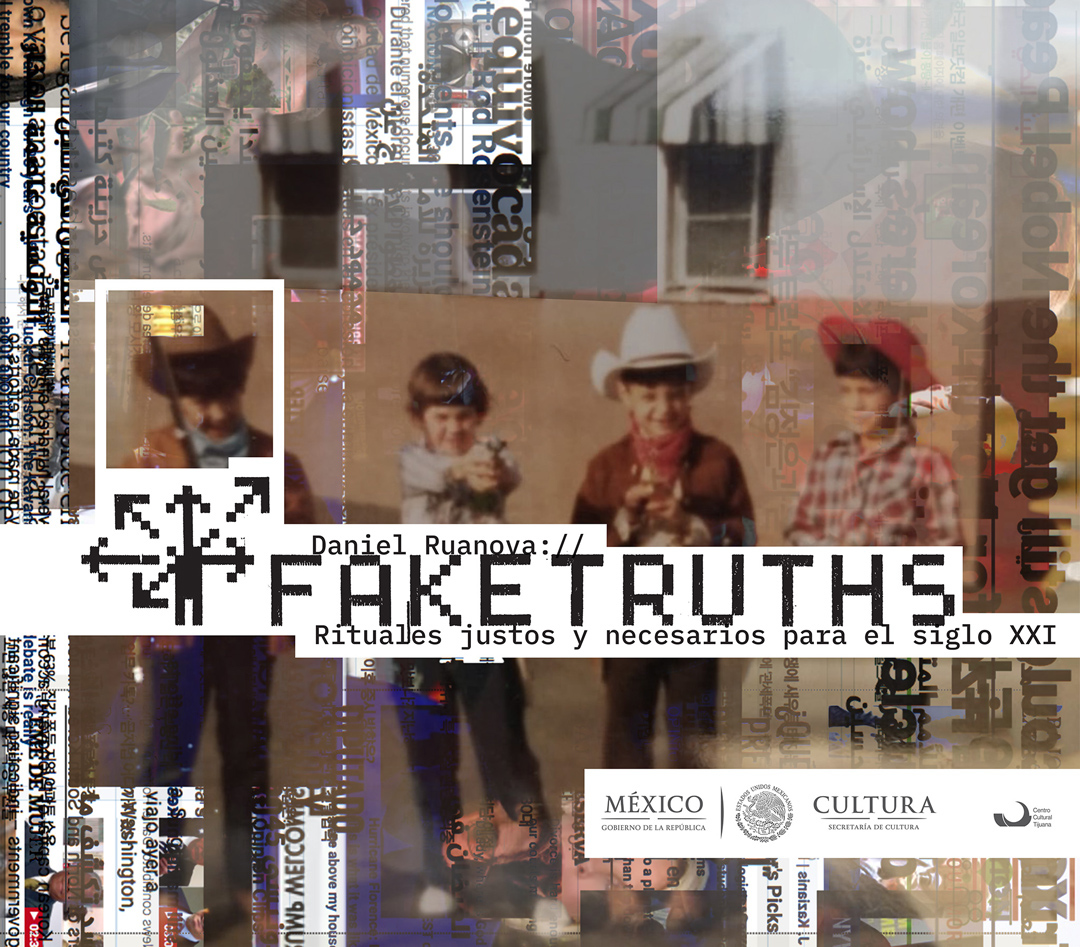
Entrevista sobre las ideas detrás de la exposición Fake Truths, Rituales justos y necesarios para el siglo XXI.
Producido por el Centro Cultural Tijuana, 2018 – 2019
Poseedor de una obsesión por los lenguajes mediáticos y los imaginarios fronterizos, Daniel Ruanova cuenta en su haber con una larga carrera artística que toma como punto de partida Tijuana, pero se extiende para abarcar un conjunto ecléctico de plataformas que fomentan la hibridación de las estéticas de los medios masivos y soportes digitales.
Desde el mismo algoritmo de la exposición, el artista nos da una muestra de la incertidumbre que provocan los símbolos de la dominación económica en los espacios públicos poblados por billboards electrónicos que como en Blade Runner y el Metro Insurgentes invaden el espacio público y privado con mensajes encriptados.
Las pinturas de Ruanova son pantallas que proyectan logotipos, cruzados por efectos visuales y recortes de imágenes pixeleadas. Entre signos de colores chillantes y destellos aparecen buzzwords del argot político racista alt-right estadounidense entremezclados con los brandings difundidos en las redes digitales chovinistas de youtubers e influencers.
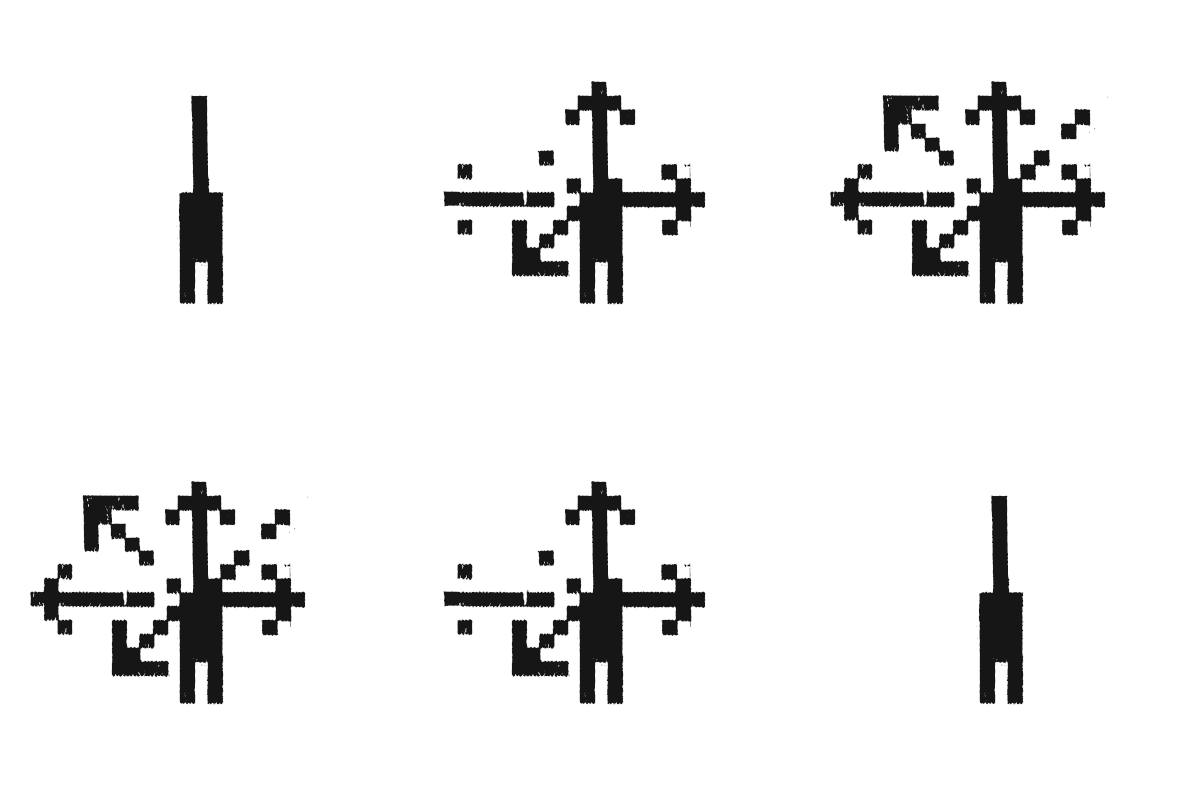
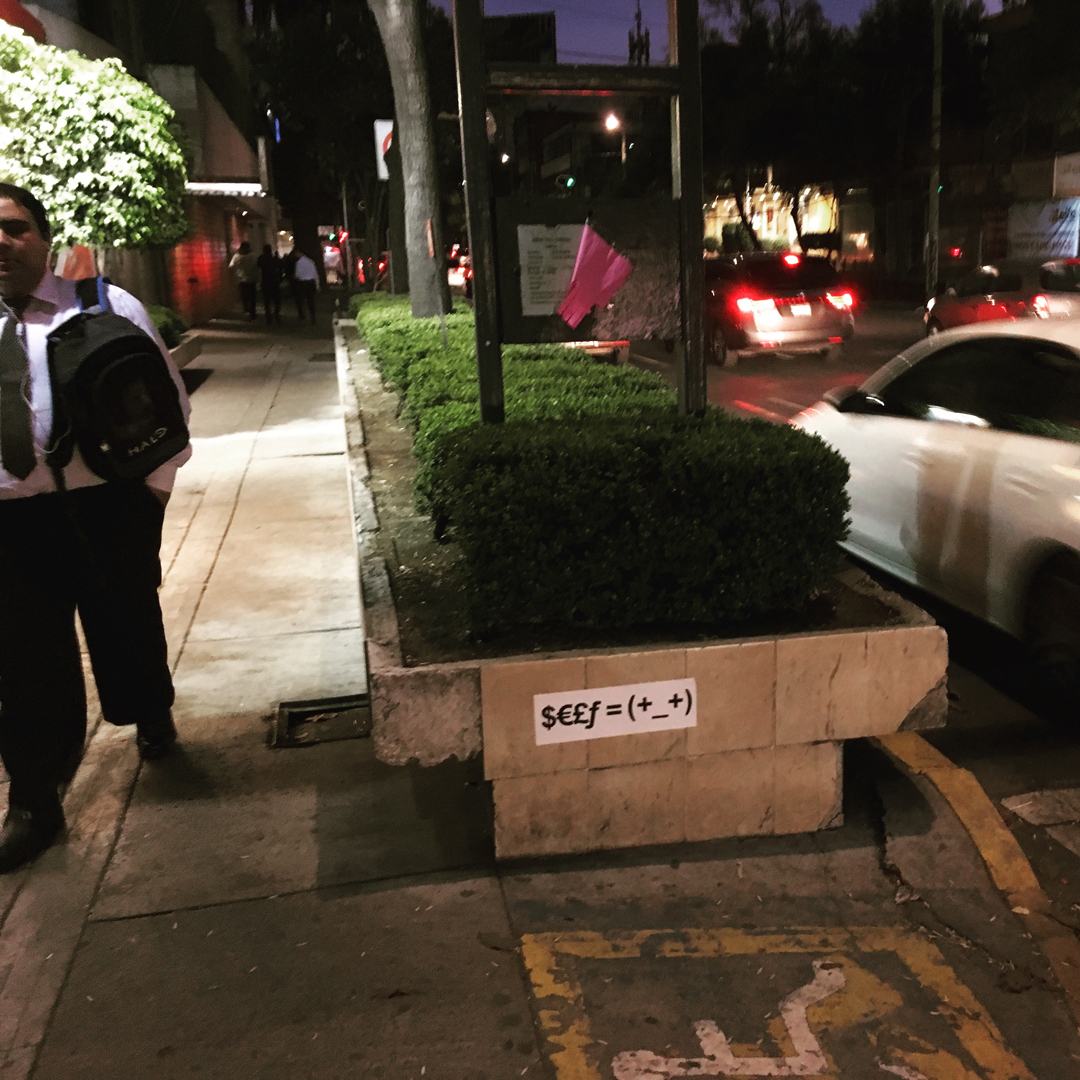
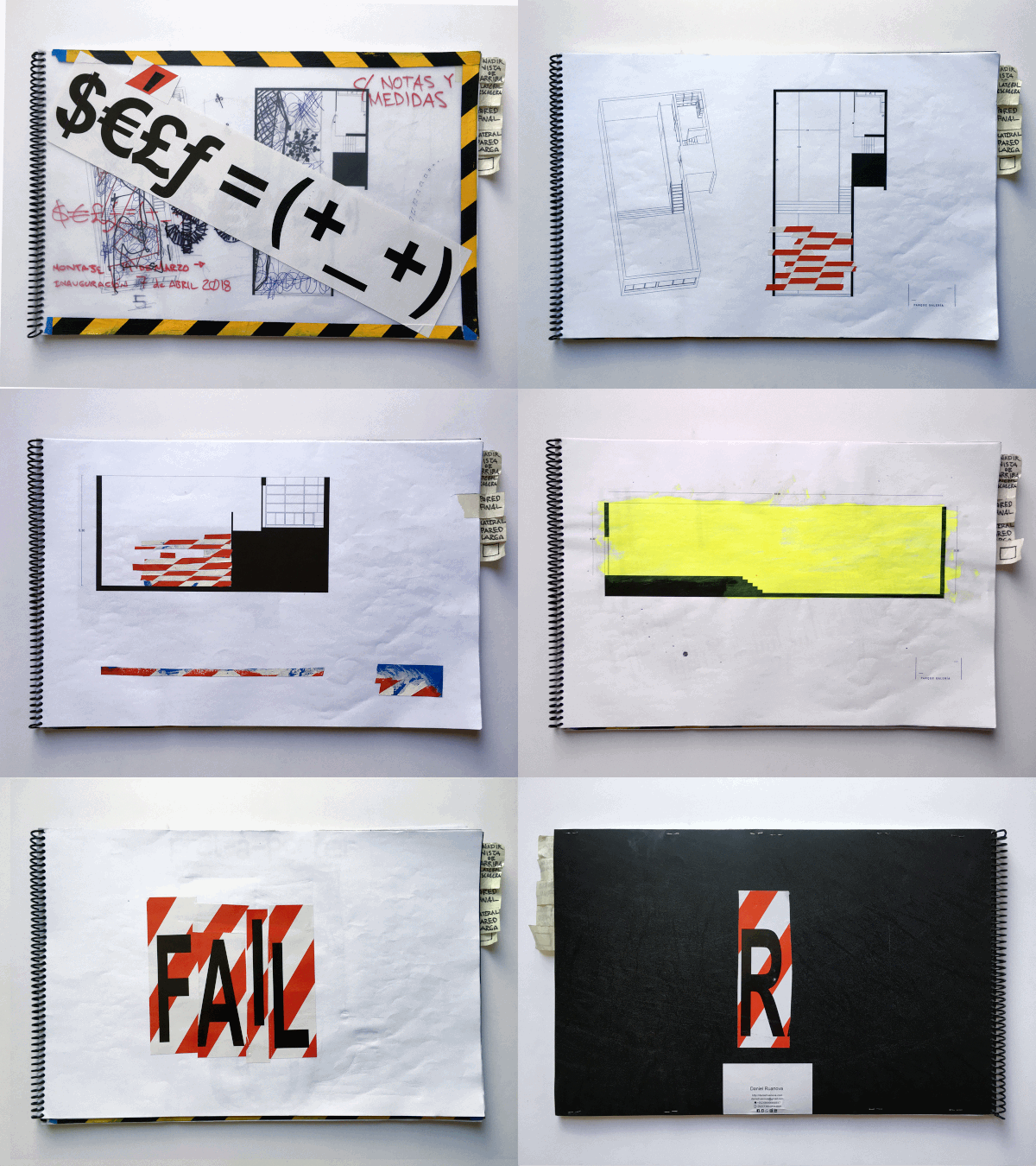
La fórmula $€£ƒ = (+_+) designa el surgimiento de subjetividades alienígenas resultado de una deriva de imágenes provenientes de Beijing, en el extremo Oriente, hasta la última frontera de Occidente: Tijuana. La obra de Ruanova propone otras identidades nómadas a partir del ruido perceptual que envuelve a esta realidad cada vez más dependiente de Google.
Obsessed with media´s visual language and border imaginaries, Daniel Ruanova has embarked on a long career in art with Tijuana as its starting point. It expands to cover an eclectic set of platforms that encourage the hybridization of the aesthetics of mass-media and digital platforms.
From the exhibition´s title algorithm, the artist hints at the uncertainty provoked by the symbols of economic domination in public spaces, littered with electronic billboards that, just as in Blade Runner or the Insurgentes subway stop, invade the public and private domain with encrypted messages.
Ruanova’s paintings are screens that reflect logos, covered in visual effects and clippings of pixelated images. Amongst bright colored signs and flashes, buzzwords containing the racist political jargon of the American Alt-Right, jumbled up with branding from the chauvinistic digital networks of YouTubers and influencers.
The formula $€£ƒ = (+_+) appoints the emergence of alien subjectivities resulting from a drift of images from Beijing, in the far East, to the last frontier of the West: Tijuana. Ruanova’s work presents nomadic identities from the perceptual noise that surrounds this reality, one that is increasingly dependent on Google.
05 abril – 26 mayo, 2018 //// April 05 – May 26, 2018
Martes a jueves de 10:00-14:00 y de 15:00-18:00 hrs, viernes de 10:00-15:00 y sábado de 11:00-14:00 hrs. Lunes cerrado. ///// Tuesday to Thursday from 10:00 a.m. – 2:00 p.m. and from 3:00 p.m. to 6:00 p.m., Friday from 10:00 p.m. to 3:00 p.m. and Saturday from 11:00 p.m. to 2:00 p.m. Closed Mondays.
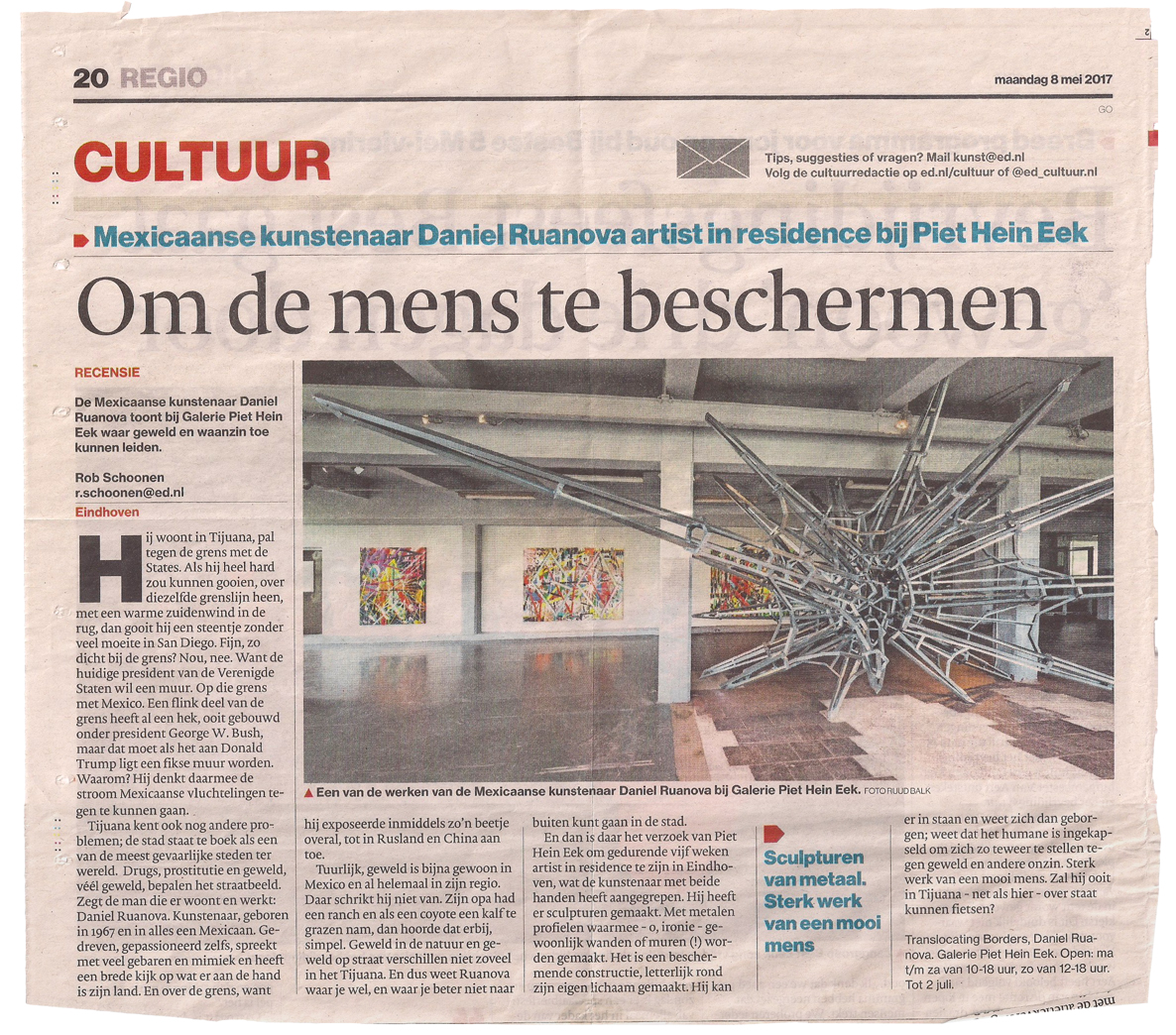
The Mexican artist Daniel Ruanova (1976) comes from a different world and a different culture, a world with urgency and where survival takes time. Death is an integral part of his culture, not only because of the drugs wars, political instability and poverty. As Ruanova himself explains: ‘if you do not embrace death, it will haunt you’. Death and life are inextricably linked with each other and are a part of nature. When a coyote grabbed and ate a calf on his grandfather’s ranch, the very same place in the desert landscape was marked the following year by flowers that had started growing there.
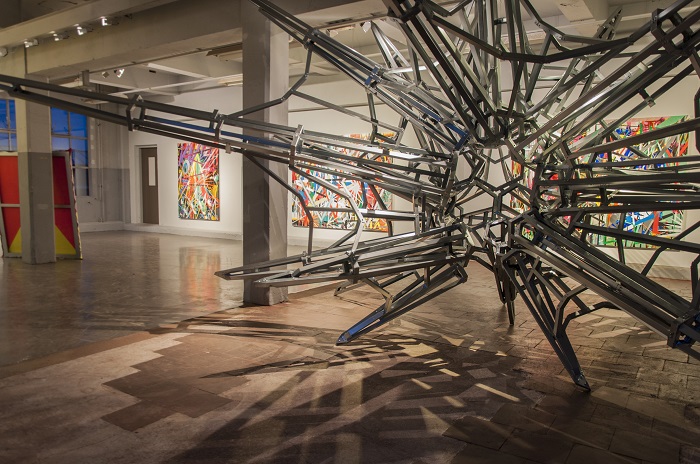
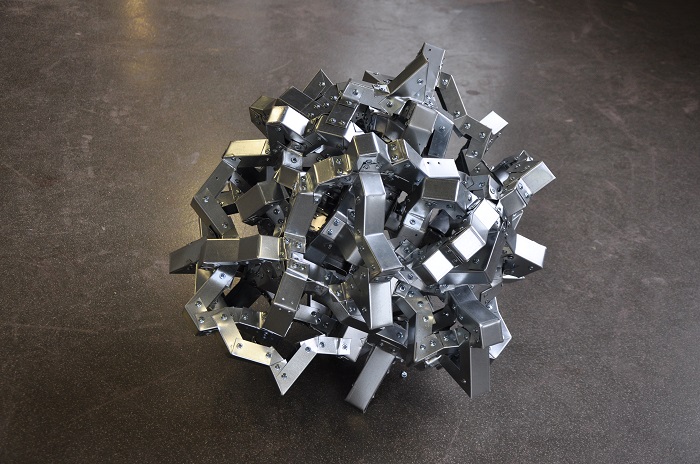
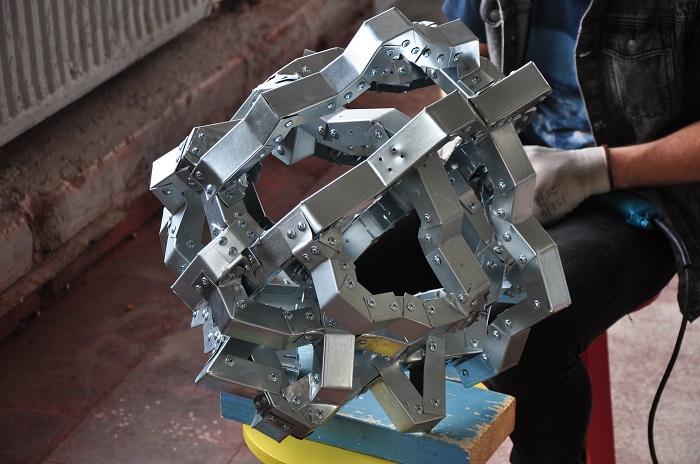
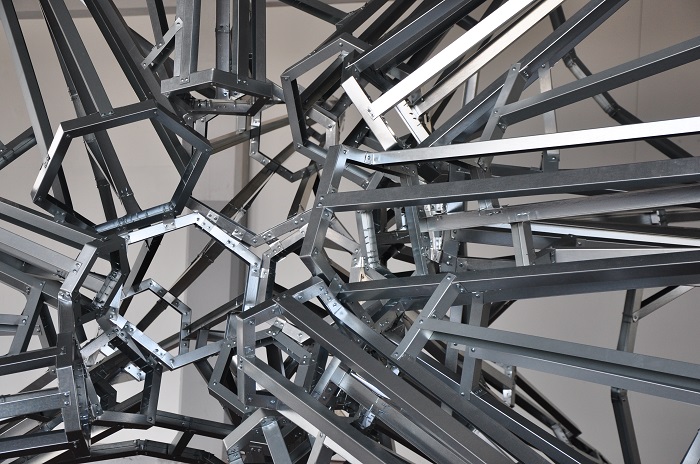
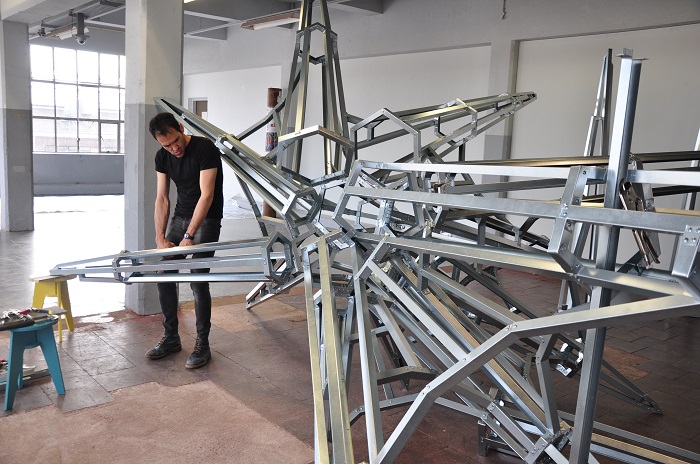
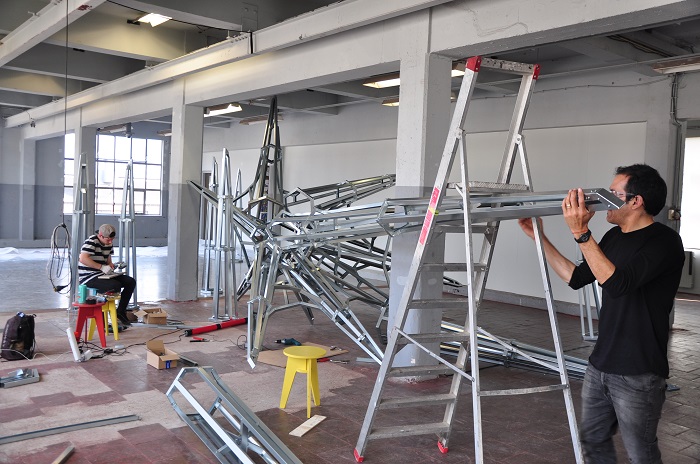
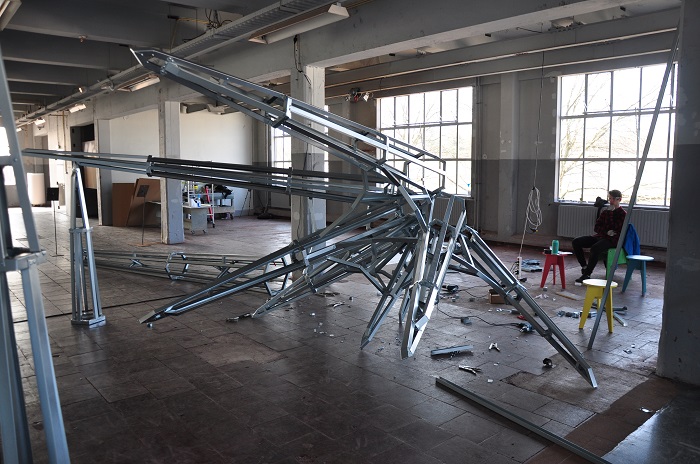
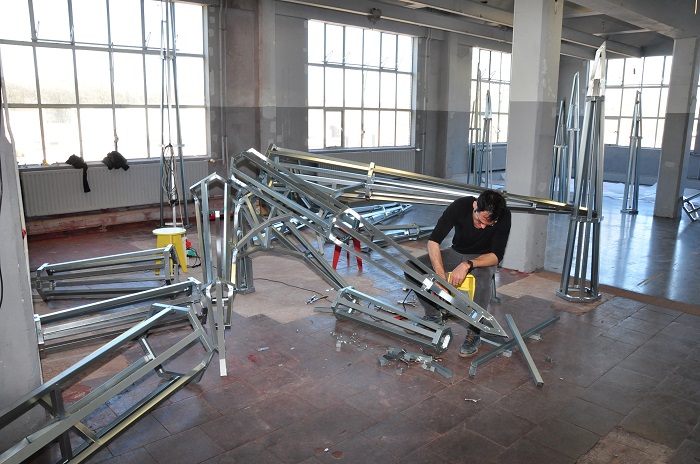
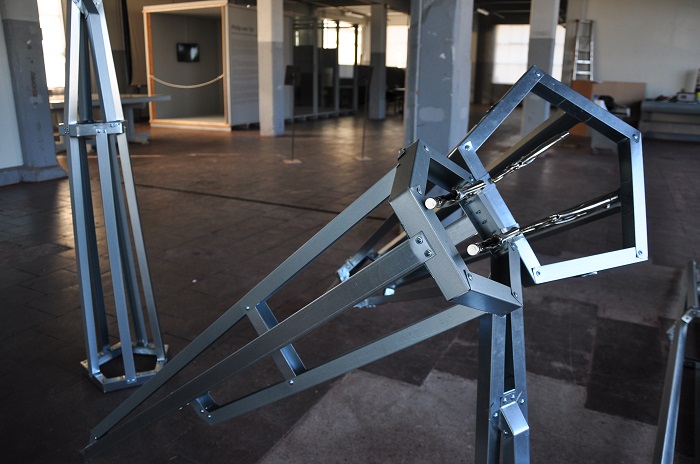
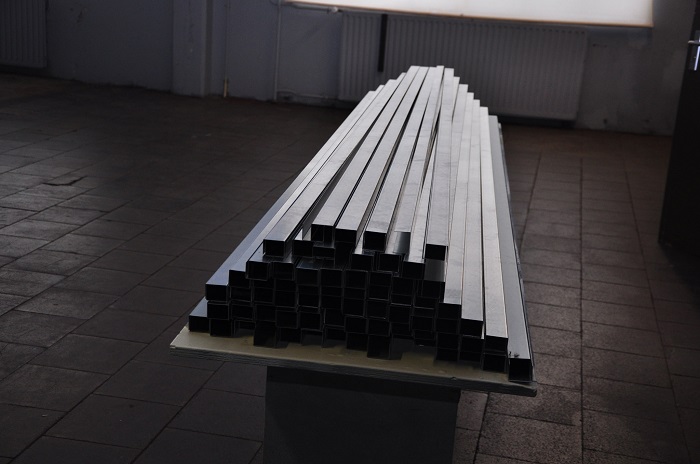
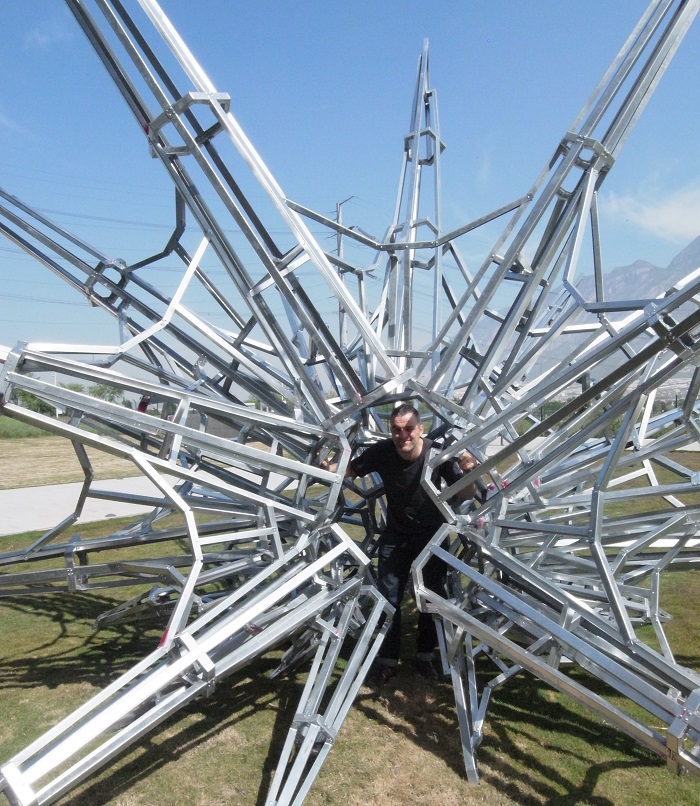
Nature is also a source of inspiration for the defensive constructions that Ruanova makes. The structures, made from modular wall profiles, are created according to the mathematical logics of nature. We now produce these U-profiles ourselves, because the profiles used in Europe proved to be unsuitable. The way in which this structure is built up organically is the same as how a cactus grows and occupies space.
Ruanova has gathered an incredible wealth of knowledge and has developed a feel for the possibilities of using steel construction materials to let a structure grow organically. The structure protects the essence, but is simultaneously also sharply daunting.
According to Ruanova, the art world is changing and he, as an artist, can therefore change this world: his existence as an artist is urgent. Just like a cactus in the desert, he is a part of Mexico – a child of his country – and in everything he does, he breathes and communicates the care, love and unwavering trust in his origins and the future.
He currently lives in Tijuana, a city on the border between Mexico and the United States. Violence and social tension are quite commonplace here. In recent years Ruanova has used his new project ‘New World Border’ to focus on the generation of an increased awareness of border cultures.
The current anti-Mexican political climate in the United States also has a positive side, according to Ruanova. It has led to the fortification of the Mexican culture and a growing self-awareness, which in turn has created new opportunities. As there is growing tension along borders all over the world, and Ruanova’s work transcends local issues due to its contemplative and elaborate nature, his presence with us here in Eindhoven is even more interesting than we thought.
As well as the fact that his work, down to the finest detail, is a result of the consciousness of current affairs and what’s going on in the world, Ruanova also turns out to be an anecdotal narrator and someone who accurately observes his surroundings. Although his sculptures and paintings radiate enormous aggression and give the viewer the impression that he actually wants to shut himself away from the world around him, he actually wants to achieve exactly the opposite. Ruanova is anything but pessimistic. He defines himself as a ‘realist and humanist’, someone who comes from a relatively young culture, in which the future is still open and to which he, as an artist, can have an active contribution.
//
De Mexicaanse kunstenaar Daniel Ruanova (1976) komt uit een andere wereld en een andere cultuur, een wereld met urgentie en waar overleven tijd vergt. Niet alleen vanwege de drugsoorlogen, politieke instabiliteit en armoede, is de dood vast onderdeel van de cultuur. Zoals Ruanova zelf vertelde: ‘als je de dood niet omarmt wordt je erdoor achtervolgd’. Dood en leven zijn onlosmakelijk met elkaar verbonden en zijn onderdeel van de natuur. Als een coyote op de ranch van zijn opa een kalf te grazen nam en opat, werd deze plek in de woestenij het jaar daarop gemarkeerd doordat er bloemen groeiden.
De natuur is tevens de inspiratiebron voor de beschermingsconstructies die Ruanova maakt. De van systeemwandprofielen gemaakte structuren worden volgens de mathematische logica van de natuur vervaardigd. Wij produceren deze U-profielen nu zelf, want de profielen die in Europa worden gebruikt bleken niet geschikt te zijn. De wijze waarop deze structuur organisch wordt opgebouwd is die van hoe een cactus groeit en de ruimte inneemt. Ruanova heeft een ongelooflijke kennis opgebouwd en gevoel ontwikkeld voor de mogelijkheden die er zijn om met de stalen bouwmaterialen een structuur organisch in de ruimte te laten groeien. De structuur beschermt het wezen, maar is tegelijkertijd ook priemend en afschrikwekkend.
Volgens Ruanova verandert kunst de wereld en kan hij als kunstenaar dus de wereld veranderen: zijn bestaan als kunstenaar is urgent. Hij is zoals de cactus in de woestijn onderdeel van Mexico – kind van zijn land – en in alles ademt en communiceert hij de zorg liefde hoop en het rotsvaste vertrouwen in zijn herkomst en de toekomst.
Momenteel is hij woonachtig in Tijuana, een stad op de grens tussen Mexico en de Verenigde Staten. Geweld en sociale spanningen zijn hier aan de orde van de dag. De afgelopen jaren richt Ruanova zich met zijn project ‘New World Border’ op het creëren van een groter bewustzijn bij grensculturen.
De huidige anti-Mexicaanse politiek in de Verenigde Staten heeft volgens Ruanova ook een positief punt. Het leidt tot de versterking van de Mexicaanse cultuur en een groeiend zelfbewustzijn, waardoor ook weer nieuwe kansen worden gecreëerd. Omdat er wereldwijd spanningen langs grenzen zijn en het werk van Ruanova, door de beschouwende en doorwrochte aard ervan, de plaatselijke problematiek overstijgt, is zijn aanwezigheid bij ons in Eindhoven nog belangwekkender dan we dachten.
Naast dat zijn werk tot in de haarvaten voortkomt uit bewustzijn van de actualiteit en waar het in de wereld over gaat, blijkt Ruanova ook een anekdotische verteller en iemand die de wereld rondom hem heen nauwkeurig observeert. Hij is allesbehalve pessimistisch en definieert zichzelf als een ‘realist en humanist’, iemand die uit een relatief jonge cultuur komt, waarin de toekomst nog open ligt en waaraan hij als kunstenaar een actieve bijdrage kan leveren.
_____________________________________________
Information of individual works:
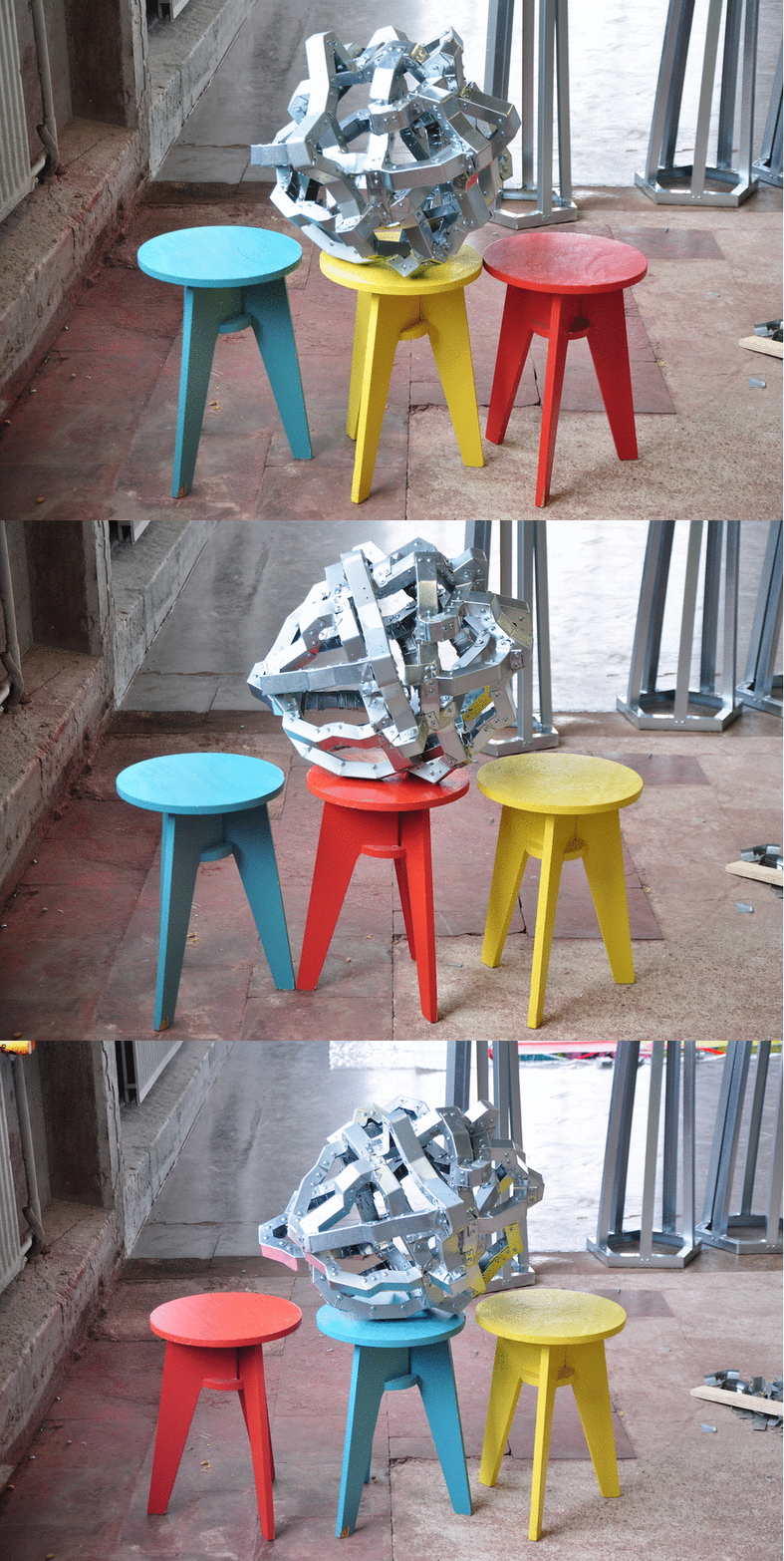
DEFENSE seed I / Galvanized steel drywall studs and self drilling screws / Ø 80 cm / 2017
DEFENSE seed II / Brass drywall studs and self drilling screws / Ø 80 cm / 2017
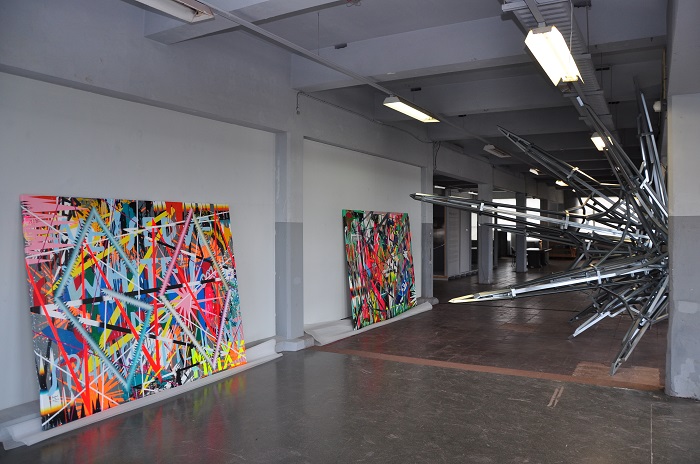
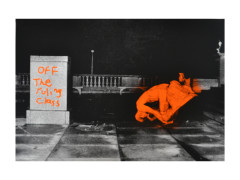
THE FUCK OFF PROJECT – SAFE AREA 11 / Galvanized steel drywall studs and self drilling screws / 700 x 800 x 400 cm / 2008 – 2017
HplFN – Peace Dove II / Acrylic on canvas (two sides), metal pushpins and aerosol on wood / 140 x 185 cm / 2017
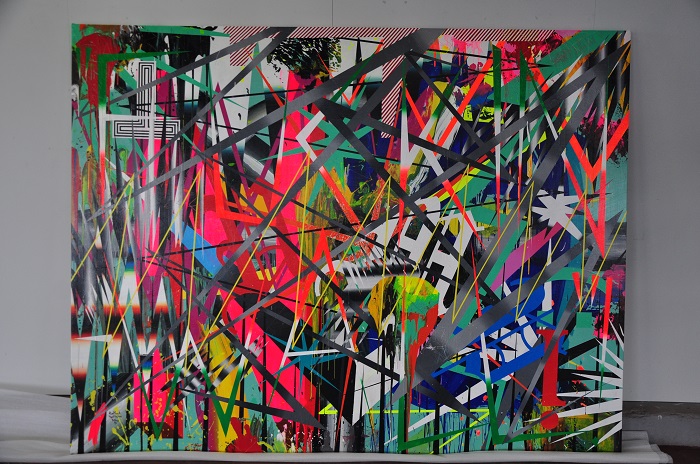
HplFN – MY $€£ƒ / Acrylic on canvas / 153 x 198.5 x 5 cm / 2017
HplFN – GO / Acrylic on canvas / 257 x 198.5 x 4 cm / 2016
HplFN – FUCKIN WALL / Acrylic on canvas / 257 x 198.5 x 4 cm / 2017
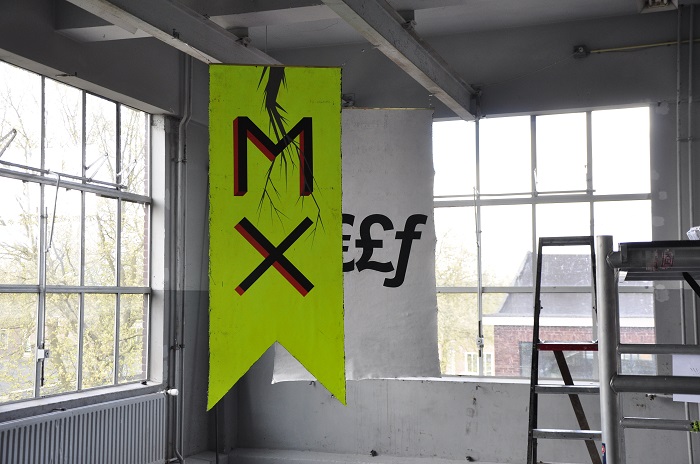
Heraldry for the Complacent – two Sided Battle Standards / Acrylic on canvas (two sides x 6) / variable dimensions aprox. 130 x 200 x 500 cm / 2015 -2017
$€£ƒ / digital print on paper / ed. of 5 / 59.4 x 80 cm / 2017
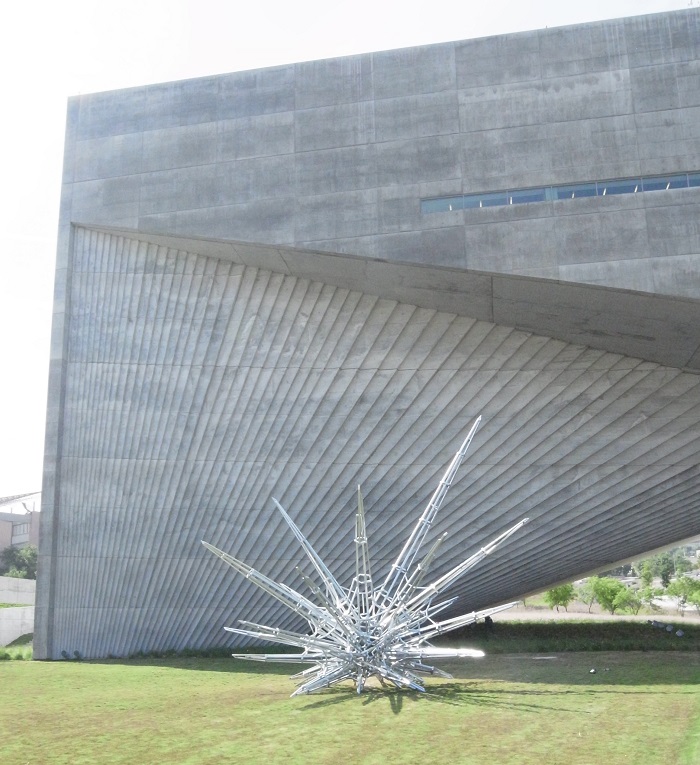
When I paid a flying visit to the University of Architecture in Monterrey, Mexico for a lecture over a year ago, an artwork by the Mexican artist Daniel Ruanova stood outside the entrance to the beautiful building designed by the Japanese architect Tadao Ando. Inside the building, close to the entrance, was more of his work on display in the exhibition space.
It is quite intelligent and modern to display art in the entrance hall of an institute where creativity is the main focus – as is the case with architecture, or rather it should be. This stimulates a dialogue between the mutual influences of the creative professions. This is instead of the increasingly oppressive isolation that is caused by the general belief in specialisation, from which we are now gradually (thankfully) struggling away from.
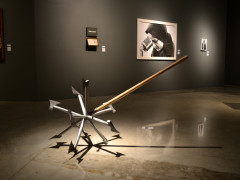
The work that stood outside, an angular, constructive and open piece of protective clothing, is somewhere between isolation and openness, polarisation and reconciliation, fear and security. As is sometimes the way in the animal kingdom: protect yourself by scaring off others. For us in the Netherlands such issues are much lower on the agenda, or even not at all, but in Mexico there is arbitrariness and fear, and violence is the order of the day.
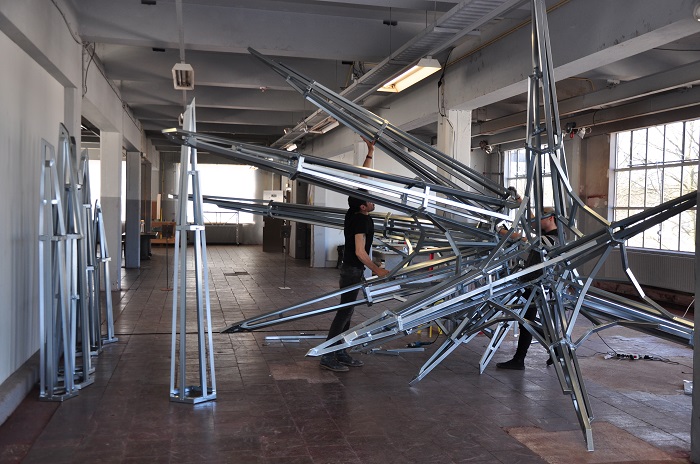
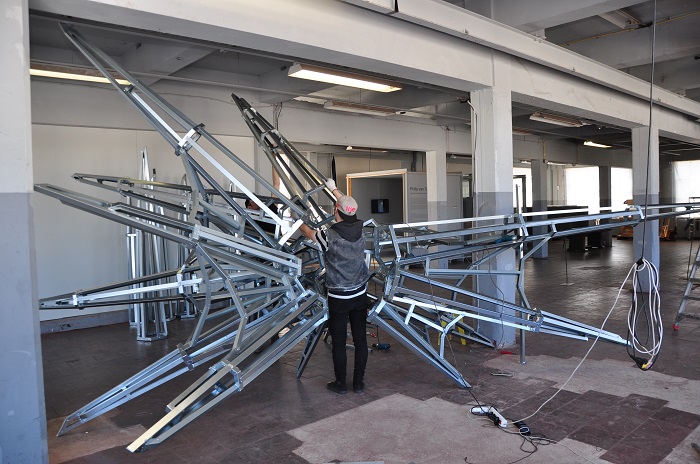
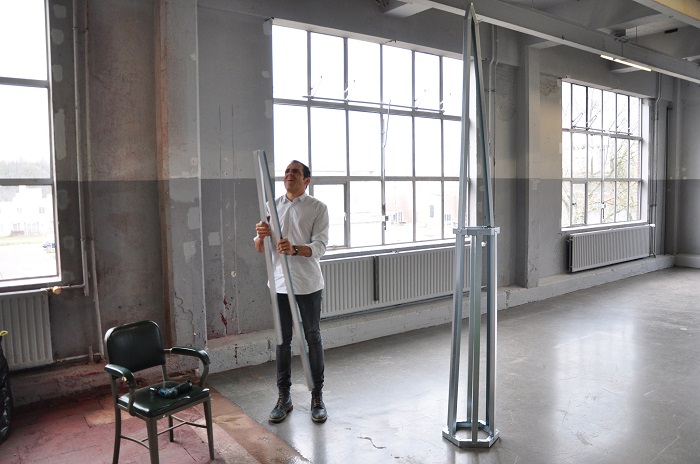
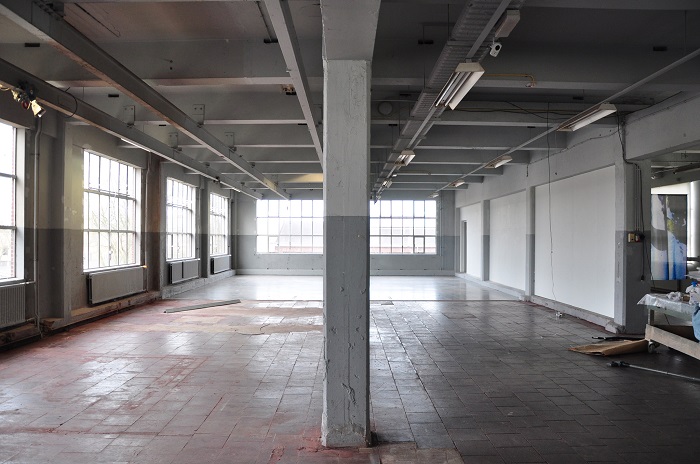
Daniel is our artist-in-residence and will create a sculpture during his time in the gallery. The creation process will form an important component of the exhibition, and visitors can follow this work-in-progress in the gallery. The opening is on 23 April. We have also had several canvasses shipped over from Mexico that make the exhibition equally as powerful as I experienced it in Monterrey and perhaps even more beautiful, as the making of is now an integral component of the exhibition.
photos from: Piet Hein Eek´s visit to Monterrey, MX
I am a visual artist from the borderlands of Tijuana (México-USA). My art practice moves through layers of aesthetics – politics – dark humor and transcultural mutations; every so often, the human tragedy creates forms that must be engaged with as new-language.
Now, specially in Europe (but always present in “las Américas”), these forms are taking place in a constant flow of cultural transformation through the destruction and reconstruction of long held cultural-social-&-economical borders.
While a very sophisticated, plural and civilized culture has been established within the EU, the structures needed for this standard of living have very much depended on the plunder and pillage of long lasting colonization practices in Africa, Asia, the Middle-East and Latin America, with the creation of subservient states that today are finally crumbling. The outpour of these states inhabitants towards “the lands of plenty” in an inevitable outcome of a long held status of wealth and privilege, this is unbalanced.
The consequent creation of security driven systems to rid the initial fear and create a constant paranoia state-industry towards the new others is the real sign of our humanities tolerance and will to change. These are the ideas behind THE FUCK OFF PROJECT. An onsite sculptural installation that creates a metaphor of security-insecurity.
_______________________________
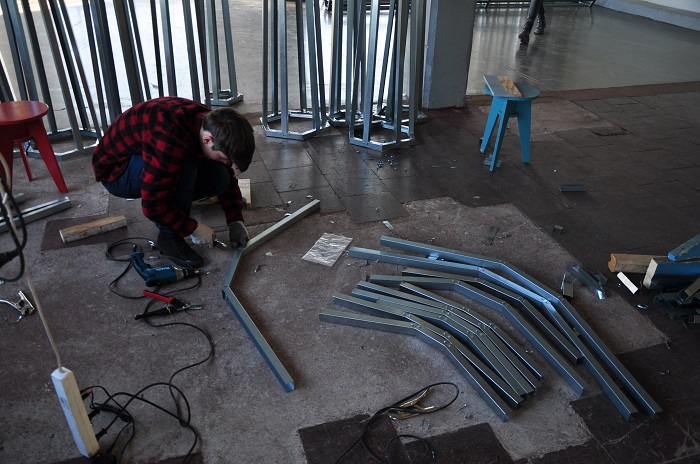
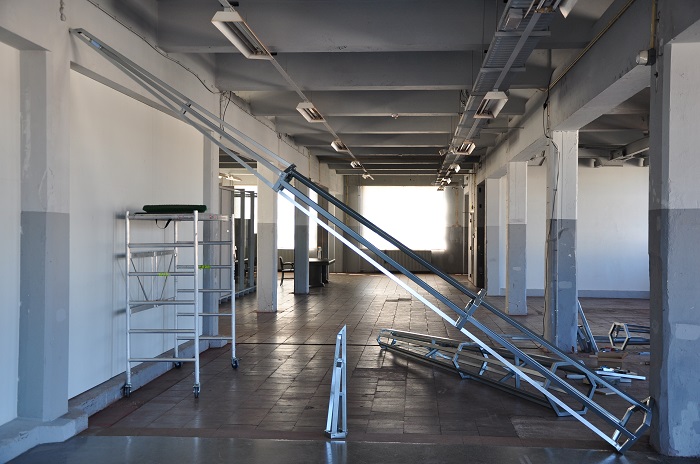
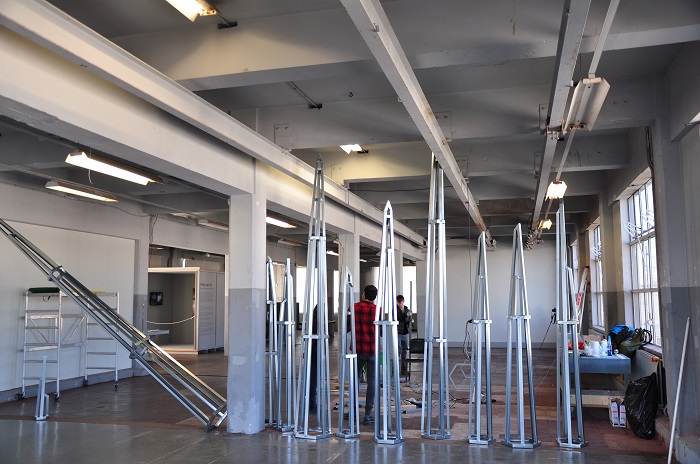
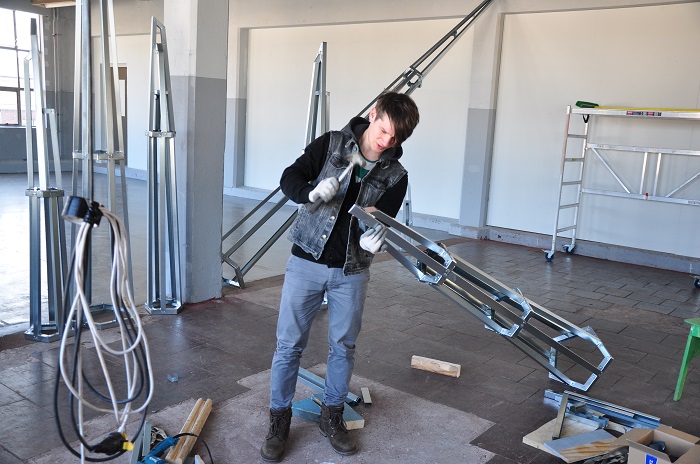
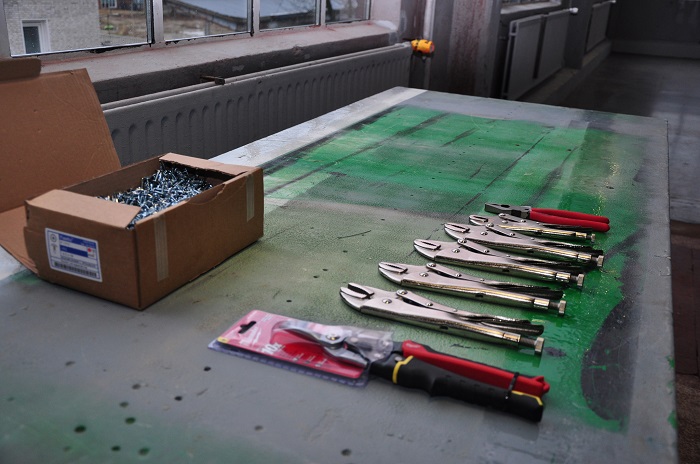
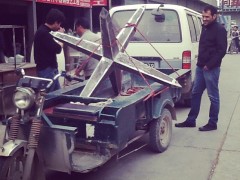
Construction process for The Fuck Off Project, centerpiece of Daniel Ruanova´s Translocating Borders @ PIET HEIN EEK Gallery, Eindhoven, The Netherlands, 2017.
Timelaps from 20/March to 11/April, 2017.
Artist: Daniel Ruanova
Curators: Piet Hein Eek & Pim Hoff
Production Assistants: Anderson Araujo & Salvis Slavišens
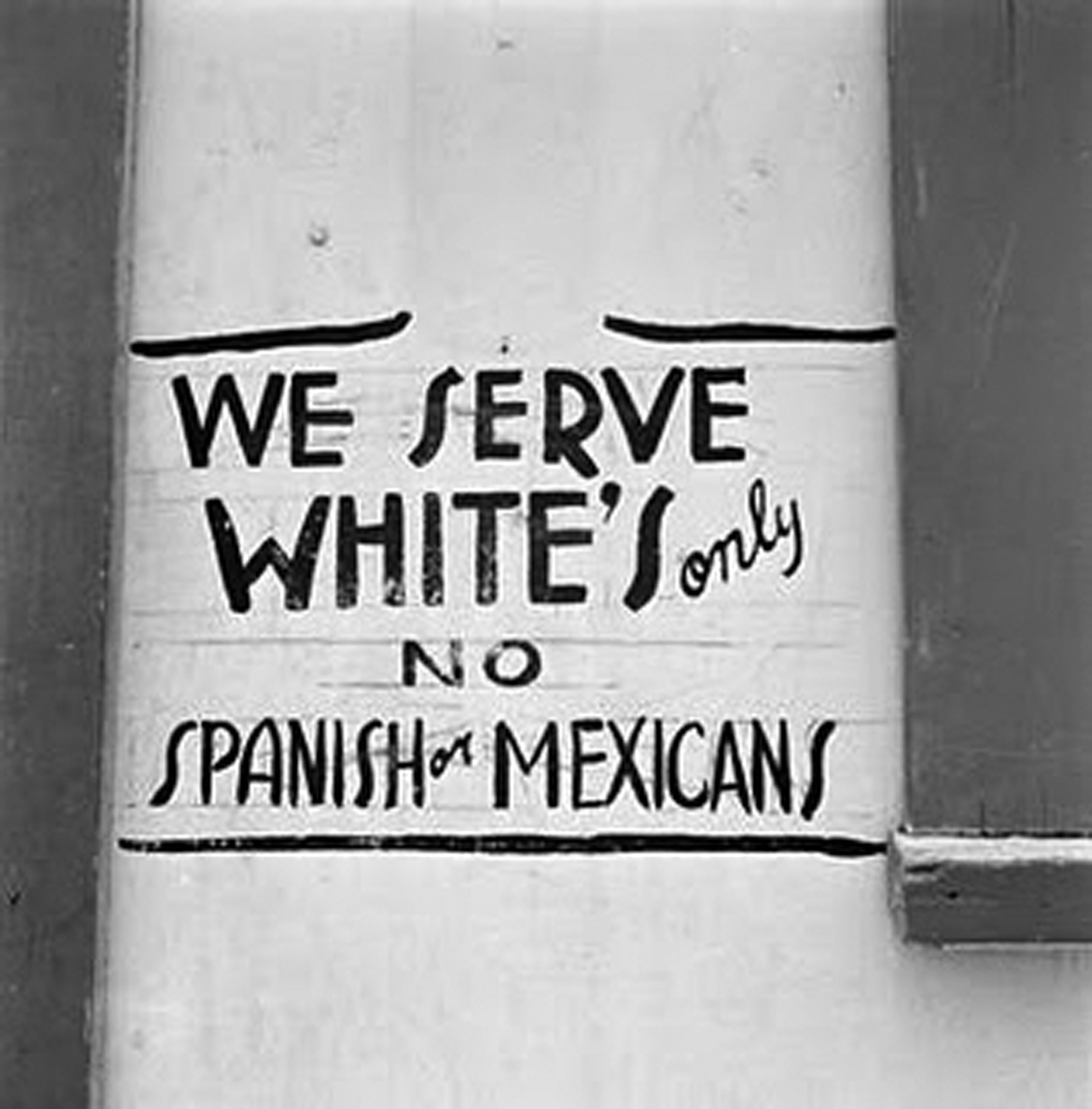
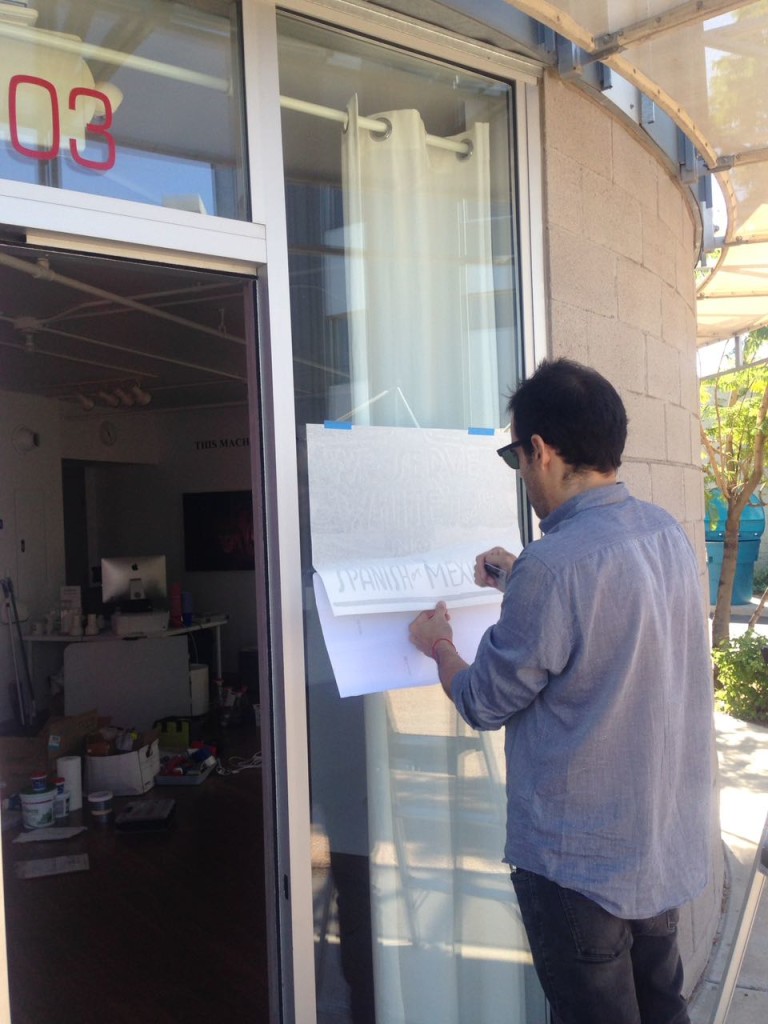
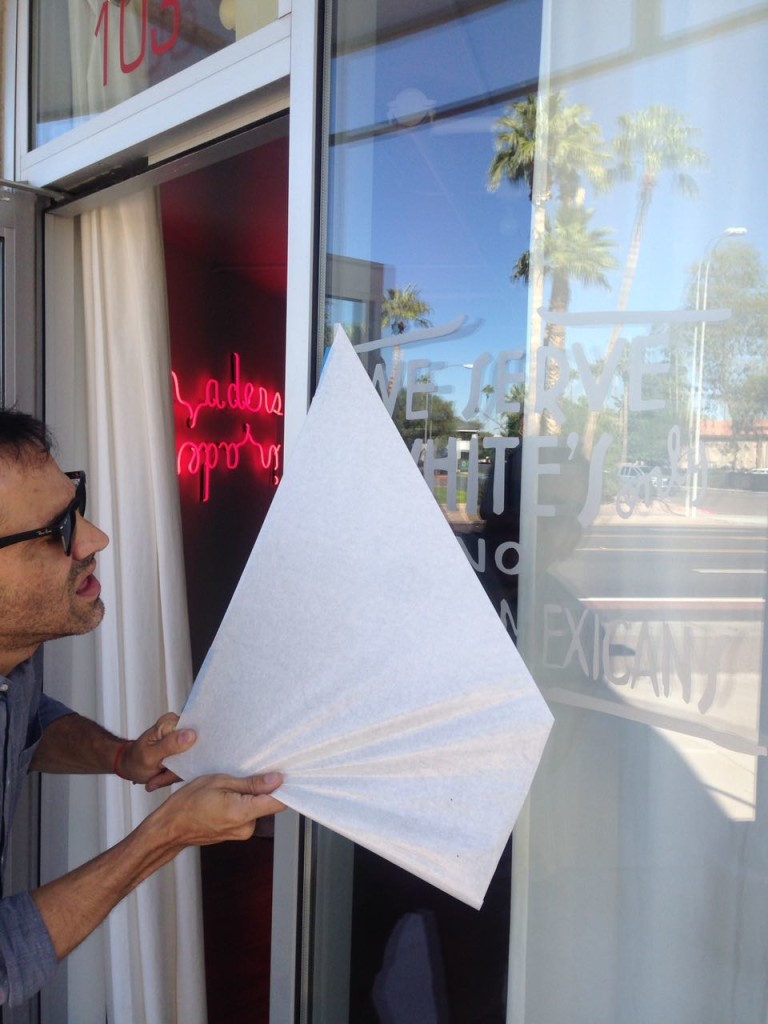
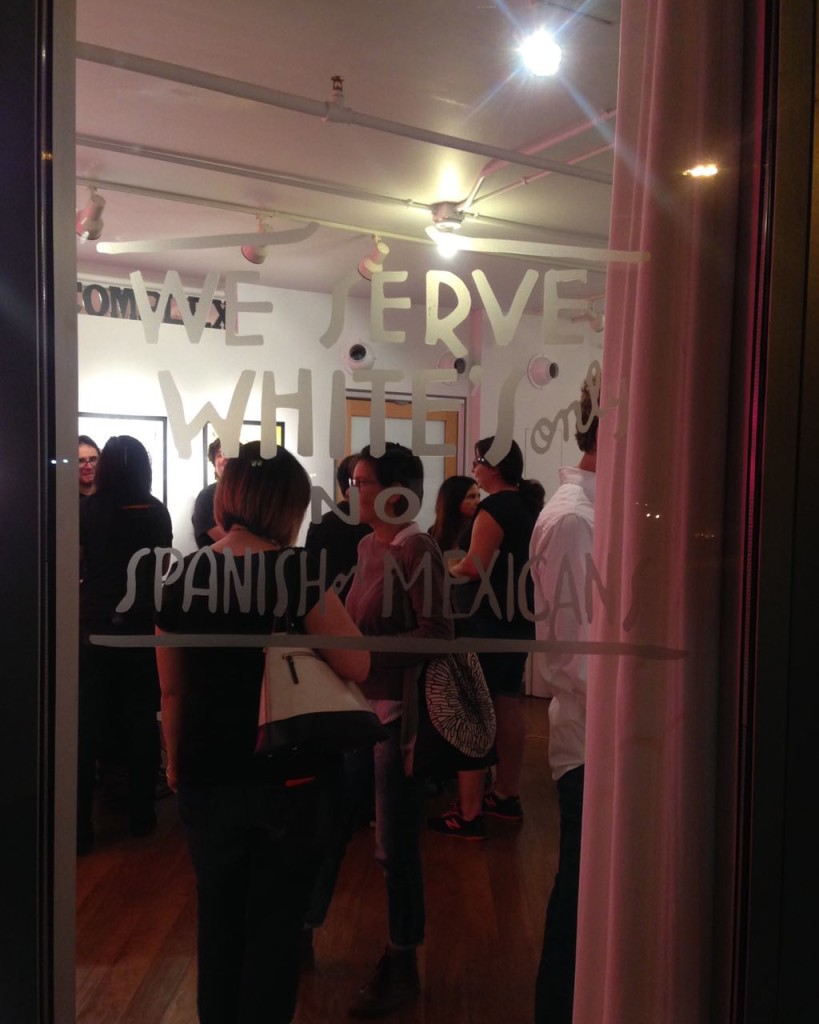
Title: OLD HABITS DIE HARD III (I wish it to be visibly invisible, there but not quite, always present but only for the ones who look for it and for the ones who can´t hide it.)
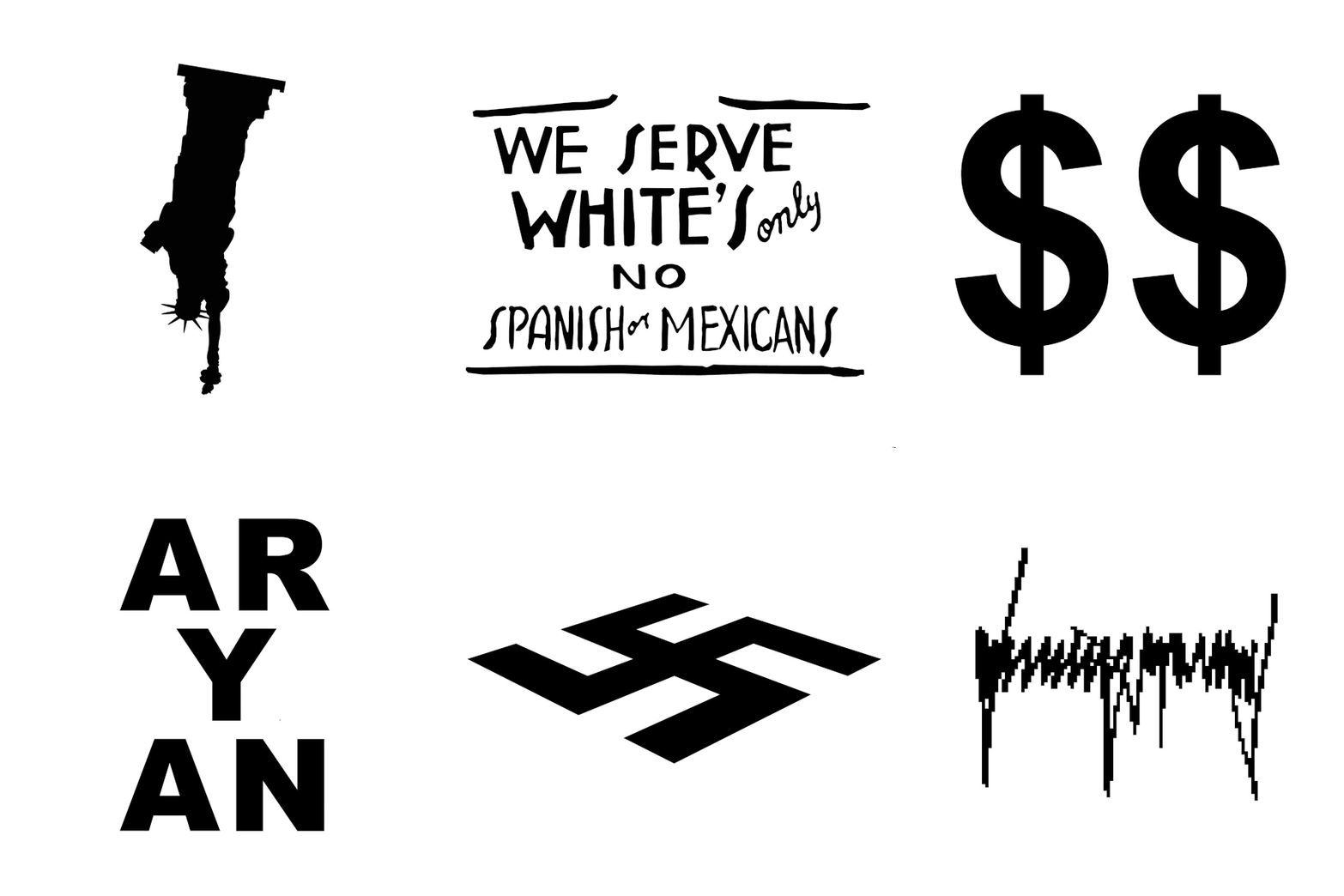
Medium: translucent “sandblast” vinyl decal on gallery window (lettering appropriation from historical 20th century photograph)
Size: aprox. 2 x 2 feet
Year: 2016
_____________________________________
Original Photograph:
Sign meant for migrant agricultural workers in Texas, 1949, From the Russell Lee Photography Collection, courtesy of The Dolph Briscoe Center for American History, The University of Texas at Austin
_____shown @ ______
This Machine Kills______________
Fine Art Complex 1101
Dates: 11.5.2016 – 12.10.2016
Curated by: E.Gomez, L.G.Hernandez and A.Lillard-G.
This Machine Kills _______ is a group exhibition examining works of art dealing with matters of protest, activism and propaganda relating to the 2016 presidential election. The show seeks to explore topics relevant in an election year, often propagated and exploited by news outlets and social media. Topics such as election fraud, terrorism, political corruption, economic insecurities, xenophobia and civil rights issues among many others are open to artistic interpretation and exploration.Participating Artists:
Mely Barragan (TJ) Cindy Santos Bravo (San Diego/LA) Gomez Bueno (LA) Temoc Camacho (Guadalajara) Robbie Conal (LA) Jeff Chabot (PHX) Sean Deckert (PHX/LA) Karla Diaz (LA) Victoria Delgadillo (LA) Veronica Duarte (LA) Cristian Franco (Guadalajara) Jason Gonzalez (Mesa) Olga Gutierrez (Guadalajara) Carlos Hernandez (LA) Luis G. Hernandez (SoCal/Mexicali) Julio Cesar Morales (Tempe, TJ) Ann Morton (PHX) Karl Petion (LA) Radio Healer (Mesa)
Daniel Ruanova (TJ) Christopher Vena (AZ)Film Screening by:
Karen Finley and Bruce Yonemoto (LA)The title of the show directly references American folk legend Woody Guthrie’s iconic guitar text “ This Machine Kills Fascists”, itself a protest piece recreting the musician’s leftist political views. The phrase has been repeatedly adapted by artists and activists, most recently by punk royalty Buzz Osborne of the Melvins for a 2014 solo album named “This Machine Kills Artists”. In 2012, journalist Andy Greenberg published a novel titled This Machine Kills Secrets: Julian Assange, the Cypherpunks, and their Fight to Empower Whistleblowers. A reference to the phrase has also been made in the post-apocalyptic themed video game Fallout 4 in which the words “WELL THIS MACHINE KILLS COMMIES” is etched into the side of a rifle. The title for this exhibition has been intentionally left incomplete, leaving interpretation open to the artist and/or viewer.Guthrie originally wrote the “patriotic” ballad “This Land is Your Land” as a social commentary on what he saw as fascism in America. He penned politically nuanced songs but generally sided with Communist ideals. His experiences during the Great Depression and Dust Bowl era parallel what many citizens are experiencing in modern day America.“This Land is Your Land” contains often redacted lyrics containing references to borders and food lines for the poor. In an untitled song, he criticizes real estate magnate Fred Trump, the father of presidential candidate Donald Trump. The lyrics were written at a time when he himself was living in tenements owned by the elder Trump. Guthrie’s lyrics reflected his thoughts on Trump’s unethical business practices:
Beach Haven looks like heaven
Where no black ones come to roam!
No, no, no! Old Man Trump!
Old Beach Haven ain’t my home!
This Machine Kills_____ seeks to explore the relationship between art, music and politics during a volatile election cycle. Featuring artists from Arizona, California and Mexico, the exhibition utilizes the historically significant function of protest art as an opposition to technologically prolific forms of media. Most works will consist of propaganda style posters and prints, though there will be several types of media represented. The gallery will be screening a new film by artists Bruce Yonemoto and Karen Finley in conjunction with this exhibition.Opening night performances by Phoenix based art collective Radio Healer.
I, Daniel Ruanova, a borderrat & visual artist from Tijuana, am solely responsible for the RACIST SIGN on the gallery window at FINE ARTS COMPLEX in Tempe Arizona. This is a recreation of an actual sign that was up in Texas during the 20th century. My intent in bringing this sign back to life, is to convey the importance of history, and the terrible things that happen once we forget it…
I do not support any person who uses this artwork to justify their own ignorance. The words WE SERVE WHITE´S ONLY, NO SPANISH OR MEXICANS are harsh, but have been present during my entire life. I believe that it is my moral obligation to use my power (in this case art) to put forth ideas and situations that question the world we live in.
I, like millions of other US citizens (yes, I have dual Mexican and American citizenship) are appalled that a country like this one, can elect a full blown bigot to the most powerful position that the democratic process can create. We are now living in times where dialogue is crucial, and art, specifically political art is necessary.
In my own words (regarding my piece): “I wish it to be visibly invisible, there but not quite, always present but only for the ones who look for it and for the ones who can´t hide it.”
Daniel Ruanova, 12th of NOV 2016
_____________________________________
Press:
Phoenix NEW TIMES / Fine Art Complex 1101 Vandalized in Tempe FRIDAY, DEC 2, 2016 AT 6 A.M. by Lynn Trimble
EFEUSA – EEUU – ARTE / Arte sobre racismo crea polémica e indignación en exposición en Arizona Phoenix (AZ) 6 dic., 2016. Por Beatriz Limón, EFE Noticias
ideas sobre LA INSTALACIÓN ESCULTÓRICA COMO SOPORTE PARA MEDIOS AUDIOVISUALES
A raíz de la proliferación de la producción de arte digital, mucha de esta información es intangible y carece de cuerpo físico para introducirlo al mundo de lo matérico. Aunque algunos discuten que esa misma razón es la función de la información artística en código binario; planteo que las ideas, sean las que sean, se “consumen” con mayor apertura y se perciben con menos filtros si se platean con forma físcia y como cosas matéricas. Ya sea la luz que genera un proyector o las ondas sonoras que generan unas bocinas, o lo movimientos que generan los seres vivos al interactuar con la pieza.
La instalación escultórica que actualmente genero, reproduce “otras obras e ideas”: La forma del objeto se construye en función de “servir” de plataforma para estructurar el sinfín de información multimediática que se actualmente produce. Utilizando materiales de construcción ligeros, andamios, arquitectura y elementos vivos (humanos o animados), genero formas y estructuras que condicionan el espacio y al espectador en cómo ver el medio y la información que se mueve “con y dentro” lo mismo.
SCULPTURAL INSTALLATION AS SUPPORT FOR AUDIOVISUAL MEDIA
Because of the proliferation of digital art production ,much of this information is intangible and lacks “physical body” to enter the world of matter. Although some may argue that in this reason lay the function of information in binary code; I propose that ideas, whatever they are , are “consumed” with greater openness and are perceived less filtered if they exist as matter and have a physical shape. Like the light beamed from a projector or sound waves generated by speakers, or movements generated by living beings by interacting with the piece.
The sculptural installation I currently generate, reproduces “other works and ideas”: The shape of the object is built to “serve” as a platform for structuring and hosting an onslaught of multimedia information produced currently. Using lightweight materials , scaffolding, architecture and live Elements (human or animated), this project generates forms and structures that determine the space and the viewer in how to view the medium and information that flows “with and within” itself.
ENLACES A YOUTUBE PARA VISUALIZAR LAS ANIMANCIONES DE PRECONTRUCCIÓN DE EL MONUMENTO:
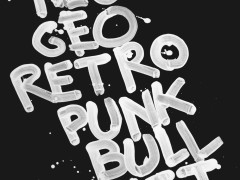
Es sumamente elocuente que El Arte de la Guerra (子兵法), el más conocido libro del estratega y filósofo chino Sun Tzu, sea actualmente mayormente utilizado en occidente como una guía invaluable en programas de liderazgo y gestión administrativa. Que los hombres de negocios hayan encontrado en el libro variables para la solución de conflictos e incluso, más cercano al espíritu del texto, una herramienta de control. El ensayo explica minuciosamente y en trece capítulos los preparativos previos a la guerra, su epítome: “Lo supremo en el arte de la guerra consiste en someter al enemigo sin darle batalla”. Y aunque muy lejano a todas estas estrategias neoliberales que han llevado al mundo al precipicio en el que estamos, el más reciente proyecto de Daniel Ruanova sigue hablando de esta obstinación del humano contemporáneo por controlar, por someter y por decidir por los demás, por someter “al otro” a partir de cualquier estrategia, elemento u objeto a su alcance: el dominio económico, el control de la seguridad, el poder del texto y sobretodo el del miedo. Ahora bien, mejor título no podía tener la muestra, es decir y aclarando, este ejercicio expositivo se ubica cromática y gestualmente más cerca del punk setentero y si bien coquetea conceptualmente entre el Neo Geo computacional y el Neo Geo artístico ambos noventeros, la realidad es que no se delimita a partir de eso. No se trata de los enérgicos trazos, ni de los gestos digitales. Quizás la parte final del juego de palabras que da título y que está absolutamente emparentada con su proyecto antecesor The Fuck off Project, sea lo que mejor lo define. Aquella acción en forma de periplo circular que desde Monterrey pasó por Tijuana y San Diego, Ciudad de México, Beijing y terminó regresando a Monterrey hace apenas unos meses. Un proyecto obstinado en incomodar e incluso mandar al diablo ese preciosismo que tan frecuentemente aparece en el arte contemporáneo, aunque a veces lo haga disfrazado de pretendida alternatividad. El NEO GEO RETRO PUNK BULL SHIT de Daniel Ruanova viene entonces a reafirmar posturas, a levantar la mano sudorosa y ansiosa para dejar en claro que si bien ese gesto puede ser usado como el más elemental de convivencia al saludar, por ejemplo, también puede ser -simplemente imprimiendo un poco de fuerza- el principio básico de la destrucción, esa que tanto nos hemos empeñado en lograr.
El Museo de Arte Contemporáneo de Monterrey presenta una revisión del contexto de la creación contemporánea en la franja fronteriza norte de México a través de la obra de siete artistas cuyas circunstancias los han llevado a vivir en esta zona.
Desde su muy personal estilo artístico, cada uno ha abordado el tema desde el ámbito geográfico, político, social, cultural y psicológico, siendo su obra un espejo en donde mirar y escudriñar la identidad y el estigma del mexicano que vive en ambos lados de la frontera, y al mismo tiempo es reflejo de su idiosincrasia.
Proyecto en el que participan 36 artistas de diferentes países resultando un total de 69 piezas que muestran el cruce entre la dimensión individual del trabajo creativo y la dimensión colectiva de los temas que abordan.
Una exposición internacional de arte contemporáneo cuyo eje temático es la política, vale decir, la dimensión colectiva de la existencia humana y sus posibilidades de transformación, a partir de la dimensión individual del trabajo artístico.


 _____________________________________________