Blog

  • The Van Abbe Vitrine – curatorial

    One of the great perks of my artist residency @ Piet Hein Eek gallery in Eindhoven, was the collaboration with the Van Abbemuseum. The Van Abbe Vitrine is an offsite museum space situated inside the large gallery at PIET HEIN EEK. Here, gallery artists are commissioned to curate a selection of works from the museum’s collection. In this case, I engaged the project as a future video art explorer. Searching for the works of the original video-artists-iconoclasts from the empire. Creating a viewing space for these eleven pieces that helped provoke the current motivations of communications through video messages. It is an honor to chose, from such a prestigious institution, ideas and work from artists that I have learned so much from.

    ►Lawrence Weiner´s AFFECTED AND/OR EFFECTED / 1974 / 22 min.
    ►Bruce Nauman´s Violin Film # 1 (Playing The Violin As Fast As I Can) / 1967-1968 / 11 min.
    ►John Baldessari’s Art Disaster / 1971 / 32:40 min.
    ►John Baldessari´s Four Minutes of Trying to Tune Two Glasses / 1976 / 4:09 min.
    ►Paul McCarthy´s Black and White Tapes / 1970-1975 / 32:50 min.
    ►Paul McCarthy & Mike Kelley´s Cultural Soup / 1987 / 6:55 min.
    ►Mike Kelley´s Beholden to Victory / 1980-1983 / 26 min.
    ►Mike Kelley´s BLIND COUNTRY / 1989 /19:57 min.
    ►Martha Rosler´s A Budding Gourmet / 1974 / 16:58 min.
    ►Martha Rosler’s Semiotics of the Kitchen / 1975 / 6:09 min.
    ►Martha Rosler´s Martha Rosler Reads Vogue / 1982 / 28 min.
    technical assistance from Anderson Araujo Ferreira
  • The Fuck Off Project / Translocating Borders by Daniel Ruanova @ PIET HEIN EEK Galerie

    I am a visual artist from the borderlands of Tijuana (México-USA). My art practice moves through layers of aesthetics – politics – dark humor and transcultural mutations; every so often, the human tragedy creates forms that must be engaged with as new-language.

    Now, specially in Europe (but always present in “las Américas”), these forms are taking place in a constant flow of cultural transformation through the destruction and reconstruction of long held cultural-social-&-economical borders.

    While a very sophisticated, plural and civilized culture has been established within the EU, the structures needed for this standard of living have very much depended on the plunder and pillage of long lasting colonization practices in Africa, Asia, the Middle-East and Latin America, with the creation of subservient states that today are finally crumbling. The outpour of these states inhabitants towards “the lands of plenty” in an inevitable outcome of a long held status of wealth and privilege, this is unbalanced.

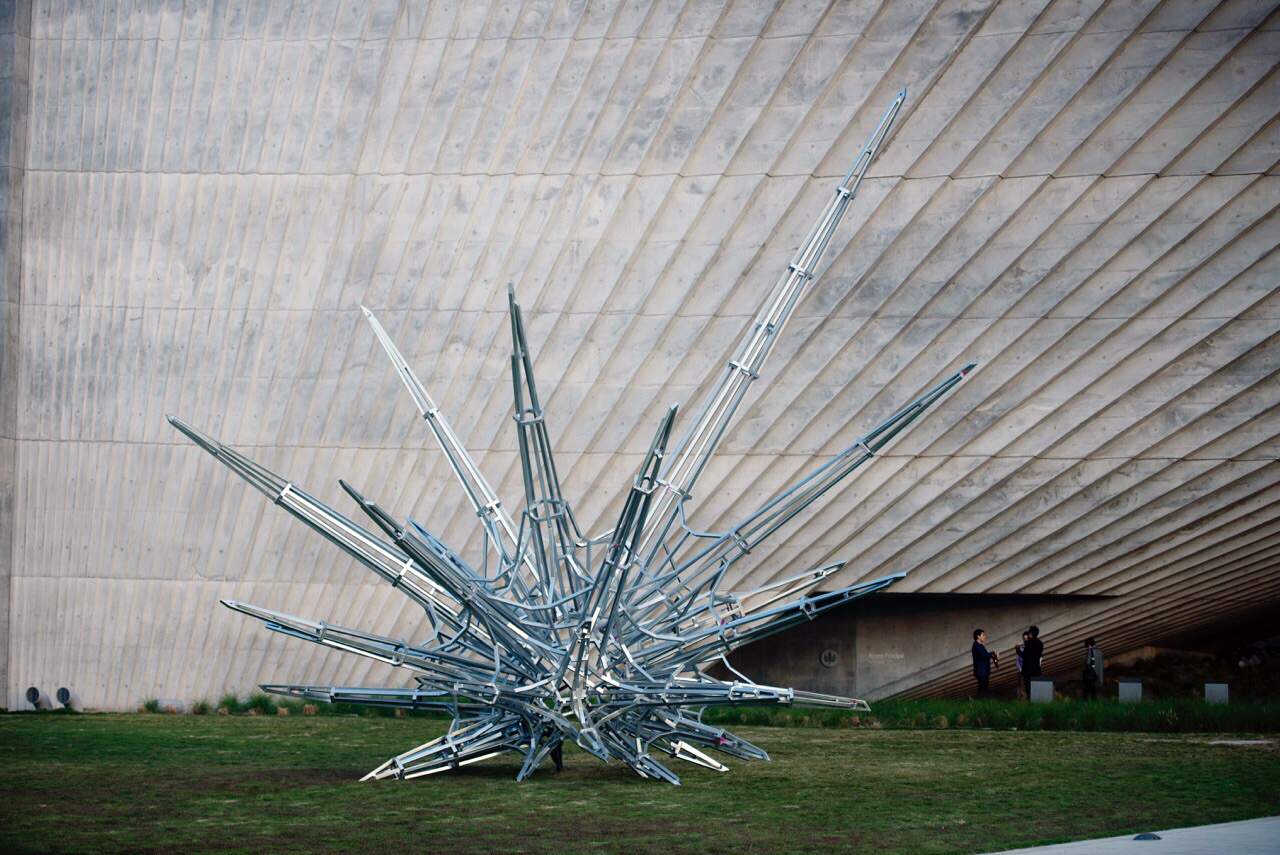
    The consequent creation of security driven systems to rid the initial fear and create a constant paranoia state-industry towards the new others is the real sign of our humanities tolerance and will to change. These are the ideas behind THE FUCK OFF PROJECT. An onsite sculptural installation that creates a metaphor of security-insecurity.

    _______________________________

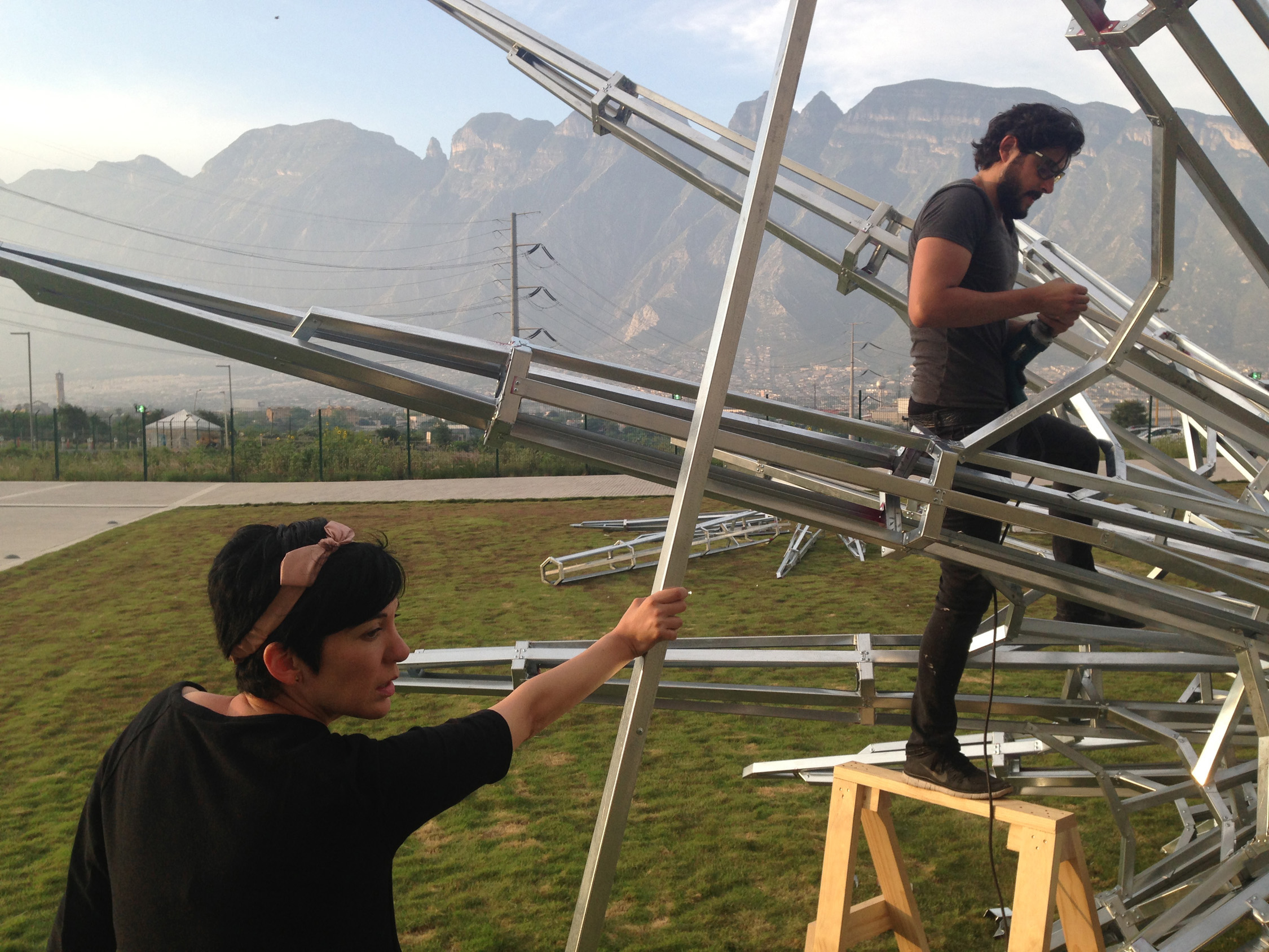
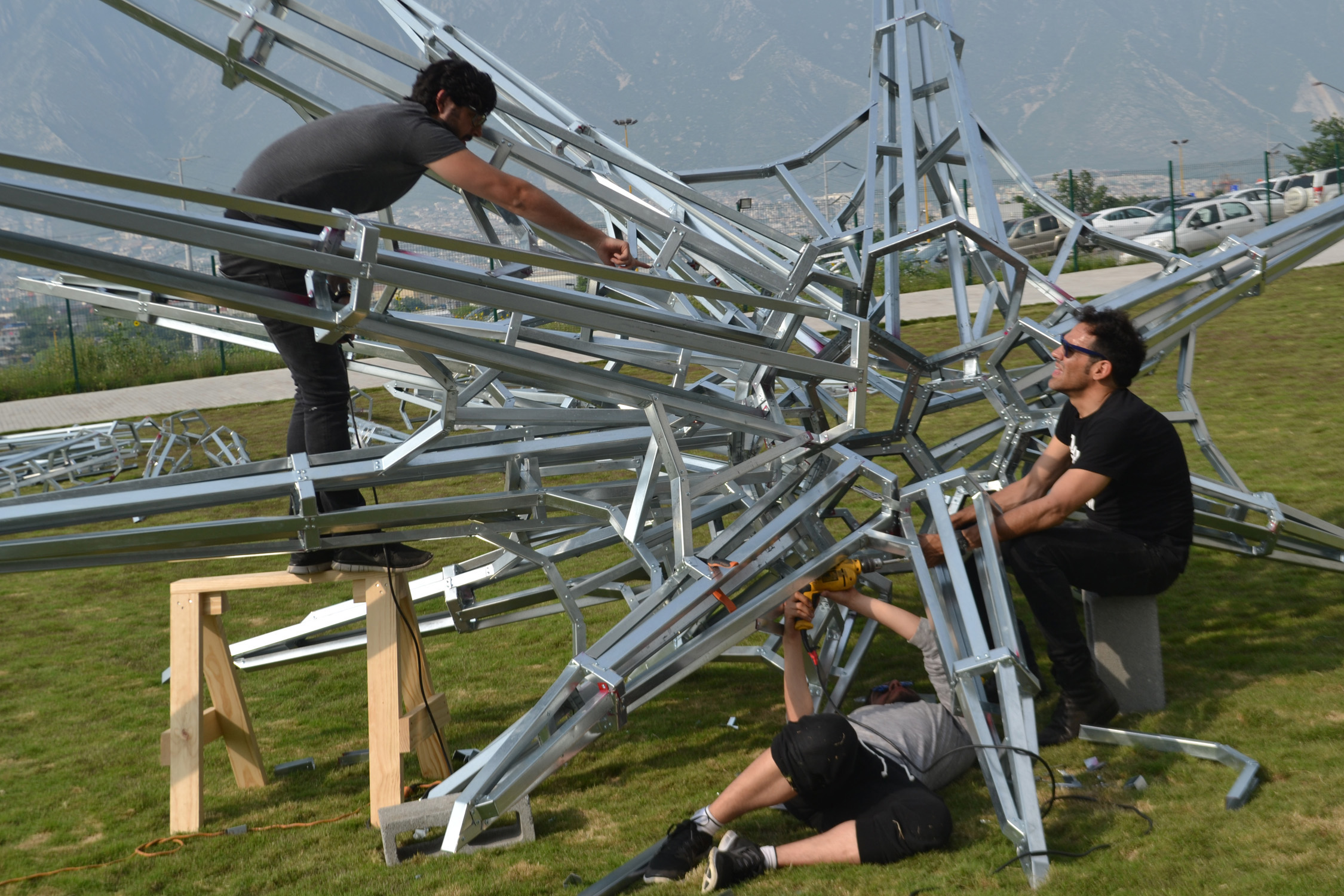
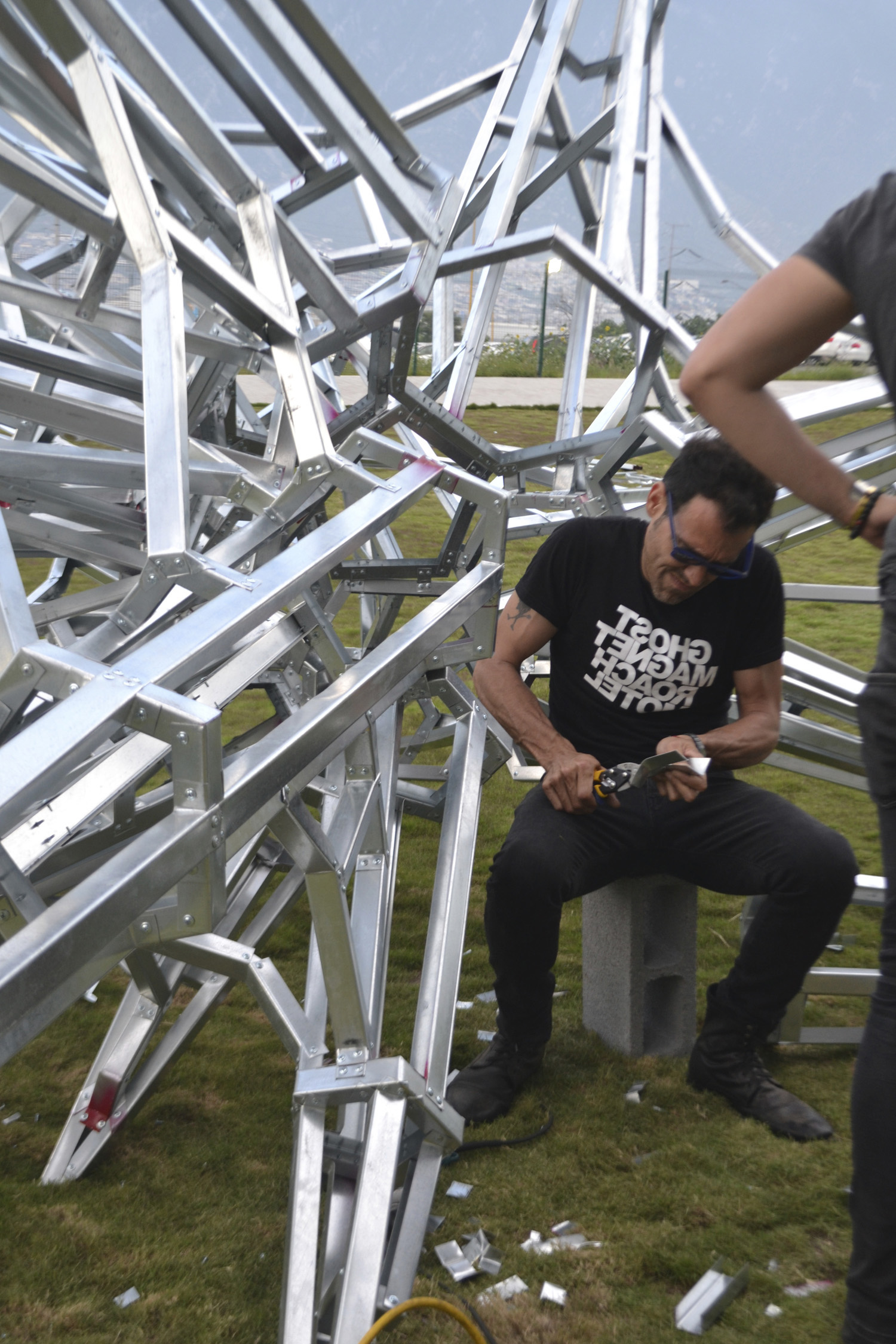
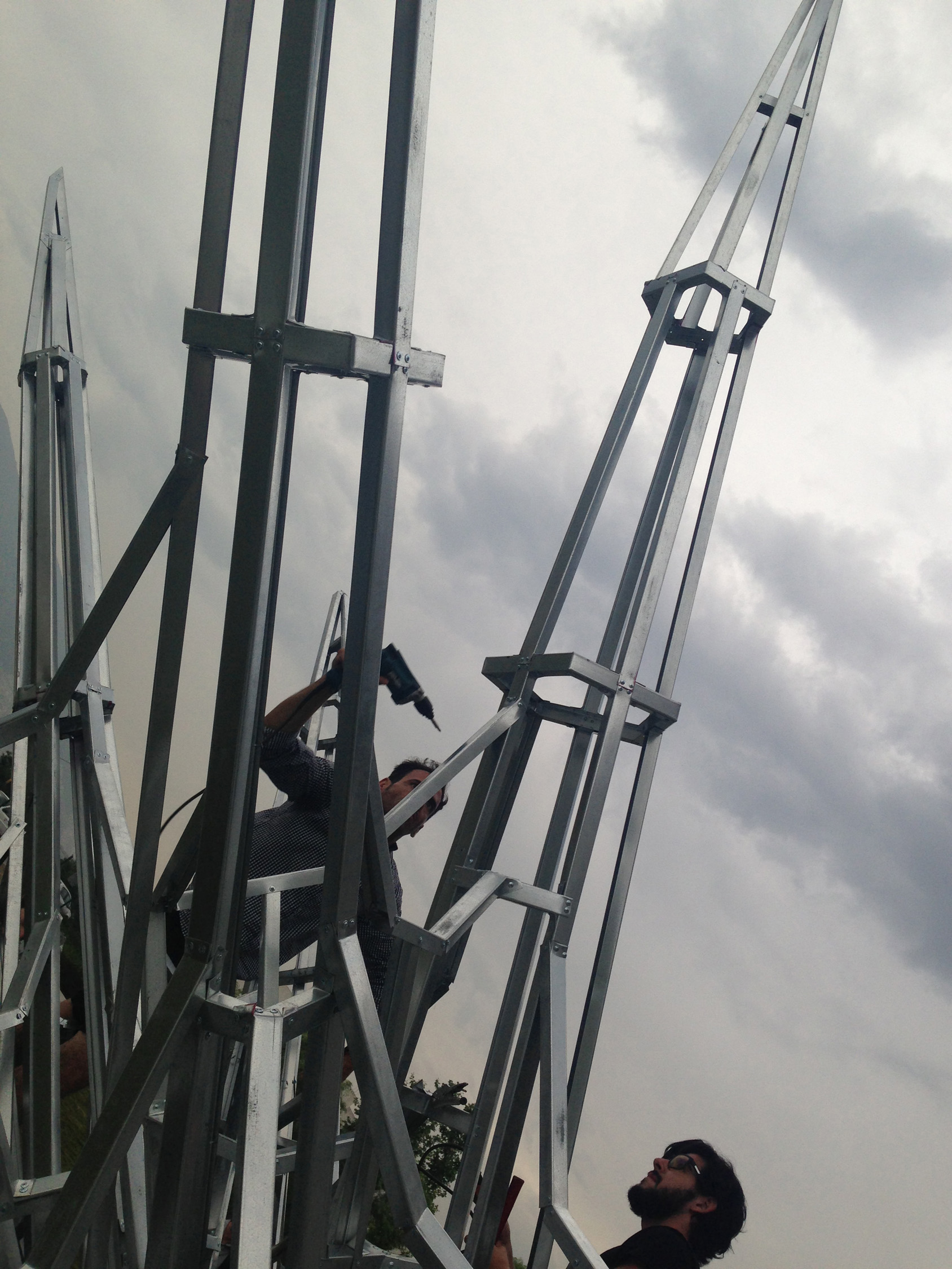
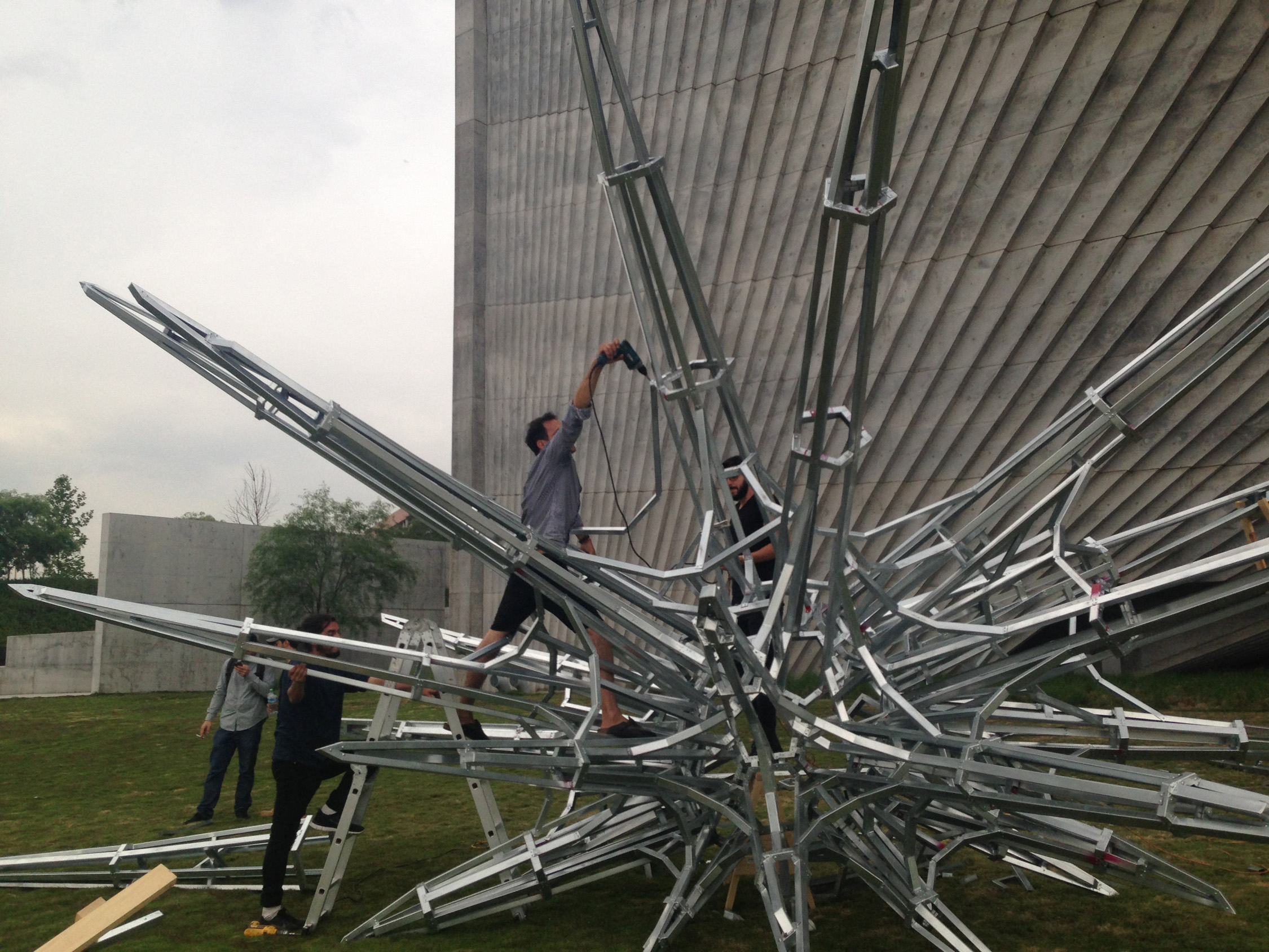
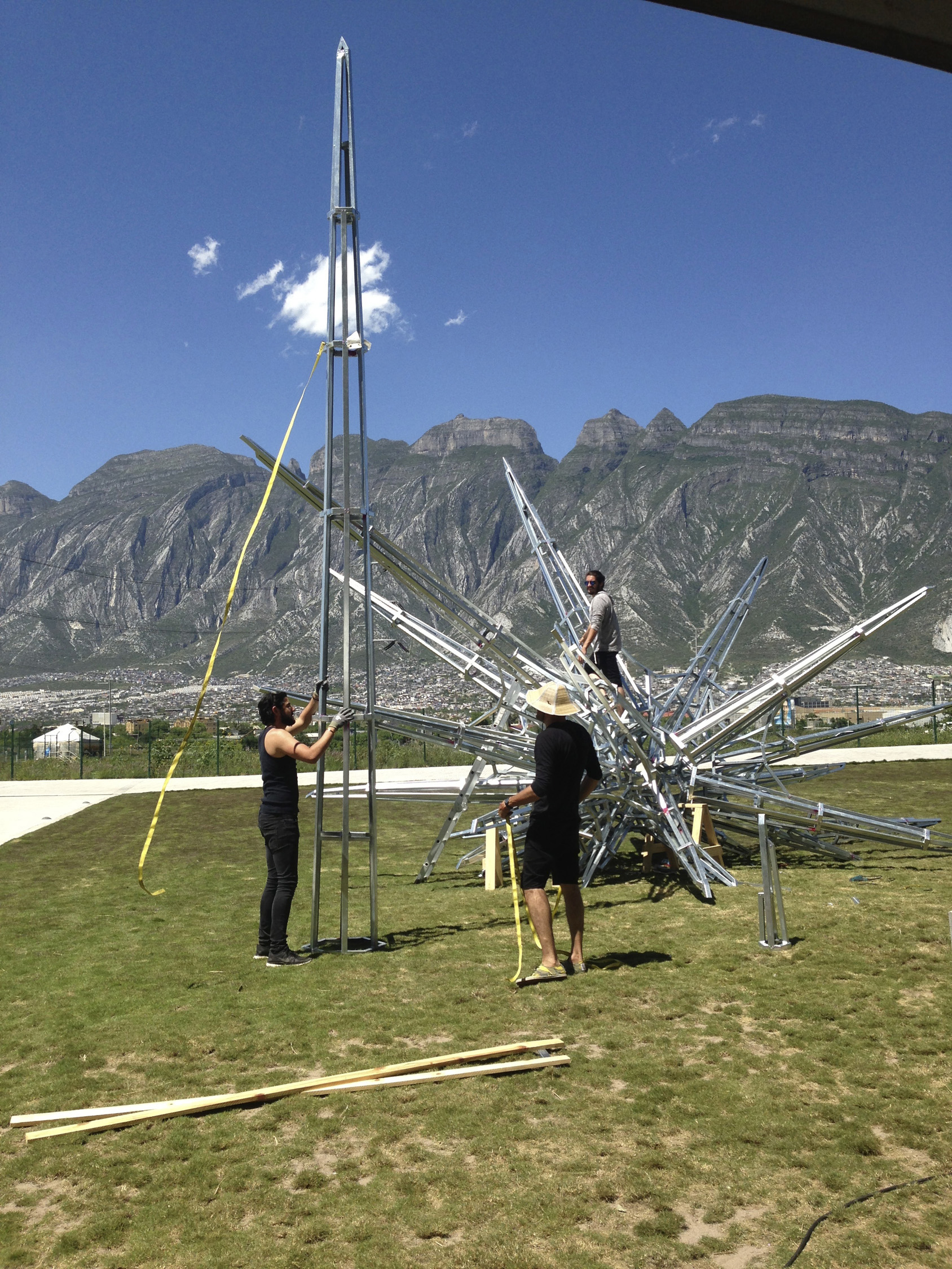
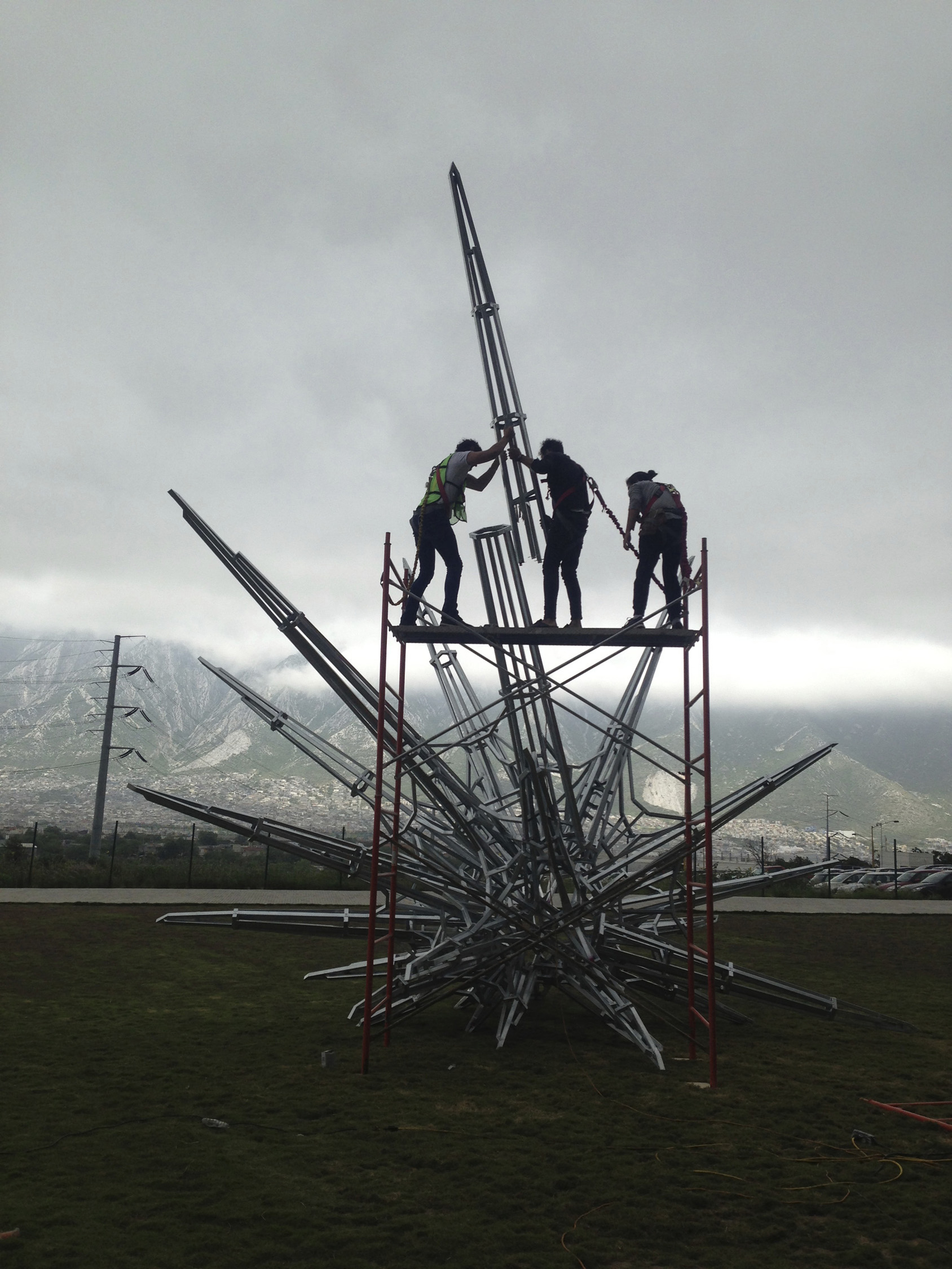
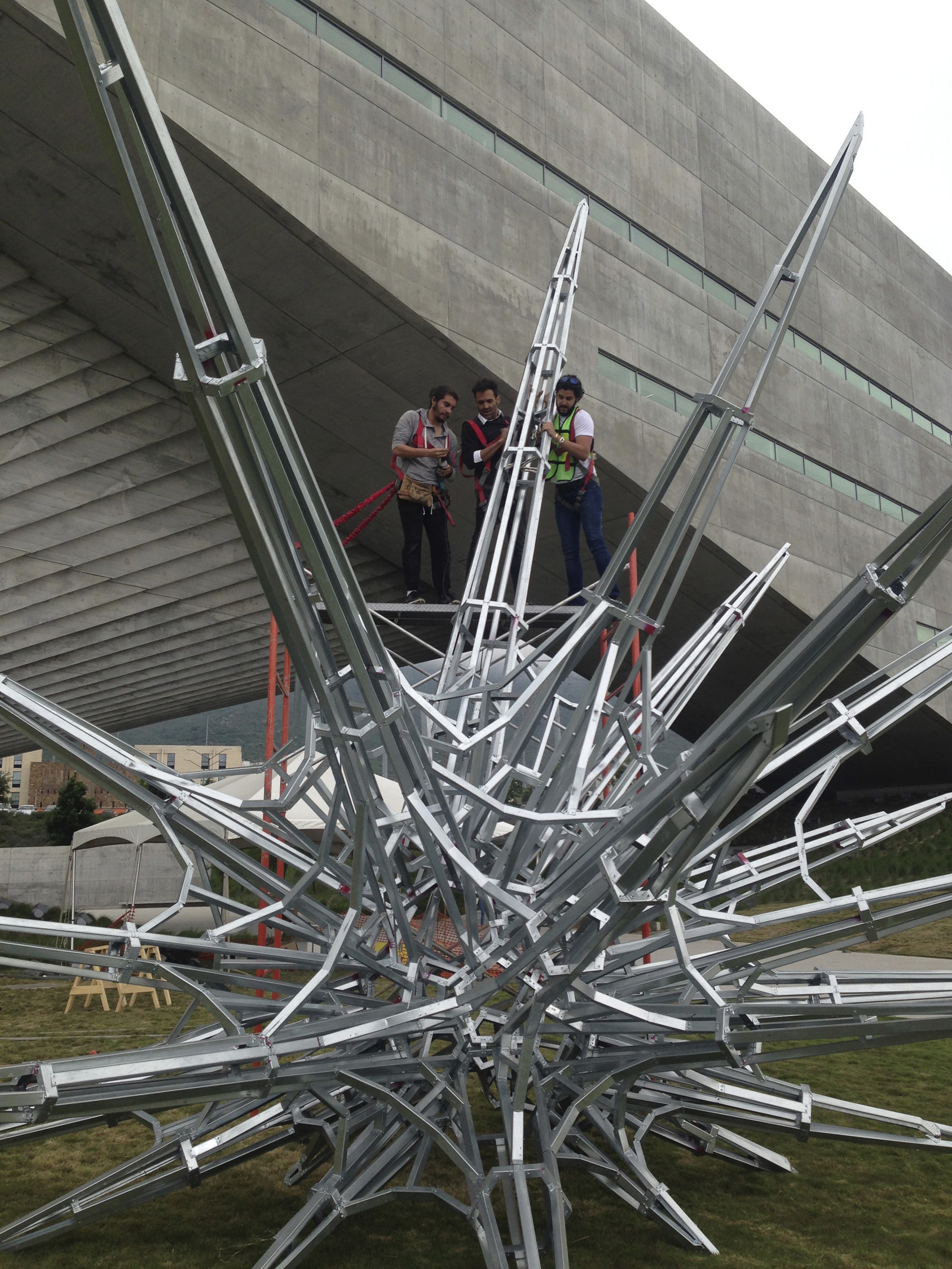
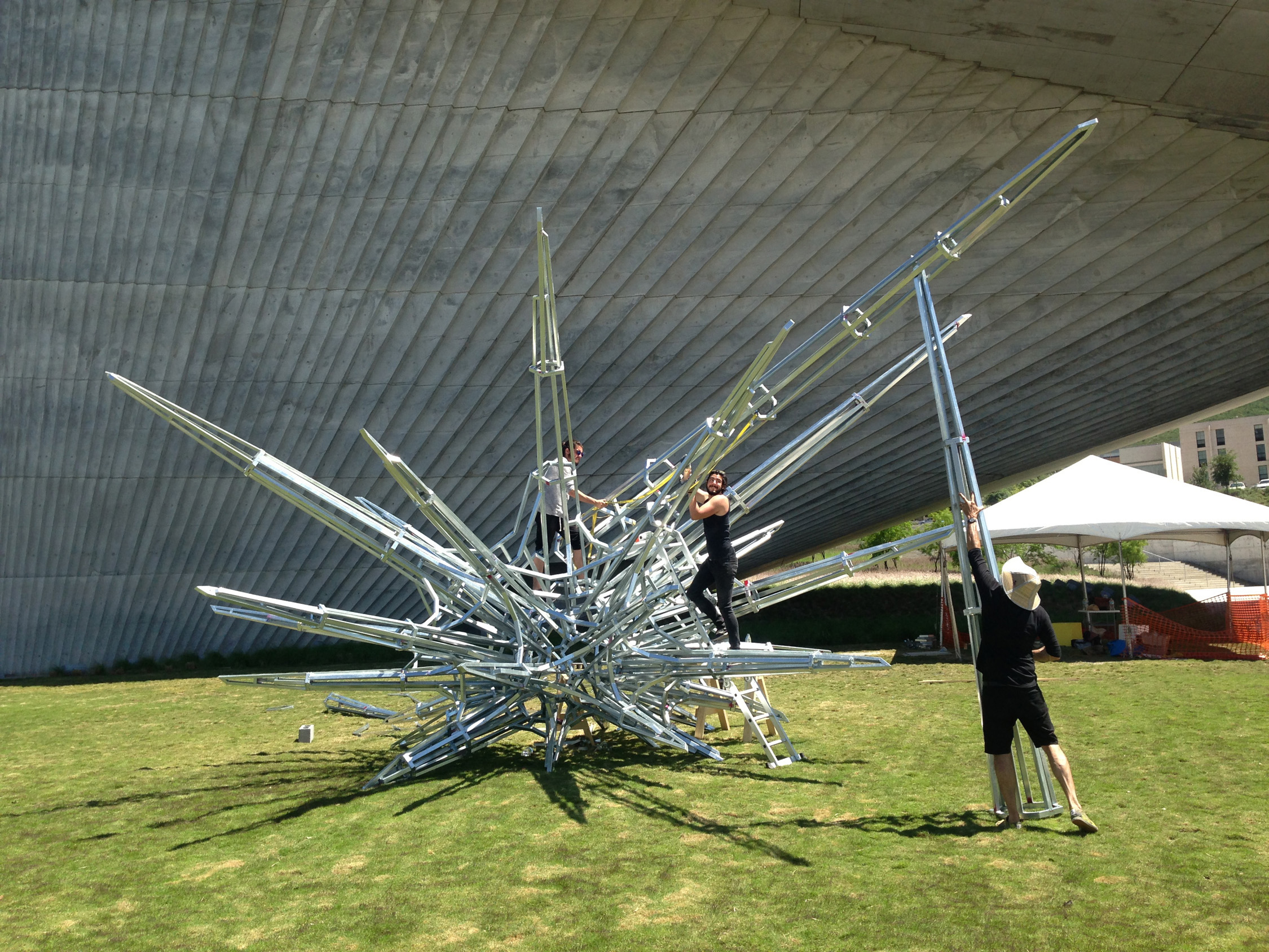
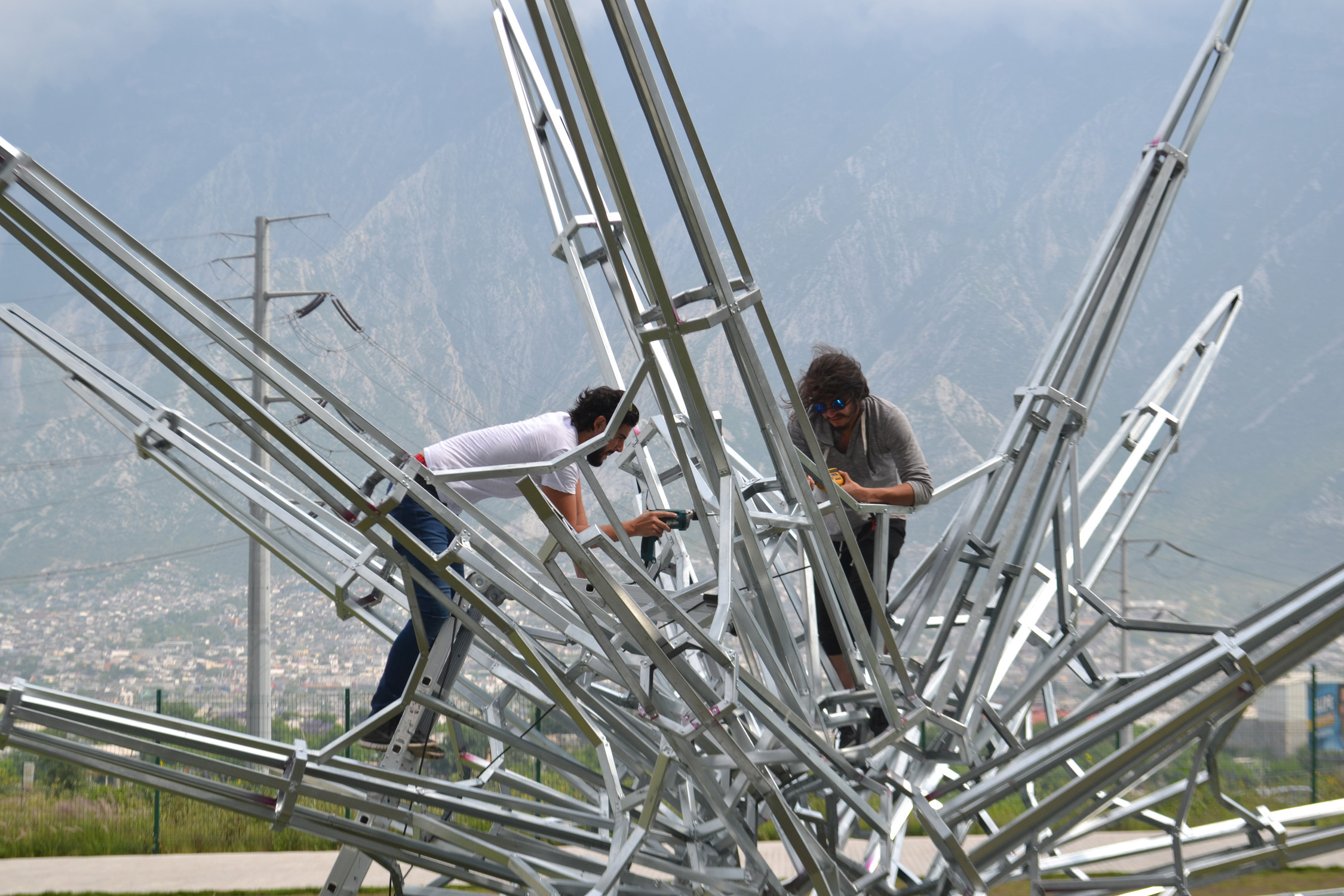
    Construction process for The Fuck Off Project, centerpiece of Daniel Ruanova´s Translocating Borders @ PIET HEIN EEK Gallery, Eindhoven, The Netherlands, 2017.

    Timelaps from 20/March to 11/April, 2017.

    Artist: Daniel Ruanova

    Curators: Piet Hein Eek & Pim Hoff

    Production Assistants: Anderson Araujo & Salvis Slavišens

    Video by Anderson Araujo (@andyzeo)

    Music: GHOST MAGNET ROACH MOTEL

  • Heráldica para la Frontera Norte PINTURA / PAINTING

    Heráldica para la Frontera Norte PINTURA / PAINTING

    Serie(s): Heráldica para la Frontera Norte / Heraldry for the Northern Border

    2014-2017

    “Con este proyecto pictórico genero una post-historia que nunca existió. Con tintes localistas y con una visión cívica crítica, construyo un imaginario heráldico de un lugar que no existía como-tal antes del modernismo; y por lo tanto los únicos símbolos socio-políticos existentes que identifiquen a los “pobladores de la frontera” son institucionales e impuestos por los poderes en turno, de lejos. Hoy día, cuando las imágenes digitales se hyper-reproducen de manera exponencial al instante; la pintura y la construcción de la imagen juega un papel distinto: documentar la sensaciones de los tiempos y contexto en el cual se realiza el documento pictórico, que se sigue distribuyendo dentro los métodos convencionales y exclusivistas del arte y por lo tanto debe de deambular entre los caminos de la información digital y la análoga.”


    “With this pictorial project I create a post-history that never existed. With localist bias and a critical civic vision, I build heraldic imagery of a place that did not exist as such before  modernism; and therefore the only existing socio-political symbols identifying the ” border´s residents” are institutional and imposed by the powers in turn, from far away. Nowadays, when digital images are hyper-reproduced in an exponential manner instantly; painting and image building plays a different role: document the feelings of the times and the context in which the pictorial document is created, while still being distributed in conventional and exclusivist art methods and therefore must wander between the paths of analog and digital information.”

    __________________________________________

    • GO

    acrílico sobre tela / acrylic on canvas, 270 x 210 cm

    • WhiteMan´s Anger (XVII)

    acrílico sobre tela / acrylic on canvas, 160 x 200 cm

    • CERDO

    acrílico sobre tela / acrylic on canvas, 196 x 258 cm

    • OLD IMMIGRANT SCUM

    acrílico sobre tela / acrylic on canvas, 200 x 254 cm

    • Privileged looks

    acrílico sobre tela / acrylic on canvas, 200 x 300 cm

    • NON-WHITE BABY 

    acrílico sobre tela / acrylic on canvas , 2 x 3.5 m

    • The People… 

    acrílico sobre tela / acrylic on canvas, 3 x 2 m (aprox.)

    • BROWN PRIDE

    acrílico sobre tela / acrylic on canvas, 3 x 2 m (aprox.)

    • !!SPIC

    acrílico sobre tela / acrylic on canvas, 3.3 x 2 m

    • NORTE

    acrílico sobre tela / acrylic on canvas, 205 x 165 cm

    • DANIEL

    acrílico sobre tela / acrylic on canvas, 182 x 195 cm

    • DANIEL II

    acrílico sobre tela / acrylic on canvas, 146 x 201 cm

    • sin titulo ni nada…

    acrílico sobre tela / acrylic on canvas, 146 x 201 cm

    • PERMANENT WHITE STAIN

    acrílico sobre tela / acrylic on canvas, 182 x 269 cm

    • FUCKIN WALL

    acrílico sobre tela / acrylic on canvas, 270 x 210 cm

    • MY $€£ƒ

    acrílico sobre tela / acrylic on canvas, 150 x 210 cm

    • Paloma de la Paz II

    acrílico sobre tela / acrylic on canvas, 140 x 190 cm

    • Billion Coin Contract (XVI)

    acrílico sobre tela / acrylic on canvas, 270 x 210 cm

    __________________________________________

    OLD IMMIGRANT SCUM, D Ruanova 2016

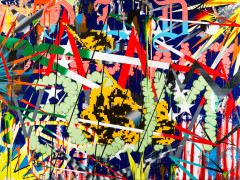
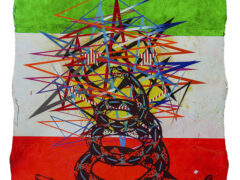
    Comienzo con una bandera, mutante de la UE, el círculo con estrellas doradas convertidas en un pentágono de estrellas blancas. El número y la configuración de estrellas ha sido clave en el desarrollo histórico de la bandera de EEUU; comenzando con trece estrellas en círculo, hasta llegar a la retícula actual con cincuenta. Este símbolo conlleva el inicio de una nación, como se ha venido dando con esta serie pictórica, estamos generando los símbolos para lo que George Friedman denomina “El Norte” (leído en inglés) en su libro THE NEXT 100 YEARS, cuándo prevé que los Estados del norte de México y los Estados del Sur Oeste de los EEUU llegarán a formar una nueva nación por medio del conflicto y la democracia.

    El texto pintado, en letras caricaturistas y de antaño, da nombre a la pieza, haciendo referencia a que en “las Américas” descendemos de alguna inmigración de seres que alguien más consideró como escoria; dando inicio al fenómeno que ha hecho de estas tierras la nueva multiculturalidad global. Al generar la grosería, pretendo poner en tela de juicio las actitudes anti-migrante que comienzan a resurgir con tonos fascistas en el “mundo desarrollado”. Mismas que juegan mezclando el patriotismo con el miedo al “otro”, mientras reviven viejas heridas según superadas por el desarrollo.

    Al centro se alcanza a percibir un elemento de pixeles rotos que proviene abstrayendo una de las fotografías históricas bélicas de la Segunda Guerra Mundial, la Batalla de Iwo Jima. Estandarte para la fuerza militar de los EEUU, e imagen icónica para cualquier consumidor de la cultura popular posguerra del siglo pasado.

    Con vértices, líneas y gráficos entrelazados; yuxtapuestos ante unos gestualismos de un ignorante picto-político (véase el caso morenazi) de las barras rojiblancas del imperio. La composición final de este pintura se corona con un sombrero logotipo manipulado de una cadena de comida ràpida Americana. Logrando el constructo de identidad con una bandera que será útil en un futuro no tan lejano.

    /////////////////////////////////////////

    OLD IMMIGRANT SCUM, X, series Heraldry for the Northern Border

    Beginning with a flag, a mutant from the EU´s circle with golden stars turned into a pentagon of white stars. The number and configuration of stars has been key to the historical development of the US flag; starting with thirteen stars in a circle until you reach the current grid of fifty. This symbol implies the beginning of a nation; a mission that this pictorial series has engaged in generating the symbols for what George Friedman called “El Norte” (read in English) in his book THE NEXT 100 YEARS, when he predicts that states of northern Mexico and the southern states of the US will come to form a new nation through conflict & democracy.

    Painted in old cartoonist letters, a text names the piece, referencing that “the Americas” is conformed by and descends from immigrant beings that someone else considered as dross; beginning a phenomenon that has made this land the beacon of new global multiculturalism. When generating rudeness, I intend to put into question the anti-migrant attitudes that begin to emerge with fascist tones in the “developed world”. Mixing patriotism with the fear of the “other” while reliving old wounds, once considered healed by development.

    At the center, a fairly perceivable element of broken pixels comes through by abstracting a famous historical-military photograph of World War II, the Battle of Iwo Jima. Standard for the US military, and an iconic war image for any consumer of popular culture of the last century.

    With vertices, lines and intertwined graphics; juxtaposed against gestures of an ignorant picto-political (see morenazi case) of the red and white bars of the empire. The final composition of this painting is crowned with a manipulated hat logo of an American fast food chain. Achieving a construct of identity with a flag that will be useful in the not too distant future.

    __________________________________________

    !!SPIC  y su crío NON-WHITE BABY / txt x D Ruanova 2014-2015

    SPIC, vulgarismo en inglés-americano para describir o señalar con denotaciones peyorativas a una persona de origen latino ( hi-SP-an-IC ).

    Cursé mis estudios primarios en una zona privilegiada del sur de California. En aquel entonces, los latinos y los mexicanos no estábamos representados en la cultura-pop-americana fuera del estereotipo étnico, y la translocación permanente de millones de  personas no era tan clara como lo es hoy en la cotidianidad global. Con esta pintura me apropio de la palabra y su memoria, misma por la que viví varios “conflictos infantiles en el parque” con mis contemporáneos “locales güeritos” durante los cientos de recesos que tuvimos allá.”

    Cierto que la fragmentación socio-económica que se vive en cualquier ciudad del imperio hace que la identidad post-mexicana de muchos de la diáspora se difumine para incluirse en una sociedad racialmente dividida que valora los tonos claros y las situaciones solemnes. El Mexico-Americano ha tenido que ceder la historia de su aventura pionera para ser recluido como solo-vino o inmigrante, aunque el latinoamericano no representa una sola raza biológica y por que viene de una larga historia de migraciones e hibridaciones; el término LATINO o HISPANIC pretende encapsular el poder demográfico y por ende democrático, más grande del futuro Norte-Americano.

    ¿Cómo será nuestro futuro colectivo cuando las fronteras y las nacionalidades se extingan por la democratización de la información y la tecnología? NON-WHITE BABY busca cifrar un lenguaje en base al intercambio de información en donde los usuarios pierden las connotaciones del origen biológico y cultural, para convertirse en un algoritmo racial. En ambas pinturas, las figuras orgánicas son penetradas, rajadas y divididas por las líneas tajantes de color e información. Con simbología política extinta e iconografía de cultura popular urbana al fondo (y en veces asomando se un poco), la maraña conforma un constructo imposible de sostenerse y de repetirse.
  • OLD HABITS DIE HARD III

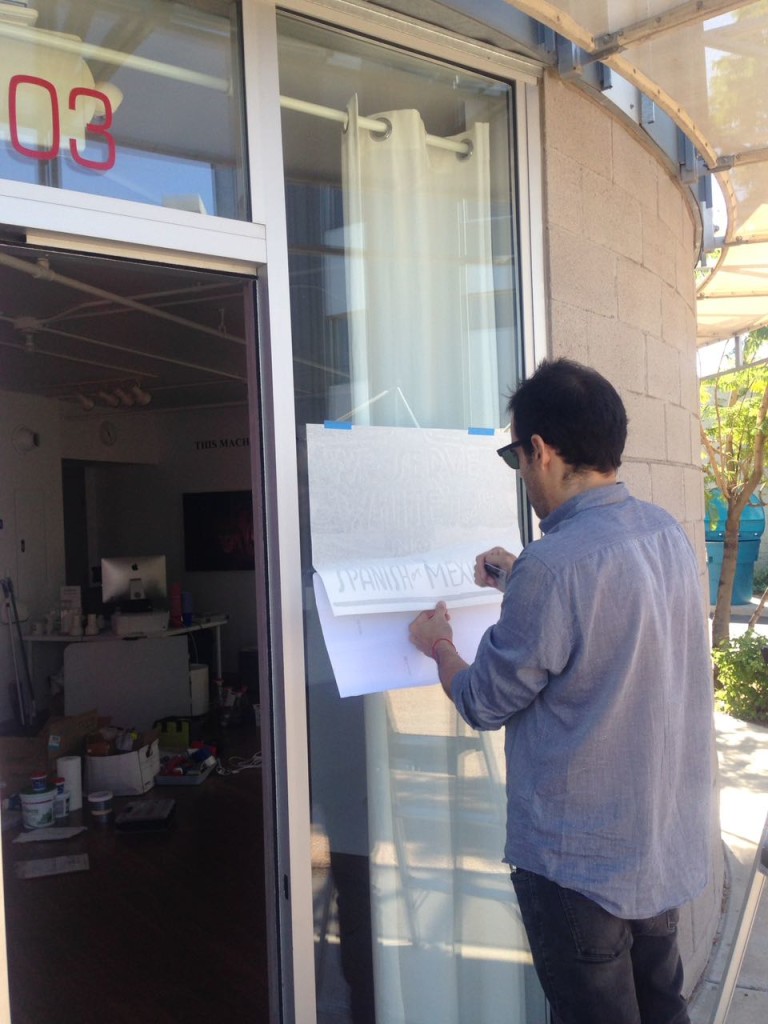
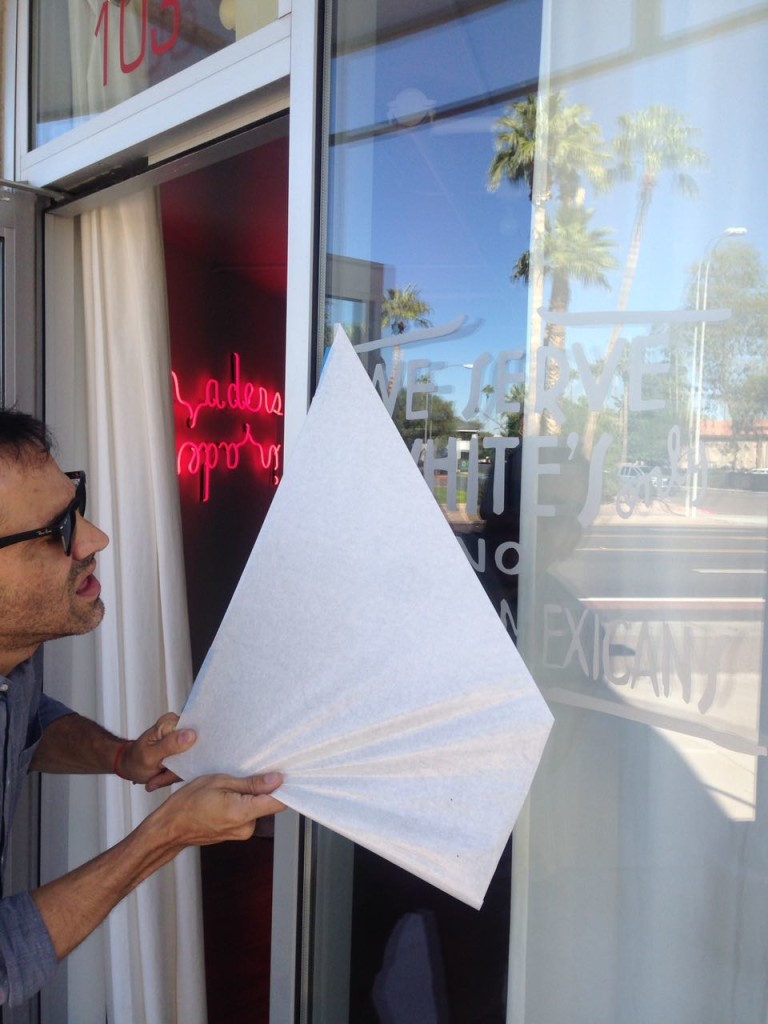
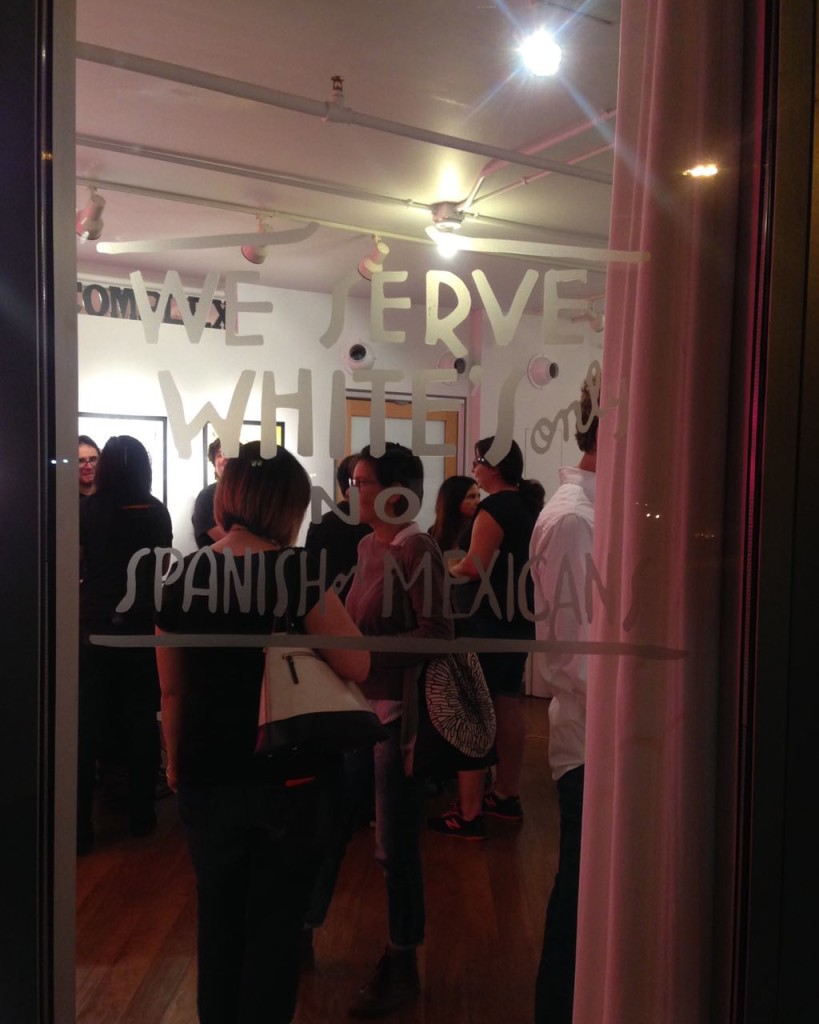
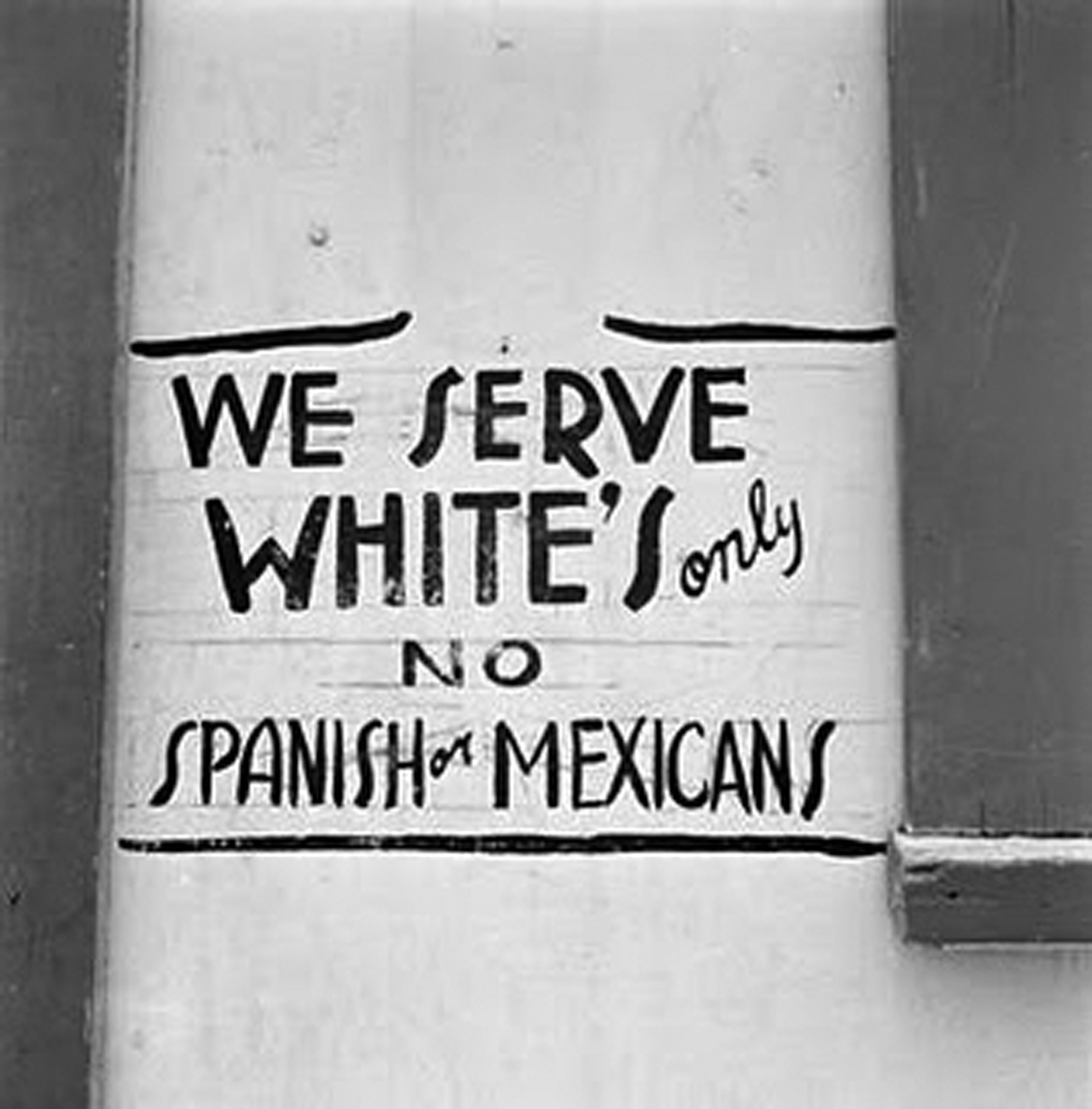
    Title: OLD HABITS DIE HARD III (I wish it to be visibly invisible, there but not quite, always present but only for the ones who look for it and for the ones who can´t hide it.)
    Medium: translucent “sandblast” vinyl decal on gallery window (lettering appropriation from historical 20th century photograph)
    Size: aprox. 2 x 2 feet
    Year: 2016
    _____________________________________
    Original Photograph:
    weservewhiteonly_ogphoto
    Sign meant for migrant agricultural workers in Texas, 1949, From the Russell Lee Photography Collection, courtesy of The Dolph Briscoe Center for American History, The University of Texas at Austin
    _____shown @ ______
    This Machine Kills______________
    Fine Art Complex 1101
    Dates: 11.5.2016 – 12.10.2016
    Curated by: E.Gomez, L.G.Hernandez and A.Lillard-G.
    This Machine Kills _______ is a group exhibition examining works of art dealing with matters of protest, activism and propaganda relating to the 2016 presidential election. The show seeks to explore topics relevant in an election year, often propagated and exploited by news outlets and social media. Topics such as election fraud, terrorism, political corruption, economic insecurities, xenophobia and civil rights issues among many others are open to artistic interpretation and exploration.Participating Artists:
    Mely Barragan (TJ) Cindy Santos Bravo (San Diego/LA) Gomez Bueno (LA) Temoc Camacho (Guadalajara) Robbie Conal (LA) Jeff Chabot (PHX) Sean Deckert (PHX/LA) Karla Diaz (LA) Victoria Delgadillo (LA) Veronica Duarte (LA) Cristian Franco (Guadalajara) Jason Gonzalez (Mesa) Olga Gutierrez (Guadalajara) Carlos Hernandez (LA) Luis G. Hernandez (SoCal/Mexicali) Julio Cesar Morales (Tempe, TJ) Ann Morton (PHX) Karl Petion (LA) Radio Healer (Mesa)
    Daniel Ruanova (TJ) Christopher Vena (AZ)Film Screening by:
    Karen Finley and Bruce Yonemoto (LA)The title of the show directly references American folk legend Woody Guthrie’s iconic guitar text “ This Machine Kills Fascists”, itself a protest piece recreting the musician’s leftist political views. The phrase has been repeatedly adapted by artists and activists, most recently by punk royalty Buzz Osborne of the Melvins for a 2014 solo album named “This Machine Kills Artists”. In 2012, journalist Andy Greenberg published a novel titled This Machine Kills Secrets: Julian Assange, the Cypherpunks, and their Fight to Empower Whistleblowers. A reference to the phrase has also been made in the post-apocalyptic themed video game Fallout 4 in which the words “WELL THIS MACHINE KILLS COMMIES” is etched into the side of a rifle. The title for this exhibition has been intentionally left incomplete, leaving interpretation open to the artist and/or viewer.Guthrie originally wrote the “patriotic” ballad “This Land is Your Land” as a social commentary on what he saw as fascism in America. He penned politically nuanced songs but generally sided with Communist ideals. His experiences during the Great Depression and Dust Bowl era parallel what many citizens are experiencing in modern day America.“This Land is Your Land” contains often redacted lyrics containing references to borders and food lines for the poor. In an untitled song, he criticizes real estate magnate Fred Trump, the father of presidential candidate Donald Trump. The lyrics were written at a time when he himself was living in tenements owned by the elder Trump. Guthrie’s lyrics reflected his thoughts on Trump’s unethical business practices:
    Beach Haven looks like heaven
    Where no black ones come to roam!
    No, no, no! Old Man Trump!
    Old Beach Haven ain’t my home!
    This Machine Kills_____ seeks to explore the relationship between art, music and politics during a volatile election cycle. Featuring artists from Arizona, California and Mexico, the exhibition utilizes the historically significant function of protest art as an opposition to technologically prolific forms of media. Most works will consist of propaganda style posters and prints, though there will be several types of media represented. The gallery will be screening a new film by artists Bruce Yonemoto and Karen Finley in conjunction with this exhibition.Opening night performances by Phoenix based art collective Radio Healer.

    Galleries Director: Grant Vetter / fineartcomplex1101.com/

    _____________________________________
    Installation Process:
    whatsapp-image-2016-11-07-at-12-47-53-pm
    whatsapp-image-2016-11-07-at-12-48-36-pm
    whatsapp-image-2016-11-07-at-12-47-50-pm
    _____________________________________
    Political Developments:

    To whom it may concern,

    I, Daniel Ruanova, a borderrat & visual artist from Tijuana, am solely responsible for the RACIST SIGN on the gallery window at FINE ARTS COMPLEX in Tempe Arizona. This is a recreation of an actual sign that was up in Texas during the 20th century. My intent in bringing this sign back to life, is to convey the importance of history, and the terrible things that happen once we forget it…

    I do not support any person who uses this artwork to justify their own ignorance. The words WE SERVE WHITE´S ONLY, NO SPANISH OR MEXICANS are harsh, but have been present during my entire life. I believe that it is my moral obligation to use my power (in this case art) to put forth ideas and situations that question the world we live in.

    I, like millions of other US citizens (yes, I have dual Mexican and American citizenship) are appalled that a country like this one, can elect a full blown bigot to the most powerful position that the democratic process can create. We are now living in times where dialogue is crucial, and art, specifically political art is necessary.

    In my own words (regarding my piece): “I wish it to be visibly invisible, there but not quite, always present but only for the ones who look for it and for the ones who can´t hide it.”

    Daniel Ruanova, 12th of NOV 2016

    _____________________________________

    Press:

    Phoenix NEW TIMES / Fine Art Complex 1101 Vandalized in Tempe FRIDAY, DEC 2, 2016 AT 6 A.M. by Lynn Trimble

    http://www.phoenixnewtimes.com/arts/fine-art-complex-1101-vandalized-in-tempe-8836937

    CBS 5 TEMPE AZ / Racism or art? Controversial sign at Tempe gallery attracts vandalism Posted: Dec 02, 2016. By Lauren Reimer

    http://www.cbs5az.com/clip/12941273/racism-or-art-controversial-sign-at-tempe-gallery-attracts-vandalism

    Derived from previous:

    http://www.tucsonnewsnow.com/story/33858054/racism-or-art-controversial-sign-at-tempe-gallery-attracts-vandalism

    EFEUSA – EEUU – ARTE / Arte sobre racismo crea polémica e indignación en exposición en Arizona Phoenix (AZ) 6 dic., 2016. Por Beatriz Limón, EFE Noticias

    http://www.efe.com/efe/america/mexico/arte-sobre-racismo-crea-polemica-e-indignacion-en-exposicion-arizona/50000545-3117840

    Derived from previous:

    http://www.holaciudad.com/vida_y_estilo/Arte-polemica-indignacion-exposicion-Arizona_0_978502405.html

    http://www.foxnews.com/entertainment/2016/12/06/art-about-racism-sparks-indignation-controversy-in-arizona.html (translated & deleted)

    http://hidrocalidodigital.com/cultura/articulo.php?idnota=116804

    http://www.voceroxtrapr.com/1044_entretenimiento/4202115_arte-sobre-racismo-crea-polemica-e-indignacion-en-exposicion-en-arizona.html

  • OLD IMMIGRANT SCUM

    OLD IMMIGRANT SCUM

    OLD IMMIGRANT SCUM, X, de la serie Heráldica para la Frontera Norte

    Comienzo con una bandera, mutante de la UE, el círculo con estrellas doradas convertidas en un pentágono de estrellas blancas. El número y la configuración de estrellas ha sido clave en el desarrollo histórico de la bandera de EEUU; comenzando con trece estrellas en círculo, hasta llegar a la retícula actual con cincuenta. Este símbolo conlleva el inicio de una nación, como se ha venido dando con esta serie pictórica, estamos generando los símbolos para lo que George Friedman denomina “El Norte” (leído en inglés) en su libro THE NEXT 100 YEARS, cuándo prevé que los Estados del norte de México y los Estados del Sur Oeste de los EEUU llegarán a formar una nueva nación por medio del conflicto y la democracia.

    El texto pintado, en letras caricaturistas y de antaño, da nombre a la pieza, haciendo referencia a que en “las Américas” descendemos de alguna inmigración de seres que alguien más consideró como escoria; dando inicio al fenómeno que ha hecho de estas tierras la nueva multiculturalidad global. Al generar la grosería, pretendo poner en tela de juicio las actitudes anti-migrante que comienzan a resurgir con tonos fascistas en el “mundo desarrollado”. Mismas que juegan mezclando el patriotismo con el miedo al “otro”, mientras reviven viejas heridas según superadas por el desarrollo.

    Al centro se alcanza a percibir un elemento de pixeles rotos que proviene abstrayendo una de las fotografías históricas bélicas de la Segunda Guerra Mundial, la Batalla de Iwo Jima. Estandarte para la fuerza militar de los EEUU, e imagen icónica para cualquier consumidor de la cultura popular posguerra del siglo pasado.

    Con vértices, líneas y gráficos entrelazados; yuxtapuestos ante unos gestualismos de un ignorante picto-político (véase el caso morenazi) de las barras rojiblancas del imperio. La composición final de este pintura se corona con un sombrero logotipo manipulado de una cadena de comida ràpida Americana. Logrando el constructo de identidad con una bandera que será útil en un futuro no tan lejano.

    /////////////////////////////////////////

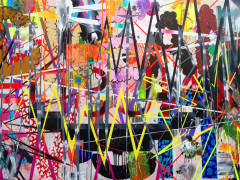
    OLD IMMIGRANT SCUM, X, series Heraldry for the Northern Border

    Beginning with a flag, a mutant from the EU´s circle with golden stars turned into a pentagon of white stars. The number and configuration of stars has been key to the historical development of the US flag; starting with thirteen stars in a circle until you reach the current grid of fifty. This symbol implies the beginning of a nation; a mission that this pictorial series has engaged in generating the symbols for what George Friedman called “El Norte” (read in English) in his book THE NEXT 100 YEARS, when he predicts that states of northern Mexico and the southern states of the US will come to form a new nation through conflict & democracy.

    Painted in old cartoonist letters, a text names the piece, referencing that “the Americas” is conformed by and descends from immigrant beings that someone else considered as dross; beginning a phenomenon that has made this land the beacon of new global multiculturalism. When generating rudeness, I intend to put into question the anti-migrant attitudes that begin to emerge with fascist tones in the “developed world”. Mixing patriotism with the fear of the “other” while reliving old wounds, once considered healed by development.

    At the center, a fairly perceivable element of broken pixels comes through by abstracting a famous historical-military photograph of World War II, the Battle of Iwo Jima. Standard for the US military, and an iconic war image for any consumer of popular culture of the last century.

    With vertices, lines and intertwined graphics; juxtaposed against gestures of an ignorant picto-political (see morenazi case) of the red and white bars of the empire. The final composition of this painting is crowned with a manipulated hat logo of an American fast food chain. Achieving a construct of identity with a flag that will be useful in the not too distant future.

    /////////////////////////////////////////

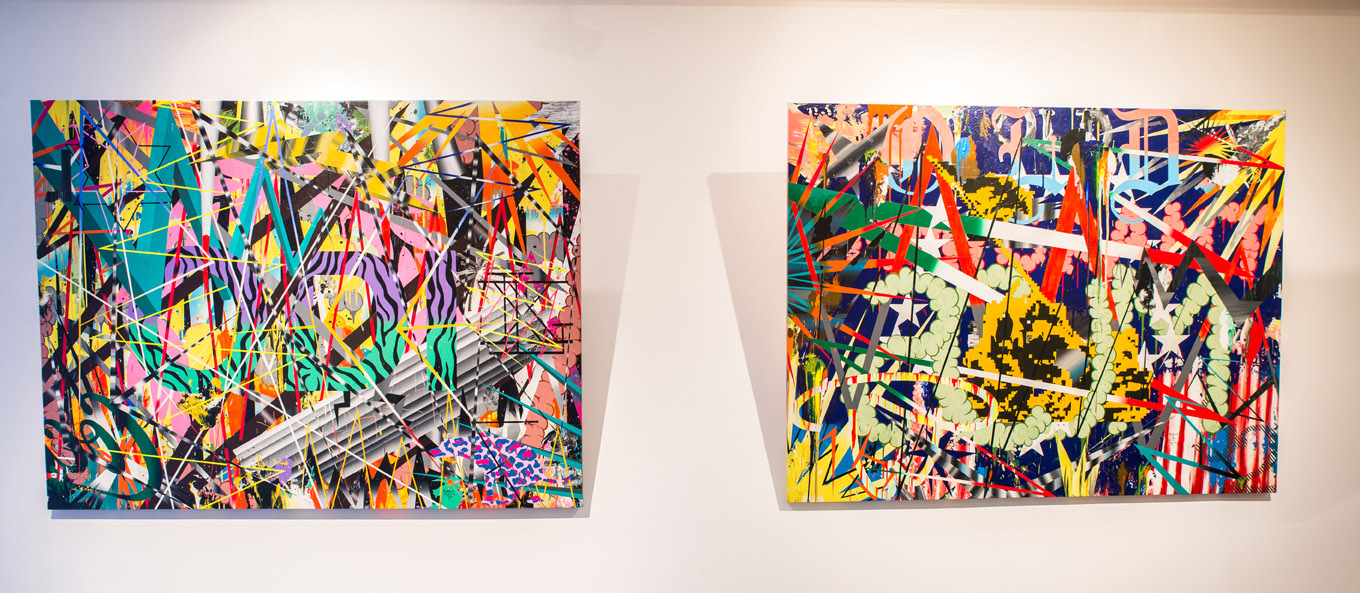
    acrílico sobre tela / acrylic on canvas, 200 x 255 cm, D Ruanova 2016

    Serie: HERÁLDICA para la FRONTERA NORTE (aqui/here)

    /////////////////////////////////////////

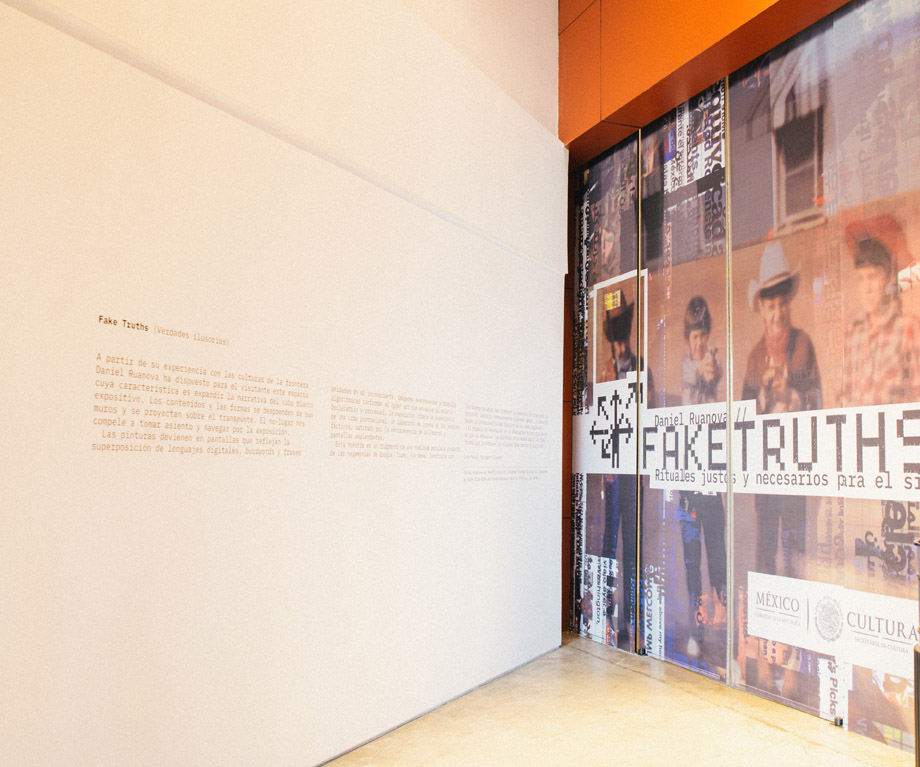
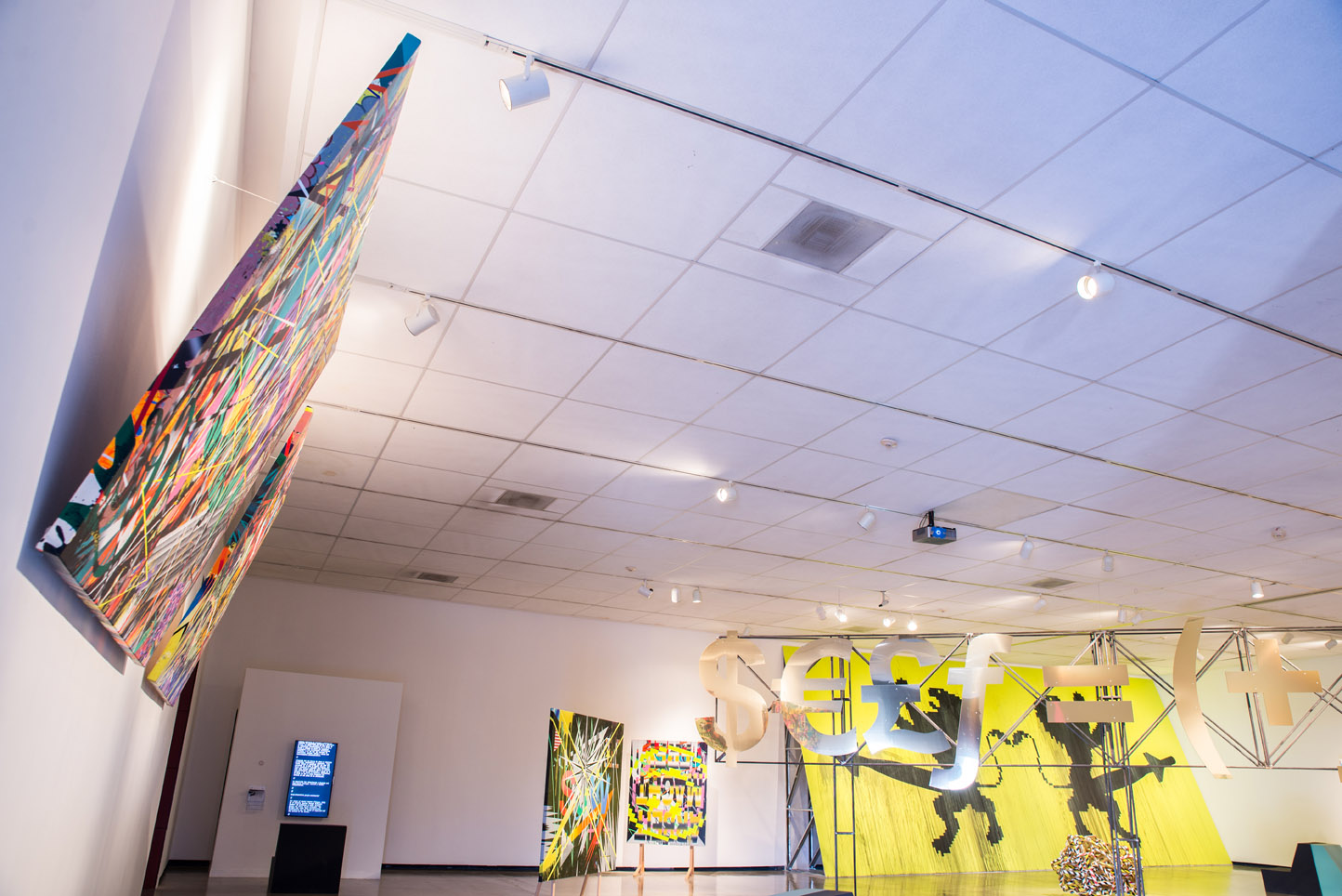
    vista de instalación en (installation view at) FAKETRUTHS @ Centro Cultural Tijuana / EL CUBO Sala 3, 2018-2019

  • GHOST MAGNET ROACH MOTEL / 2016 / A NEW AMERICAN SOUND / Preview New Release

    GHOST MAGNET ROACH MOTEL / 2016 / A NEW AMERICAN SOUND / Preview New Release

    We have been inside our minds and back again…
    we have been dealing with the thoughts that happen after that…
    A NEW AMERICAN SOUND is what we’re listening to,
    and now we want you to hear it too.
    This is just a taste of tasteful tastelessness we call our work…
    So listen up, and get ready to experience the proto-gringo cringe that will make you go hmmm…

    New Release #1 of 2


    It’s more than putting two and two together, we’re finding the moment when one will clash with the other and the other and the other and the other, and something new will come out of that…

    New Release #2 of 2

  • THIS IS A MAN 2

    kinetic assemblage / mixed media on exhibition pedestal: fake antique chinese weapon, pressure pliers, plastic zip-ties, assorted screws and bolts, electric motor-switch-cables, aerosol lacquer, acrylic paint, polyurethane, stickers, metal studs, etc… / 109 x 30 x 30 cm (when off)

    _____________________________


    ensamblaje cinético / técnica mixta sobre pedestal de exposición : arma antigua falsa china, pinzas de presión, zip-ties de plástico , tornillos y pernos , surtidos de motor -Switch- cables eléctricos, la laca en aerosol , pintura acrílica, clavijas metálicas, poliuretano, adhesivos, etc .. . / 109 x 30 x 30 cm ( cuando está apagado )

    2014-2016

  • THE BRACERO LEGACY PROJECT… ongoing process

    THE BRACERO LEGACY PROJECT… ongoing process

    THE BRACERO LEGACY PROJECT is a multidisciplinary approach for creating a new dialogue about Californian and American history through the generational experience of farm labor migrants and how their struggles have created opportunities for them and their families. Notwithstanding the pain and loss, but focusing on sacrifice and hard work as a means of liberation and social mobility. During the past year, Ignacio Ornelas and I have built a series of projects that should be considered a starting point for great social awareness through the power of History, Art and Education.

    I believe that the Bracero is a symbol that has been in the dark for too long. Their contributions to the Californian and American economy have never been applauded, nor has a greater acknowledgement of the influence that their journeys had in the region, with the eventual migration of their peers and their families. The Bracero is the original transborder Mexican-American, a situation that is more than common nowadays, and better yet, is about to become the most influential culture in California.

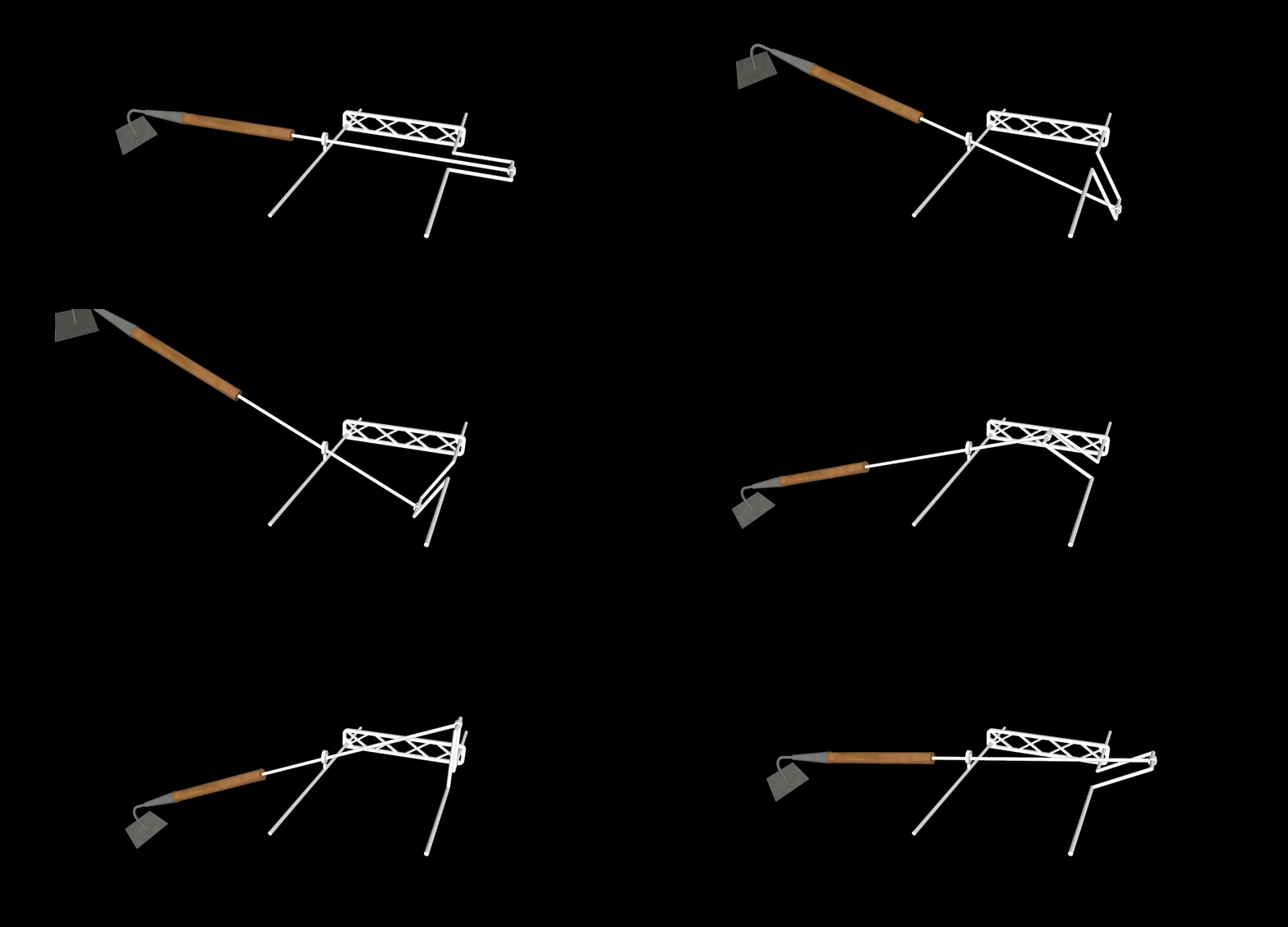
    I have been very active in artistic experimentation with these ideas, and created a kinetic sculpture project that honors the strength of the Bracero. Named THE MEXICAN LABOR AGREEMENT, the project is an amalgamation of history, culture andingenio mexicano. I appropriated EL CORTITO as a symbolic tool of social change. The objects political connotations should be seen as scars of honor, not shame, and its victorious extinction in the field is witness to our culture`s evolution. But the battle should be known.

    SCULPTURE / ESCULTURA: THE MEXICAN LABOR AGREEMENT

    cortito-motorizado

    DOCUMENTARY : SEARCHING FOR THE BRACERO´S LEGACY

    We are in the midst of a documentary film project that we see informing millions of potential viewers about the real history of the Californian success story. Based on the research of The Bracero Legacy Project, the testimony of actual Braceros and their families. We will dissect our own journey into this story through the eyes of a Historian and an Artist. The film is in it’s initial stages, and we plan to secure resources to continue it´s production.

    ____________________________________

    TRANSBORDER / THE GALARZA COLLECTION is a reproduced  series of 1950´s archival photographic documents from the Ernesto Galarza Collection at The Stanford University Libraries/Special Collections, curated by Ignacio Ornelas Rodríguez, a Bracero history scholar and grandson of an actual Bracero Program veteran, and Daniel Ruanova, an iconoclastic visual artist from the borderlands of Tijuana.

    Mr. Galarza held a very critical stance towards the Bracero Program and took these photographs to demonstrate the ills of the program; many pre-established Mexican-American families did not approve of the influx that these “new Mexican arrivals” created in the local job markets and future labor issues were detonated by these conflicts.

    Today we give new light to these photographs, and publish them as images of new-Americans on their journey to the land of opportunity. Eventually, these moments in time will be seen in the same context as the ones with European immigrants reaching The Statue of Liberty or Ellis Island during the eighteenth and nineteenth century. The Bracero program gave these men the opportunity to overcome poverty in Mexico through hard work and personal sacrifice. Their journeys became the precedent for millions of Mexicans who are now Americans.

    The power of image, in this case, witness to historical presence and the empowerment that self-representation creates in the lives of people, generates a sense of cultural redemption now lost in post-nationalistic rhetoric, racial mongering politics and the cultural whitewashing of multiethnic communities. The images we all know of the migrant mexican farm workers -spots on a landscape or a sombrero with a body- tell the story of the oppressed, the shamed, the battered, and a world of pitiful connotations almost never acknowledging the subjects own personal story and stance.

    We want to change that story.

    ____________________________________

    PRESS: 

    https://medium.com/stanford-magazine/to-be-a-bracero-seeing-beyond-abuses-5ffe40a4814#.1y9xj7kb7

    http://www.montereycountyweekly.com/news/cover/with-the-bracero-legacy-project-an-artist-and-historian-reframe/article_f4e7dfb4-22c0-11e6-8558-274873f77933.html

    http://thecreatorsproject.vice.com/blog/a-mechanical-sculpture-reframes-the-legacy-of-mexican-migrant-workers

    http://sdcitybeat.com/article-16833-daniel-ruanova-tackles-migrant-labor-at-bracero-cocina-de-ra%C3%ADz.html

    THE BRACERO ART PROJECT:

    THE MEXICAN LABOR AGREEMENT / 2015 /onsite-kinetic-sculptural-installation24 mechanically animated short handle hoes, steel chassis, sprockets, chains, electrical wiring, two 1 horsepower electric motors and timer / Variable dimensions (approx 17´ x 7´ x 5´). Collection and Project commissioned: Luis Peña / Bracero, Cocina de Raíz

    SEARCHING FOR THE BRACERO´S LEGACY – A new-American encounter for a place in history (working title) / 2015 / Docu-drama-teaser / in collaboration with Ignacio Ornelas / HD video duration: 5 mins.

    TRANSBORDER / THE ERNESTO GALARZA COLLECTION photographs from the STANFORD UNIVERSITY LIBRARIES / 1950´s – 2015 / Re-printed for The Bracero Legacy Project

  • MAMA

    MAMA

    (del acto de mamar) 2015
    acrílico sobre tela, 206 x 139 cm
    Daniel Ruanova

    colección de @arteexpuesto

    #colaboracioninminente

    #campañaciudadana
    #elsistemanofunciona
    #heraldica

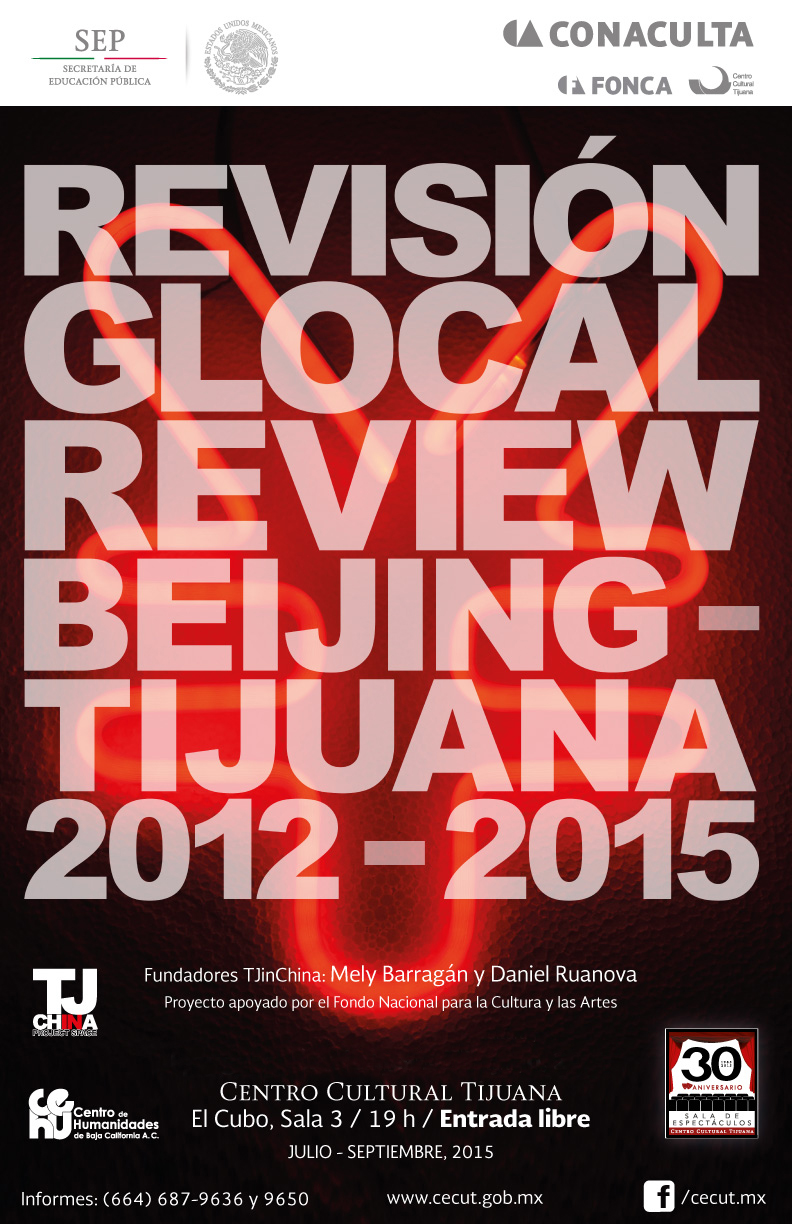
  • REVISIÓN GLOCAL REVIEW / TJINCHINA @ CECUT – EL CUBO

    REVISIÓN GLOCAL REVIEW / TJINCHINA @ CECUT – EL CUBO

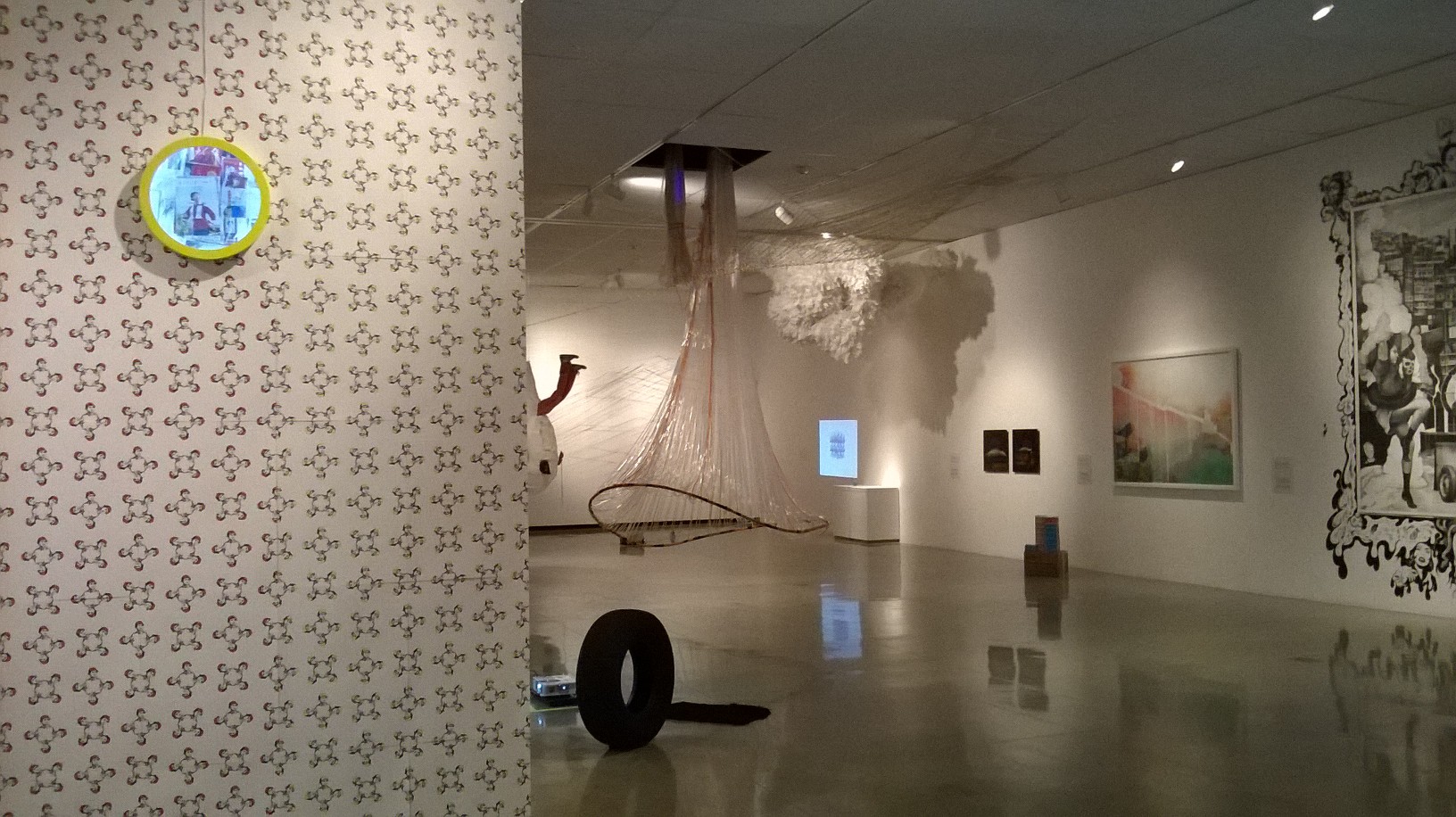
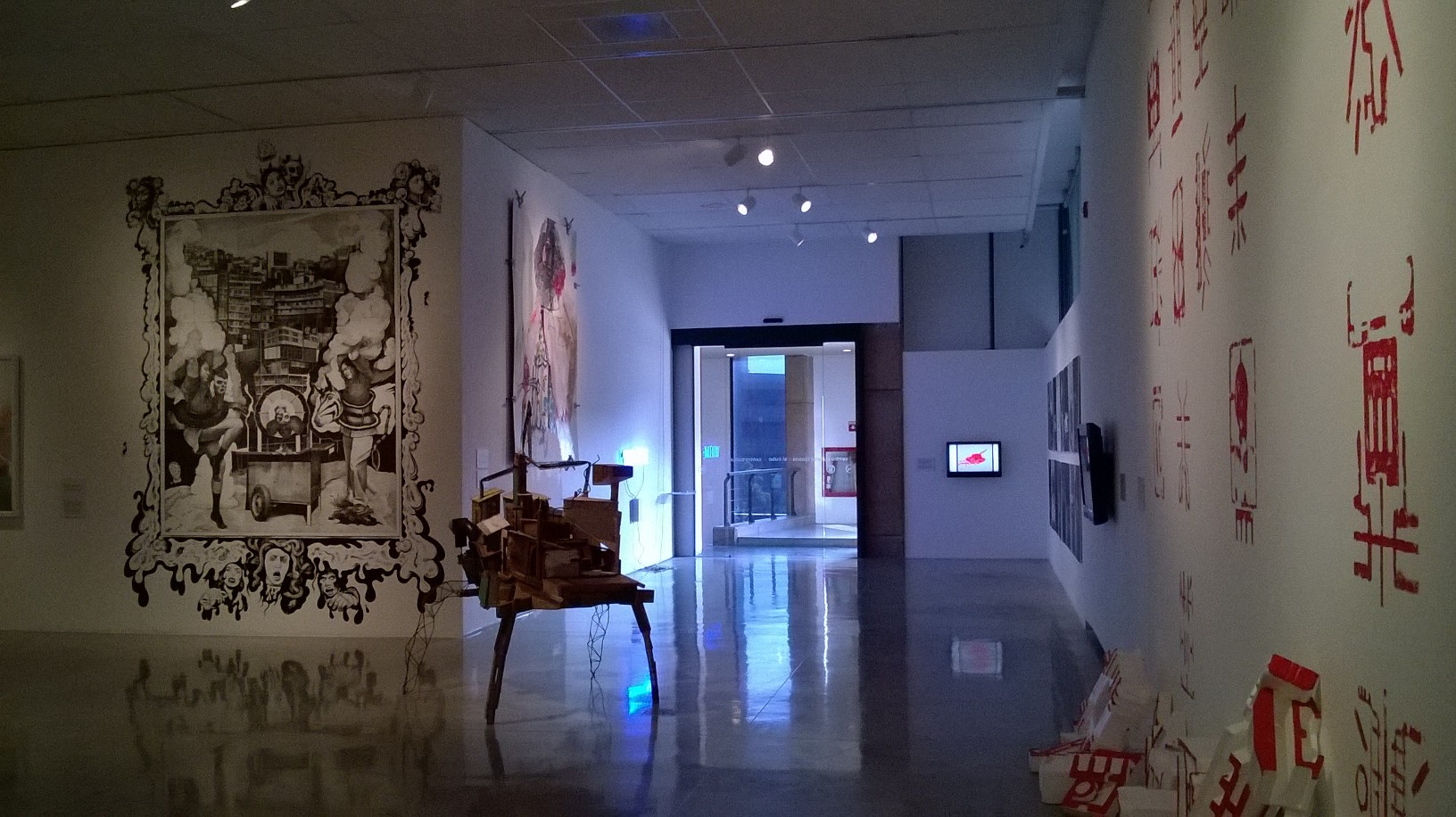
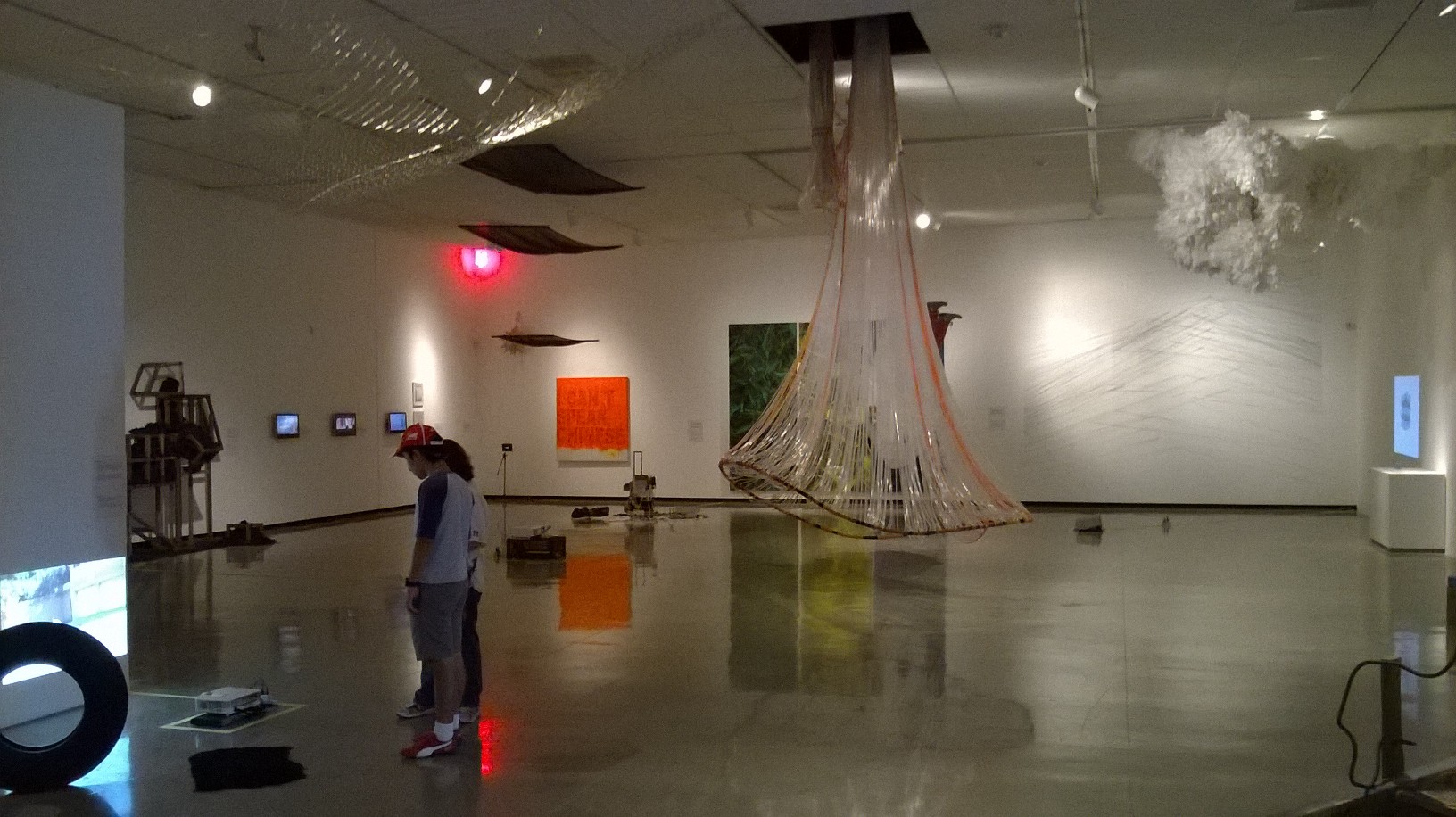
    RE-INSTALACIÓN de: THE FALLEN TOWER IDEA (selección de obra producida durante estancia en Caochangdi-Beijing, China 2011-2013) / Daniel Ruanova

    Neon, fibra de vidrio con herrajes de acero inoxidable, pintura de acrílico sobre lino y Ipad con animación tipográfica y sonido / dimensiones variables / colección del artista

    animación en Youtube:

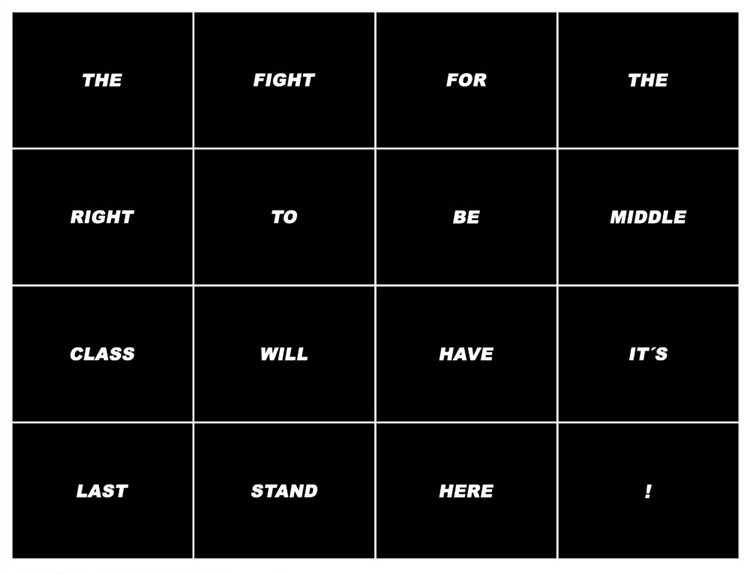
    stills de animación tipográfica:

    THEFIGHTFORTHERIGHT

    _________________________________________

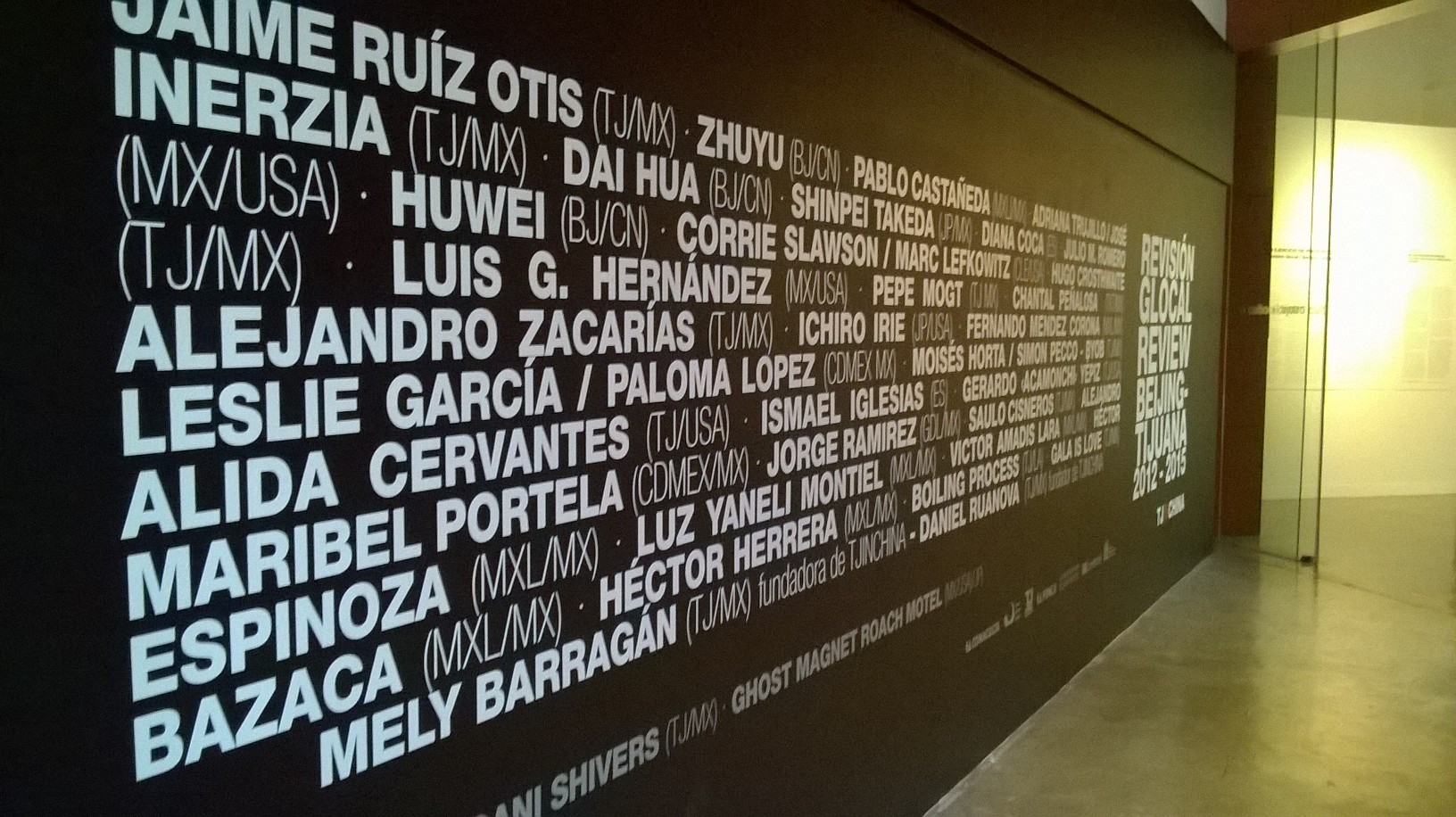
    REVISIÓN GLOCAL REVIEW se exhibe en el Centro Cultural Tijuana (CECUT) / EL CUBO Sala 3 hasta mediados de septiembre 2015. El proyecto ofrece al público fronterizo una recopilación de mas de 40 artistas e información generada durante los tres años de operación de TJINCHINA ProjectSpace (de Caochangdi-Beijing a Tijuana); exhibimos una selección de las ideas de tod@s l@s artistas que han participado-colaborado-e-intercambiado ideas con nosotros. Establecemos la idea de lo GLOCAL como nuestra premisa de acción y lo que representa en una ciudad como esta, en el contexto de la cultura tijuanense y su participación en las redes globales de espacios y comunidades artísticas de actualidad.

    http://tjinchina.dinstudio.com/empty_29.html

    ARTISTAS PARTICIPANTES:

    JAIME RUÍZ OTIS (TJ/MX) – ZHUYU (BJ/CHINA) – PABLO CASTAÑEDA (MXLI/MX) – ADRIANA TRUJILLO Y JOSÉ INERZIA (TJ/MX) – DAI HUA (BJ/CHINA) – SHINPEI TAKEDA (JAPÓN/MX) – GHOST MAGNET ROACH MOTEL (MX/USA/JAPÓN) – DIANA COCA (ESPAÑA) – JULIO M. ROMERO (MX/USA) – HUWEI (BJ/CHINA) – CORRIE SLAWSON Y MARC LEFKOWITZ (CLE/USA) – HUGO CROSTHWAITE (TJ/MX) – LUIS G. HERNÁNDEZ (MX/USA) – PEPE MOGT (TJ/MX) – CHANTAL PEÑALOSA (TKT/MX) – ALEJANDRO ZACARÍAS (TJ/MX) – ICHIRO IRIE (JAPÓN/USA) – FERNANDO MÉNDEZ CORONA (MXLI/MX) – LESLIE GARCÍA Y PALOMA LOPEZ (CDMEX/MX) – MOISÉS HORTA Y SIMON PECCO – BYOB (TJ/MX) – ALIDA CERVANTES (TJ/USA) – ISMAEL IGLESIAS (ESPAÑA) – GERARDO “ACAMONCHI” YÉPIZ (TJ/USA) – MELY BARRAGÁN (TJ/MX) – DANIEL RUANOVA (TJ/MX) – MARIBEL PORTELA (CDMEX/MX) – JORGE RAMIREZ (GDL/MX) – SAULO CISNEROS (TJ/MX) – ALEJANDRO ESPINOZA (MXLI/MX) – LUZ YANELI MONTIEL (MXLI/MX) – VICTOR AMADIS LARA (MXLI/MX) – HÉCTOR BAZACA (MXLI/MX) – HÉCTOR HERRERA (MXLI/MX) – BOILING PROCESS (TJ/LA) – GALA IS LOVE (TJ/MX)

    para mas información: http://www.cecut.gob.mx/exposiciones.php

    TJINCHINAREVISIONGLOCALREVIEW

    El arte como ejercicio de proscripción

    TJ IN CHINA

    REVISIÓN GLOCAL

    BEIJING-TIJUANA

    2012-2015

    ESCRITURA EN PROCESO

    Desde su establecimiento en el distrito de arte de Caochangdi en la ciudad de Beijing, China en 2012, hasta su inserción en las dinámicas locales del campo artístico tijuanense a principios de 2014, TJ IN CHINA se ha dedicado, subrepticiamente, a proscribir el arte, a expulsarlo de su territorio histórico- cultural, a dejarlo sin patria, para hacerlo formar parte de esa metástasis que opera en el ámbito de las artes a nivel internacional, ahí donde las posibilidades del arte son infinitas, las historias han dejado de ser regionales o nacionales, las localidades difusas y, por lo tanto, las geografías y sus sentidos se han vuelto imprescindibles para la práctica.

    Bajo una dinámica de residencias artísticas, el espacio, el proyecto y los modos de operación concebidos por los artistas Mely Barragán y Daniel Ruanova, le inyectan un nuevo sentido a la producción de arte en Baja California, a la manera como los artistas imaginan, producen y difunden sus obras, mismas que se han manifestado en este espacio como un ejercicio de interrupción y una actualización constante de lo que significa hacer arte contemporáneo en nuestro entorno, lo cual ha generado obras que constantemente desafían lo que entendemos por experiencia estética.

    La cultura de la residencia artística, permite que creadores de distintas latitudes se inserten en espacios a veces disímiles, a veces similares a sus entornos de origen, con la finalidad de establecer un diálogo entre la historia que traen consigo, la obra que producen, y las experiencias sociales, económicas, políticas y sensoriales que el entorno visitado le ofrece. De este modo, el discurso del artista es trastocado por el entorno que habita temporalmente, y a su vez, el entorno puede ser trastocado por las visiones y perspectivas que dicho artista propone a través de sus obras.

    La dinámica de las residencias apunta hacia una tendencia generalizada en el campo del arte, donde los artistas procuran la inserción de su obra en distintas geografías, generando así una dinámica sin precedentes, ya que los circuitos históricos o tradicionales (bienales, galerías, museos o espacios institucionales) dejan de ser los únicos actores en la difusión de las artes; a su vez, permite al artista modos de pensar su localidad desde la globalidad, ya que en el pasado, la difusión de su obra se hallaba circunscrita a un entorno inmediato; una vez que los entornos se diversifican, las maneras de concebir su obra igualmente se desprenden de su “terruño” para buscar su significado más allá de lo que el horizonte les permita ver.

    Una posible perspectiva de esta dinámica, es que esta socialización y glocalización en el arte contemporáneo puede producir una red dispersa e indefinida de individuos que no logran adherirse a una visión arte-histórica particular; sin embargo, también podemos decir que la producción artística en nuestra época construye una historia sin precedentes: la historia de un arte global, cuyo germen se encuentra en la localidad que le da voz, cuerpo y biografía a los artistas (en el caso particular de esta exhibición, Beijing y Tijuana), pero que reunido con las voces, cuerpos y biografías de otras latitudes, construyen una historia cuyas raíces no se encuentran ni en las vanguardias ni en las tendencias regionales, ni en las tradiciones formales ni en los avances técnicos y/o tecnológicos, sino en la narrativa personal o histórico-social que cada artista introduce a la percepción global del mundo. Esta es, finalmente, la historia de nuestro arte actual, una escritura en constante proceso, en un presente perpetuo, incesante, efímero y no menos conmovedor.

    Lo único que necesitas para adentrarte al significado de estas propuestas, es el más preciado de los tesoros en la actualidad: tiempo. Tiempo para meditar, permitirte un diálogo con lo desconocido para conocerlo mejor, tiempo para pararte frente a una de estas obras y contemplarla con los sentidos abiertos, tiempo para comparar entre formas, perspectivas, técnicas, medios, formas, materiales y temas. Tiempo para ser un niño otra vez. Tiempo para escuchar, ver, sentir lo que quieren decirnos estos artistas.

    Si algo podrá atestiguar el espectador, es que esta exhibición se presenta como un escenario abierto, para que las visiones particulares de los artistas puedan apreciarse al unísono. No hay barreras que separen una obra de la otra, todas ellas reclaman el mismo espacio de atención. En todos los casos, vemos recreaciones o replanteamientos de lo que los artistas hicieron durante sus respectivas residencias en TJ IN CHINA. No hay un predominio formal: el video comparte espacio con la pintura, misma que comparte espacio con la instalación, los materiales efímeros están en igualdad de circunstancias con los materiales permanentes. Hay mucha obra en estado de permanente evolución. Manchas urbanas, bestias nobles compuestas de los materiales que desecha nuestro mundo, imágenes en contra de la realidad abyecta, la búsqueda de un lenguaje encriptado universalmente humano y el trazo incesante de caminos encontrados, son algunas de las huellas, índices, visiones y prospectivas que ofrece esta dinámica retrospectiva, sin una localidad única que la defina, sólo la presencia de TJ IN CHINA como cómplice e instigadora de estas obras, suspendidas en el aire fascinante y al mismo tiempo aterrador de la vida contemporánea.

    Alejandro Espinoza


    VIDEO DOCUMENT(O)S


    WP_20150729_17_05_01_Pro WP_20150729_17_05_17_Pro WP_20150729_17_05_28_Pro WP_20150729_17_05_47_Pro

  • THE MEXICAN LABOR AGREEMENT / 2015 /onsite-kinetic-sculptural-installation

    onsite-kinetic-sculptural-installation24 mechanically animated short handle hoes, steel chassis, sprockets, chains, electrical wiring, two 1 horsepower electric motors and timer / Variable dimensions (approx 17´ x 7´ x 5´). Collection and Project commissioned: Luis Peña / Bracero, Cocina de Raíz

  • We are the Borderrats!

    Text for Shinpei Takeda´s  ALPHA DECAY  (English/Japanese)

    ______________________________________

    We are the Borderrats!

    Then what is a Borderrat? We are post global, now glocal, human beings that traverse the sociohistorical powers of nations. As artists, our agency lies upon our action, our everyday life turns out to be errored models of dysfunctional culture clashes, that turn out to be proto-symbols of what is to come. In other words we are mutants of culture and biology, of nations and geography. In our best light, we are artists, makers, creators, hackers, etc… because our ¨place in time¨ has become the foreground of everybody else’s future with globalisation. We are creatures of a Strange New World, that conflicts all notions of law and order as the glue of our communities, because we know that what makes you common through your stuff or your debts or your vogues or your gods; is also your ill, your unwillingness to mutate, to evolve…

    I met Shinpei Takeda through a mutual friend over a decade ago… What was this post-japanese- americanized thinker looking for in TJ? I thought to myself. What also intrigued me about this new character in the post-hyped- up TJ context was his mutated notion of self. A young man that was clearly searching for his place when all of his other places didn´t seem to satisfy his search. A Borderrat like us, but different, but still a lot like us. ¨Es un políglota decíamos nosotros…¨ We all, and in that time ¨all!¨was enough, were trying to do the same he was, learn from each other, because no one else will teach you more… During the beginning of the new millennia, TJ (Tijuana, México. The biggest border city on the US-Mexico border) was a place of engagement for many transcultural practitioners. Artists, writers, thinkers, promoters, etc… came searching for the antidote for a wide array of actual and future notions of otherness.

    Shinpei and I started having a conversation through our ideas (in english first, then gradually in spanish) that unraveled in euphoric state of awareness through the social channels that a context like ours provided, engaging in substance motivated dialogues of our own art practices and most of all our life as art practitioners. We were a group of artists (including my wife and colleague Mely Barragán), entering our most productive years and looking for a way to reignite the global dialogue of this place.

    Most of us split around 2009, Mely and I went to Beijing, Caochangdi Arts District to be precise, and started a project that keeps on expanding: TJINCHINA ProjectRoom. An independent art space occupying part of our warehouse studio in one of the most interestingly contrasted and metaphorically correct places in the Chinese art scene, a place where ultra-elite and bluechip asian galleries are mixed in a small village type setting with thousands upon thousands of new immigrant arrivals to the Chinese capital, horde of young men and women from the countryside looking for a better life for them and their families. Shinpei became part of that ProjectRooms memory when he self produced a one month’s residency and installed a wall to wall installation at our space. The work was an act of labor that not much people would endure. The project was in tune and simultaneously going on when Japan and China where hate mongering about some small islands… Shinpei;s show was the only project to open fettering japanese artists during the famed Beijing Design Week craze, everybody else took orders from their embassy and halted their activities, we betted that art could be and was a tool of dialogue during a very shot time of national hate. The show, artist talk and documentary screenings were all a great success.

    This short account cannot even embrace a small piece of what our collaborations, complicities, coworkings and creative deviations we have ventured with Shinpei Takeda, but we know that the true value in his work, is exactly that: work. As mexicans, we value hard work over many other virtues. So the intent to experiment through craft, action, thought provoking circumstance, punkformance, etc… the we engage in with Shinpei, Has made us see him as a glocal tijuanenese, and somebody very different than that out of place post-japanese- americanized thinker we met more than a decade ago. I haven’t even touched GHOST MAGNET ROACH MOTEL, a multilayered post-global PUNKFORMANCE outfit that Shinpei and I collaborate in with another group of radical free agents from the borderlands, but that is a different tale andsomething best experienced through its consumption.

    Shinpei Takeda is a Borderrat, like us, he is looking to coexist with the Empire, and the Empire´s mutants; this is what we do…

    Daniel Ruanova

    ______________________________________

    我々はボーダラットである!

     ボーダラットとは何なのか? 我々はポストグローバルで現在グローカルな、国家の社会歴史的な力を横断する人類である。アーティストとして、我々のエージェントは我々の行動の上に横たわっている。我々の日常生活は、これから起こることのプロトシンボルであることが分かるような、機能不全の文化的衝突の誤ったモデルであることが分かる。言い換えれば、我々は文化と生物学、国家と地理学の突然変異体である。良く言えば我々は芸術家、製作者、クリエイター、ハッカーなどである。なぜなら我々の「時間の中の場所」はグローバル化と共に他の全ての人々の未来の前景となったからである。我々は、コミュニティーの接着剤としてのあらゆる法と秩序の概念と対立する、奇妙な新世界の創造物である。なぜなら、あなたの才能やあなたの借金、あなたの流行やあなたの神に共通であるものが、あなたの病気、あなたの変異したくないという願い、進化したくないという願いでもあることを我々は知っているからである。

     私は10年以上前に共通の友人を通じて竹中信平と出会った。ポスト・ジャパニーズ・アメリカナイズされた思想家がTJで何を探しているのだろう?私は自問した。ポスト・ハイプトアップ・TJのコンテクストにおけるこの新しいキャラクターに関してもう一つ私の興味を引いたのは、彼の変異した自己の概念である。彼が居た他のどの場所も彼の探求を満たさないように見えた時、明確に自分の居場所を探していた若い男。我々のようなボーダラット、しかし違う、それでも我々と良く似ている。「Es un políglota decíamos nosotros…」我々は全て、そしてこの時、「全て!」は十分であった。我々は皆彼と同じことをしようとしていた。互いに学びあうこと、なぜなら他にはもう誰も教える人がいなくなるから…千年紀の初め、TJ (メキシコのティファナ、米国とメキシコを結ぶ最大の国境都市) は多くの異文化実践者にとって約束の土地であった。アーティストや作家、思想家、プロモーター、その他の人々が、現在と未来における「異質」の概念に対する解毒剤を探しにやって来た。

     信平と私は我々のアイデアについて (最初は英語で、徐々にスペイン語で) 語り始めた。社会的経路を通じた認識の陶酔状態の中で、物質的に動機付けられた対話の中で、我々が置かれているようなコンテクストが、我々自身の芸術的実践と何よりも芸術実践者としての我々の人生を与えてくれるのだということが解明された。我々は最も実り多い年に入りつつあり、この場所のグローバルな対話に再点火しようとしているアーティスト・グループである (私の妻であり同僚であるメリー・バラガンを含む)。

     我々の多くが2009年に別れて、メリーと私は北京 (細かく言えば草場地芸術区) に行き、今も拡大し続けているあるプロジェクトを始めた。TJINCHINAプロジェクトルーム。中国のアートシーンにおいて最も興味深く対照され、かつ隠喩的に正しい場所の一つにある我々のウェアハウス・スタジオの一部を占める独立したアートスペース。ここは小さな村のような設定の中にウルトラエリートとブルーチップアジア人達のギャラリーが混在する場所で、自分と家族にとってより良い生活を求めて田舎からやって来た大勢の若い男女、中国の首都にたどり着いたばかりの何千何万もの移民達がいる。信平は彼が自分で一ヶ月間の居住地を作り、我々のスペースの壁中にインスタレーションを設置した時、このプロジェクト・ルームの記憶の一部となった。この作品は大抵の人には耐えられほどの重労働の成果である。このプロジェクトは、日本と中国が小さな島のことで憎しみを利用し合っている時にそれと同期して同時進行した。信平のショーは名高い北京デザインウィークの熱狂の中で 日本人アーティスト達の足枷を外した唯一のプロジェクトであった。他は全員大使館からの要請を受けて活動を中止した。国家的嫌悪の激しい撃ち合いの最中には、アートが対話の手段となり得るからだろうと我々は考えた。このショー、アーティストのトーク、そしてドキュメンタリーの上映は全て大成功だった。

     この短い説明では我々が竹田信平と共に試みたコラボレーション、共犯、共同作業および創造的逸脱の僅かな部分さえ紹介することはできないが、我々は彼の仕事の真の価値が、それがまさしく仕事であるという点にあることを知っている。我々メキシコ人は他のいかなる美徳よりも勤勉さに価値を置く。そうしてクラフトやアクション、出来事の誘発や、パンクパフォーマンスなどによる実験の意図について信平と話し合ったことで、我々には彼がグローカルなティファナ人であるかのように見えた。10年前に出会った場違いなポスト・ジャパニーズ・アメリカナイズされた思想家とは全く別人のように見えた。信平と私がボーダーランドから来たラジカルフリーエージェントのもう一つのグループとコラボレートした、多層的でポストグローバルなパンクフォーマンスであるゴースト・マグネット・ローチ・モーテルについては私は一切言及しないが、これは別の物語であり、その消費を通じて最も良く体験し得るものである。

     竹田信平は我々と同じボーダラットである。彼は帝国と、そして帝国のミュータント達と共存しようとしている。それは我々がしていることでもある…

    ダニエル・ルアノバ

    ______________________________________

  • TIJUANA VIRUS / Colaboración con MOISES HORTA (audio)

    TIJUANA VIRUS / Colaboración con MOISES HORTA (audio)

    VIDEO: animación generada con esculturas digitales ensambladas con modelos de monumentos locales tijuanenses apropiados de GoogleEarth /animation of digital sculptures assembled with models of local Tijuana landmarks  appropriated from GoogleEarth 

    AUDIO: Colaboración de MOISES HORTA (Ruidosón / Los Macuanos / DJ Nombre Apellido / HEXORCISMOS)

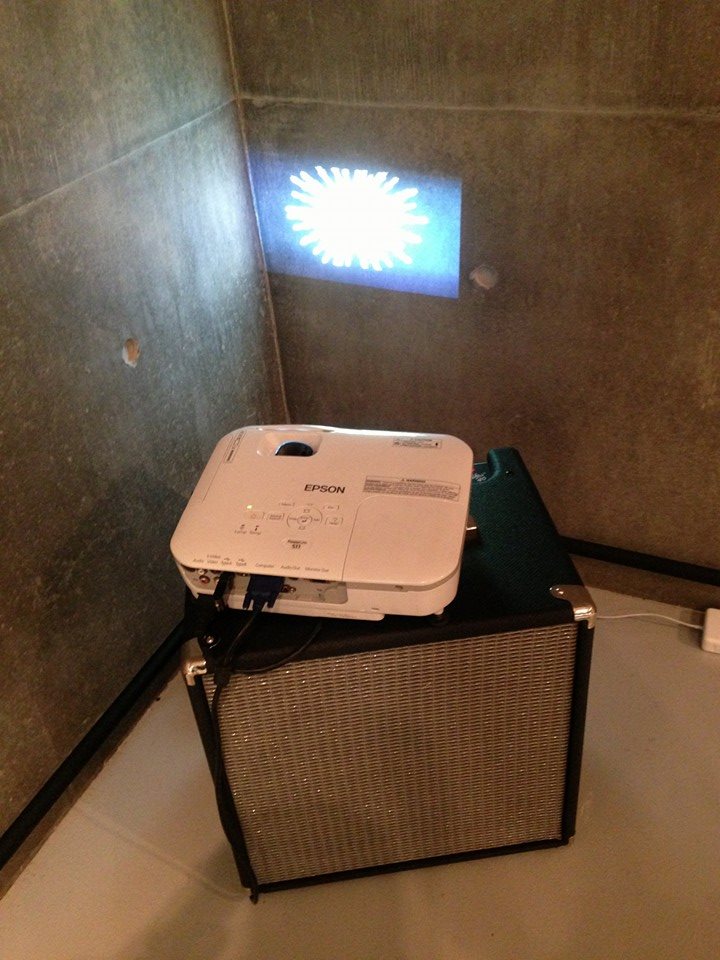
    AUDIO DIGITAL A SUBWOOFER PREAMPLIFICADO DE 700Watts CON UN CONO DE 15″ / DIGITAL AUDIO TO SUBWOOFER 700Watts preamp WITH 15 ” CONE

    Durac(t)ión: 40:53
    Resoluc(t)ión: 1920 x 1080
    Video Display Dimensions: max. 30 cm
    Codecs: H.264, AAC, Timecode
    Color Profile: HD (1-1-1)
    Audio Channels: 2

    Expuesta en / Shown at:

    HERÁLDICA PARA LA FRONTERA NORTE, Exhibición Individual de Daniel Ruanova @ CRGS UdeM / Gate of Creation, San Pedro Garza García, NL, MX. Abril 2015

    19383_10206548999587657_2696033659648585050_n


  • SITIO DE SEGURIDAD VIII @ UDEM – CRGS

    PRENSA/PRESS:
    Periódico La Jornada / Sábado 25 de abril de 2015, p. 4
    Daniel Ruanova propone en sus creaciones ridiculizar la agresión, para ganarle

    Merry MacMasters

    Periódico El Norte / Monterrey, México (17 abril 2015)
    Cuestiona su obra la división social / El artista Daniel Ruanova ensambla su instalación “Sitio de seguridad VIII. T.F.O.P.”
    Teresa Martínez
    _________________________
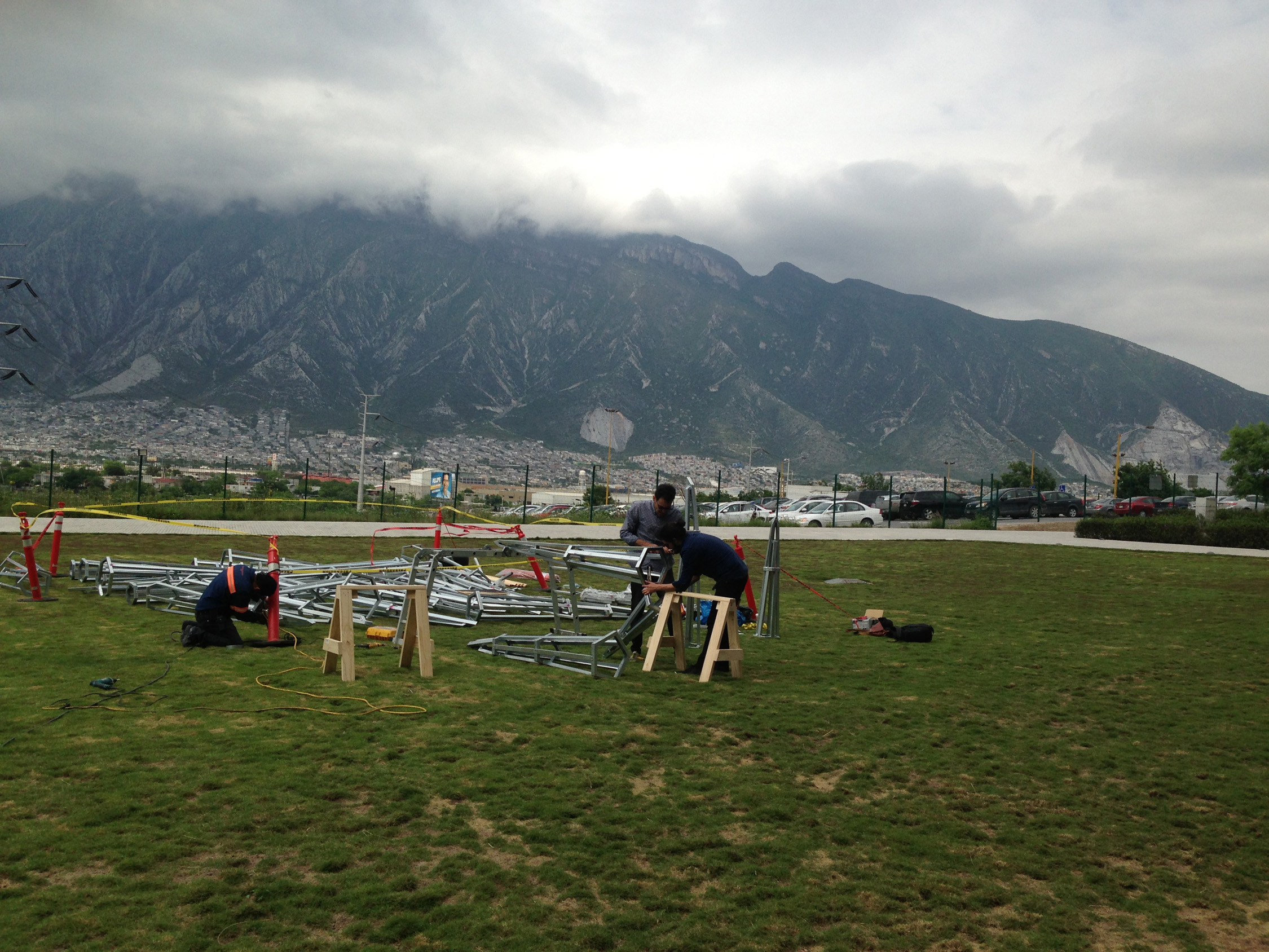
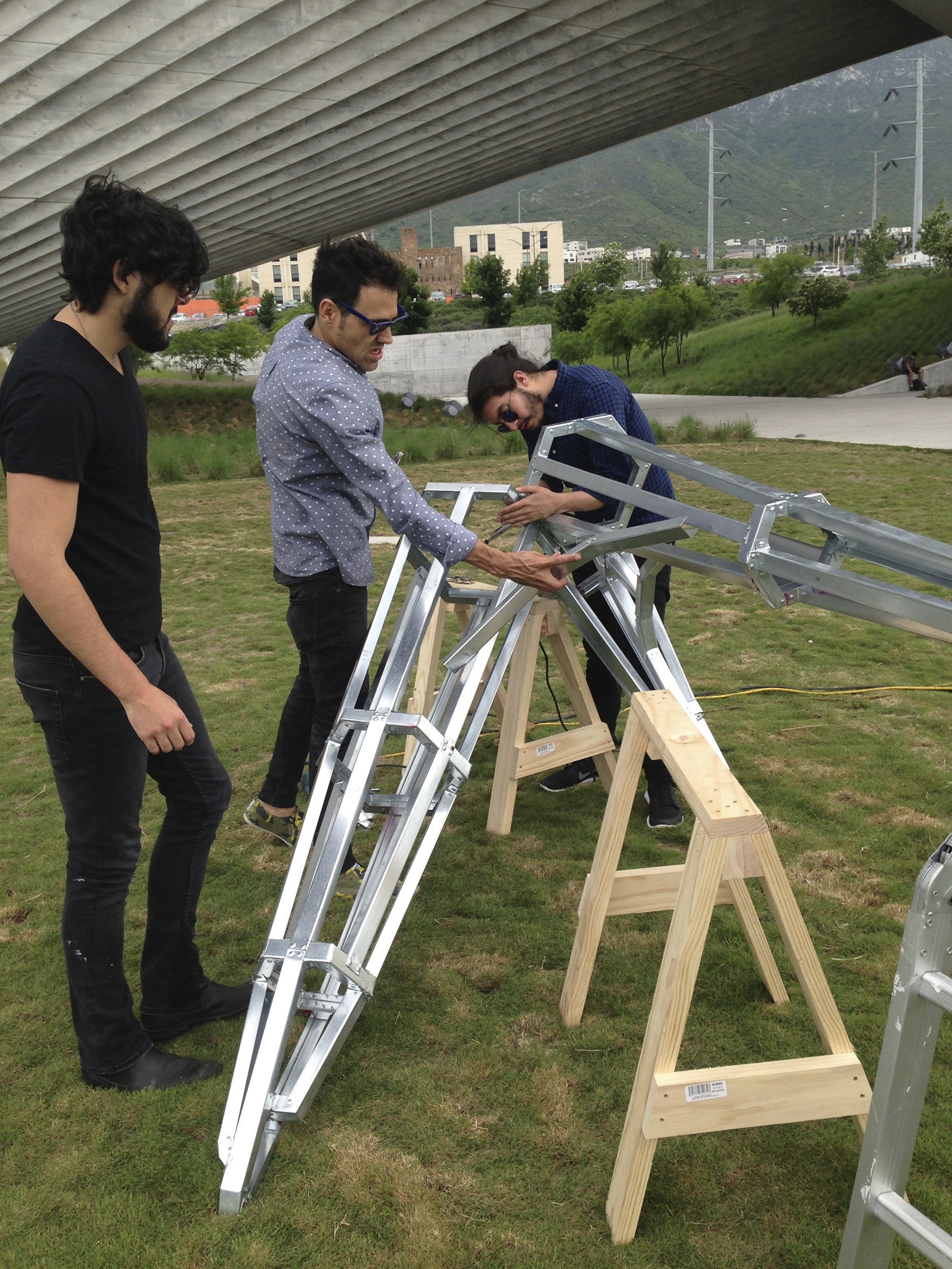
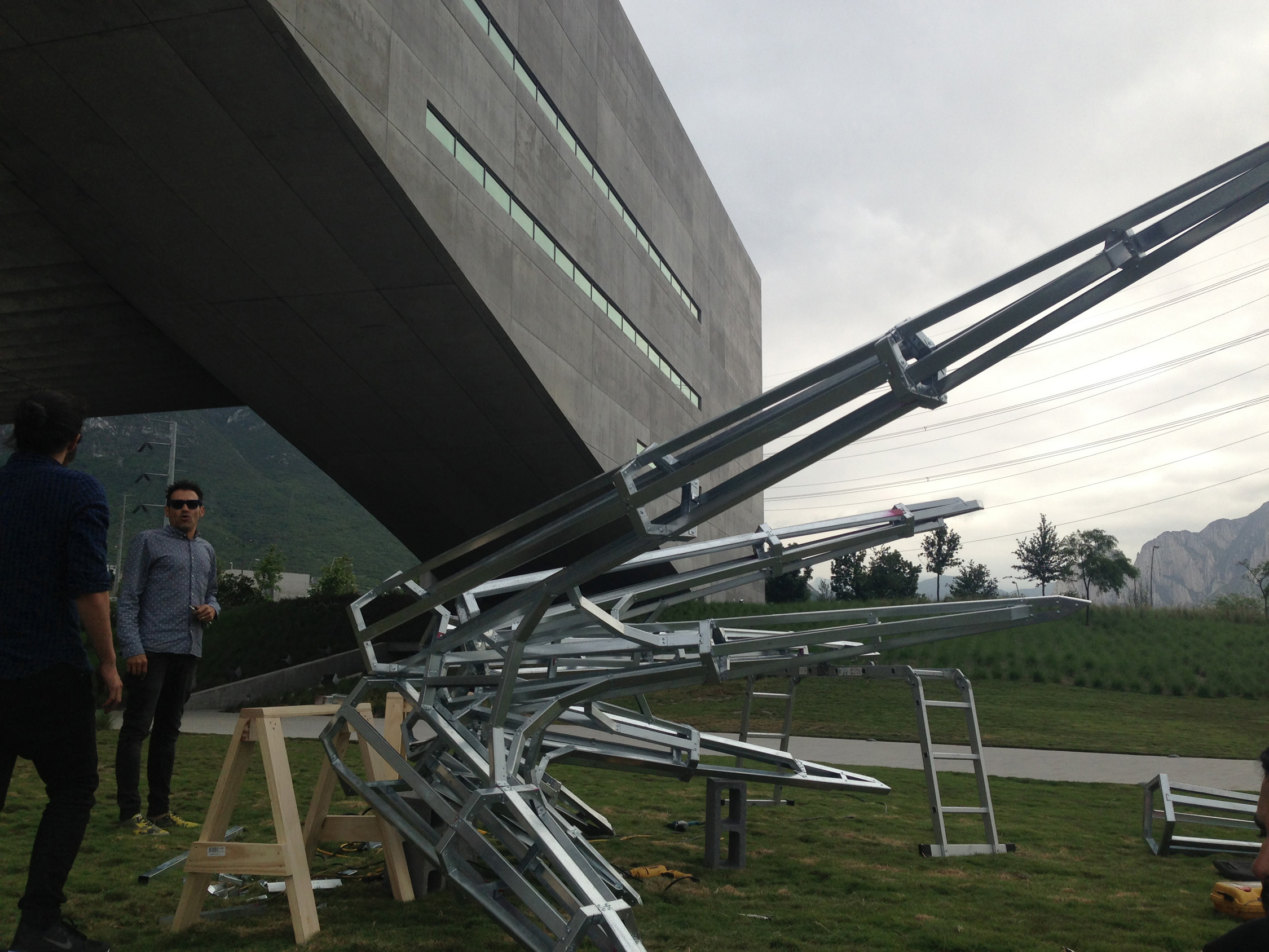
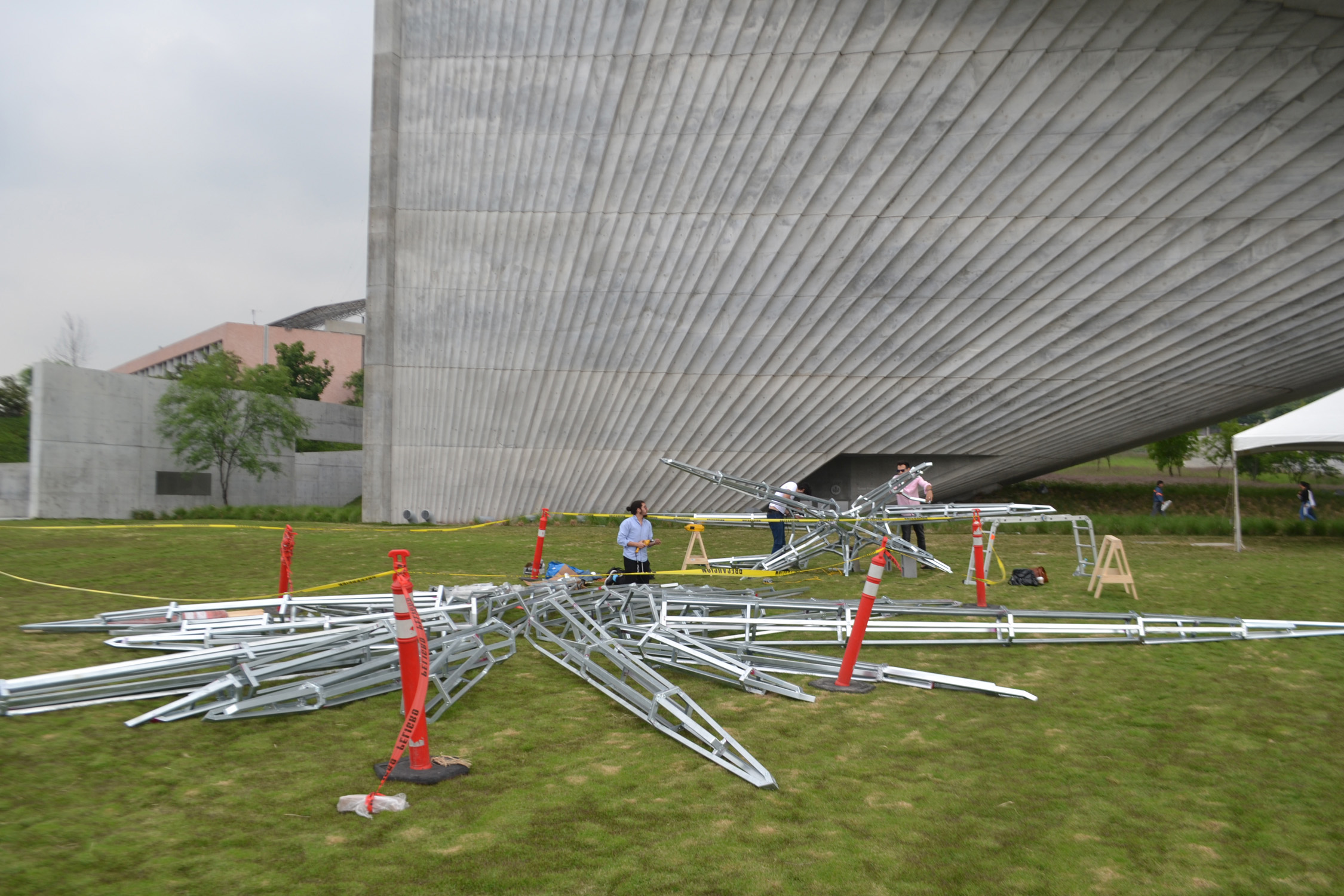
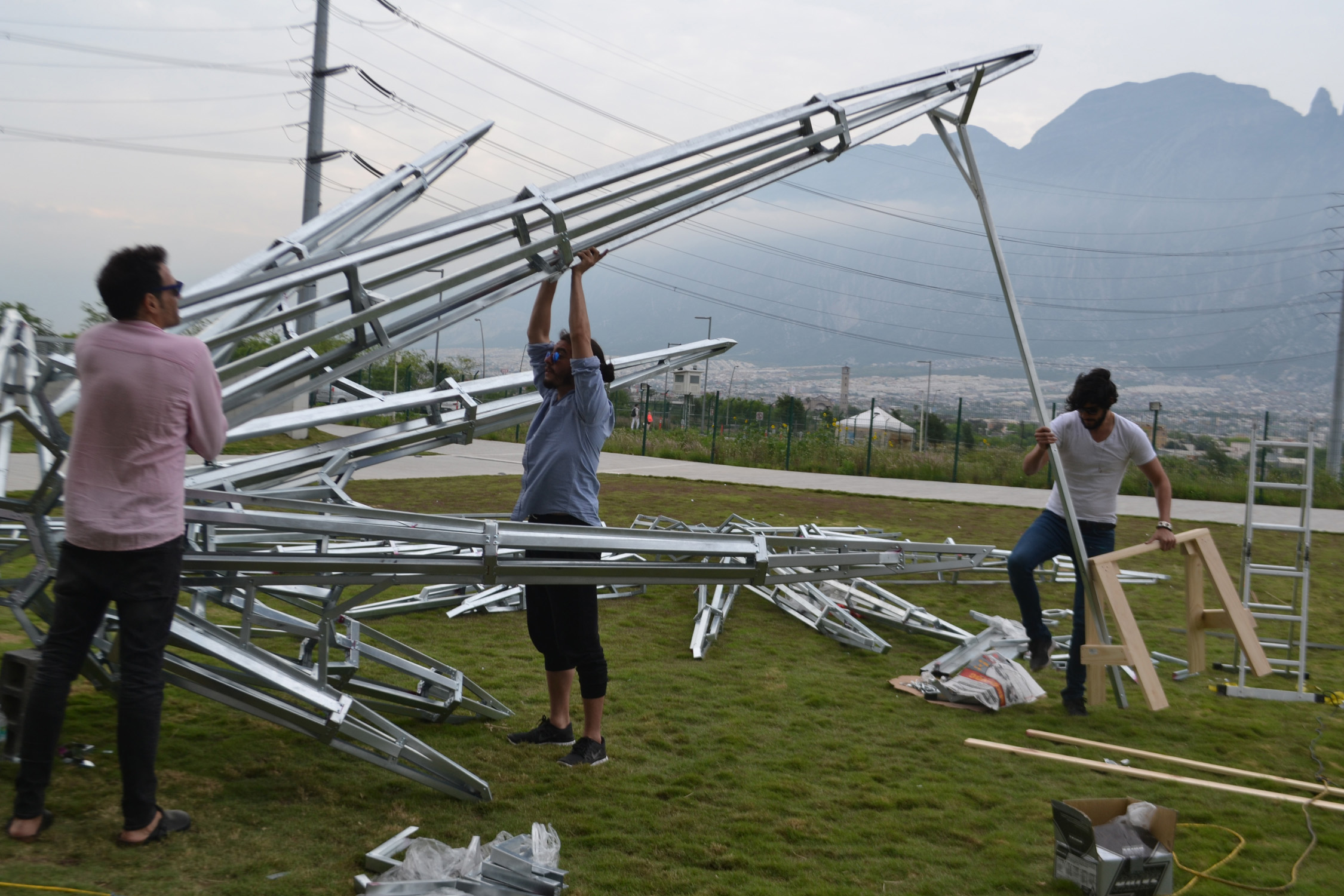
    A continuación se presentan una serie de fotografías que documentan el proceso de instalación escultórica
    / Below are a series of photographs documenting the sculptural installation process
    Productores /Producers:
    Raul Rosado www.r-arte.com
    Arq. Jesús Flores Martínez
    Asistentes de Producción /Production Assistants:
    Gelacio Moreno Hernández
    Luis Alonso Sánchez Varela
    Carlos Balderrama
    Fotos/Photos:
    Mely Barragán
    001procesoTFOP8 002procesoTFOP8 003procesoTFOP8 004procesoTFOP8 005procesoTFOP8 006procesoTFOP8 007procesoTFOP8 008procesoTFOP8 009procesoTFOP8 010procesoTFOP8 011procesoTFOP8 012procesoTFOP8 013procesoTFOP8 014procesoTFOP8 015procesoTFOP8
    015procesoTFOP8b
    _______________________________

    _______________________________
    VIDEO-PROMOCIONAL  CRGS / UDEM (Gates of Creation)
  • GHOST MAGNET ROACH MOTEL / 2014 – 2015 /

    GHOST MAGNET ROACH MOTEL / 2014 – 2015 /

    GHOST MAGNET ROACH MOTEL / colectivo de arte multidisciplinario / PUNKFORMANCE

    Proyecto en colaboración con Shinpei Takeda, Julio Orozco, Tony Cozano y Brian Sueda

    El caso específico de GHOST MAGNET ROACH MOTEL (www.ghostmagnet.info), produzco y colaboro como una especie de escultor sonoro-visual, genero las condiciones de espacio y materialidad para que los “punk-formances” que hacemos en conjunto, reconfiguren la experiencia del público por medio de la transmutación de medios e información. Hemos punk-formado en seis ocasiones durante el 2014, en las cuales mi función ha sido construir las instalaciones escultóricas y generar las estructuras de audio y video que utilizamos:

    • 3 de mayo 2014, Multiforo del Instituto de Cultura de Baja California. Tijuana, BC, MX
    • 17 de mayo 2014, Multiforo del Instituto de Cultura de Baja California. Tijuana, BC, MX
    • 31 de mayo 2014, Multiforo del Instituto de Cultura de Baja California. Tijuana, BC, MX
    • 14 de junio 2014, ALL MY FRIENDS MUSIC FESTIVAL V, Rosarito, BC, MX
    • 25 de octubre 2014, Trans-pecos, Brooklyn, NY, USA
    • 26 de octubre 2014, KungFu Necktie, Philadelphia, PA, USA
    • 28 de febrero y 1 de marzo 2015, Festival NRMAL, Ciudad de Mexico, MX
    • 18 de marzo 2015, SXSW, Austin, TX, USA
    • 25 de abril 2015, BORDERLAND NOISEFEST, Tijuana, MX
    • 15 de mayo 2015, MOUSTACHE, Tijuana, MX
    • 19 de junio 2015, A.M.F./B.L.N.F. Showcase, Pasaje Rodriguez, Tijuana, MX

    _______________________________________________________

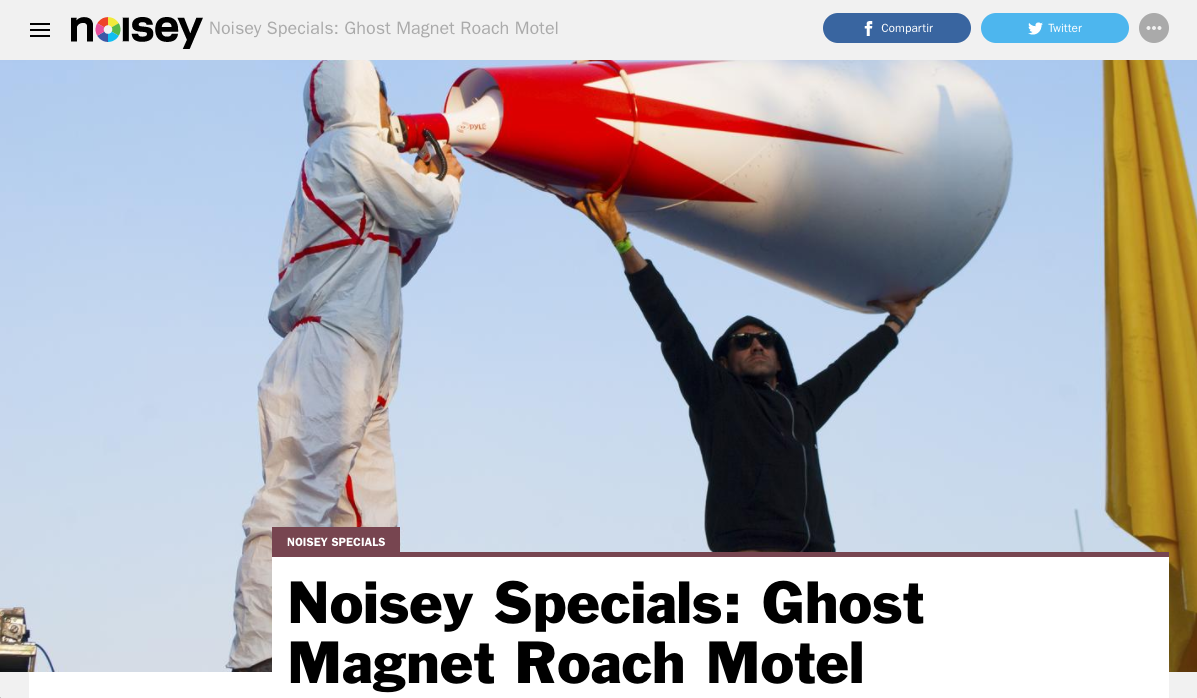
    NRMAL X NOISEY GHOST MAGNET ROACH MOTEL: EL ACTO MÁS ENIGMÁTICO DEL NRMAL 2015

    GHOST MAGNET ROACH MOTEL @ SXSW 2015

    Video-Documento de MEXICAN JUDGEMENT DAY – GHOST MAGNET ROACH MOTEL @ AMF MUSIC FESTIVAL:

    AUDIO-GRABACIÓN DE PUNKFORMANCE EN VIVO @ AMFMF CON RETRO-PROYECCIÓN
    PUNKFORMANCE LIVE AUDIO-RECORDING @ AMFMF WITH BACK PROJECTION
    – MEXICAN JUDGEMENT DAY – GHOST MAGNET ROACH MOTEL @ AMF MUSIC FESTIVAL:

    Video-Promo de GHOSTA MAGNET ROACH MOTEL CONSTRUYE SU MONUMENTO :

    Punkformance e instalación escultórica sonora mutable; fabricada con materiales de construcción, sistemas de audio (bocinas, amplificadores, sintetizadores, etc…), pantallas, cajas de luz y banderas (de plástico y mylar). Proyecto en colaboración con Shinpei Takeda, Julio Orozco, Tony Cozano y Brian Sueda (GHOST MAGNET ROACH MOTEL), también Gelasio Moreno Hernández, Josemar Gonzalez Lizarraga y Saulo Cisneros / Punkformance and sonic sculptural installation; made of building materials, audio systems (speakers, amplifiers, synthesizers, etc …), displays, light boxes and banners (plastic and mylar). Project in collaboration with Shinpei Takeda, Julio Orozco, Tony Cozano and Brian Sueda (GHOST MAGNET ROACH MOTEL) also Gelasio Moreno Hernandez, Josemar Gonzalez Lizarraga and Saulo Cisneros, among others.

    ANIMACIÓN de PROCESO / PROCESS ANIMATION:


    PRENSA/PRESS:

    http://www.sandiegoreader.com/news/2015/jul/10/concert-borderland-noise/

    http://www.stereophile.com/content/voices-mexico

    http://noisey.vice.com/es_mx/nrmal2-x-noisey/ghost-magnet-roach-motel-el-acto-mas-enigmatico-del-nrmal-2015

    http://www.lifeboxset.com/2014/06/20/all-my-friends-2014-la-quinta-es-la-vencida/

    http://infobaja.info/entretenimiento/18289-all-my-friends-ahora-junto-al-mar

    GHOST MAGNET ROACH MOTEL / WebSite

    algunas imágenes/fotos de este “post” fueron tomadas de LIVEBOXSET.COM / FOTOS: MIGUEL AHUAGE

  • INSTALACIÓN ESCULTÓRICA COMO SOPORTE PARA MEDIOS AUDIOVISUALES

    INSTALACIÓN ESCULTÓRICA COMO SOPORTE PARA MEDIOS AUDIOVISUALES

    ideas sobre LA INSTALACIÓN ESCULTÓRICA COMO SOPORTE PARA MEDIOS AUDIOVISUALES

    A raíz de la proliferación de la producción de arte digital, mucha de esta información es intangible y carece de cuerpo físico para introducirlo al mundo de lo matérico. Aunque algunos discuten que esa misma razón es la función de la información artística en código binario; planteo que las ideas, sean las que sean, se “consumen” con mayor apertura y se perciben con menos filtros si se platean con forma físcia y como cosas matéricas. Ya sea la luz que genera un proyector o las ondas sonoras que generan unas bocinas, o lo movimientos que generan los seres vivos al interactuar con la pieza.

    La instalación escultórica que actualmente genero, reproduce “otras obras e ideas”: La forma del objeto se construye en función de “servir” de plataforma para estructurar el sinfín de información multimediática que se actualmente produce. Utilizando materiales de construcción ligeros, andamios, arquitectura y elementos vivos (humanos o animados), genero formas y estructuras que condicionan el espacio y al espectador en cómo ver el medio y la información que se mueve “con y dentro” lo mismo.

    SCULPTURAL INSTALLATION AS SUPPORT FOR AUDIOVISUAL MEDIA

    Because of the proliferation of digital art production ,much of this information is intangible and lacks “physical body” to enter the world of matter. Although some may argue that in this reason lay the function of information in binary code; I propose that ideas, whatever they are , are “consumed” with greater openness and are perceived less filtered if they exist as matter and have a physical shape. Like the light beamed from a projector or sound waves generated by speakers, or movements generated by living beings by interacting with the piece.

    The sculptural installation I currently generate, reproduces “other works and ideas”: The shape of the object is built to “serve” as a platform for structuring and hosting an onslaught of multimedia information produced currently. Using lightweight materials , scaffolding, architecture and live Elements (human or animated), this project generates forms and structures that determine the space and the viewer  in how to view the medium and information that flows “with and within” itself.


    ENLACES A YOUTUBE PARA VISUALIZAR LAS ANIMANCIONES DE PRECONTRUCCIÓN DE EL MONUMENTO:

    http://youtu.be/cLkWRAMkxk

    http://youtu.be/uKizC9CnSHM

    http://youtu.be/yugrHAi80I

    http://youtu.be/6e0_K0Xqqck

    ENLACE A YOUTUBE PARA VISUALIZAR EL VIDEODOCUMENTO DE GHOST MAGNET ROACH MOTEL PUNKFORMANDO EN EL MONUMENTO en vivo @ AMFMF 2014:

    http://youtu.be/usVLY69CIdk

    ENLACE A YOUTUBE PARA VISUALIZAR VIDEODOCUMENTOS SOBRE TORRE PANÓPTICA EN BYOB:TJ 2014:

    http://youtu.be/ZIGeTA6FKsQ

    http://youtu.be/rYzt5SCfyBQ

    http://youtu.be/qZX7pWkRehQ


  • TJINCHINA ProjectSpace / curatorial

    TJINCHINA ProjectSpace / curatorial


    _________________________________________

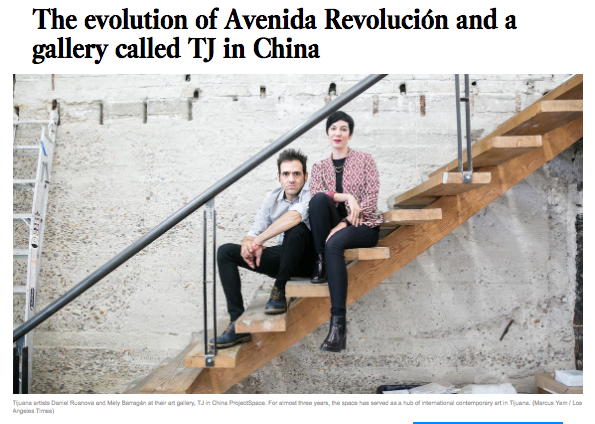
    LA TIMES: The evolution of Avenida Revolución (link)

    Captura de pantalla 2017-09-06 a las 11.39.48


    _________________________________________

    TJINCHINA Project Space en Tijuana es un espacio de arte independiente que produce, promueve y multiplica arte actual y diálogo en las nuevas fronteras. TJINCHINA desarrolla vínculos de prácticas artísticas actuales con la comunidad global a través de exposiciones, residencias y diálogos públicos.

    Durante el 2011 y 2012, TJINCHINA Project Room en Caochangdi, colocó el arte actual de la frontera norte de México en uno de los “nuevos centros globales”, específicamente en uno de los medios artísticos más pujantes en los últimos años, Beijing, China. TJINCHINA generó interés sobre la cultura contemporánea tijuanense, fronteriza y mexicana a grupos especializados en China; dando pauta a la posibilidad de intercambio constante entre las industrias culturales de ambas sociedades.

    A partir de Febrero del 2014, TJINCHINA Project Space en Tijuana abrirá sus puertas en uno de los puntos calientes de la frontera entre México y EEUU, la Avenida Revolución. Hospedando a productores culturales de varios nodos de la red global que ha generado, pero enfocados en un intercambio constante con la comunidad artística en Beijing, China.

    Gracias al apoyo de la Comisión de Cultura de la LXII Legislatura de la Cámara de Diputados, El Consejo Nacional Para la Cultura y las Artes y el Instituto de Cultura de Baja California; TJINCHINA producirá una serie de proyectos con l@s artistas que conforman dicha red, abriendo diálogos sobre aspectos de como esta región y las culturas que genera, informan o deforman a las nuevas sociedades multiculturales.

      _________________________________________________________________________

    TJINCHINA Project Space in Tijuana is an independent art space that produces, promotes and increases dialogue on contemporary art in the new frontiers. TJINCHINA develops links with current artistic practices in a global community through exhibitions, residencies and public dialogues.

    During 2011 and 2012, TJINCHINA Project Room in Caochangdi, placed contemporary art from Mexico´s northern border in one of the ” new global centers”, specifically one of the most vibrant artistic scenes in recent years , Beijing , China. TJINCHINA generated interest in contemporary Tijuana-Border-Mexican culture with specific groups in China, giving way to possibilities of constant exchange between the cultural industries of both countries.

    As of February 2014 , TJINCHINA Project Space in Tijuana will open it´s doors in one of the hot spots of the border between Mexico and the U.S., the Avenida Revolución. Hosting cultural producers from various nodes of the global network it has generated, but focused on a constant exchange with the artistic community in Beijing , China.

    With the support of the Cultural Committee of the LXII Legislature of the Chamber of Congress, the National Council for Culture and Arts and the Institute of Culture of Baja California; TJINCHINA will produce a series of projects with the artists that make up it´s network, opening dialogues on aspects of how this region and the cultures it generates, report or distort the new multicultural societies.

    4 logos oficiales ByN

    _________________________________________

  • OTHER (WHITES)

    OTHER (WHITES)

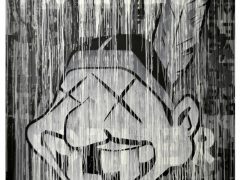
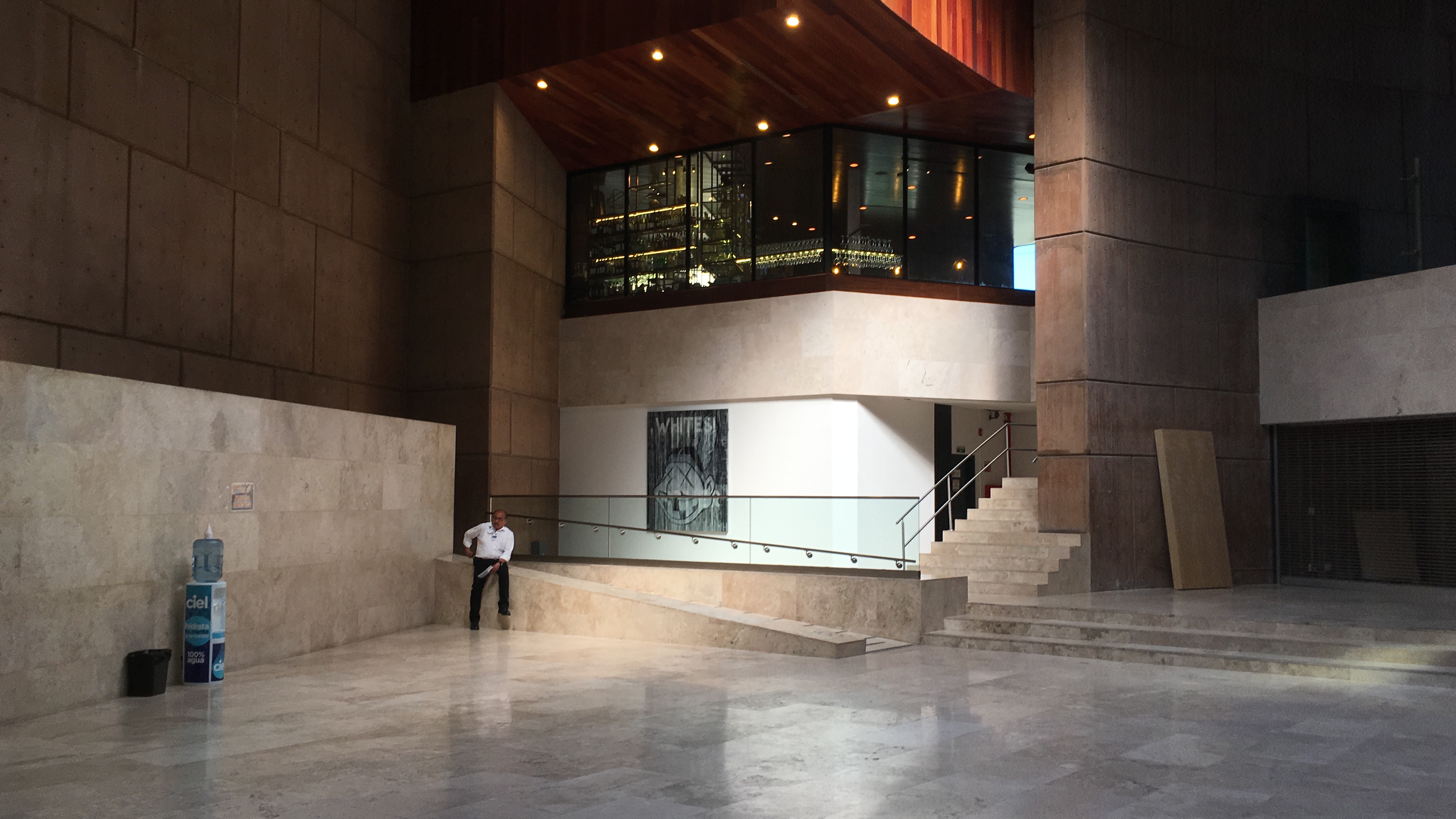
    acrílico sobre tela / acrylic on canvas, 175 x 207 x 5 cm, D. Ruanova, 2013.

    OTHER (WHITES), es una obra que pone “a tela de juicio” el racismo intrínseco en la conformación cultural del imperio americano. La pieza fue creada en la primavera del 2013 durante una residencia artística de Daniel Ruanova en Cleveland, Ohio; invitado por The Cleveland Foundation (la ONG más longeva de los EEUU y de las primeras a nivel internacional), el artista junto con su compañera-colega Mely Barragán, conformaron un equipo internacional de creadores que propiciaron el intercambio cultural por más de tres meses en comunidades muy agraviadas por la polarización racial y económica entre los sectores anglosajones y afroamericanos. Al ubicar las dinámicas de poder que ejercían los unos a los otros, el artista buscó-y-se-apropió-de símbolos históricos autóctonos para resignificar su contenido y re-introducirlo a los diálogos fomentados por la institución que lo convocó. Así, obligando una discusión profunda sobre el intercambio (o no) socio-cultural que se permite en lugares donde existen clases dominantes y sistemas establecidos que fomentan su persistencia. Entre estos símbolos “mutados”, se usó al Chief Wahoo, mascota oficial del equipo local de las grandes ligas de béisbol. Una imagen con muchísima trayectoria en los debates sobre el genocidio norteamericano de los pueblos originarios, ya que caricaturiza de forma ridícula a los primeros pobladores de aquellas tierras; muy querida por los aficionados de “su equipo” y la población con mucho arraigo, aunque algunos con sensaciones de culpabilidad política cegada por su nostalgia. Pero pocas imágenes como esta que detonen sentimientos encontrados entre los ciudadanos de Cleveland; ciudad en donde la población se compone racialmente por + o – el 50% de afroamericanos, 40% de anglosajones, 10% latinoamericanos (en su mayoría caribeños) y menos del 0.5% es del origen que ilustra la imagen de Chief Wahoo según el censo oficial de los EEUU. Con la irreverencia que caracteriza la obra plástica de Daniel Ruanova, mediante docenas de aplicaciones aguadas de pintura, el artista transcribió textos históricos sobre la clasificación de razas en los EEUU como primeras aplicaciones en la tela, seguidos por declaraciones de libertad de personajes norteamericanos medulares en la lucha de los derechos civiles del siglo pasado y antepasado, terminando con las clasificaciones raciales actuales utilizadas como identificadores visuales distintivos de los ciudadanos del imperio, enfatizando la palabra sobresaliente de WHITES como “anuncio” de la imagen antes mencionada con transformaciones en su apariencia: sugerencias de violencia y victimización. Todo en grises.

    Centro Cultural Tijuana / El Cubo, 2019

    Esta pieza pertenece a la colección de Fundación Loto Rojo A. C. y se expone en el Centro Cultural Tijuana como un convenio entre ambas instituciones para fomentar la apertura y la tolerancia colectiva, al generar diálogo artístico en nuestra comunidad a través de la exposición permanente de sus creadores locales. 


Les Neosurf casinos permettent de recharger son compte sans divulguer ses informations bancaires. Ce système flexible et accessible dans de nombreux points de vente est une excellente option pour jouer en toute discrétion.