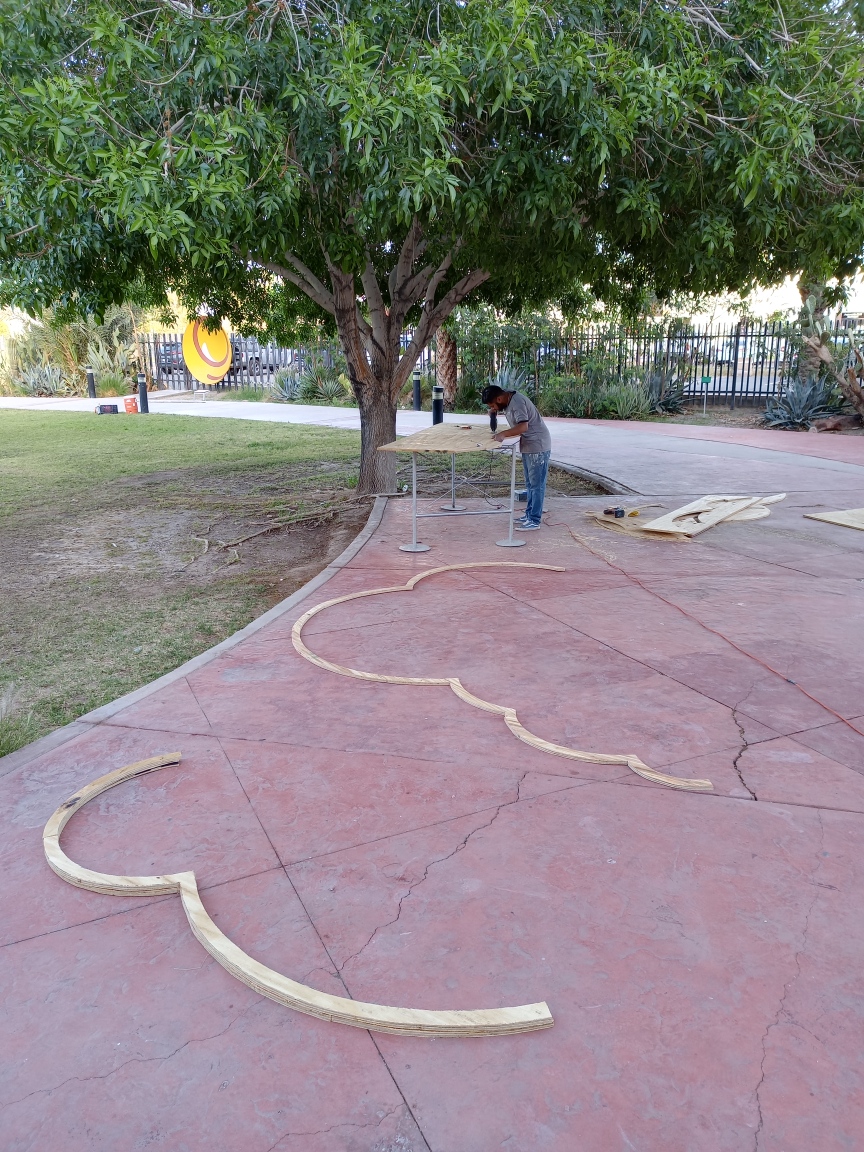
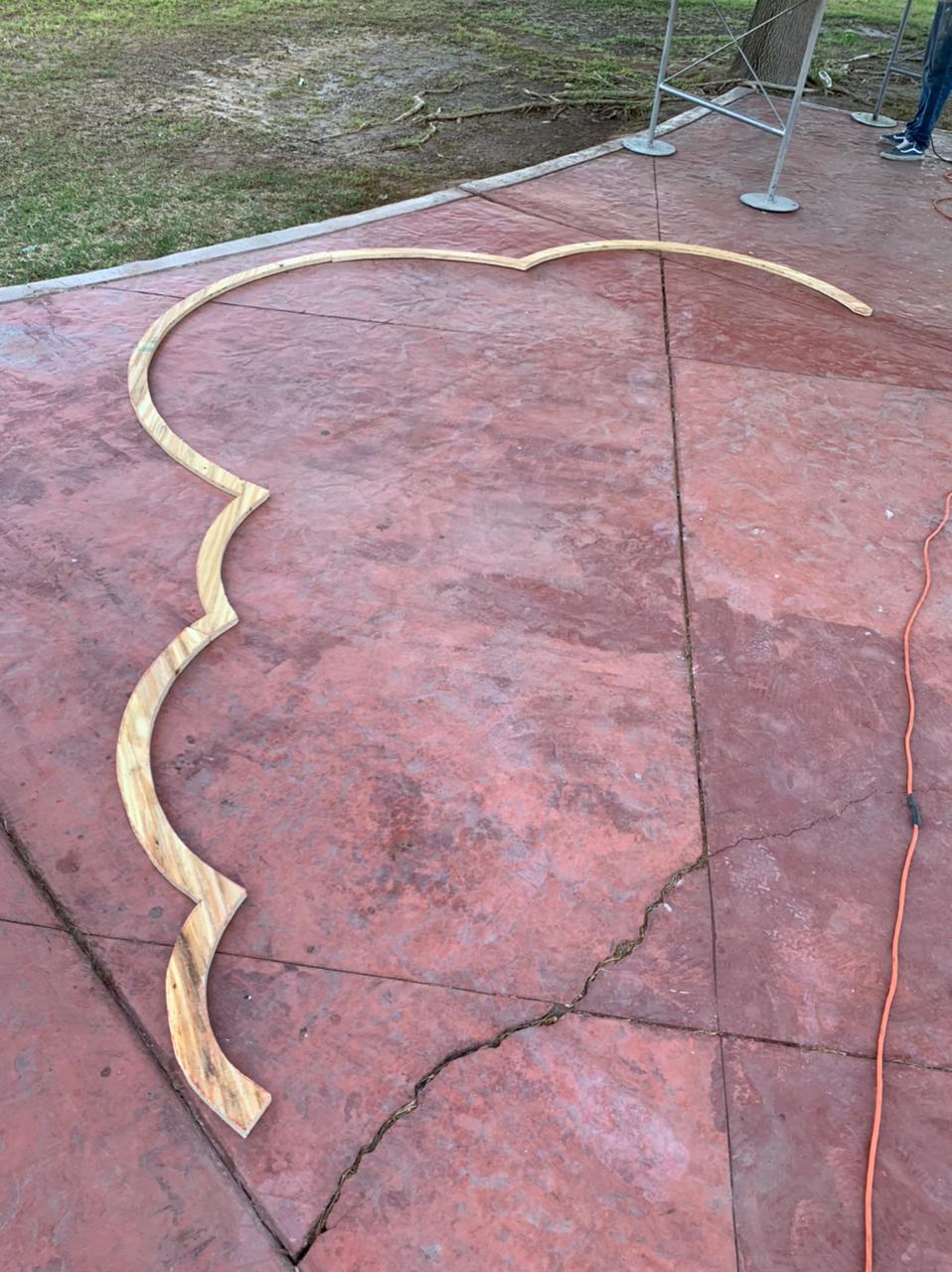
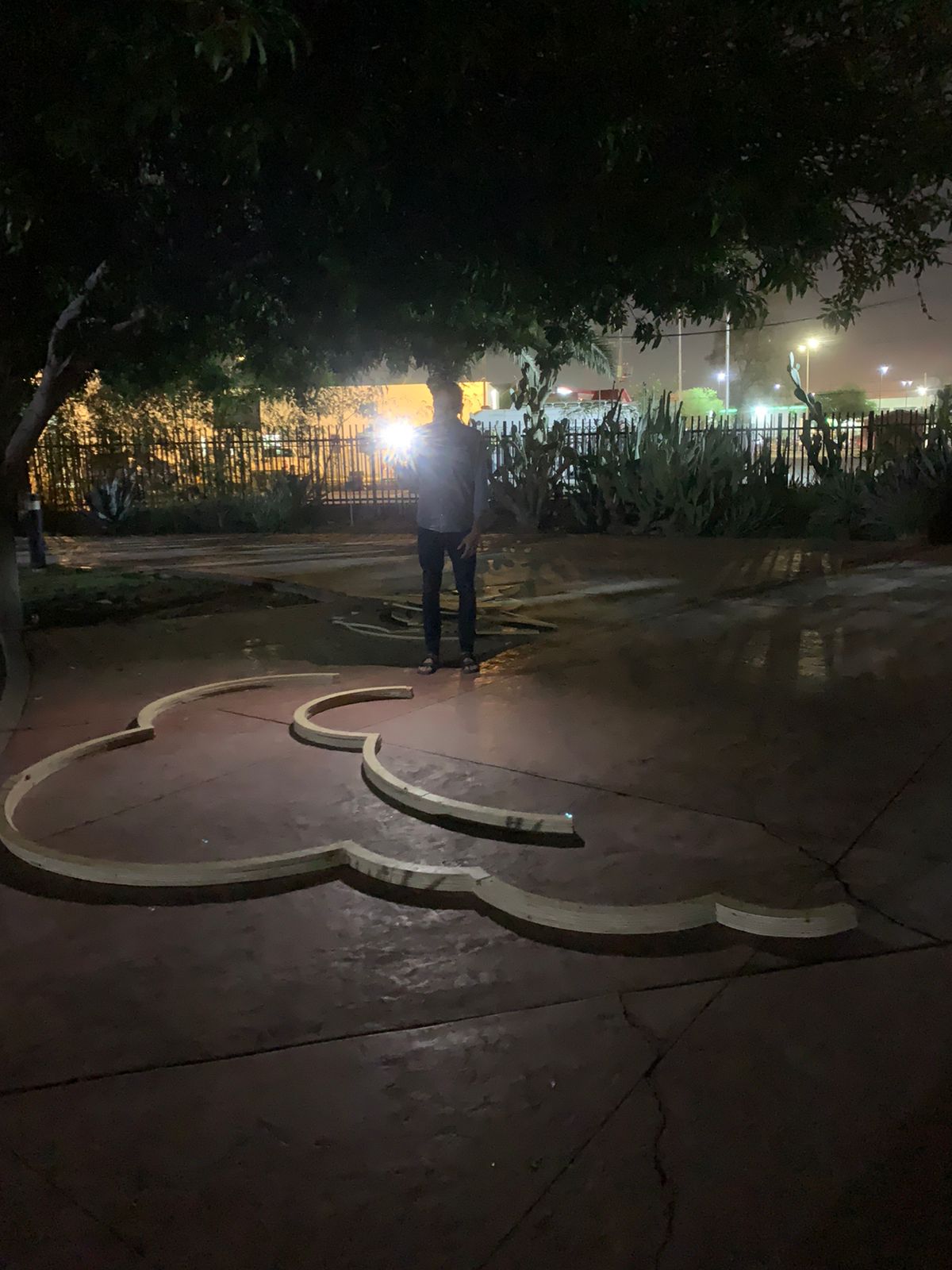
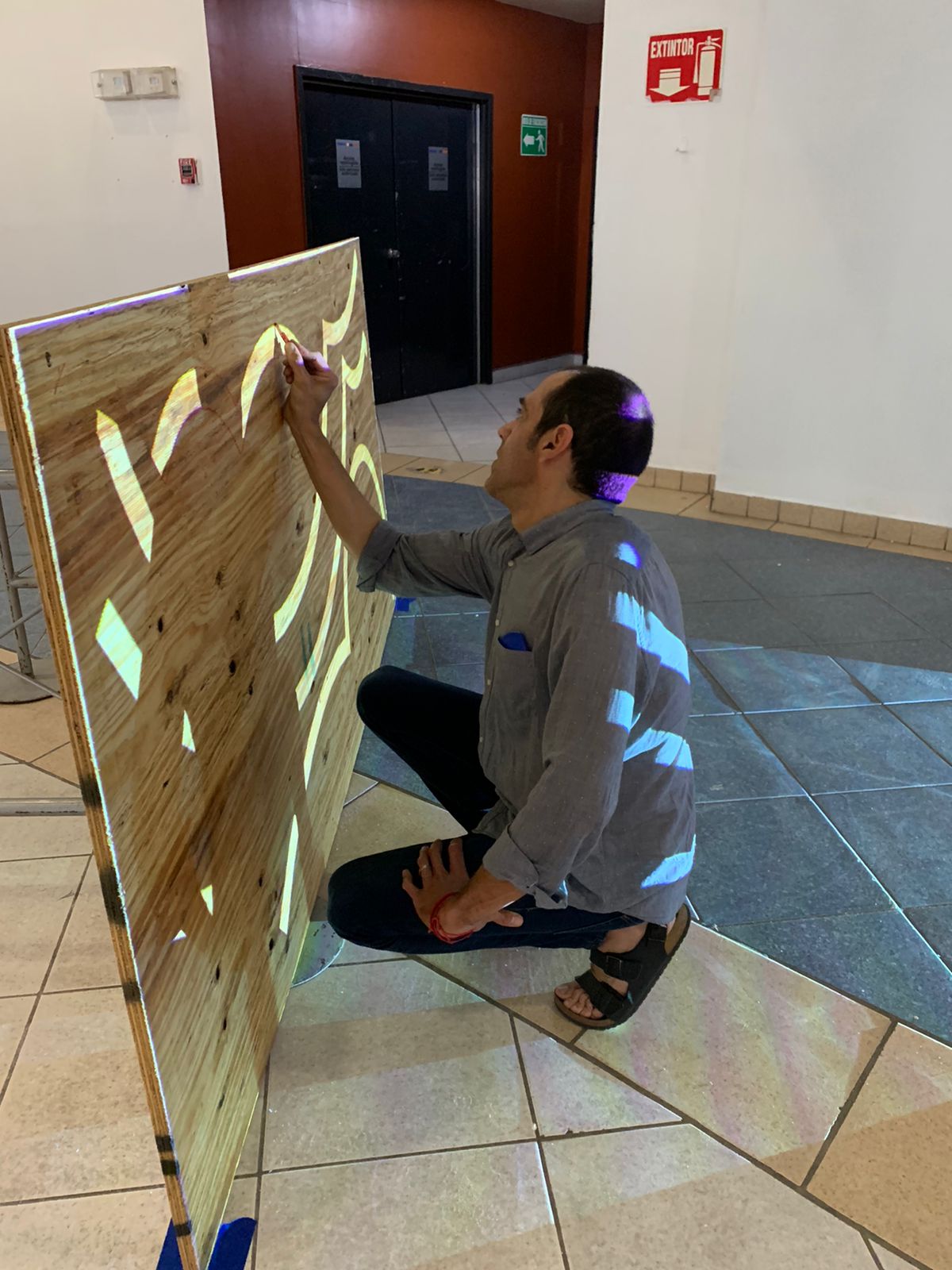
Beginning from a no-man’s-land, surrounded by socio-political constructs that conduce lifelines through funneled streams of constant trade and continuous cultural mutation, The EXCHANGE pavilion creates its particular spatial metaphor by opening up the walls and allowing free transit of anyone who coexists in this new place.
A place that intends to shelter a multiple array of collective experiences. Built to be seen from the inside out and vice versa, to transmit and receive data throughout every encounter, to be used as a source of inspiration and to capture the essence of the crossroads it creates.”
photo credits: @braulio_lam for World Design Capital 2024
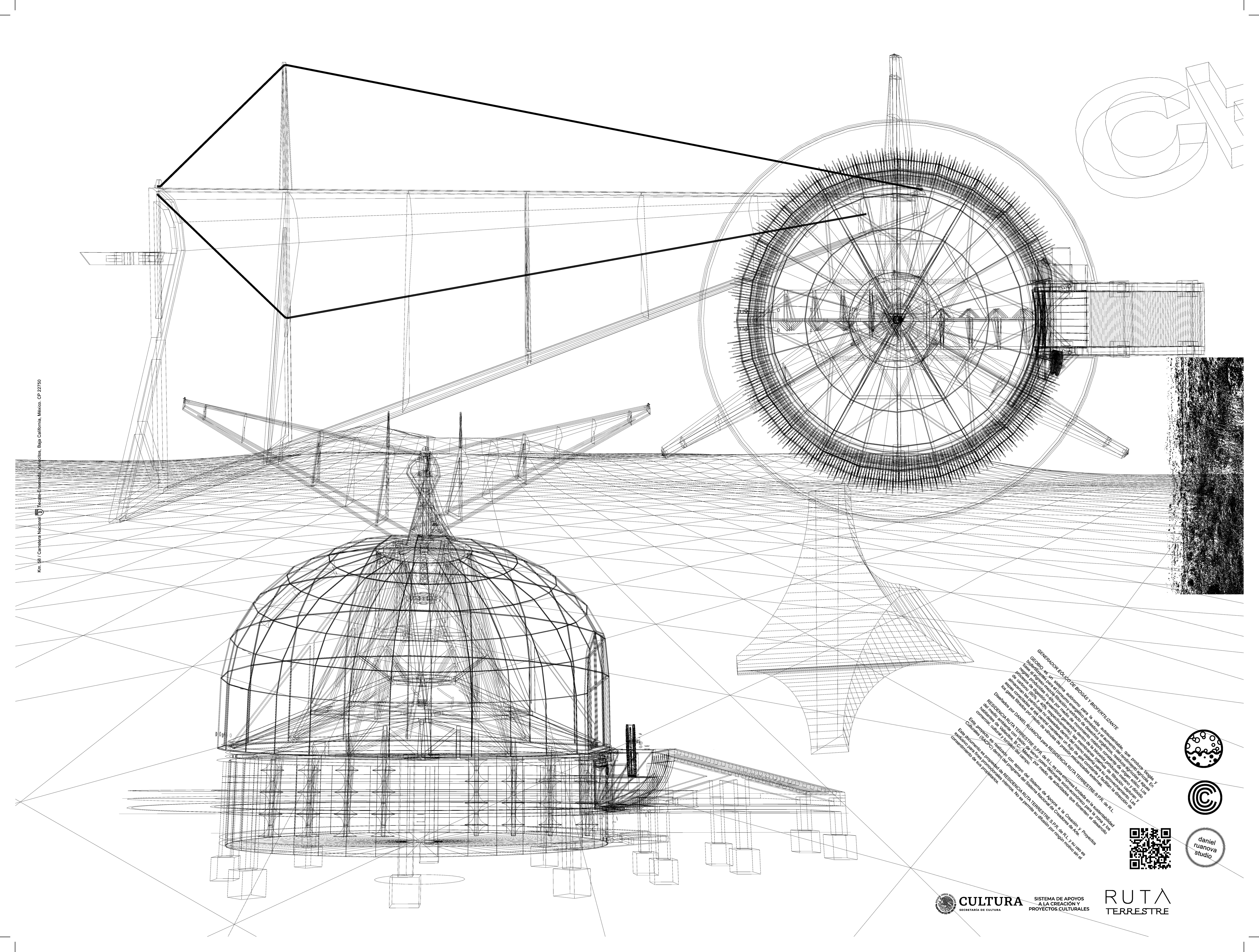
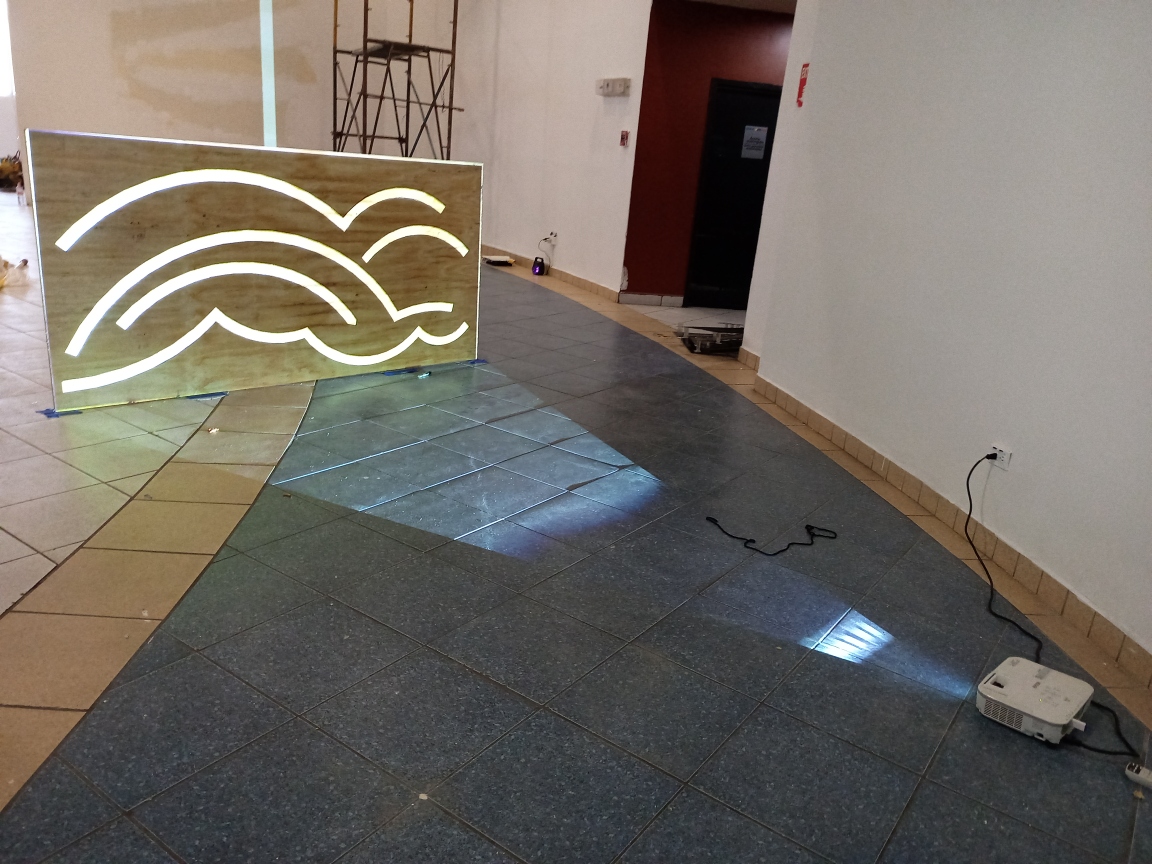
• GEOBIO Sistema autónomo para la vida campestre autosustentable, que produce biogás y biofertilizantes para el consumo energético doméstico y el aumento del rendimiento agrícola.
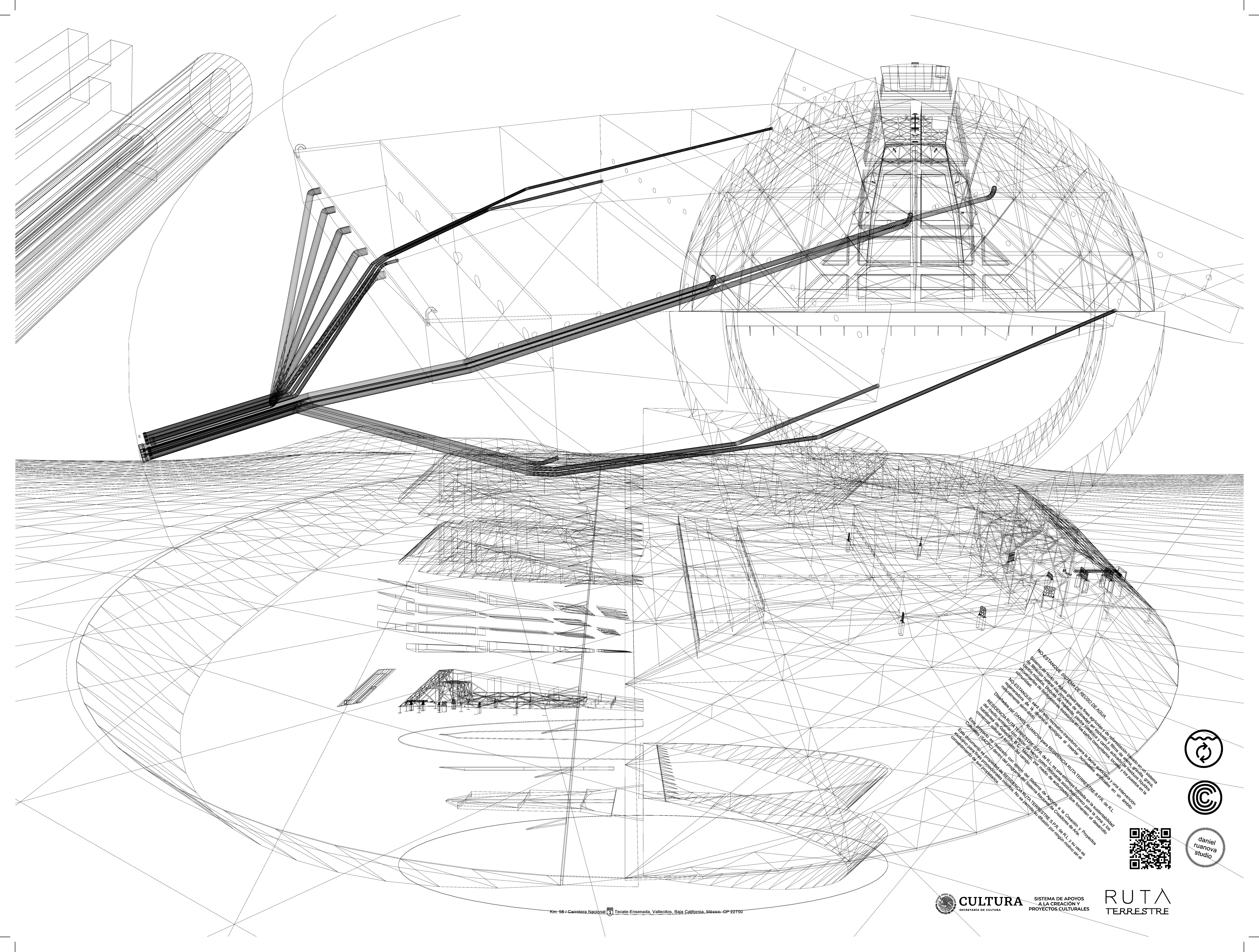
• NO-ESTANQUE Proyecto de reúso de aguas grises para fines recreativos y agrícolas basado en un sistema de filtración natural por bombeo de residuos líquidos provenientes de biodigestores instalados en baños, locales y puestos de comida cercanos.
• OBSERVADOR torre centinela Observatorio de cultivos y detractor de especies invasivas instalado en sitios específicos como aumentador de las habilidades perceptivas del ser humano en el campo.
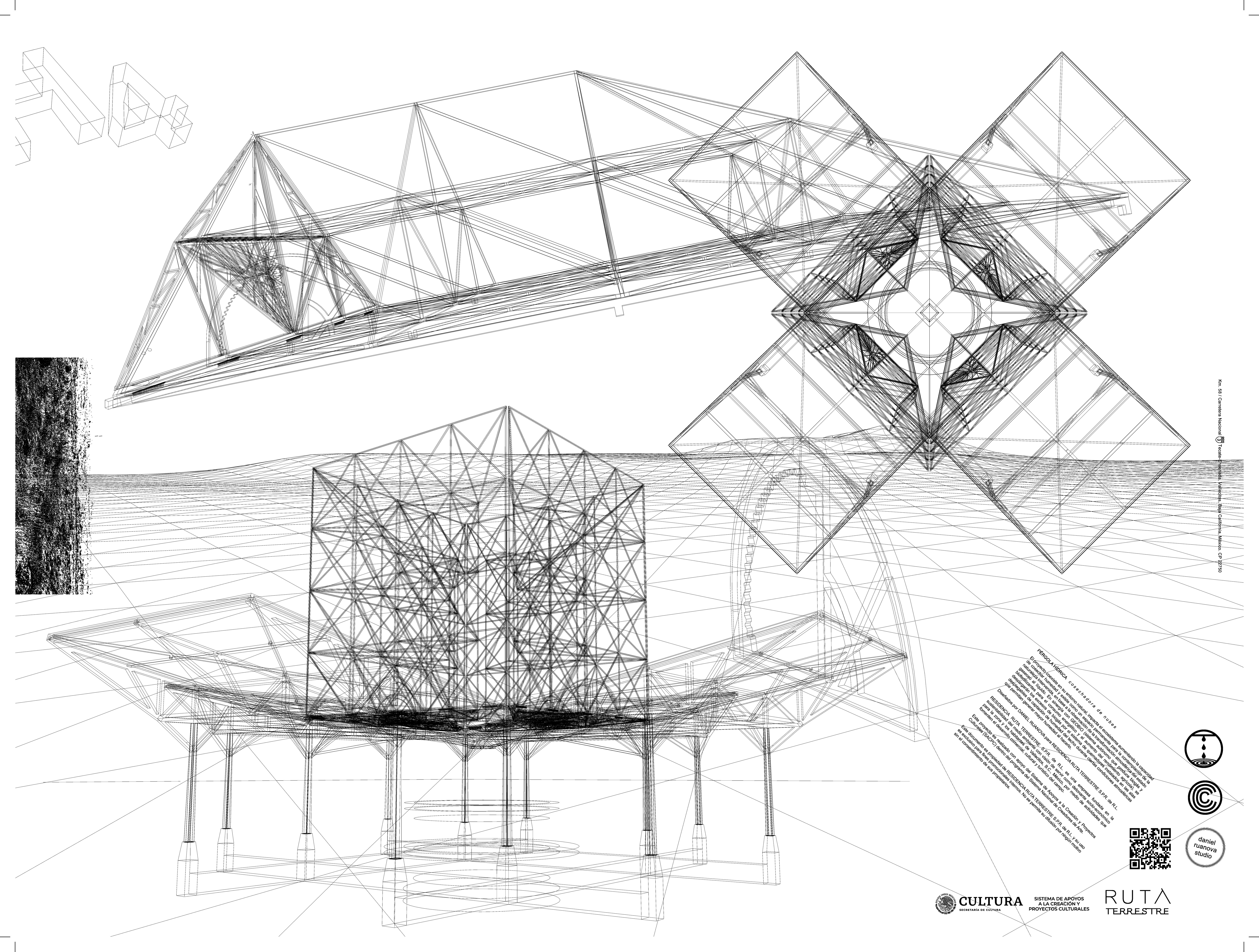
• PÉRGOLA hídrica Espacio de contemplación en base a la observación de la transformación atmosférica de estado gaseoso a líquido por medio de la captación de bruma.
• INVERNADEROS MODULARES REGENERADORES Espacio encapsulado y semi-sombreado para la investigación y experimentación en el germinado y propagación de especies endémicas de los chaparrales bajacalifornianos.
Since the first time I saw those photographs, I was in awe. There, right in front of me, framed by amazing craftsmanship, inside a beautiful vessel, housed in the most prestigious of institutions and guarded by the hierarchies of knowledge and power, was the evidence I was looking for to start contributing to a much needed source of symbols and imagery of peoples and their legacy in a land and its fruits of their labor: the Mexican diaspora in the Empire.
Nacho, mi socio, was the man who unlocked the gate, opened the door and unsealed the documents: a group of mid twentieth century photographic prints from the famous and honorable Ernesto Galarza´s not so famous collection in the Library’s Special Collections Department. At the time Nacho was working inside that most prestigious of institutions, and still is. Yet, I doubt he’s ever considered the hierarchies he’s had to obey as his Superiors or whatever. Quite the contrary, being made in una familia that was made in the land he so fiercely represents, Steinbeck’s East of Eden. He is a people’s scholar, an activist and academic that traversed the paths set before him by reaching plateaus he wasn’t supposed to.
Don Ernesto commissioned those photographs (photographer’s credits are still unknown) to evidence the damages guest worker programs were doing to labor rights movements in the US after the war. Images of hordes of Mexicans coming to steal American jobs. Yet, the Bracero Program was an opportunity for at least four million of these job stealing opportunists to earn an honorable living and eventually bring along their families into their new adopted Patria. No doubt Mr. Galaraza´s views on the program were very different than ours are now, nevertheless these images capture something very different than what he was looking for: New-Americans on their TRANSBORDER journey into their and their future families destiny. Witness to many more millions of Americans origins, eternalizing those men with a very long and strong future in their gaze.
We began making this story – his – story a collaborative transnational project around 2016, gaining momentum immediately because what these images represent just needed the light of day. He knew, and I learned, that almost every individual with Mexican heritage around California has ties to this history. In my case, my wife’s grandpa was one of these men and this was the nerve I’ve been looking to hit. Me atrevo a decir que we all have feelings for our elders of the utmost respect and many times of the highest dignity one could hope to achieve as a person. They were all beings of the times they lived through, shaped, hardened and made into the rooted trunks they were to most of us (hopefully still are to some of you).
As a borderrat, living life zigzagging a line, there was always an inconceivable feeling of separation between the story of millions of americans who were once mexicans and my clan´s bunkered down nationalism (natural emotional reactions after losing their geography and enduring years of unequal treatments from our northern neighbors). Yet, during my lifetime, things have changed dramatically, or maybe I’m just realizing that everything is always changing, evolving and continuously balancing itself out. The truth is that I changed. It took me some time to understand some knowledge one of my padrinos passed on to me at least two decades ago: chicanos and tijuanenses are complementary and derivative cultures, mirroring themselves while contrasting their distinct features. An ever expanding Mexican diaspora forged into an American cultural appropriation machine that offers individuals a better guarantee of safety, property and future. Eventually, when these two cultures merge, a cyclical force will appear from a centuries long mutation… already happening though. Either by rejecting the patriarchal ways of nationalist thought or wishing that real democracy takes over and does its thing, the borders that once stood are gone, as the borders that stand now will unequivocally shift, change, disappear or multiply.
All of these ideas rushed through my body when we initially began this Art & History venture back in Salinas, those lands that have provoked so much social change. From the valley’s market arranged marriage between nature and technology, through the influx of all origins of peoples who’ve put their hands in that soil as a means to and ends, to the crossroads of culture that penetrate through the fields on rubber wheels. Nacho and I knew what needed to be done with defining and uniting imagery such as the TRANSBORDER journey of the Braceros in all their hopeful stoicism, forever captured in The Galarza collection photographs.
We intentionally contribute in dissolving the mischievously curated historical narrative that these men were modern day slaves, pawns for polliticians or growers and anything that made them lesser beings. We stand with hard facts that state the opposite: a plurality of lifelong growth, experiences and agency that immensely shadows any minutes of shame imposed on by others some time ago. The images that we made public will eventually become collective memories for millions of families and anyone who welcomes all peoples who once immigrated to this land, everybody.
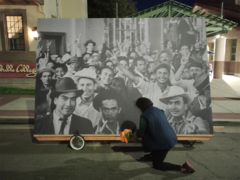
It took us more than a half dozen years to get the first major public project going, not everybody wants to revisit history, especially if their role isn’t as the good guy. A small collection of huge reproductions of the Galarza photographs became the stellar protagonists in a beautifully aging Californian surfing town during September. The local Museum put their money where their mouth was and helped us produce wandering billboard sized images on wheels that were shown to hundreds of locals at their neighborhood farmers markets around the region. Generating so much attention in town with cover stories in local papers, interviews on the local radio and television airwaves with all the current buzz that feeds everybody’s pocket size apparatus.
They came with flowers, fruits, families and stories, so many stories. All these offerings for those faces on the huge prints. Faces in places they’ve never been seen before. Not one or two, but large groups of able bodied men, ready for whatever that opportunity would bring and knowing that they have everything to gain. No shame, no bowing down, just proud Hombres Mexicanos. These images can define and unify millions of memories, these faces can be placed on any of those other images of crouched down sombreros with feet in the field, that ‘are’ very true and ‘are’ very much the norm like on the job pics of full blown (or blooming) capitalism, not portraits of people.
History is BIG, history is HEAVY, this project taught us that. History shouldnt be easy to handle nor comfortable to install. It also taught us that power always has a place at every inflection point in history, specifically its resources. It takes many initiatives and a fortuitous conjuncture to crack any well built structure. We did that, by organizing a good team on a solid foundation, batos unidos on a collective journey of historical recognition disguised as an art project.
Daniel Ruanova, Tijuana, B.C., MX, OCT MMXXII
_ _ _ _ _ _ _ _
AUDIO: listen to the stories of men who entered the US as Braceros and stayed.
Bracero Legacy Testimonials, produced by Ignacio “Nacho” Ornelas Phd. during 2013-2104.
The project, puts mid-fifties borderlands archival images on wheels, turning them into an orderly wall type succession of wandering billboards that translocate from the local Museum to different Farmers Markets in the region, while transmitting audio testimonies of Braceros and their descendants & creating temporary installation-spaces for cultural community dialogues where there weren’t any.
Produced by the Santa Cruz Museum of Art and History for their CommonGround Biennial: (click on the image to visit the MAH’s website)
_ _ _ _ _ _ _ _
TRANSBORDER / The Bracero Legacy Project* (Daniel Ruanova & Ignacio “Nacho” Ornelas)
Courtesy of the Stanford University Libraries Special Collections (Ernesto Galarza Collection)
Special thanks to Roberto Trujillo, Associate University Librarian and Director of Special Collections
Project Collaborators:
SPONSOR / The Santa Cruz Museum of Art and History, special thanks to Marla Novo
PRINTERS / Community Printers Santa Cruz, special thanks to Ross Newport
FABRICATION / Santa Cruz Barrios Unidos, special thanks to Nane Alejandrez
ENCORE SPONSOR / Luis Alejo, Monterey County Supervisor
SANTA CRUZ BARRIOS UNIDOS Team:
Nane Alejandrez, Spiritual and Community Advisor
Aaron Chermak, Production and Logistics Coordinator
SERIO, Production and Logistics support
Kalikata Umbula, Artist in Residence Advisor
*The Bracero Legacy Project was founded in Salinas CA. in 2016 by D.Ruanova & I.Ornelas as a multidisciplinary approach for creating new dialogues about Americans by engaging the Mexican farm labor experience through Art & History.
NEWBIE / propuesta para Museo Sol, MXLI, BC, MX. dentro del proyecto ENCUENTRO BINACIONAL 2022, curaduría de Marisa Ciachiolo y Gestión de Marco Miranda y Grupo Filamento.
…el objeto procura visibilizar lo débil, ridículo y fútil que parecen los tratados multi-institucionales-transnacionales que se proponen para mitigar el impacto ecocida de nuestra existencia actual…
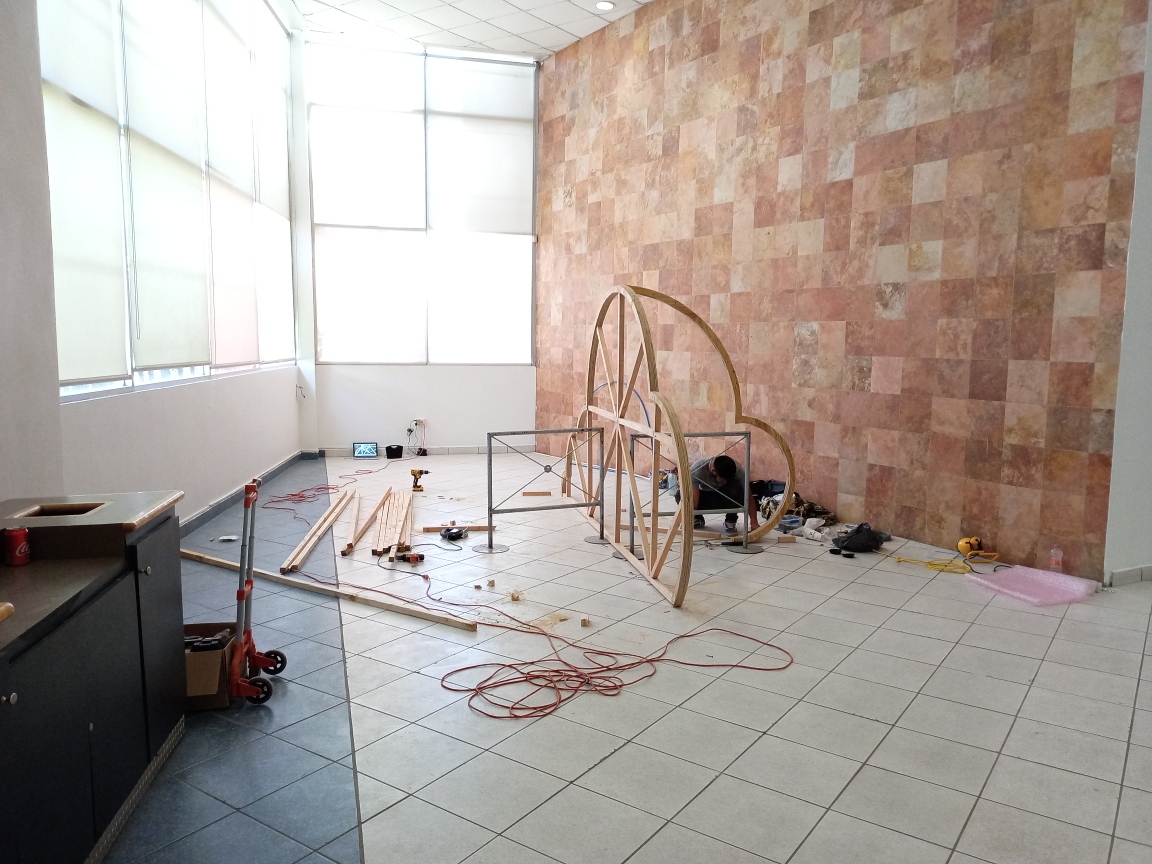
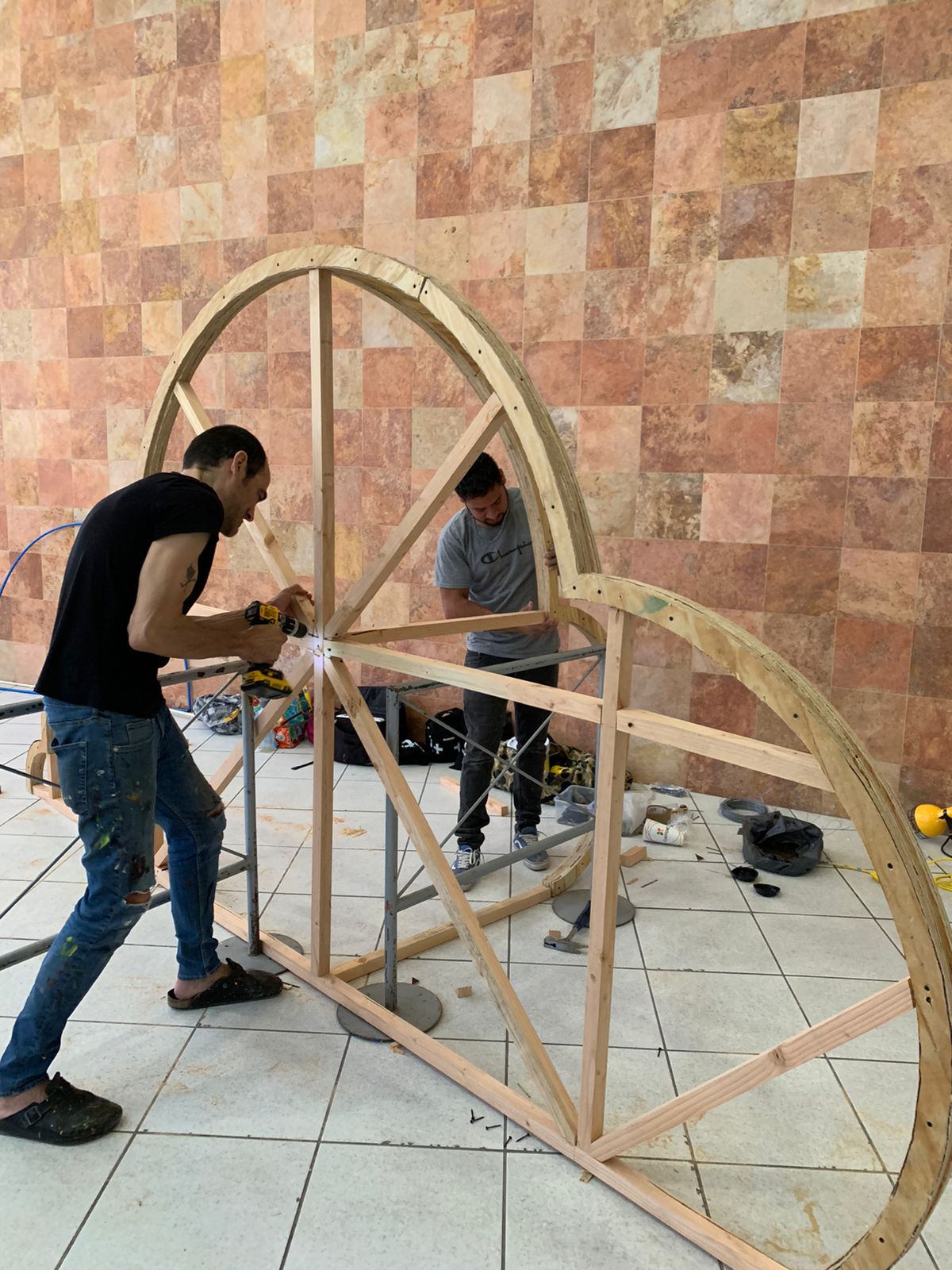
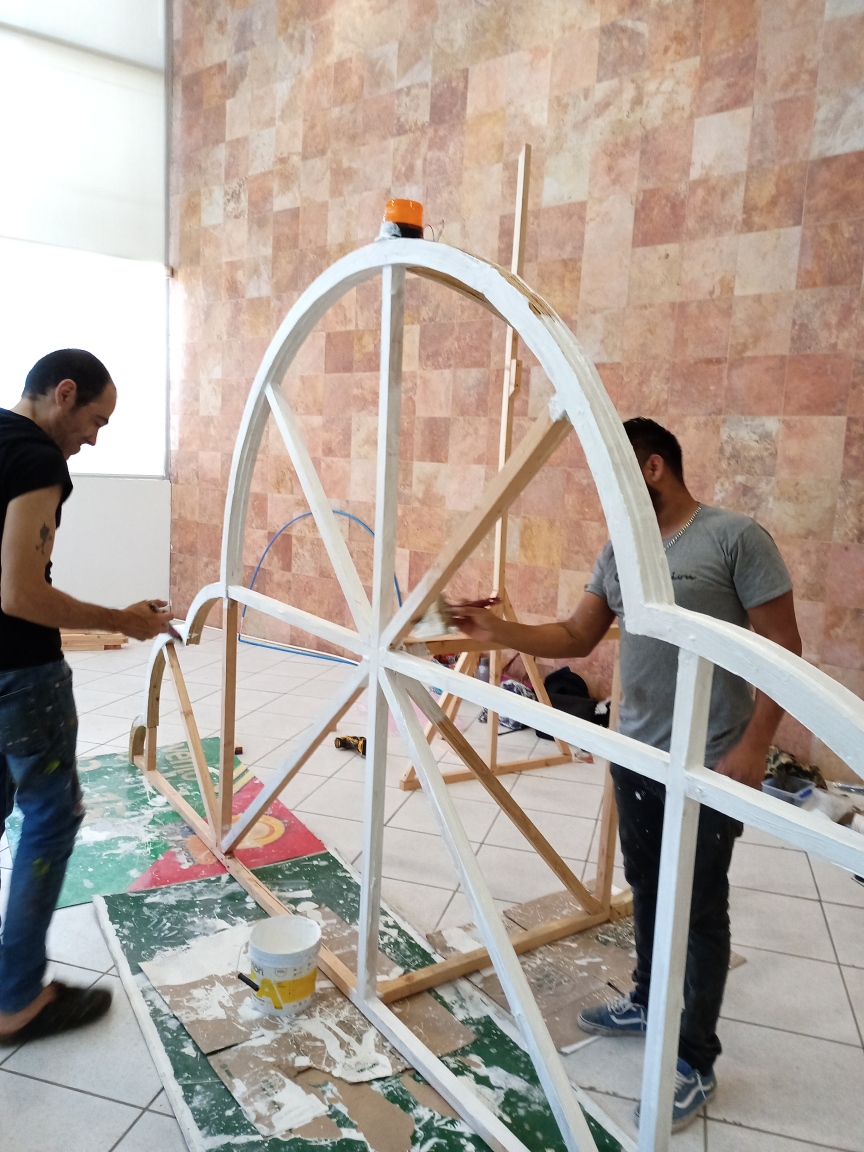
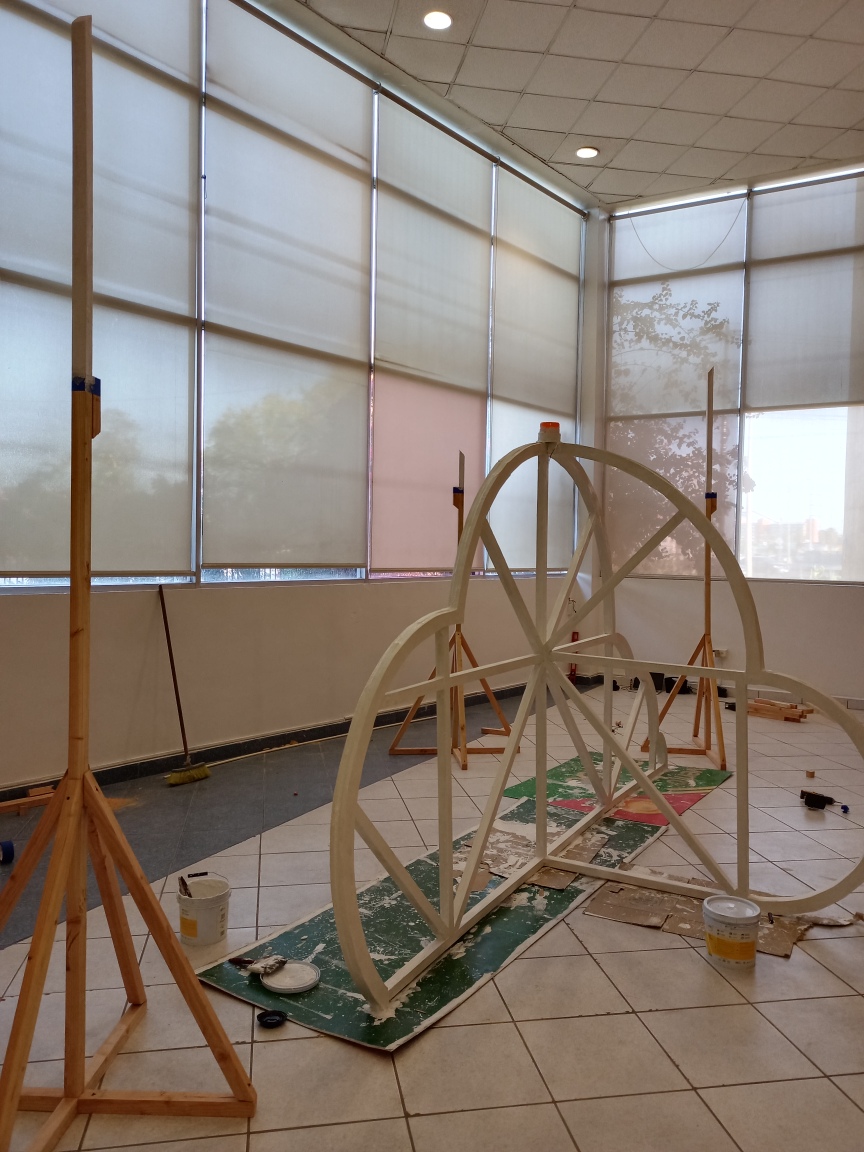
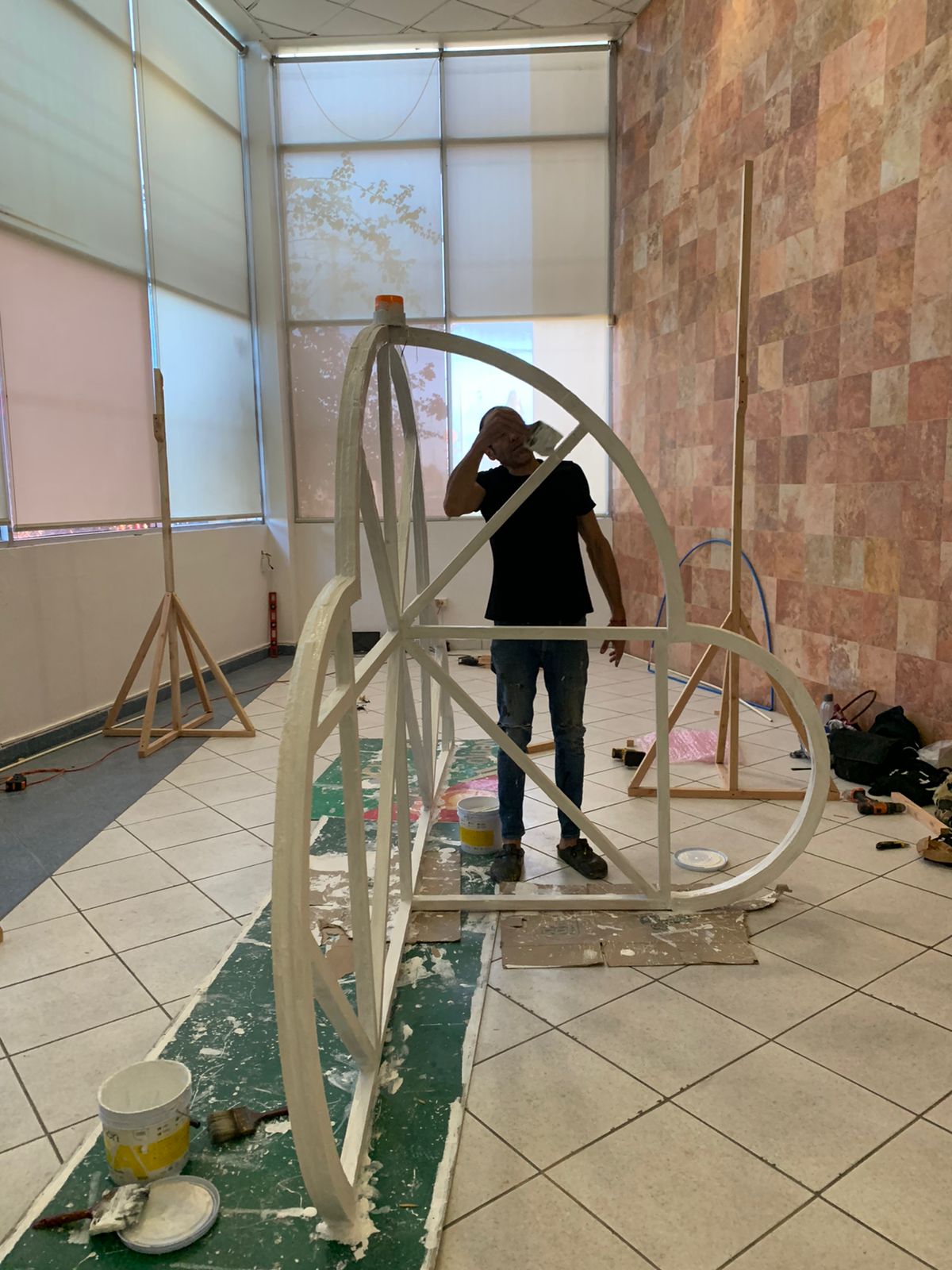
Estructura ligera fabricada in-situ con barrotes y triplay de madera, ensamblada con tornillos, pintada con impermeabilizante ZAHORI blanco y un estrobo en la punta superior. / Dimensiones: 4 x 4 x 2 mts. Fabricación in situ en dos días.
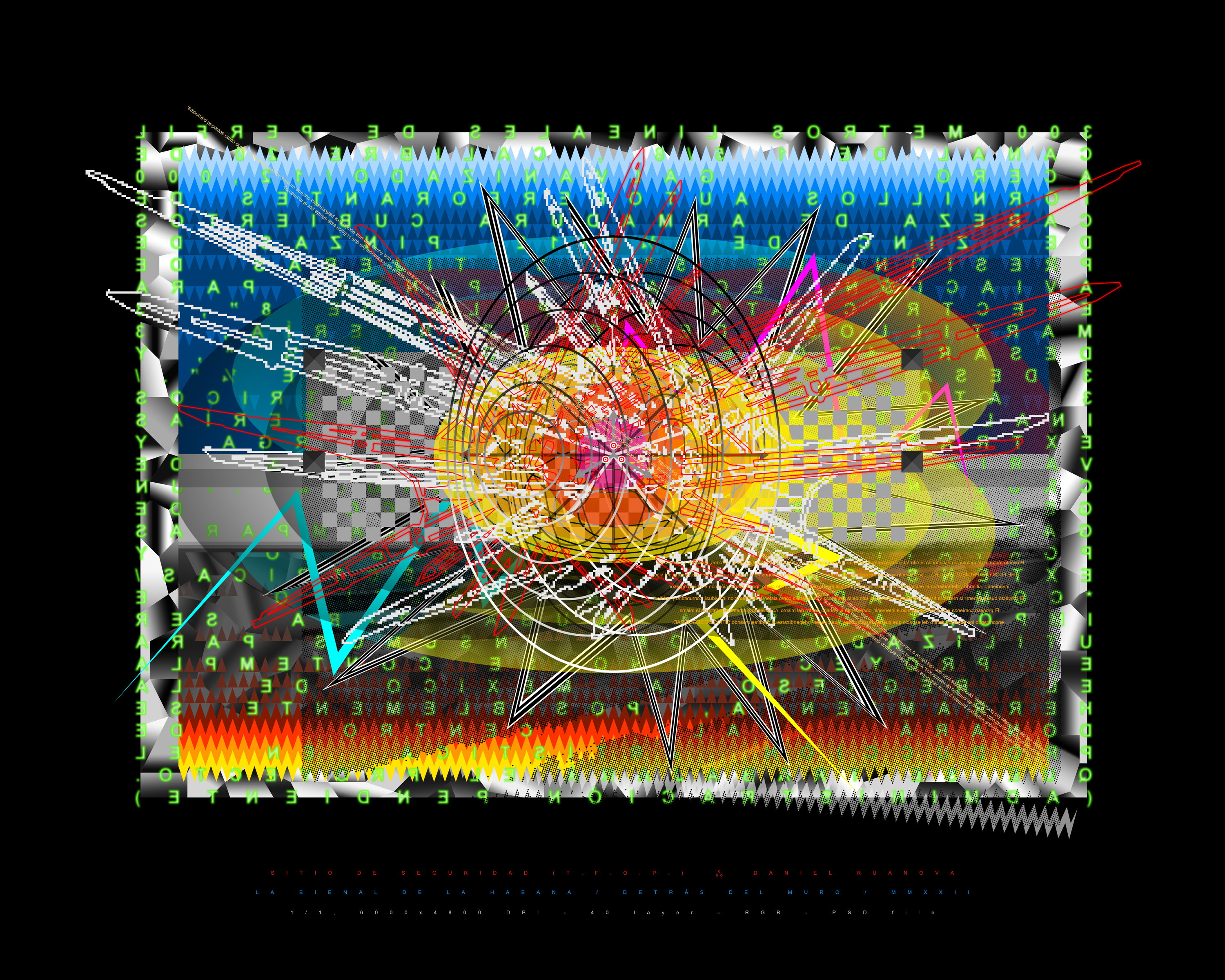
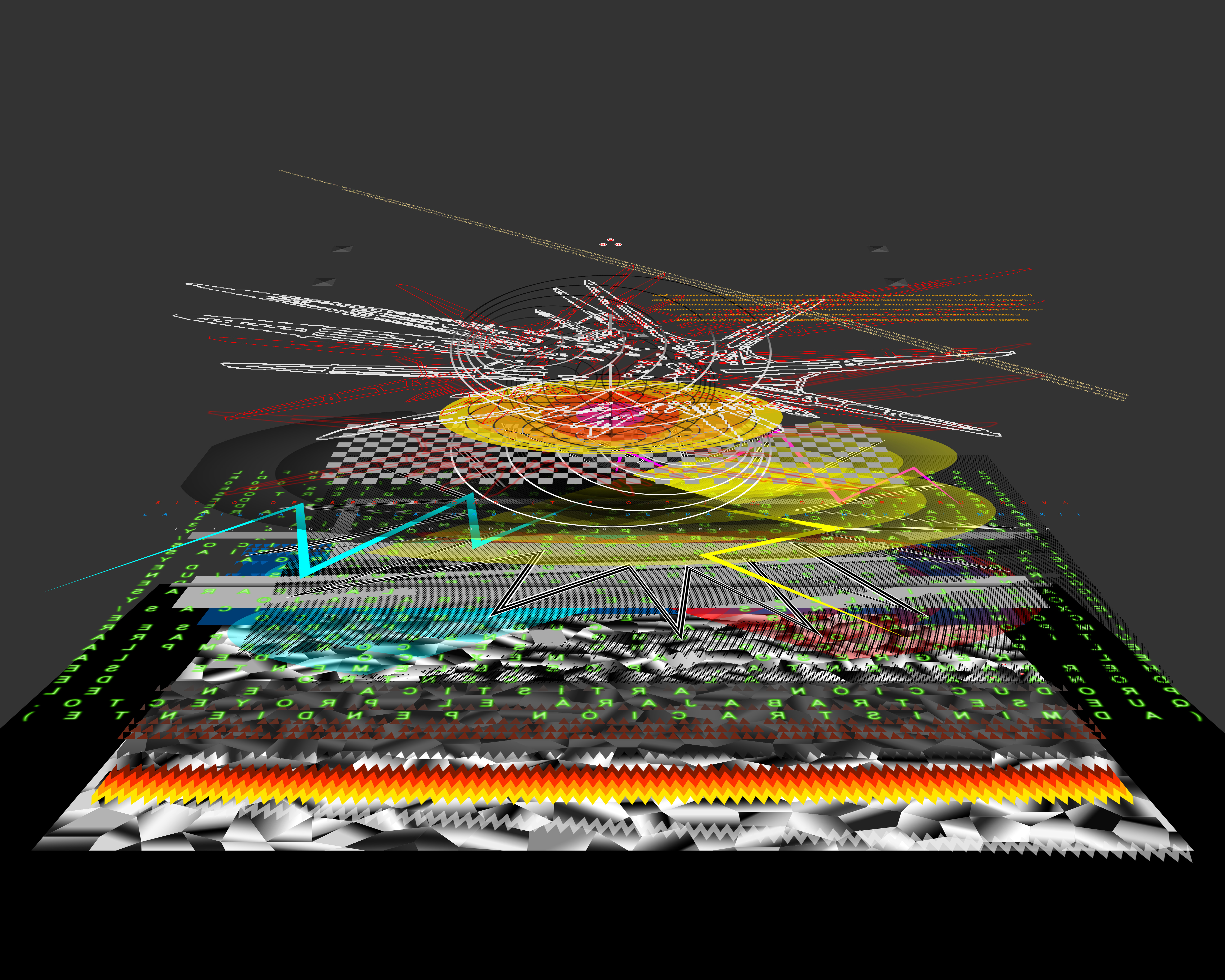
image: preview of original PSD file. courtesy of the artist
As the only spatial study and conceptual blueprint for the imminent onsite installation of Daniel Ruanova`s large format physical sculpture in Cuba for La Bienal de la Habana 2022. This NFT project is made to enhance the comprehension of space, time and intention in regards to why install an idea such as this one, in a place such as El Malecon de La Habana, the Havana pier.
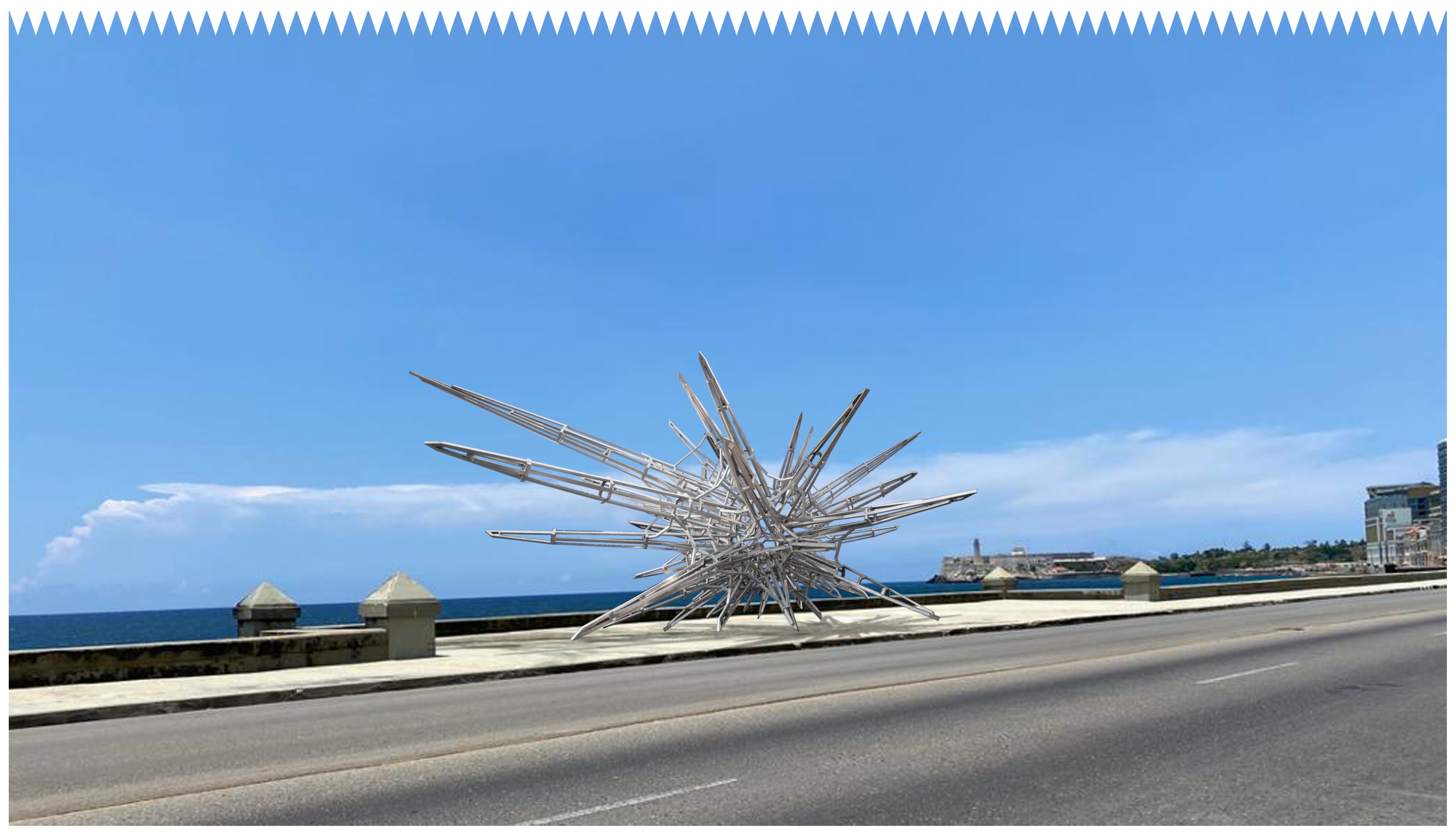
image: photo render of previous edition of physical sculpture installed on the Havana pier. courtesy of the artist
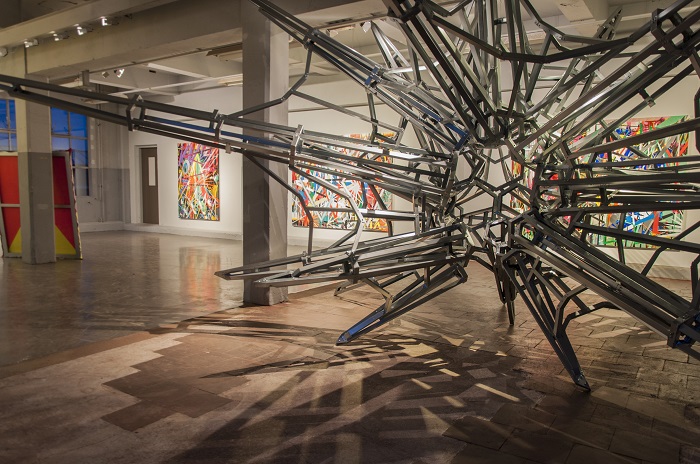
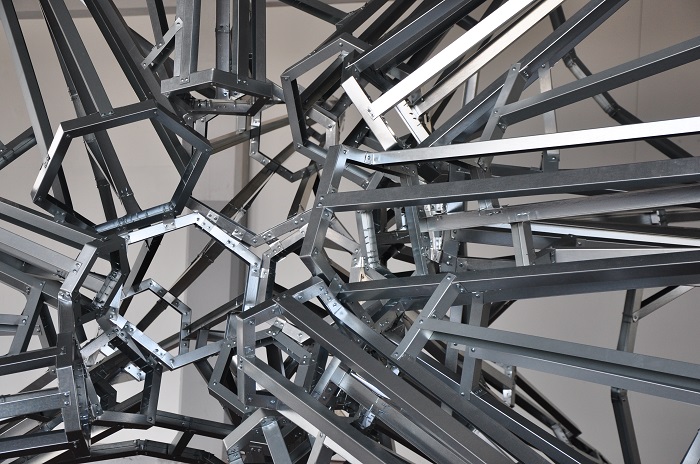
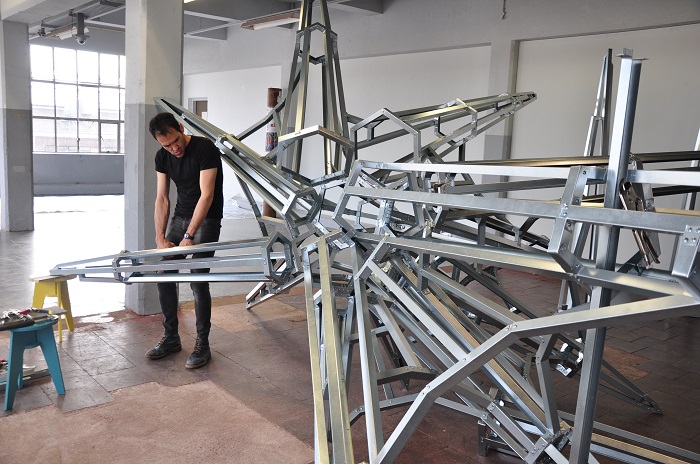
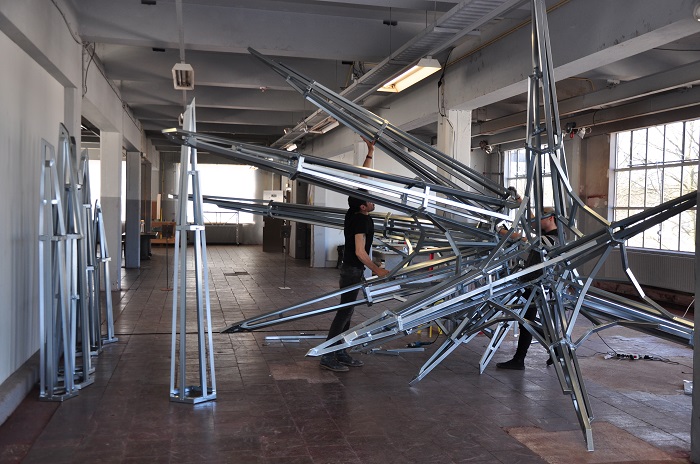
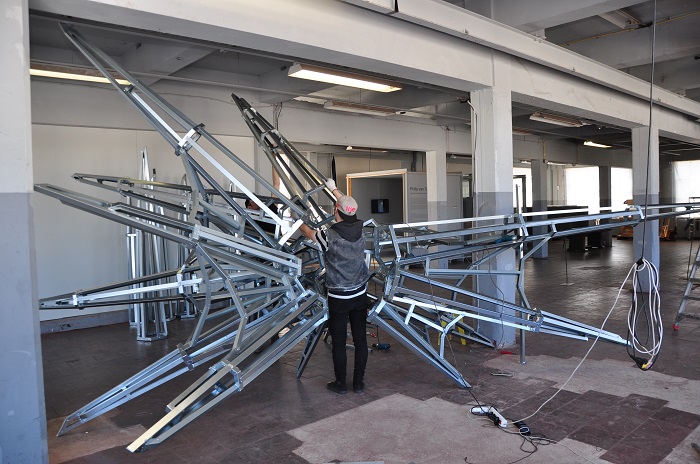
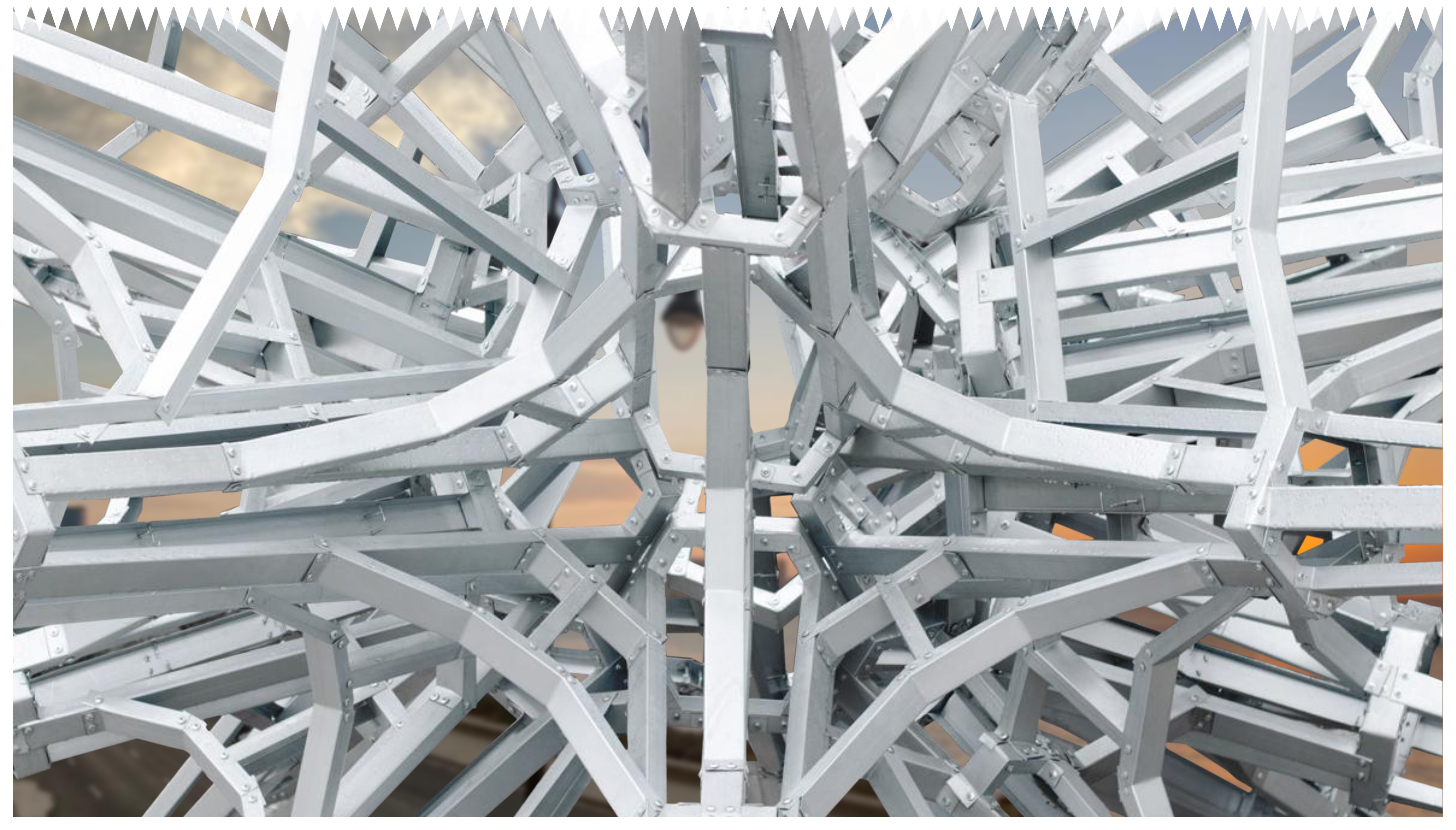
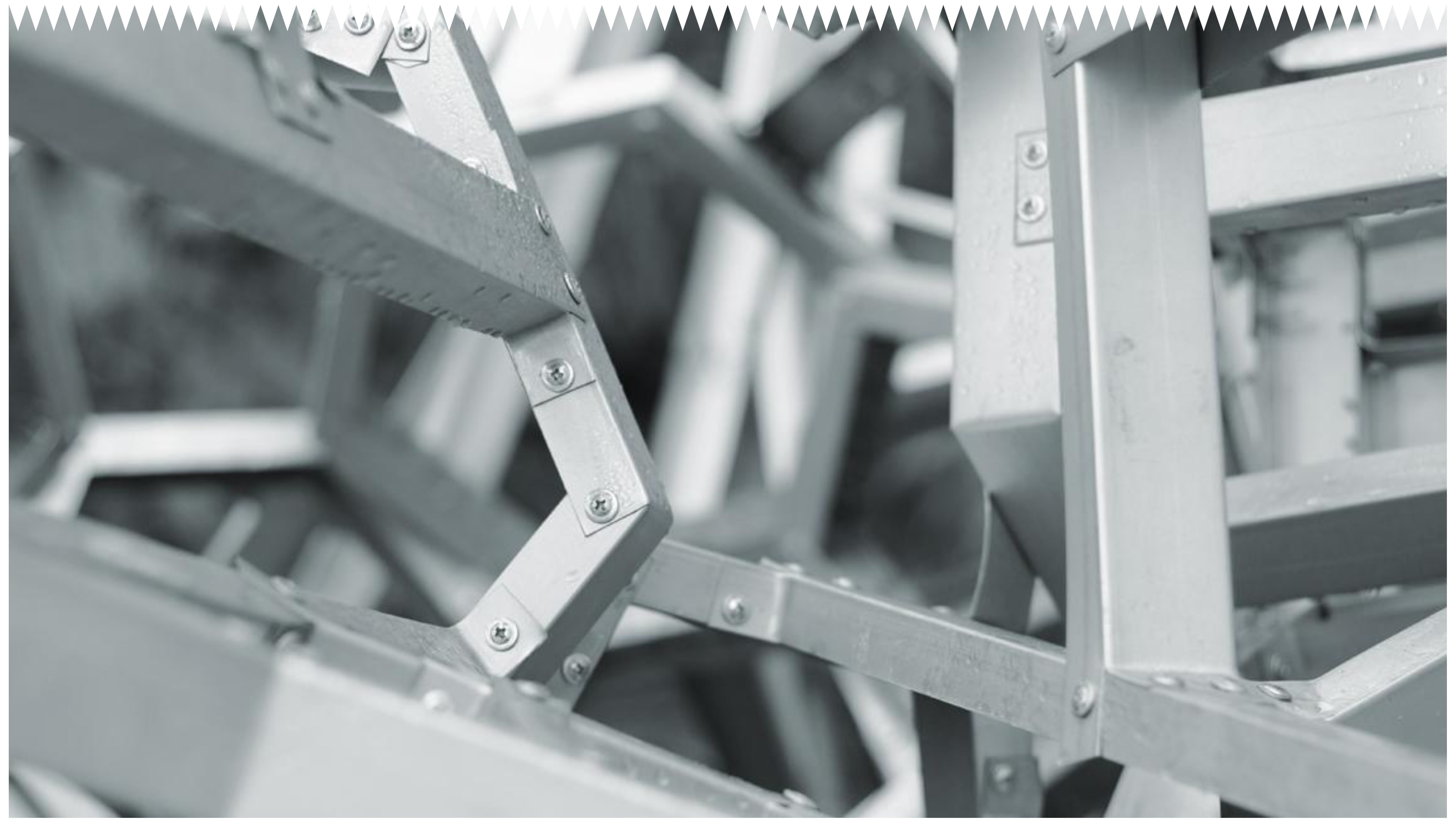
T.F.O.P. (The Fuck Off Prject) is a mutable on-site sculptural installation project made with lightweight construction materials (cut, bent and screwed galvanized steel studs). The project is reconstructed according to the context in which it is exhibited. The dimensions of the installation depend on the size of the site, invading, besieging and defending the space of its public; attacking, and at the same time, motivating a certain type of fascination with the offending object. The project seeks to generate the physical and conceptual metaphor about the use of security and violence as a system of individual, community and political protection. The process begins by studying the space to intervene, observing the traffic within it, knowing its memory or lack of it, finding the spaces within the space that can be sheltered, that can become independent when divided by creating SAFETY ZONES (SITIOS DE SEGURIDAD).
image: photo detail of previous edition of physical sculpture juxtaposed on the Havana pier. courtesy of the artist
Variations and derivatives of the project have been shown throughout the globe, in each specific context the work creates totally different reactions depending on the viewing public’s perception with safety, danger, security, power, labor, paranoia, etc… From its initial materialization in Northern Mexico where the danger of being kidnapped and held for ransom was so real in 2008 (the year this project began) that a construct with these characteristics seemed necessary, to forming part of collections and bringing a pseudo penetrative sense of empowerment that accumulating weapons creates in the citizens of American empire, the work has been shown in Russia, China, The Netherlands, among other countries, where each citizenry has their own set of rules and each culture looks at its own demise in a unique light.
image: photo detail of previous edition of physical sculpture. courtesy of the artist
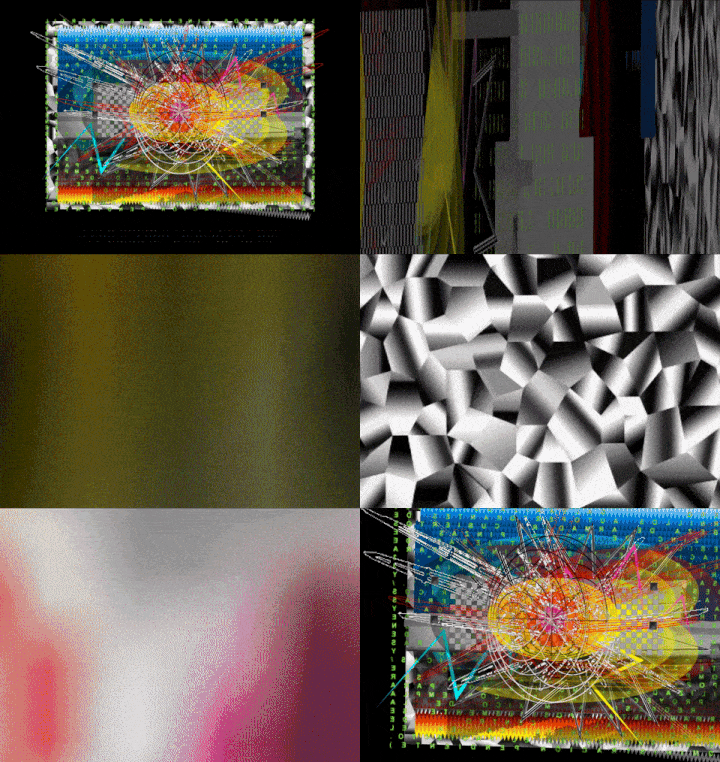
The sale of this NFT, a 1 of 1, 6000 x 4800 pixel, 40 layer*, RGB, PSD file, and it’s maximum of 3 minted derivatives (1 GIF file, 1 MOV file as in the Youtube video & 1 printable TIFF file that the artist would eventually sign, included with the original PSD file) will enable the artist to successfully fund the aforementioned physical sculptural project in Cuba, also, the artist will afford to spread the resources to four or five well paying part time jobs for art students in Havana (for the duration of six months) that will definitely change their current financial situation. Last but not least, the artist will proceed with the donation of all materials, tools and supplies purchased in México and shipped to Cuba for the production process, towards the cultural institution that will be involved in the production and post-production processes with the artist. If, and only if, the cost of the NFT exceeds the previous cost of the artist’s similar works on the conventional art market plus the estimated production costs of the whole project, the artist will donate the physical sculptural piece to the people of Cuba, for their future viewing pleasure and as a public gift from the artist and the collectors of this project.
▲▲▲▲▲▲▲▲▲▲▲▲▲▲▲▲▲▲▲▲▲▲▲▲▲▲▲▲▲▲▲▲
Check out SITIO DE SEGURIDAD (T.F.O.P.) by Daniel Ruanova at Crypto.com NFT!
This project is dedicated to the memory of Juanito Delgado. An extraordinary curator, an amazing human being and a force of good for those who were touched by his presence and ideas. The future installation of the SITIO DE SEGURIDAD (T.F.O.P.) on the Havana Pier was part of Juanito´s vision and including us in his DETRÁS DEL MURO lineup is an honor that I will always carry and mention to the world.
Hace casi treinta años, jugaba fútbol americano escolar. Jugué en un equipo campeón y en otro totalmente lo contrario. Recuerdo mucho más mis experiencias en el segundo equipo (los perdedores) que mis experiencias con el primero (los ganadores). La camaradería que se vivía con los campeones estaba basada en la ilusión de ser superiores, ganadores, de ser más chingones que los demás. Ganamos todo y eso se esperaba de nosotros. Con los otros, con los que nunca ganamos un solo juego, se sentía una realidad mucho más plural, la mayoría de nuestros jugadores no iban a nuestra escuela. Cabe mencionar que ya me habían expulsado de la escuela campeona y la escuela nueva fungía como un refugio para muchos como yo. Nuestro coach, conformó un equipo similar a como se hizo la matrícula de este mi nuevo centro educativo: dando segundas y terceras oportunidades a los chamacos que perdían su lugar en otras partes.
Lo recuerdo claramente: Se me acercó un compañero cuando nos tocaba pagar el uniforme nuevo, sacó de una mochila una docena de caretas viejas de americano que le dió su padre para venderlas entre nosotros y así poder pagar su uniforme. Nadie las compró, estaban muy usadas y eran estilos viejos… Aún recuerdo cuando le pedí los pesos a mi madre para poderlas comprar, según yo las iba a arreglar y vender. Mi madre sabía lo contrario, allí se iban a quedar, pero también sabía que esos pesos eran la oportunidad para que otro chamaco pudiera portar un uniforme nueva con orgullo. Ese equipo fue un desastre en lo deportivo, muchos compañeros ya no viven, sucumbieron ante los males que el deporte trata de evitar.
Me reencontré con las caretas cuando limpiaba la casa vieja de mi familia durante la pandemia… inmediatamente regresé a esos momentos e ideé este objeto que encapsula aquella parte de mi vida. Las caretas protejen y resguardan ante el golpe que viene. Estuvieron allí por tres décadas, esperando servir de nuevo; cuidando de las ilusiones de aquellos chamacos (hoy señores) que han sobrevivido con ellas.
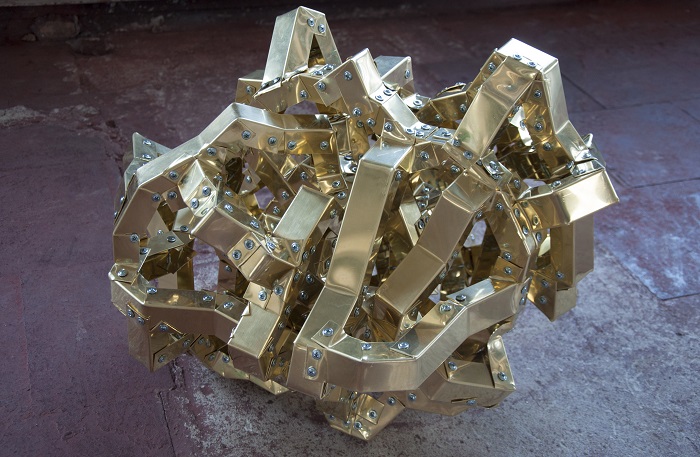
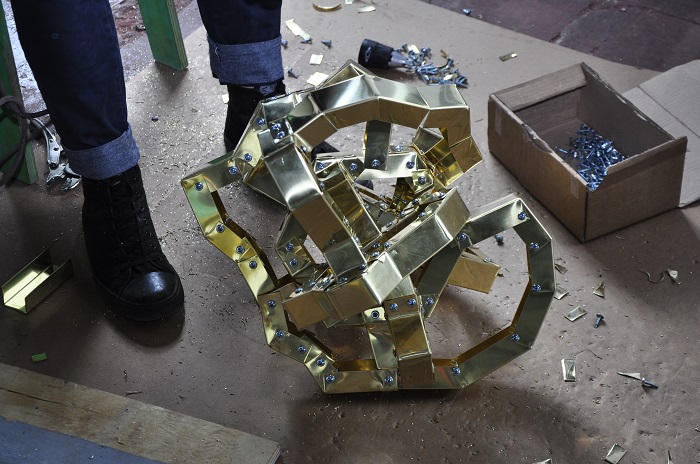
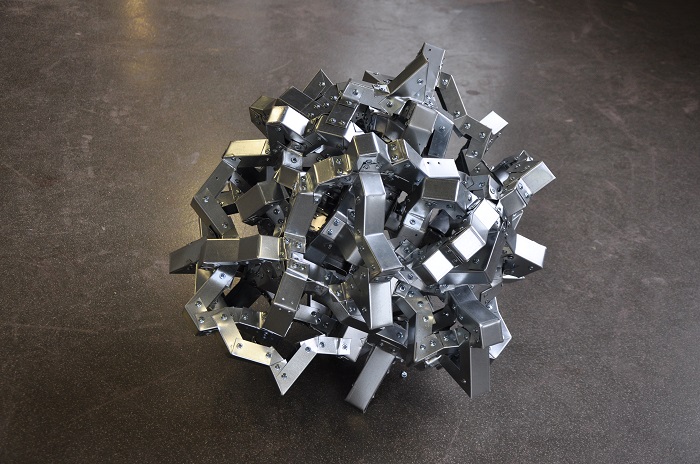
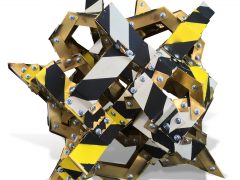
An ongoing sculptural assemblage project that utilizes custom made brass studs (that copy the form of regular light weight construction material) painted with enamel-acrylic to simulate barriers – guard rails – limits – and – borders.
///
Proyecto en curso de ensamblaje escultórico que utiliza perfiles de latón hechos a medida (que copian la forma de material de construcción lijera regular) pintados con esmalte-acrílico para simular barreras – barandillas – límites – y – bordes.
BARRIER BALL (1), 1’ x 1’ x 1’, acrylic enamel paint, custom made brass studs & galvanized steal screws. 2020
BARRIER BALL (2), 24″ x 20″ x 18″, acrylic enamel paint, custom made brass studs & galvanized steal screws. 2020
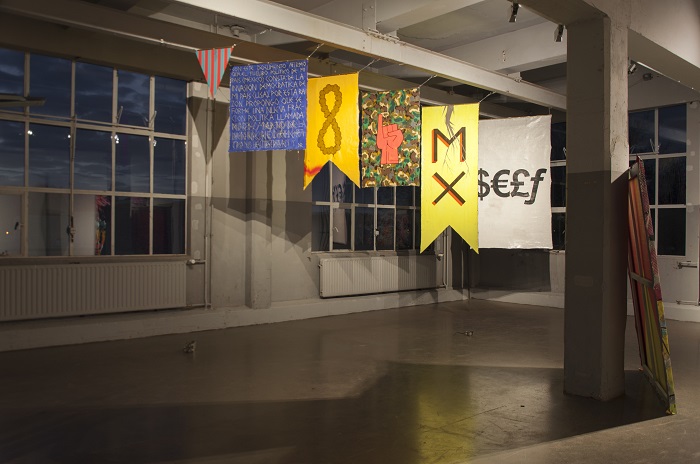
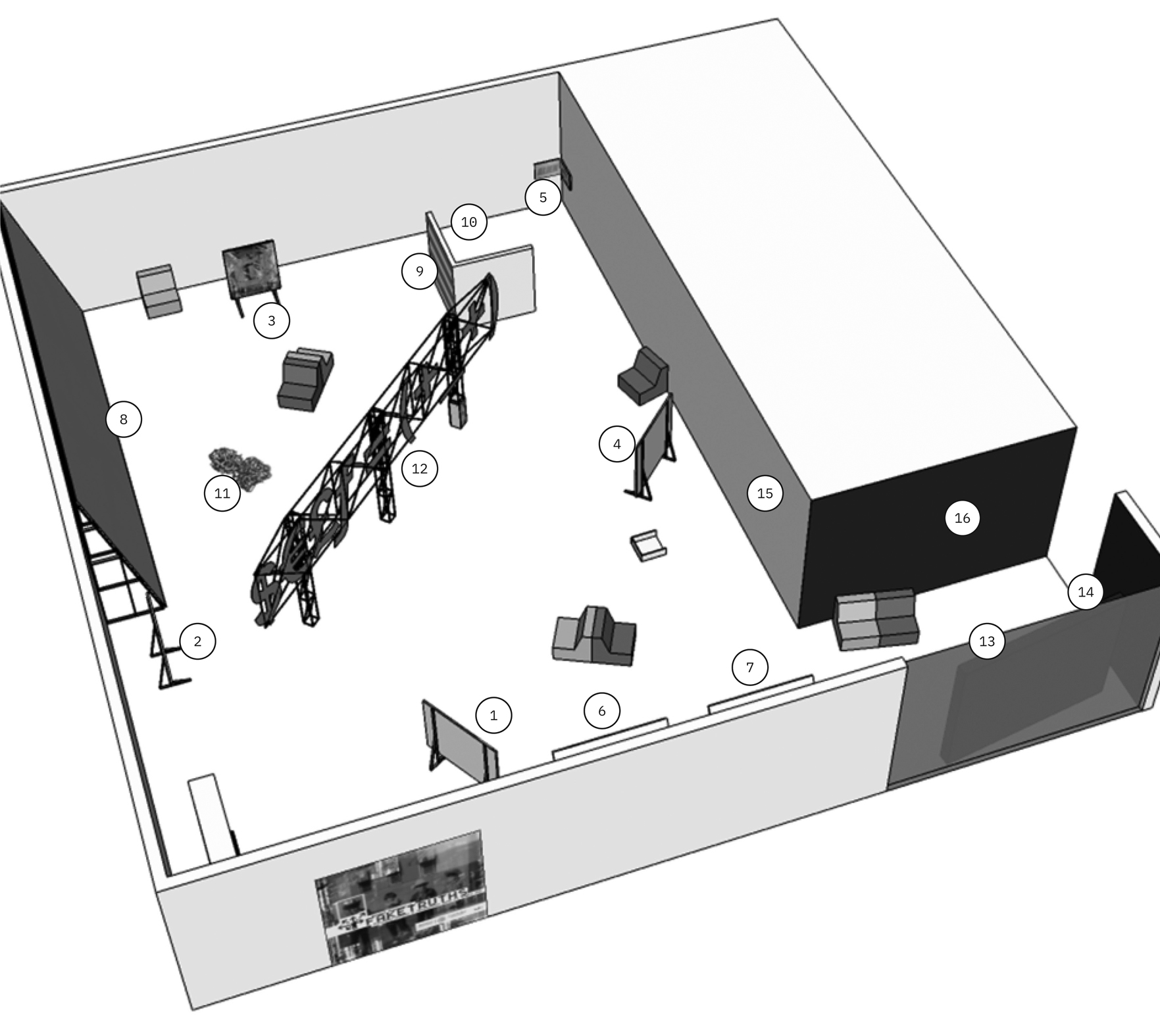
A partir de su experiencias con las culturas de la frontera Daniel Ruanova ha dispuesto para el visitante este espacio cuya característica es expandir la narrativa del cubo blanco expositivo. Los contenidos y las formas se desprenden de sus muros y se proyectan sobre el transeúnte. El no-lugar nos compele a tomar asiento y navegar por la exposición.
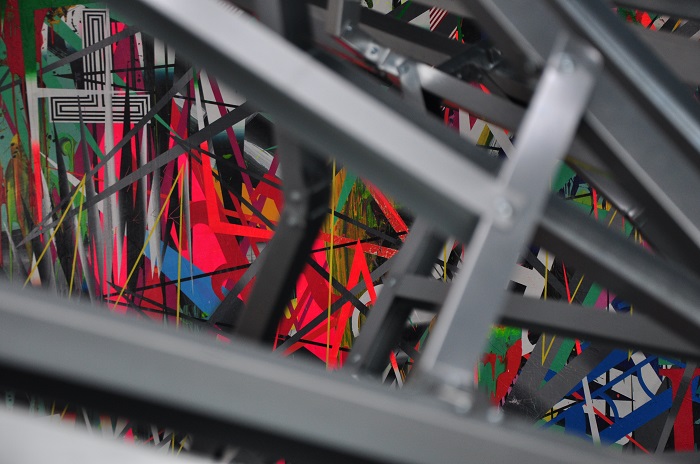
Las pinturas devienen en pantallas que reflejan la superposición de lenguajes digitales, buzzwords y frases anidadas en el inconsciente. Imágenes evanescentes y fórmulas algorítmicas conforman el cyber art que envuelve al usuario. Declarativa y procesual, la exposición ofrece la experiencia de una urbe postnacional; un laberinto de iconos de los poderes fácticos, saturado por la omnipresencia de billboards y pantallas esplendentes.
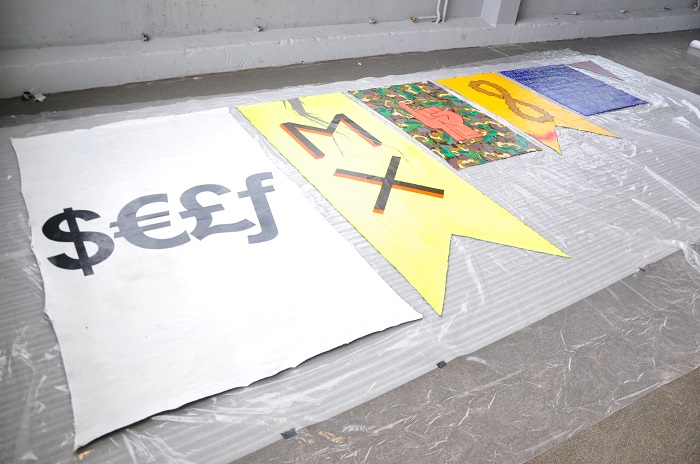
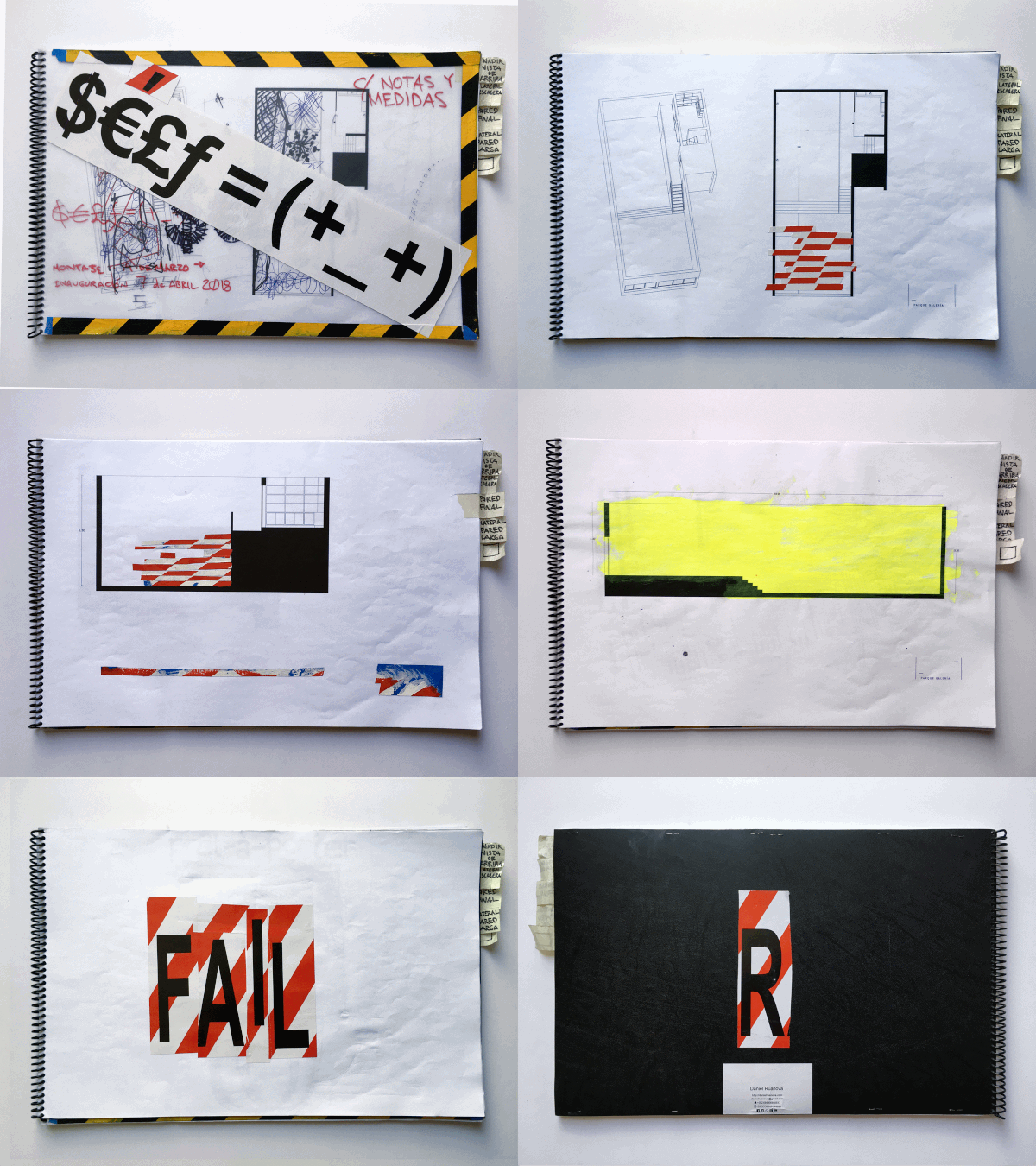
Esta muestra es un fragmento de una realidad paralela producto de las hegemonías de Google, Trump, Fox News. Construida con los mismos recursos que promueven la especulación financiera con bitcoins, avatares necesariamente alienados ($ € £ f), y promovida desde la interconectividad fascista de las redes digitales.
El espacio de exposición es un dispositivo de arte-ficción en el que se disuelven las fronteras entre mundo real y las fake truths que construyen los rituales para habitar el siglo XXI.
José Manuel Springer
Curador
___________ (+_+) ___________
Este proyecto es una enunciación sobre el acaecimiento neo-fascista de una sociedad voluntariamente cegada por rituales cotidianos que sirven a una inteligencia artificial que apenas vislumbramos. Obligando a un recorrido visualmente físico, el proyecto es una “puesta en sala” que ocupa el espacio con señalizaciones de un devenir distópico.” (in Spanish)
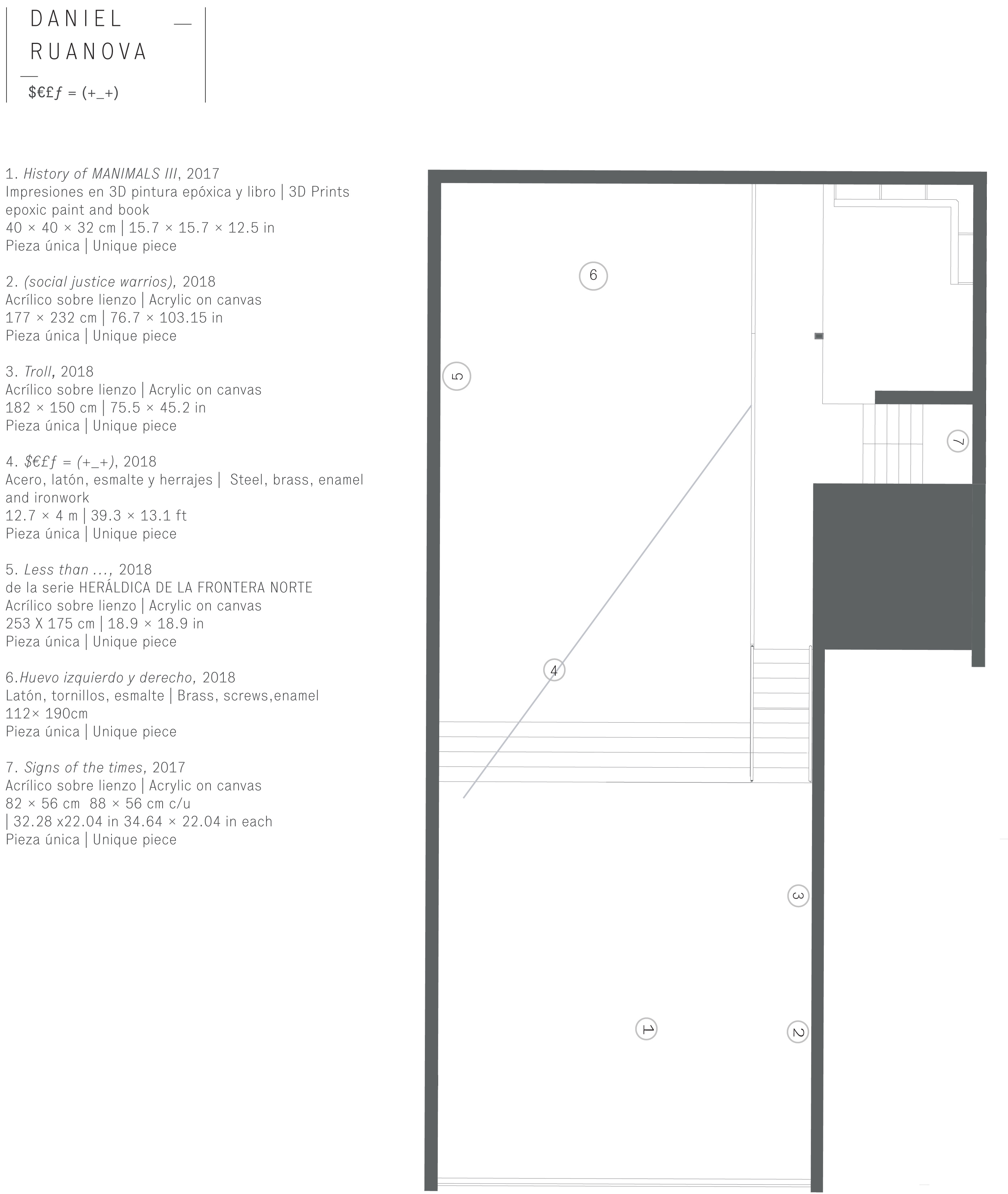
(social justice warrior) / Acrílico sobre lienzo, 2018
troll / Acrílico sobre lienzo, 2018
Bliss II / Acrílico sobre lienzo, 2018
Grand Old Putz / Acrílico sobre lienzo, 2018
Signs of the times (ALIEN METH) / Acrílico sobre lienzo, díptico, 2017
Old Immigrant Scum / Acrílico sobre lienzo, 2016 (Colección de Raul Rosado)
CERDO / Acrílico sobre lienzo, 2016 (Colección Elias+Fontes)
LEOS (oposición complementaria) / Acrílico sobre muro falso, 2018
stripes / Acrílico sobre muro falso, 2018
Extinction of the free and the brave* / de-construcción de la última estrofa del himno nacional de los Estados Unidos de América: The Star Spangled Banner. Bocina y reproductor.
Huevo izquierdo y derecho / Latón, tornillos de acero inoxidable y esmalte, 2018
Video-Documental de Saulo Cisneros con el “fantasma digital” de Daniel Ruanova.
about fascists / 3000 piezas en dos ediciones (1500 negras / 1500 rosas)
LITTLETHINKER** / Proyección de animación digital en loope ∞, 2018
AHÍ_VIENEN / (+_+) (+_+) (+_+) (+_+) (+_+) (+_+) (+_+) (+_+) (+_+) (+_+) (+_+) (+_+) serigrafía sobre bolsa-tote (ambos lados) sobre cabeza de millenniales. 12 participantes durante inauguración, duración de la acción: 30 minutos. 2018
+ 8 sillones de hule espuma diseñados y producidos por Daniel Ruanova, 2018
___________ (+_+) ___________
*Escucha / Listen:
La carrera de Daniel Ruanova (Tijuana, 1976) es un recorrido ecléctico por diferentes formatos y plataformas en la que se cruzan géneros artísticos y mundos visuales. Los puentes que unen transversalmente a estas manifestaciones son los temas de la migración y la cultura de la fronteridad.
Motivado por la evolución de Tijuana entre el vaivén de la necesidad y su estratégica posición geopolítica y cultural, el aporte artístico de Ruanova se enfocó en la capacidad de adaptación de la cultura tijuanense a las condiciones políticas y económicas de la región Pacífico, así como el modelo de integración a contrapelo de modos de consumo y tecnologías del Norte con formas de producción y vida al Sur de la frontera.
El modelo de creación del artista ha pasado por varias etapas en dos décadas: desde la consideración histórica del trabajo de los braceros e indocumentados, a las realidades que genera la violencia y la inseguridad; Tijuana lo abarca todo: ser el lugar de adaptación de modelos económicos (como la televisión de paga), el asiento de la vida disipada para el visitante y el viajero, lugar de comercio de medicina de patente y servicios médicos para el visitante hasta ser la plaza de cárteles delictivos propios y foráneos que continúan disputándose su control.
El cruce fronterizo más transitado de todo América, destino temporal de grupos de migrantes procedentes de todo el mundo, le ofreció a Daniel Ruanova al inicio de su carrera en los 90 un extenso abanico de posibilidades interpretativas sobre el significado del ser tijuanense: el individuo que cruza fronteras, que abre horizontes, distinguible por su capacidad de apropiación y asimilación de los lenguajes visuales, musicales, tecnológicos y culturales en boga.
Más adelante, con la explosión económica de China, Ruanova se estableció en Beijing donde participó en la escena cultural como artista y gestor cultural del éxodo foráneo, abrió vetas para su carrera profesional que lo llevaron a reafirmar su convicción de que el migrante es el ciudadano modelo del mundo contemporáneo.
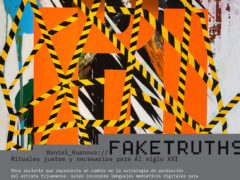
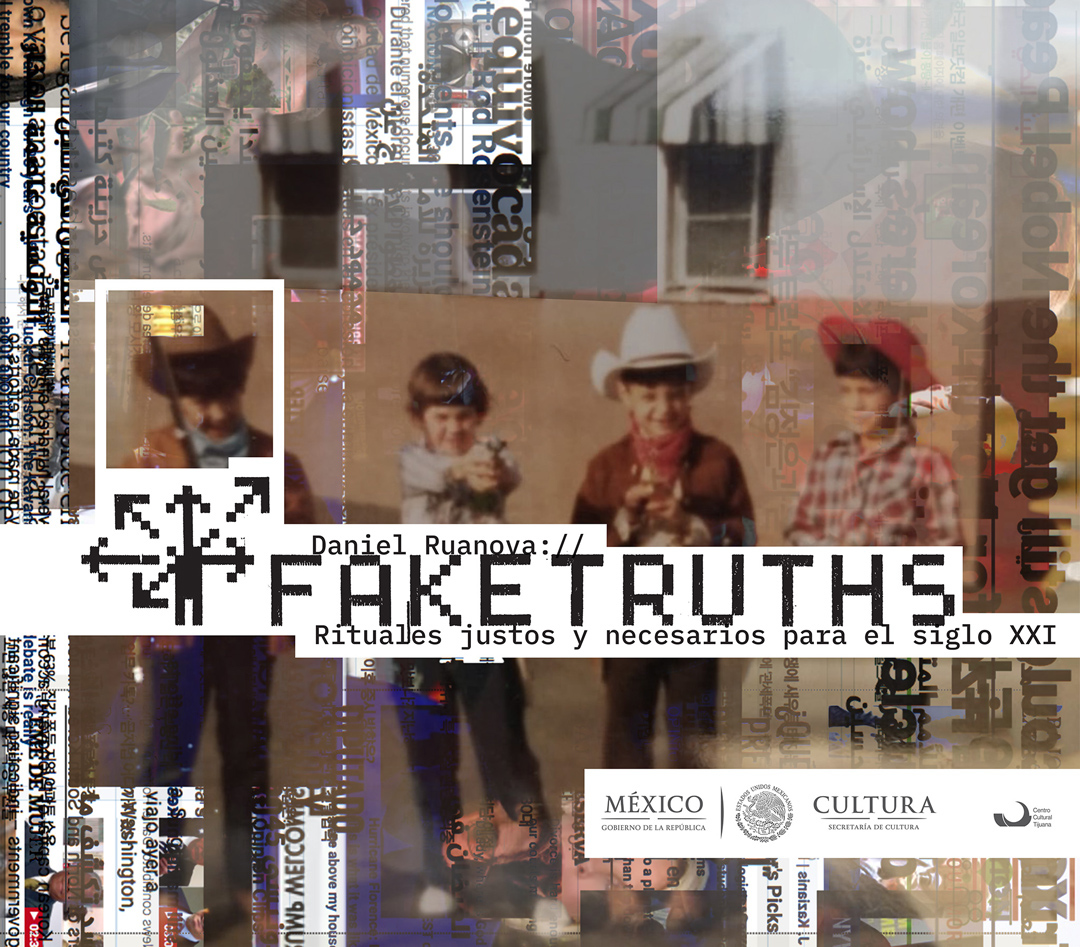
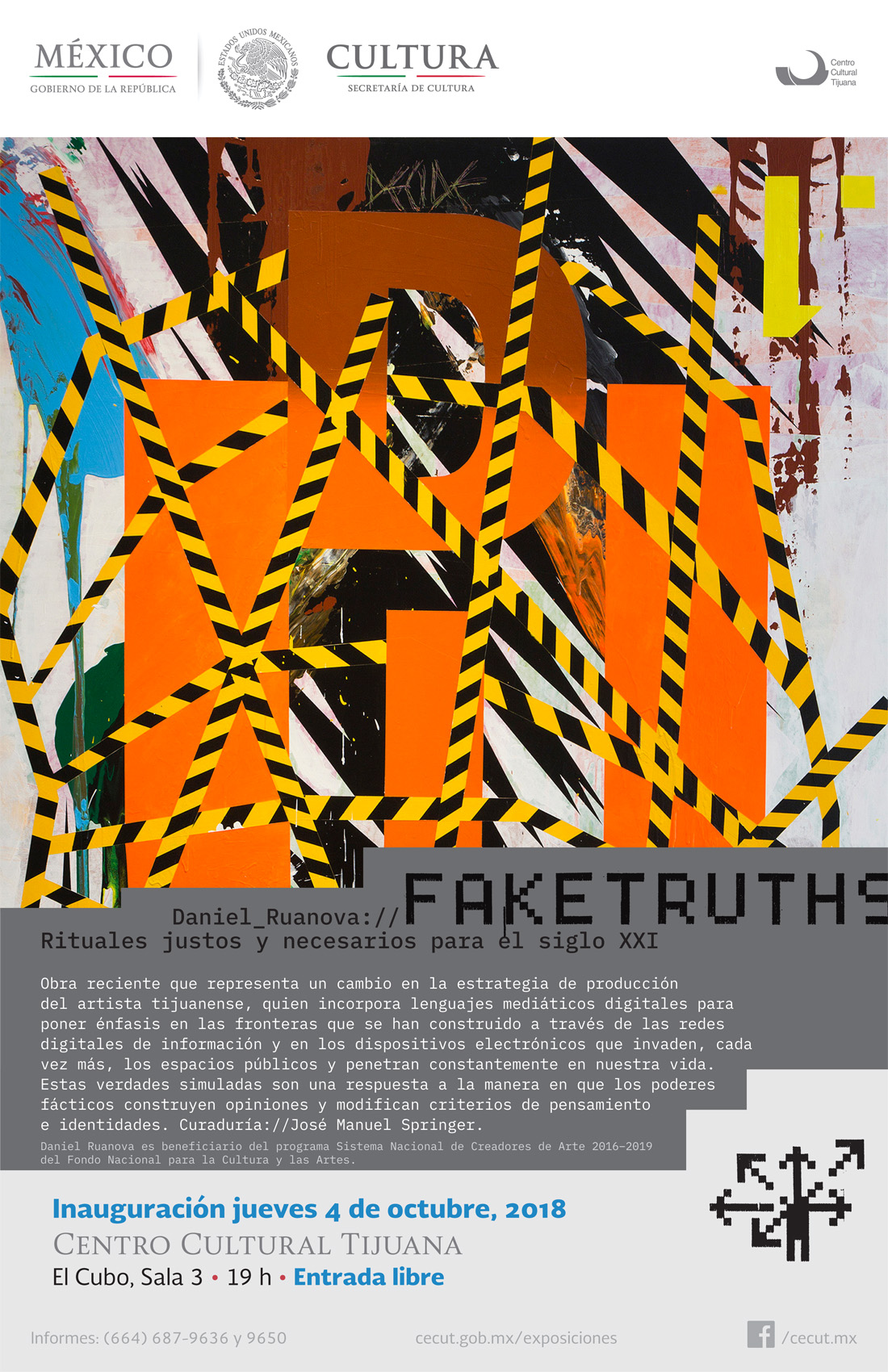
Fake truths, verdades ilusorias, es una mirada retrospectiva a los años recientes de la producción del artista. La obra incluida en esta exposición resume los diferentes aspectos que han marcado la cultura de la fronteridad, en los que se da una paradójica deconstrucción de las fronteras virtuales unida a la intención de levantar muros físicos.
Para el artista, el Internet y las grandes corporaciones surgidas de esta red (Google, Facebook, Microsoft) han fabricado los nuevos territorios y fronteras, con sus correspondientes lenguajes tecnológicos, subculturas e hitos culturales, enfocados hacia el consumo, pero también hacia la manipulación de los comicios electorales a través de la manipulación de las opiniones de cientos de millones de usuarios y sus datos personales.
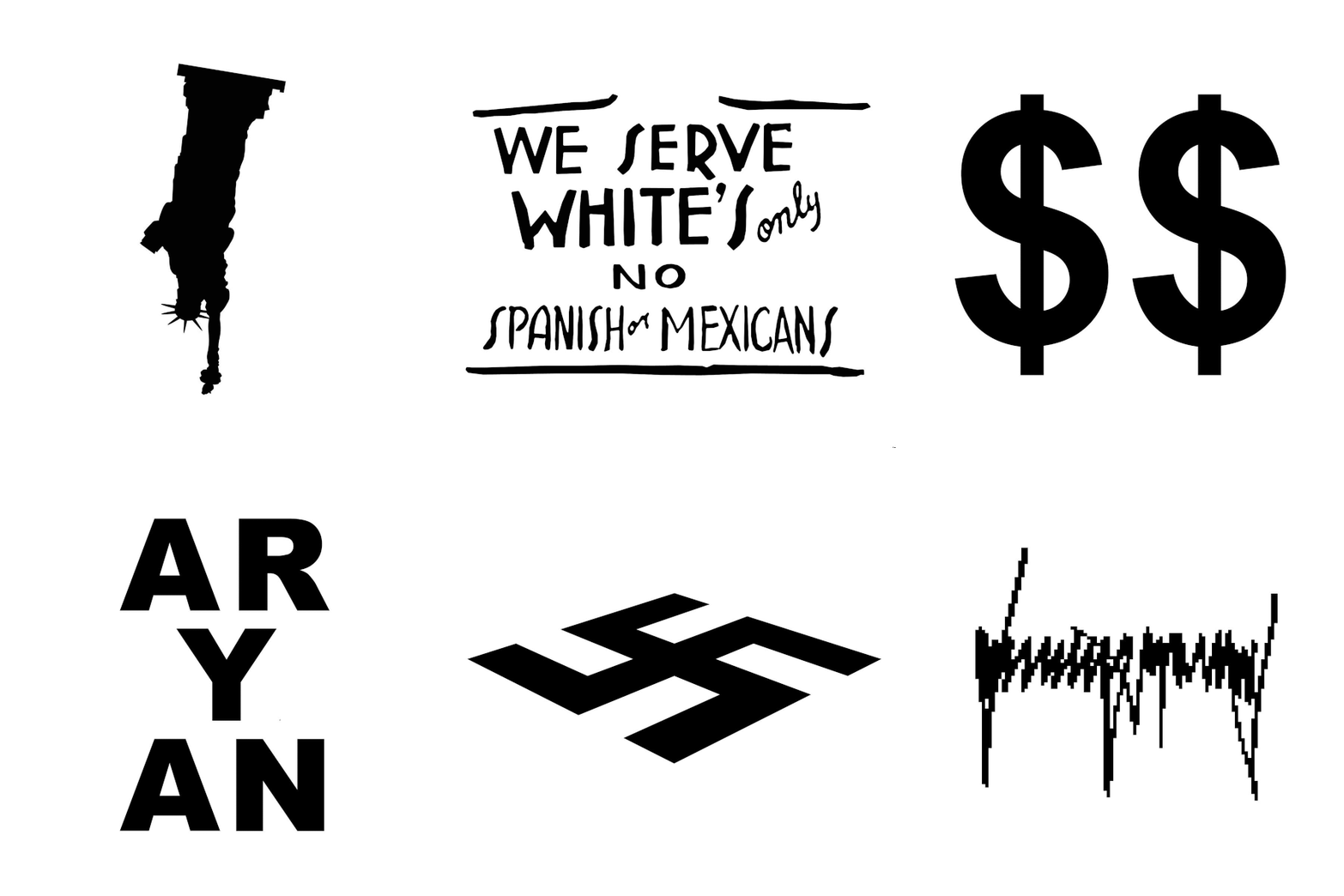
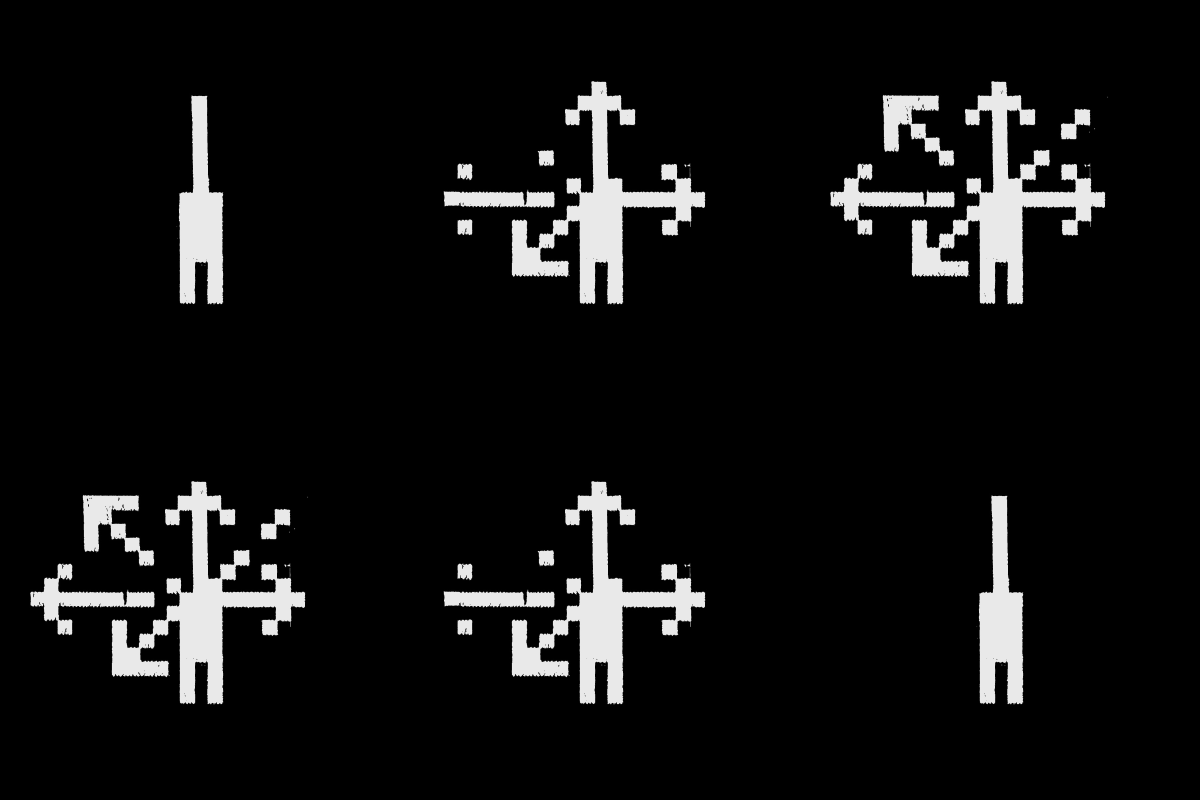
La obra pictórica incluida en la exposición expresa las metáforas de las palabras usadas para denostar a migrantes. También se incluyen ejemplos gráficos que forman parte de las plataformas Facebook, Whattsapp, Twitter y similares. La sala es una simulación del espacio virtual, donde colisionan emoticones, imágenes digitales (bitmaps) y animaciones, que forman parte de los códigos de identidad de la generación millennial.
La exposición es testimonio de las habilidades interpretativas del artista, que sabe leer oportunamente las tendencias y las historias de las redes digitales, que se han convertido en el origen y destino del mundo hiperdesarrollado, sobre informado y multipolar en que vivimos.
En ese mundo virtual expositivo conviven las fórmulas que la generación de jóvenes postnacionales manipula todos los días para construir sus propias identidades, con las que expresan sus visiones sobre el futuro de la tecnología, y de las que emergen las formas de convivencia que habrán de convertirse en rituales de paso, necesarios para entender la era en la que vivimos.
La obra de Ruanova se dirige a esas generaciones que harán de éste un mundo líquido imposible de contener y definir en términos de paradigmas culturales y políticos únicos. La lógica cultural de esta época es la exposición ininterrumpida de la gente a flujos y ráfagas de datos que desplazan velozmente a las plataformas tecnológicas efímeras, y en las que las nociones de territorio, cultura, cuerpo o idioma son continuamente intercambiables.
Integrada por una docena de obras en técnicas pictóricas, escultóricas y digitales, Fake Truths ofrece un recorrido por los años más recientes de la obra de Daniel Ruanova, que busca redefinir el concepto arte fronterizo, como zona virtual donde se ejerce la cultura como performance (demostración a través de la acción), y se recrea la estética informática, al grado de que la misma biografía del artista es una pieza de la exhibición.
La exposición fue seleccionada y co-diseñada por José Manuel Springer, crítico y curador independiente.
/////// English translation ///////
The career of Daniel Ruanova (Tijuana, 1976) is an eclectic journey through different formats and platforms in which artistic genres and visual worlds intersect. The bridges that cross these manifestations transversally are the themes of migration and the culture of the border.
Motivated by the evolution of Tijuana between the oscillation of necessity and its strategic geopolitical and cultural position, Ruanova’s artistic contribution focused on the ability of Tijuana to adapt to the political and economic conditions of the Pacific region, as well as the integration model against the grain of consumption modes and technologies from the North with forms of production and life south of the border.
The model of creation of the artist has gone through several stages in two decades: from the historical consideration of the work of braceros and undocumented, to the realities generated by violence and insecurity; Tijuana covers everything: being the place of adaptation of economic models (such as pay television), the seat of life dissipated for the visitor and the traveler, a place of trade in patent medicine and medical services for the visitor to be the square of own and foreign criminal cartels that continue to dispute their control.
The busiest border crossing in all of America, temporary destination of groups of migrants from all over the world, offered Daniel Ruanova at the beginning of his career in the 90s an extensive range of interpretative possibilities about the meaning of Tijuana being: the individual who It crosses borders, that opens horizons, distinguishable by its capacity of appropriation and assimilation of the visual, musical, technological and cultural languages in vogue.
Later, with the economic explosion of China, Ruanova settled in Beijing where he participated in the cultural scene as an artist and cultural manager of the foreign exodus, opened veins for his professional career that led him to reaffirm his conviction that the migrant is the citizen model of the contemporary world.
Fake truths, illusory truths, is a retrospective look at the recent years of the artist’s production. The work included in this exhibition summarizes the different aspects that have marked the culture of the border, in which there is a paradoxical deconstruction of the virtual borders together with the intention of building physical walls.
For the artist, the Internet and the large corporations that emerged from this network (Google, Facebook, Microsoft) have manufactured the new territories and borders, with their corresponding technological languages, subcultures and cultural milestones, focused on consumption, but also on manipulation. of the electoral elections through the manipulation of the opinions of hundreds of millions of users and their personal data.
The pictorial work included in the exhibition expresses the metaphors of the words used to insult migrants. Also included are graphic examples that are part of the Facebook, Whattsapp, Twitter and similar platforms. The room is a simulation of the virtual space, where emoticons collide, digital images (bitmaps) and animations, which are part of the identity codes of the millennial generation.
The exhibition is a testimony to the interpretive skills of the artist, who knows how to read the trends and stories of digital networks in a timely manner, which have become the origin and destiny of the overdeveloped, informed and multipolar world in which we live.
In this virtual exhibition world, the formulas that the generation of postnational youths manipulate every day to build their own identities coexist, with which they express their visions about the future of technology, and from which emerge the forms of coexistence that will become in step rituals, necessary to understand the era in which we live.
Ruanova’s work is aimed at those generations that will make this a liquid world impossible to contain and define in terms of unique cultural and political paradigms. The cultural logic of this time is the uninterrupted exposure of people to flows and bursts of data that quickly move to the ephemeral technological platforms, and in which the notions of territory, culture, body or language are continuously interchangeable.
Composed of a dozen works in pictorial, sculptural and digital techniques, Fake Truths offers a journey through the most recent years of the work of Daniel Ruanova, which seeks to redefine the concept of border art, as a virtual area where culture is exercised as performance ( demonstration through action), and the computer aesthetic is recreated, to the extent that the artist’s biography is a piece of the exhibition.
The exhibition was selected and co-designed by José Manuel Springer, critic and independent curator.
___________ (+_+) ___________
Contenido de VIDEO-MAMPARA al finalizar la exhibición:
(Video RETROSPECTIVA de 20 años de producción artísitica de DR)
___________ (+_+) ___________
Entrevista sobre las ideas detrás de la exposición Fake Truths, Rituales justos y necesarios para el siglo XXI.
Producido por el Centro Cultural Tijuana, 2018 – 2019
Poseedor de una obsesión por los lenguajes mediáticos y los imaginarios fronterizos, Daniel Ruanova cuenta en su haber con una larga carrera artística que toma como punto de partida Tijuana, pero se extiende para abarcar un conjunto ecléctico de plataformas que fomentan la hibridación de las estéticas de los medios masivos y soportes digitales.
Desde el mismo algoritmo de la exposición, el artista nos da una muestra de la incertidumbre que provocan los símbolos de la dominación económica en los espacios públicos poblados por billboards electrónicos que como en Blade Runner y el Metro Insurgentes invaden el espacio público y privado con mensajes encriptados.
Las pinturas de Ruanova son pantallas que proyectan logotipos, cruzados por efectos visuales y recortes de imágenes pixeleadas. Entre signos de colores chillantes y destellos aparecen buzzwords del argot político racista alt-right estadounidense entremezclados con los brandings difundidos en las redes digitales chovinistas de youtubers e influencers.
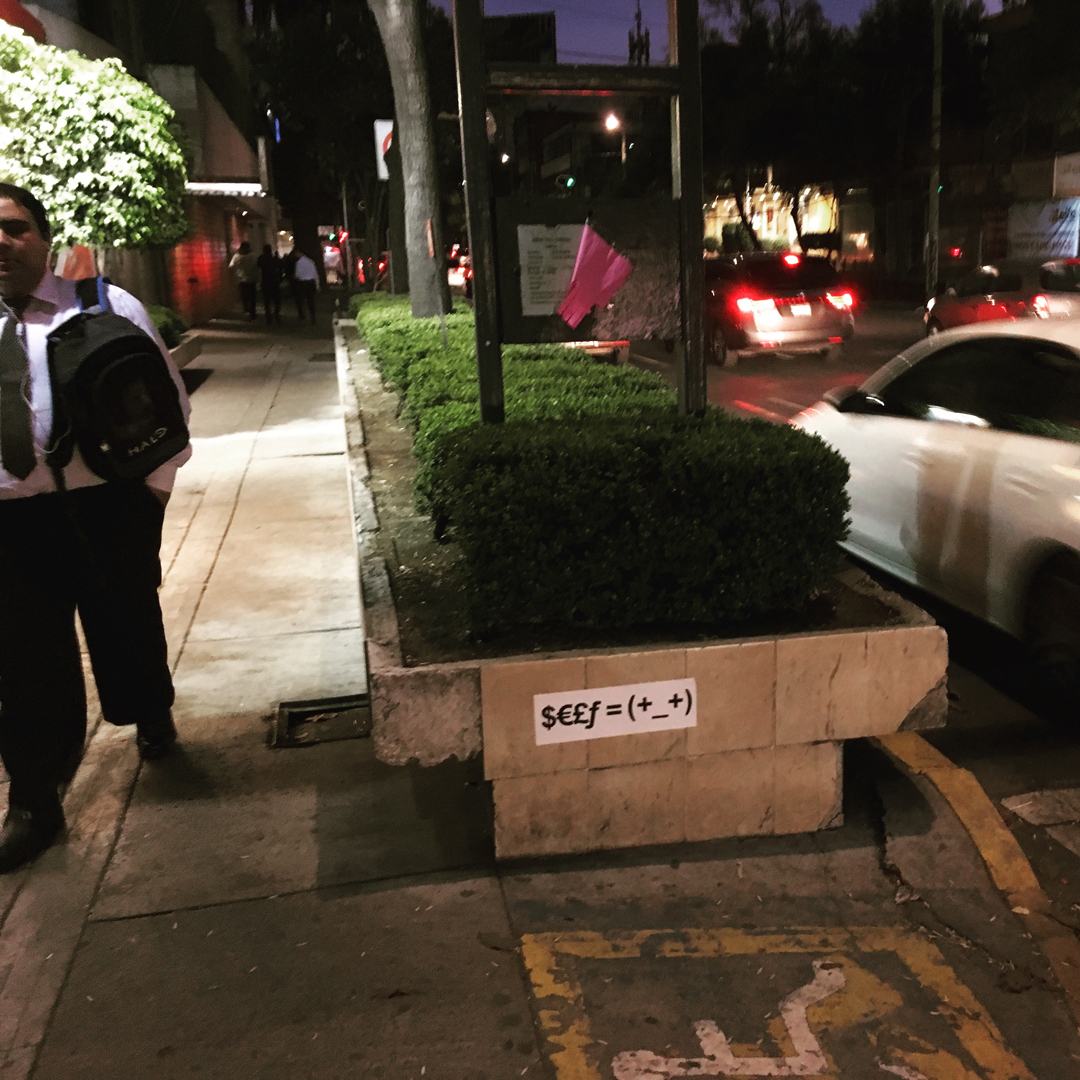
La fórmula $€£ƒ = (+_+) designa el surgimiento de subjetividades alienígenas resultado de una deriva de imágenes provenientes de Beijing, en el extremo Oriente, hasta la última frontera de Occidente: Tijuana. La obra de Ruanova propone otras identidades nómadas a partir del ruido perceptual que envuelve a esta realidad cada vez más dependiente de Google.
Obsessed with media´s visual language and border imaginaries, Daniel Ruanova has embarked on a long career in art with Tijuana as its starting point. It expands to cover an eclectic set of platforms that encourage the hybridization of the aesthetics of mass-media and digital platforms.
From the exhibition´s title algorithm, the artist hints at the uncertainty provoked by the symbols of economic domination in public spaces, littered with electronic billboards that, just as in Blade Runner or the Insurgentes subway stop, invade the public and private domain with encrypted messages.
Ruanova’s paintings are screens that reflect logos, covered in visual effects and clippings of pixelated images. Amongst bright colored signs and flashes, buzzwords containing the racist political jargon of the American Alt-Right, jumbled up with branding from the chauvinistic digital networks of YouTubers and influencers.
The formula $€£ƒ = (+_+) appoints the emergence of alien subjectivities resulting from a drift of images from Beijing, in the far East, to the last frontier of the West: Tijuana. Ruanova’s work presents nomadic identities from the perceptual noise that surrounds this reality, one that is increasingly dependent on Google.
05 abril – 26 mayo, 2018 //// April 05 – May 26, 2018
Martes a jueves de 10:00-14:00 y de 15:00-18:00 hrs, viernes de 10:00-15:00 y sábado de 11:00-14:00 hrs. Lunes cerrado. ///// Tuesday to Thursday from 10:00 a.m. – 2:00 p.m. and from 3:00 p.m. to 6:00 p.m., Friday from 10:00 p.m. to 3:00 p.m. and Saturday from 11:00 p.m. to 2:00 p.m. Closed Mondays.
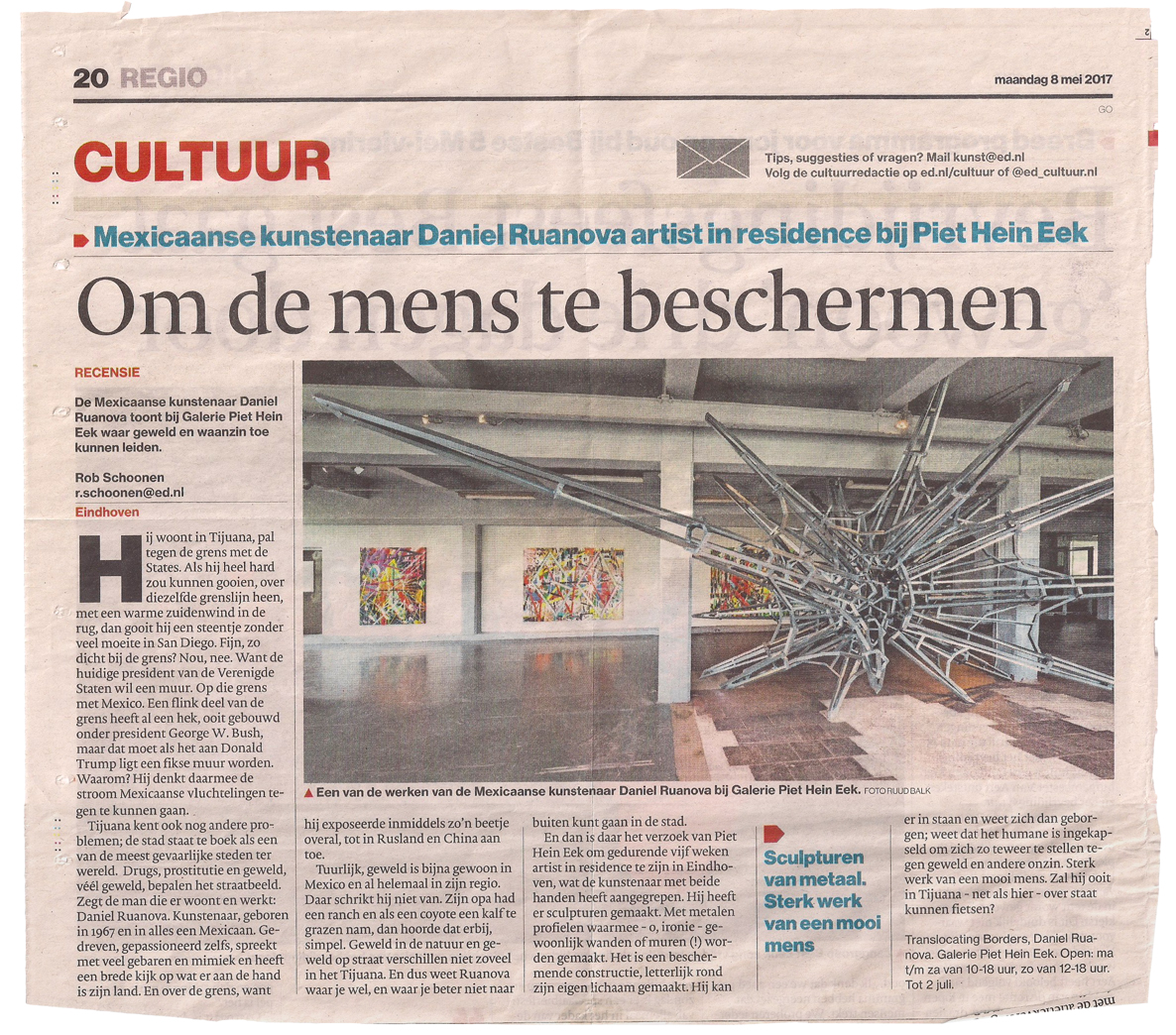
The Mexican artist Daniel Ruanova (1976) comes from a different world and a different culture, a world with urgency and where survival takes time. Death is an integral part of his culture, not only because of the drugs wars, political instability and poverty. As Ruanova himself explains: ‘if you do not embrace death, it will haunt you’. Death and life are inextricably linked with each other and are a part of nature. When a coyote grabbed and ate a calf on his grandfather’s ranch, the very same place in the desert landscape was marked the following year by flowers that had started growing there.
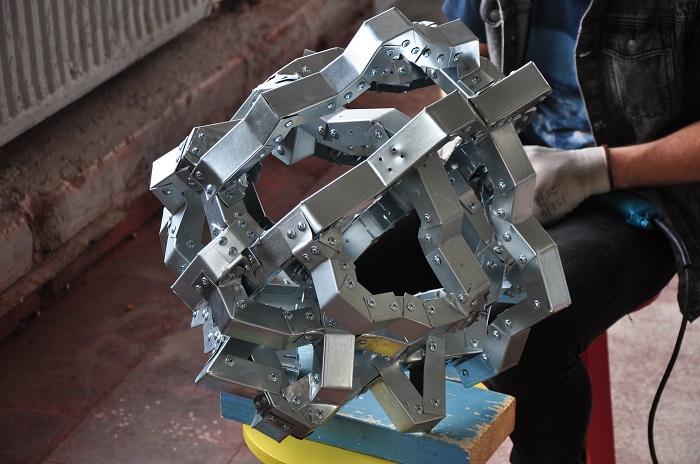
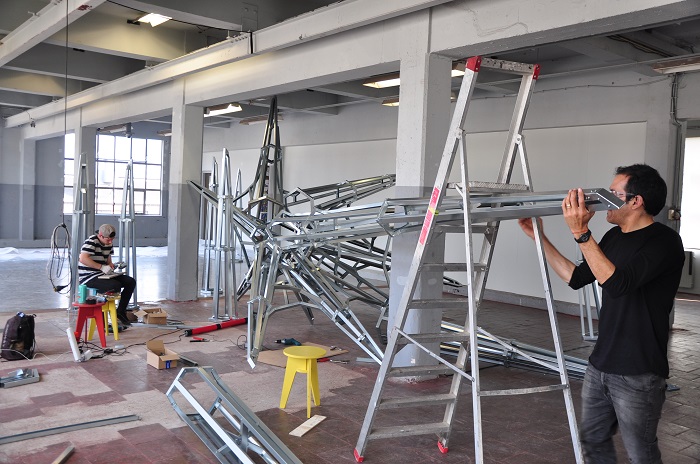
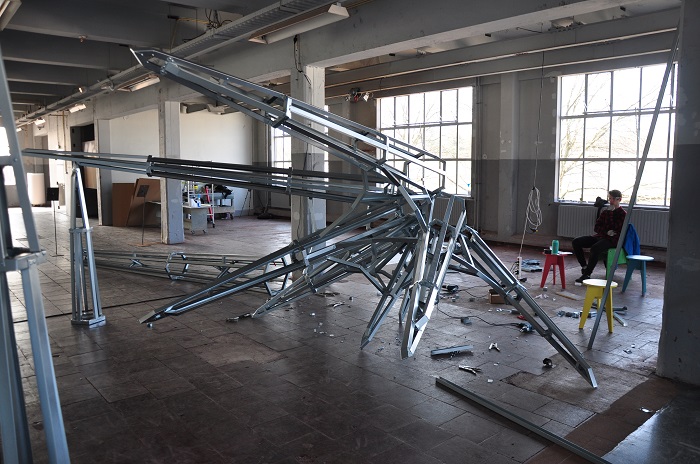
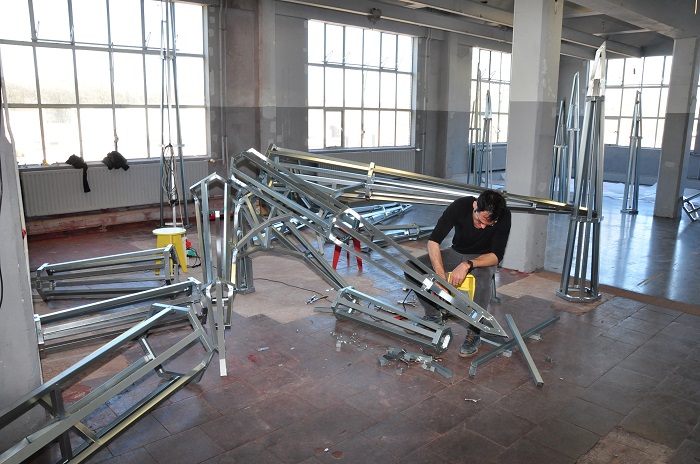
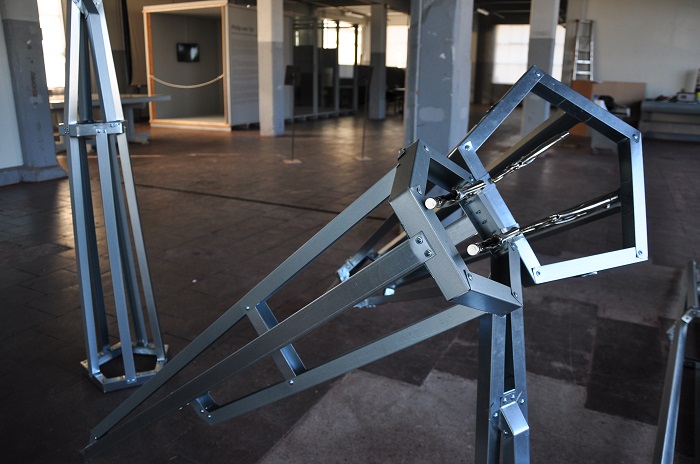
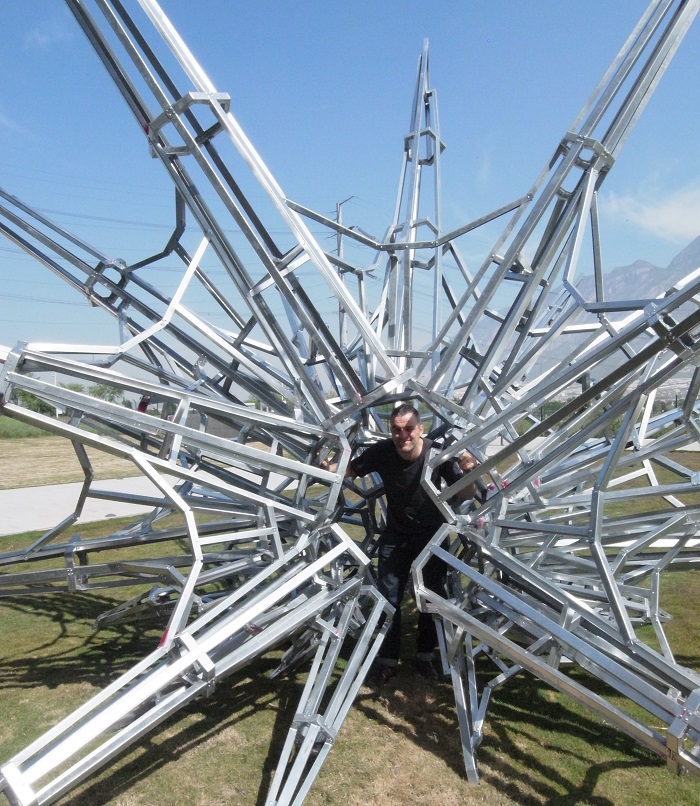
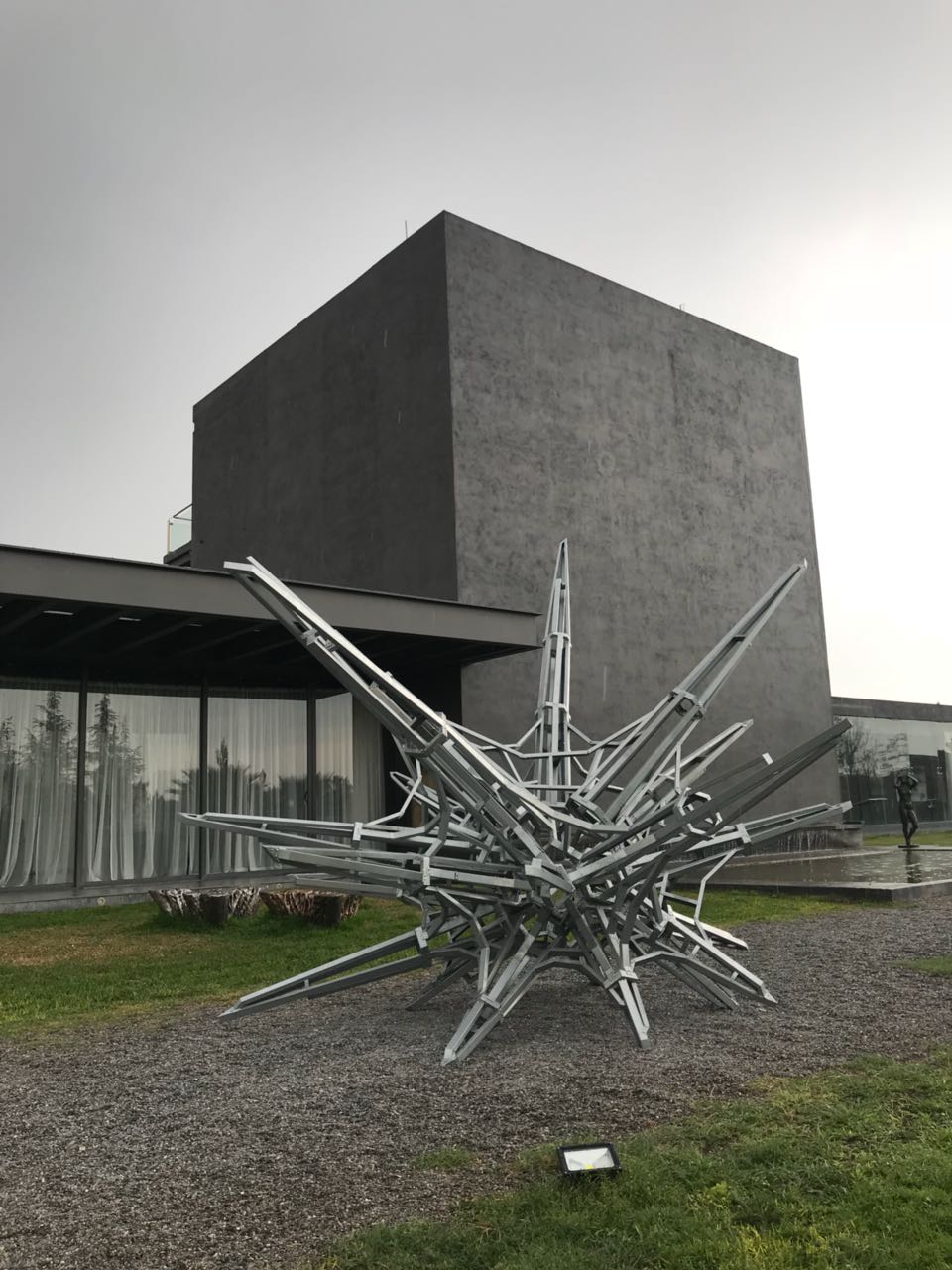
Nature is also a source of inspiration for the defensive constructions that Ruanova makes. The structures, made from modular wall profiles, are created according to the mathematical logics of nature. We now produce these U-profiles ourselves, because the profiles used in Europe proved to be unsuitable. The way in which this structure is built up organically is the same as how a cactus grows and occupies space.
Ruanova has gathered an incredible wealth of knowledge and has developed a feel for the possibilities of using steel construction materials to let a structure grow organically. The structure protects the essence, but is simultaneously also sharply daunting.
According to Ruanova, the art world is changing and he, as an artist, can therefore change this world: his existence as an artist is urgent. Just like a cactus in the desert, he is a part of Mexico – a child of his country – and in everything he does, he breathes and communicates the care, love and unwavering trust in his origins and the future.
He currently lives in Tijuana, a city on the border between Mexico and the United States. Violence and social tension are quite commonplace here. In recent years Ruanova has used his new project ‘New World Border’ to focus on the generation of an increased awareness of border cultures.
The current anti-Mexican political climate in the United States also has a positive side, according to Ruanova. It has led to the fortification of the Mexican culture and a growing self-awareness, which in turn has created new opportunities. As there is growing tension along borders all over the world, and Ruanova’s work transcends local issues due to its contemplative and elaborate nature, his presence with us here in Eindhoven is even more interesting than we thought.
As well as the fact that his work, down to the finest detail, is a result of the consciousness of current affairs and what’s going on in the world, Ruanova also turns out to be an anecdotal narrator and someone who accurately observes his surroundings. Although his sculptures and paintings radiate enormous aggression and give the viewer the impression that he actually wants to shut himself away from the world around him, he actually wants to achieve exactly the opposite. Ruanova is anything but pessimistic. He defines himself as a ‘realist and humanist’, someone who comes from a relatively young culture, in which the future is still open and to which he, as an artist, can have an active contribution.
//
De Mexicaanse kunstenaar Daniel Ruanova (1976) komt uit een andere wereld en een andere cultuur, een wereld met urgentie en waar overleven tijd vergt. Niet alleen vanwege de drugsoorlogen, politieke instabiliteit en armoede, is de dood vast onderdeel van de cultuur. Zoals Ruanova zelf vertelde: ‘als je de dood niet omarmt wordt je erdoor achtervolgd’. Dood en leven zijn onlosmakelijk met elkaar verbonden en zijn onderdeel van de natuur. Als een coyote op de ranch van zijn opa een kalf te grazen nam en opat, werd deze plek in de woestenij het jaar daarop gemarkeerd doordat er bloemen groeiden.
De natuur is tevens de inspiratiebron voor de beschermingsconstructies die Ruanova maakt. De van systeemwandprofielen gemaakte structuren worden volgens de mathematische logica van de natuur vervaardigd. Wij produceren deze U-profielen nu zelf, want de profielen die in Europa worden gebruikt bleken niet geschikt te zijn. De wijze waarop deze structuur organisch wordt opgebouwd is die van hoe een cactus groeit en de ruimte inneemt. Ruanova heeft een ongelooflijke kennis opgebouwd en gevoel ontwikkeld voor de mogelijkheden die er zijn om met de stalen bouwmaterialen een structuur organisch in de ruimte te laten groeien. De structuur beschermt het wezen, maar is tegelijkertijd ook priemend en afschrikwekkend.
Volgens Ruanova verandert kunst de wereld en kan hij als kunstenaar dus de wereld veranderen: zijn bestaan als kunstenaar is urgent. Hij is zoals de cactus in de woestijn onderdeel van Mexico – kind van zijn land – en in alles ademt en communiceert hij de zorg liefde hoop en het rotsvaste vertrouwen in zijn herkomst en de toekomst.
Momenteel is hij woonachtig in Tijuana, een stad op de grens tussen Mexico en de Verenigde Staten. Geweld en sociale spanningen zijn hier aan de orde van de dag. De afgelopen jaren richt Ruanova zich met zijn project ‘New World Border’ op het creëren van een groter bewustzijn bij grensculturen.
De huidige anti-Mexicaanse politiek in de Verenigde Staten heeft volgens Ruanova ook een positief punt. Het leidt tot de versterking van de Mexicaanse cultuur en een groeiend zelfbewustzijn, waardoor ook weer nieuwe kansen worden gecreëerd. Omdat er wereldwijd spanningen langs grenzen zijn en het werk van Ruanova, door de beschouwende en doorwrochte aard ervan, de plaatselijke problematiek overstijgt, is zijn aanwezigheid bij ons in Eindhoven nog belangwekkender dan we dachten.
Naast dat zijn werk tot in de haarvaten voortkomt uit bewustzijn van de actualiteit en waar het in de wereld over gaat, blijkt Ruanova ook een anekdotische verteller en iemand die de wereld rondom hem heen nauwkeurig observeert. Hij is allesbehalve pessimistisch en definieert zichzelf als een ‘realist en humanist’, iemand die uit een relatief jonge cultuur komt, waarin de toekomst nog open ligt en waaraan hij als kunstenaar een actieve bijdrage kan leveren.
_____________________________________________
Information of individual works:
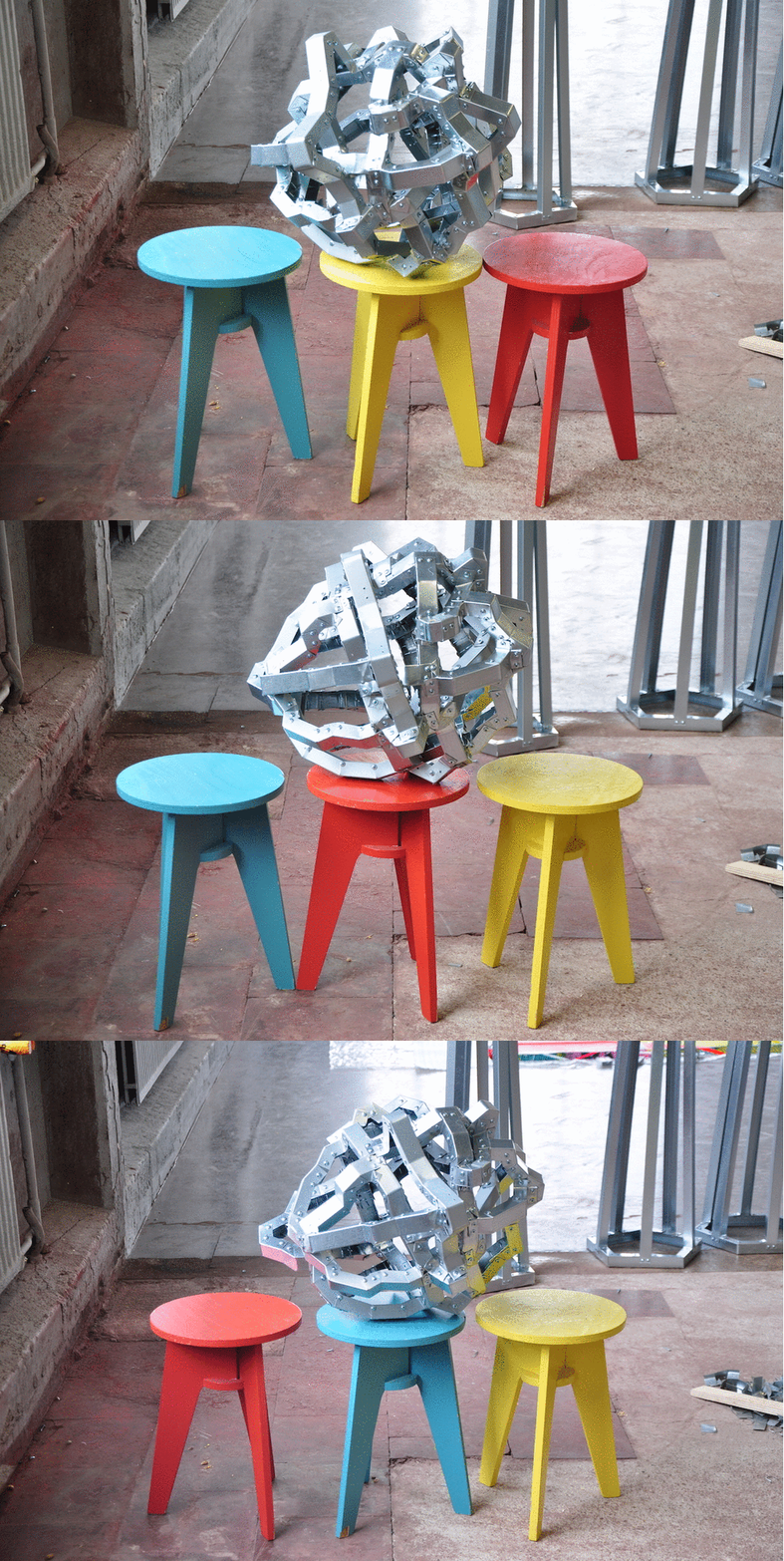
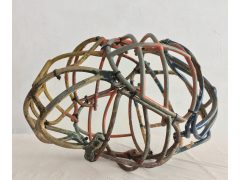
DEFENSE seed I / Galvanized steel drywall studs and self drilling screws / Ø 80 cm / 2017
DEFENSE seed II / Brass drywall studs and self drilling screws / Ø 80 cm / 2017
THE FUCK OFF PROJECT – SAFE AREA 11 / Galvanized steel drywall studs and self drilling screws / 700 x 800 x 400 cm / 2008 – 2017
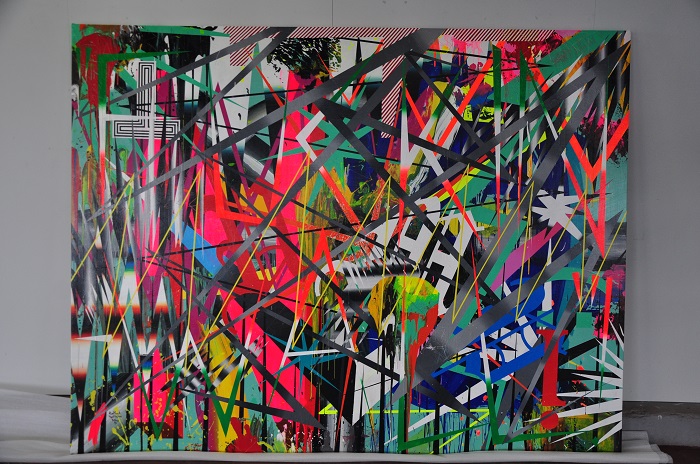
HplFN – Peace Dove II / Acrylic on canvas (two sides), metal pushpins and aerosol on wood / 140 x 185 cm / 2017
HplFN – MY $€£ƒ / Acrylic on canvas / 153 x 198.5 x 5 cm / 2017
HplFN – GO / Acrylic on canvas / 257 x 198.5 x 4 cm / 2016
HplFN – FUCKIN WALL / Acrylic on canvas / 257 x 198.5 x 4 cm / 2017
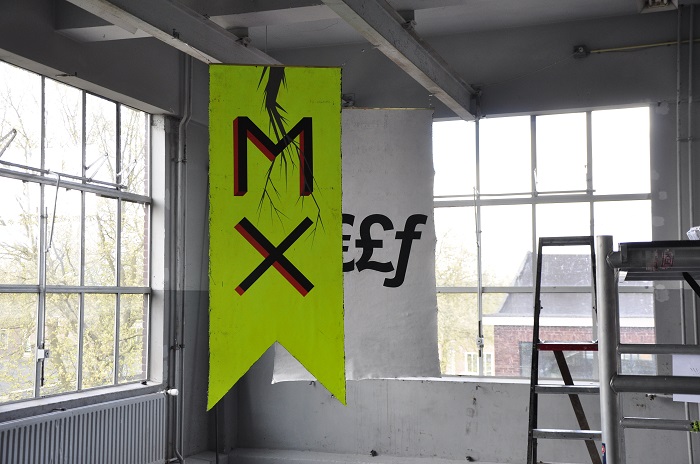
Heraldry for the Complacent – two Sided Battle Standards / Acrylic on canvas (two sides x 6) / variable dimensions aprox. 130 x 200 x 500 cm / 2015 -2017
$€£ƒ / digital print on paper / ed. of 5 / 59.4 x 80 cm / 2017
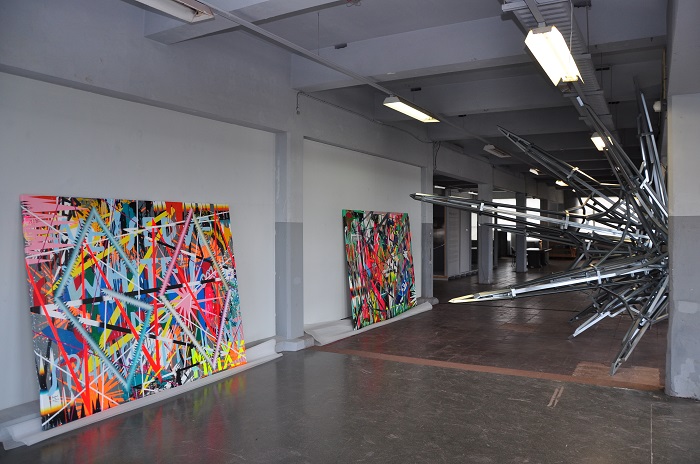
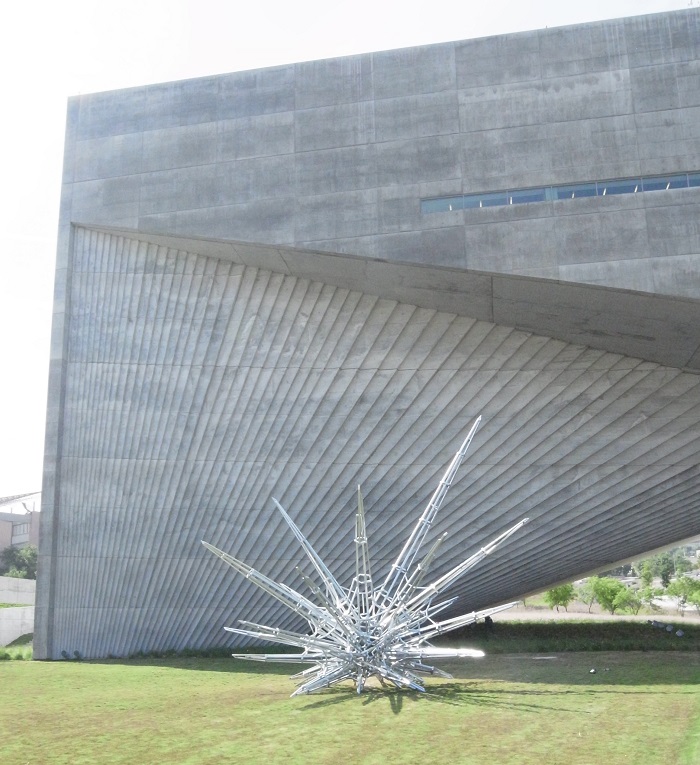
When I paid a flying visit to the University of Architecture in Monterrey, Mexico for a lecture over a year ago, an artwork by the Mexican artist Daniel Ruanova stood outside the entrance to the beautiful building designed by the Japanese architect Tadao Ando. Inside the building, close to the entrance, was more of his work on display in the exhibition space.
It is quite intelligent and modern to display art in the entrance hall of an institute where creativity is the main focus – as is the case with architecture, or rather it should be. This stimulates a dialogue between the mutual influences of the creative professions. This is instead of the increasingly oppressive isolation that is caused by the general belief in specialisation, from which we are now gradually (thankfully) struggling away from.
The work that stood outside, an angular, constructive and open piece of protective clothing, is somewhere between isolation and openness, polarisation and reconciliation, fear and security. As is sometimes the way in the animal kingdom: protect yourself by scaring off others. For us in the Netherlands such issues are much lower on the agenda, or even not at all, but in Mexico there is arbitrariness and fear, and violence is the order of the day.
Daniel is our artist-in-residence and will create a sculpture during his time in the gallery. The creation process will form an important component of the exhibition, and visitors can follow this work-in-progress in the gallery. The opening is on 23 April. We have also had several canvasses shipped over from Mexico that make the exhibition equally as powerful as I experienced it in Monterrey and perhaps even more beautiful, as the making of is now an integral component of the exhibition.
photos from: Piet Hein Eek´s visit to Monterrey, MX
I am a visual artist from the borderlands of Tijuana (México-USA). My art practice moves through layers of aesthetics – politics – dark humor and transcultural mutations; every so often, the human tragedy creates forms that must be engaged with as new-language.
Now, specially in Europe (but always present in “las Américas”), these forms are taking place in a constant flow of cultural transformation through the destruction and reconstruction of long held cultural-social-&-economical borders.
While a very sophisticated, plural and civilized culture has been established within the EU, the structures needed for this standard of living have very much depended on the plunder and pillage of long lasting colonization practices in Africa, Asia, the Middle-East and Latin America, with the creation of subservient states that today are finally crumbling. The outpour of these states inhabitants towards “the lands of plenty” in an inevitable outcome of a long held status of wealth and privilege, this is unbalanced.
The consequent creation of security driven systems to rid the initial fear and create a constant paranoia state-industry towards the new others is the real sign of our humanities tolerance and will to change. These are the ideas behind THE FUCK OFF PROJECT. An onsite sculptural installation that creates a metaphor of security-insecurity.
_______________________________
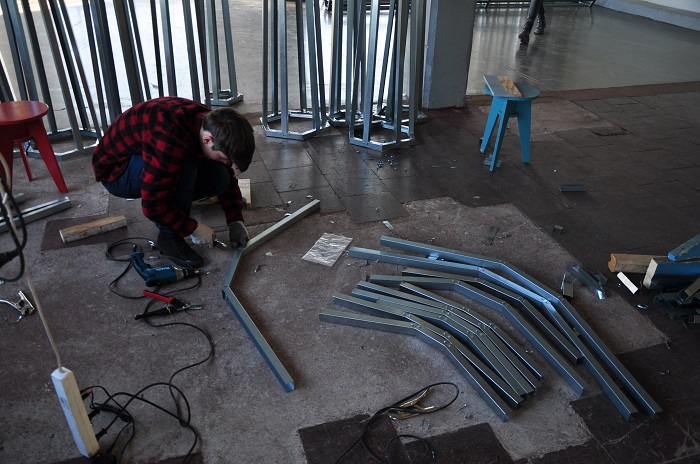
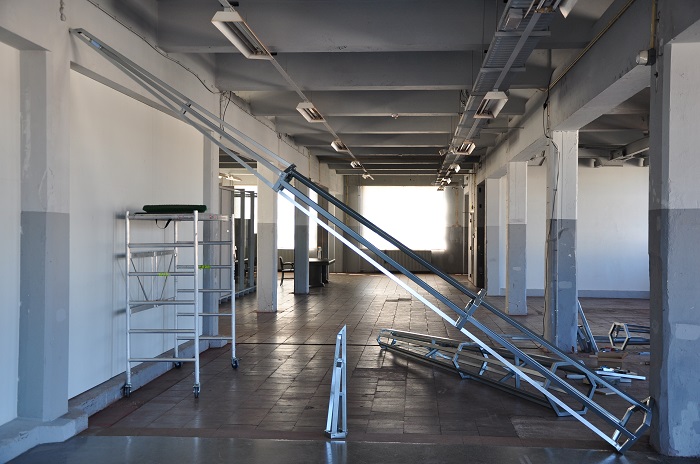
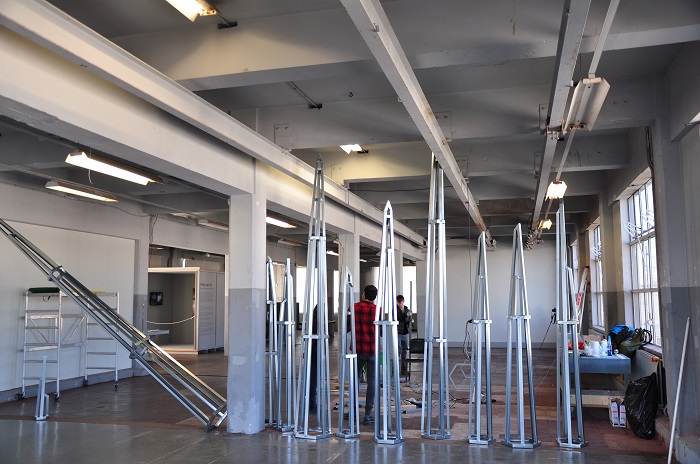
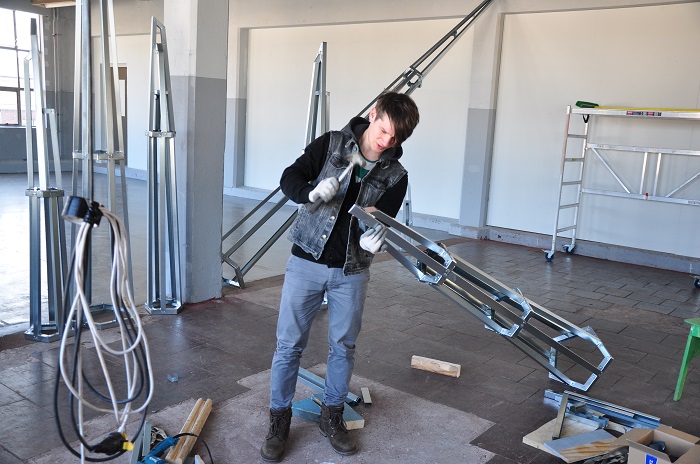
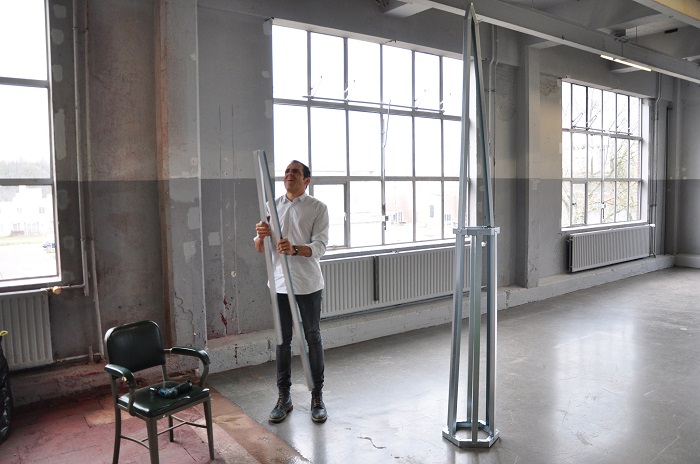
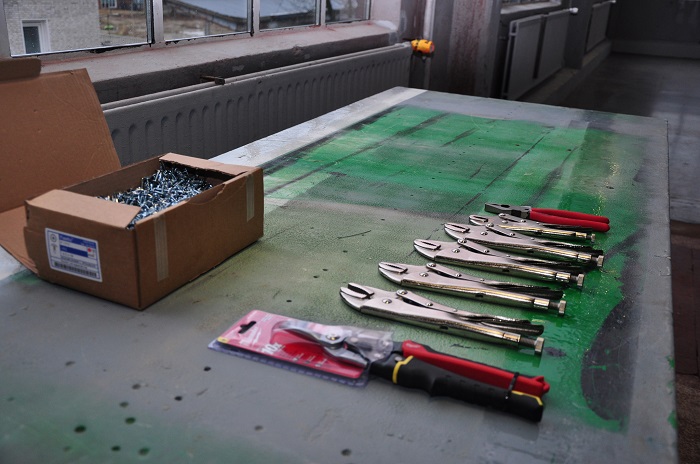
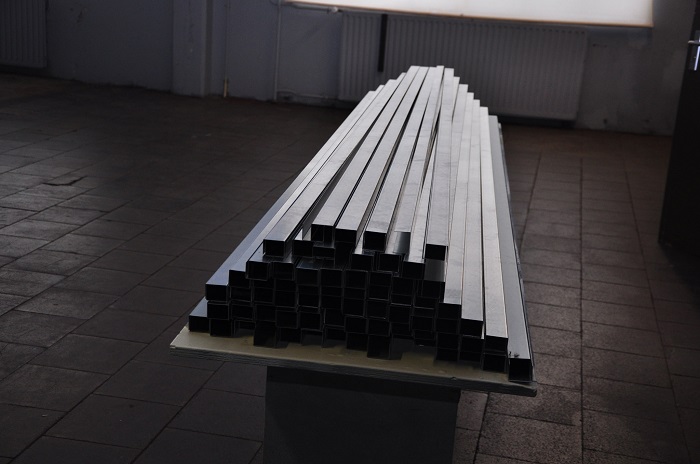
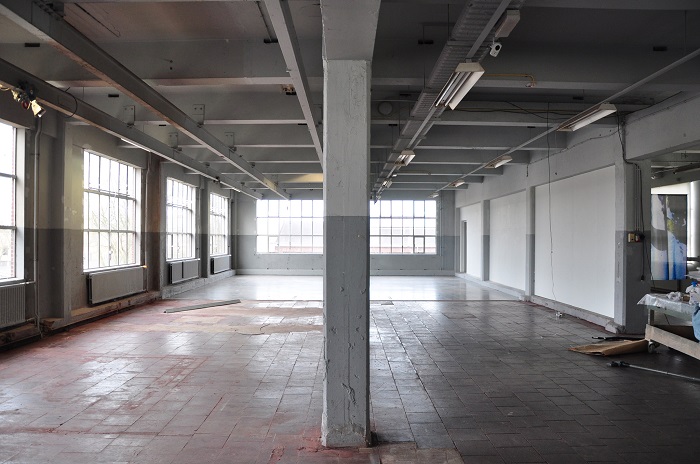
Construction process for The Fuck Off Project, centerpiece of Daniel Ruanova´s Translocating Borders @ PIET HEIN EEK Gallery, Eindhoven, The Netherlands, 2017.
Timelaps from 20/March to 11/April, 2017.
Artist: Daniel Ruanova
Curators: Piet Hein Eek & Pim Hoff
Production Assistants: Anderson Araujo & Salvis Slavišens
kinetic assemblage / mixed media on exhibition pedestal: fake antique chinese weapon, pressure pliers, plastic zip-ties, assorted screws and bolts, electric motor-switch-cables, aerosol lacquer, acrylic paint, polyurethane, stickers, metal studs, etc… / 109 x 30 x 30 cm (when off)
_____________________________
ensamblaje cinético / técnica mixta sobre pedestal de exposición : arma antigua falsa china, pinzas de presión, zip-ties de plástico , tornillos y pernos , surtidos de motor -Switch- cables eléctricos, la laca en aerosol , pintura acrílica, clavijas metálicas, poliuretano, adhesivos, etc .. . / 109 x 30 x 30 cm ( cuando está apagado )
THE BRACERO LEGACY PROJECTis a multidisciplinary approach for creating a new dialogue about Californian and American history through the generational experience of farm labor migrants and how their struggles have created opportunities for them and their families. Notwithstanding the pain and loss, but focusing on sacrifice and hard work as a means of liberation and social mobility. During the past year, Ignacio Ornelas and I have built a series of projects that should be considered a starting point for great social awareness through the power of History, Art and Education.
I believe that the Bracero is a symbol that has been in the dark for too long. Their contributions to the Californian and American economy have never been applauded, nor has a greater acknowledgement of the influence that their journeys had in the region, with the eventual migration of their peers and their families. The Bracero is the original transborder Mexican-American, a situation that is more than common nowadays, and better yet, is about to become the most influential culture in California.
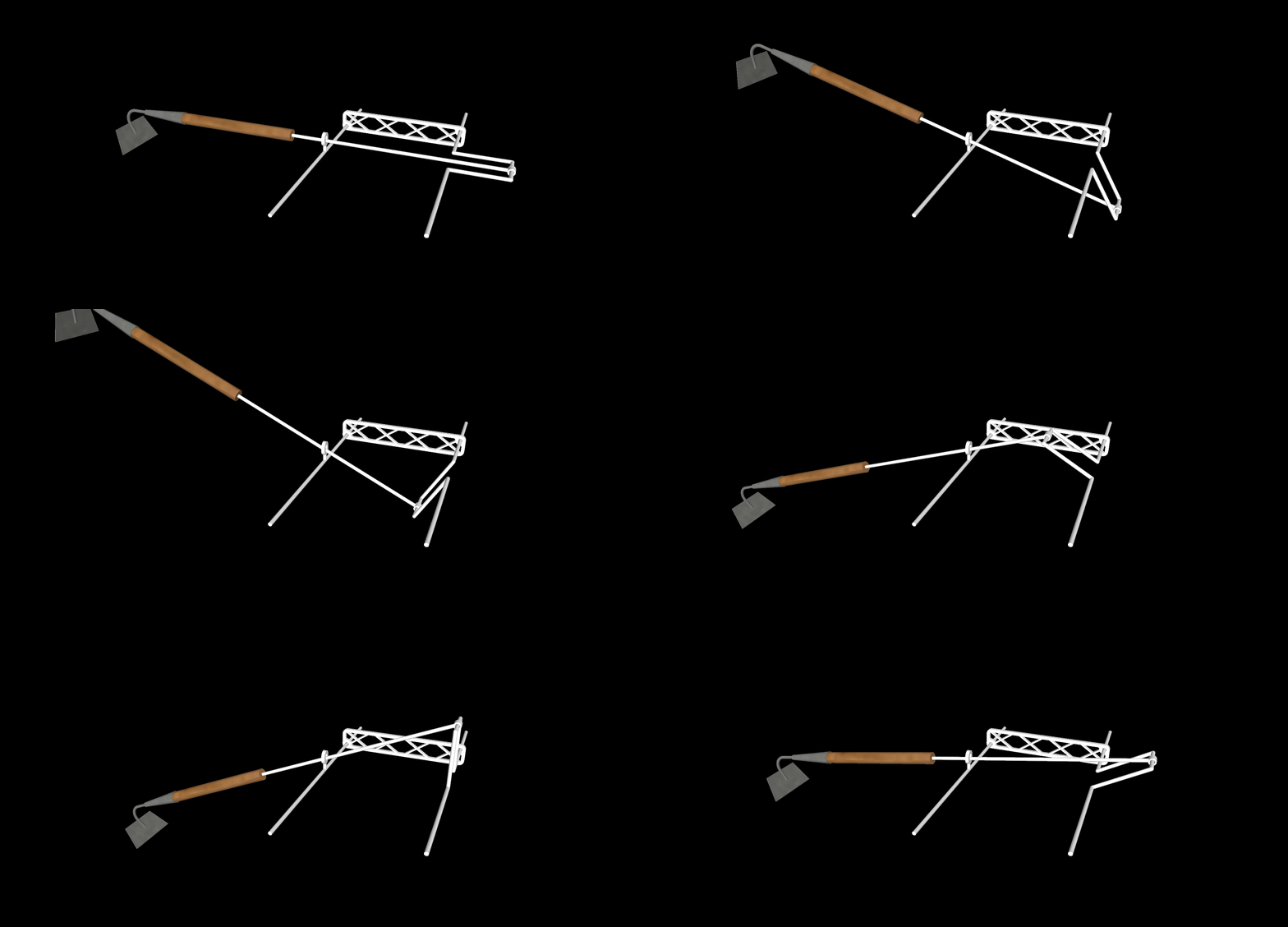
I have been very active in artistic experimentation with these ideas, and created a kinetic sculpture project that honors the strength of the Bracero. Named THE MEXICAN LABOR AGREEMENT, the project is an amalgamation of history, culture andingenio mexicano. I appropriated EL CORTITO as a symbolic tool of social change. The objects political connotations should be seen as scars of honor, not shame, and its victorious extinction in the field is witness to our culture`s evolution. But the battle should be known.
SCULPTURE / ESCULTURA: THE MEXICAN LABOR AGREEMENT
DOCUMENTARY : SEARCHING FOR THE BRACERO´S LEGACY
We are in the midst of a documentary film project that we see informing millions of potential viewers about the real history of the Californian success story. Based on the research of The Bracero Legacy Project, the testimony of actual Braceros and their families. We will dissect our own journey into this story through the eyes of a Historian and an Artist. The film is in it’s initial stages, and we plan to secure resources to continue it´s production.
____________________________________
TRANSBORDER / THE GALARZA COLLECTION is a reproduced series of 1950´s archival photographic documents from the Ernesto Galarza Collection at The Stanford University Libraries/Special Collections, curated by Ignacio Ornelas Rodríguez, a Bracero history scholar and grandson of an actual Bracero Program veteran, and Daniel Ruanova, an iconoclastic visual artist from the borderlands of Tijuana.
Mr. Galarza held a very critical stance towards the Bracero Program and took these photographs to demonstrate the ills of the program; many pre-established Mexican-American families did not approve of the influx that these “new Mexican arrivals” created in the local job markets and future labor issues were detonated by these conflicts.
Today we give new light to these photographs, and publish them as images of new-Americans on their journey to the land of opportunity. Eventually, these moments in time will be seen in the same context as the ones with European immigrants reaching The Statue of Liberty or Ellis Island during the eighteenth and nineteenth century. The Bracero program gave these men the opportunity to overcome poverty in Mexico through hard work and personal sacrifice. Their journeys became the precedent for millions of Mexicans who are now Americans.
The power of image, in this case, witness to historical presence and the empowerment that self-representation creates in the lives of people, generates a sense of cultural redemption now lost in post-nationalistic rhetoric, racial mongering politics and the cultural whitewashing of multiethnic communities. The images we all know of the migrant mexican farm workers -spots on a landscape or a sombrero with a body- tell the story of the oppressed, the shamed, the battered, and a world of pitiful connotations almost never acknowledging the subjects own personal story and stance.
THE MEXICAN LABOR AGREEMENT / 2015 /onsite-kinetic-sculptural-installation24 mechanically animated short handle hoes, steel chassis, sprockets, chains, electrical wiring, two 1 horsepower electric motors and timer / Variable dimensions (approx 17´ x 7´ x 5´). Collection and Project commissioned: Luis Peña / Bracero, Cocina de Raíz
SEARCHING FOR THE BRACERO´S LEGACY – A new-American encounter for a place in history (working title) / 2015 / Docu-drama-teaser / in collaboration with Ignacio Ornelas / HD video duration: 5 mins.
TRANSBORDER / THE ERNESTO GALARZA COLLECTION photographs from the STANFORD UNIVERSITY LIBRARIES / 1950´s – 2015 / Re-printed for The Bracero Legacy Project
RE-INSTALACIÓN de: THE FALLEN TOWER IDEA (selección de obra producida durante estancia en Caochangdi-Beijing, China 2011-2013) / Daniel Ruanova
Neon, fibra de vidrio con herrajes de acero inoxidable, pintura de acrílico sobre lino y Ipad con animación tipográfica y sonido / dimensiones variables / colección del artista
animación en Youtube:
stills de animación tipográfica:
_________________________________________
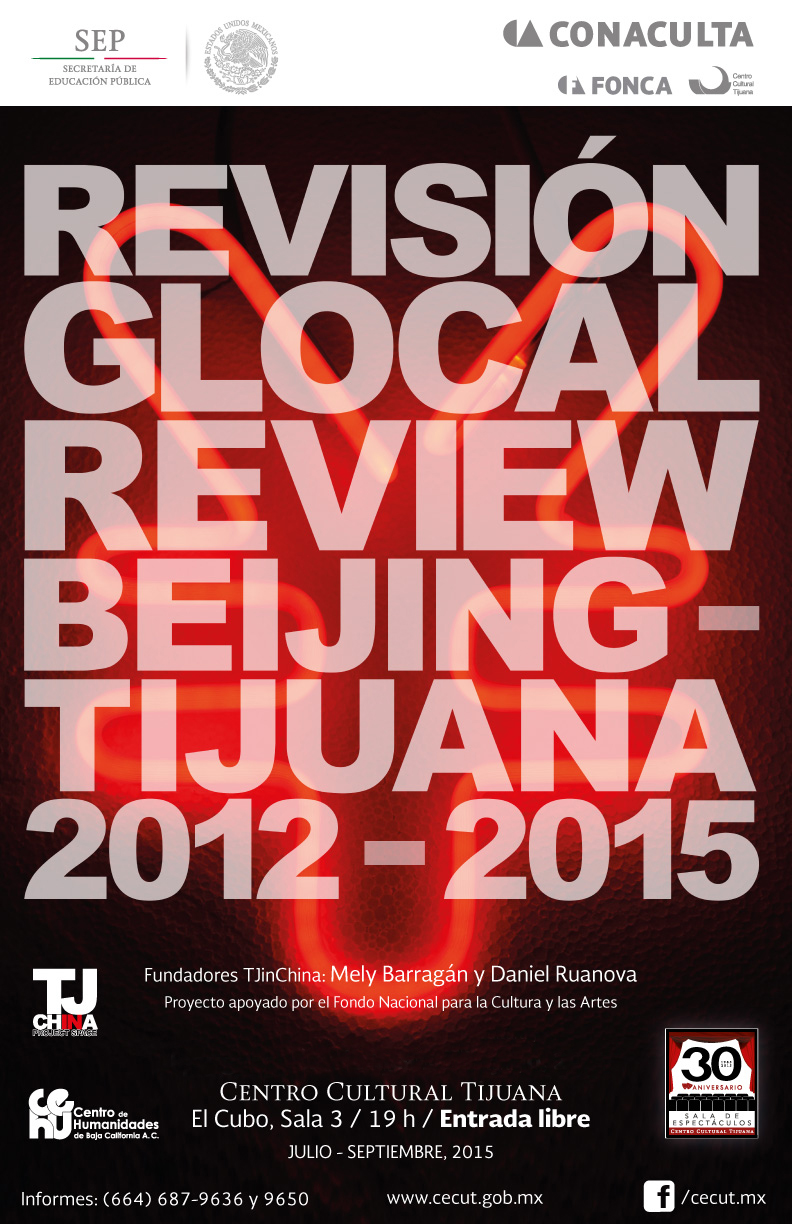
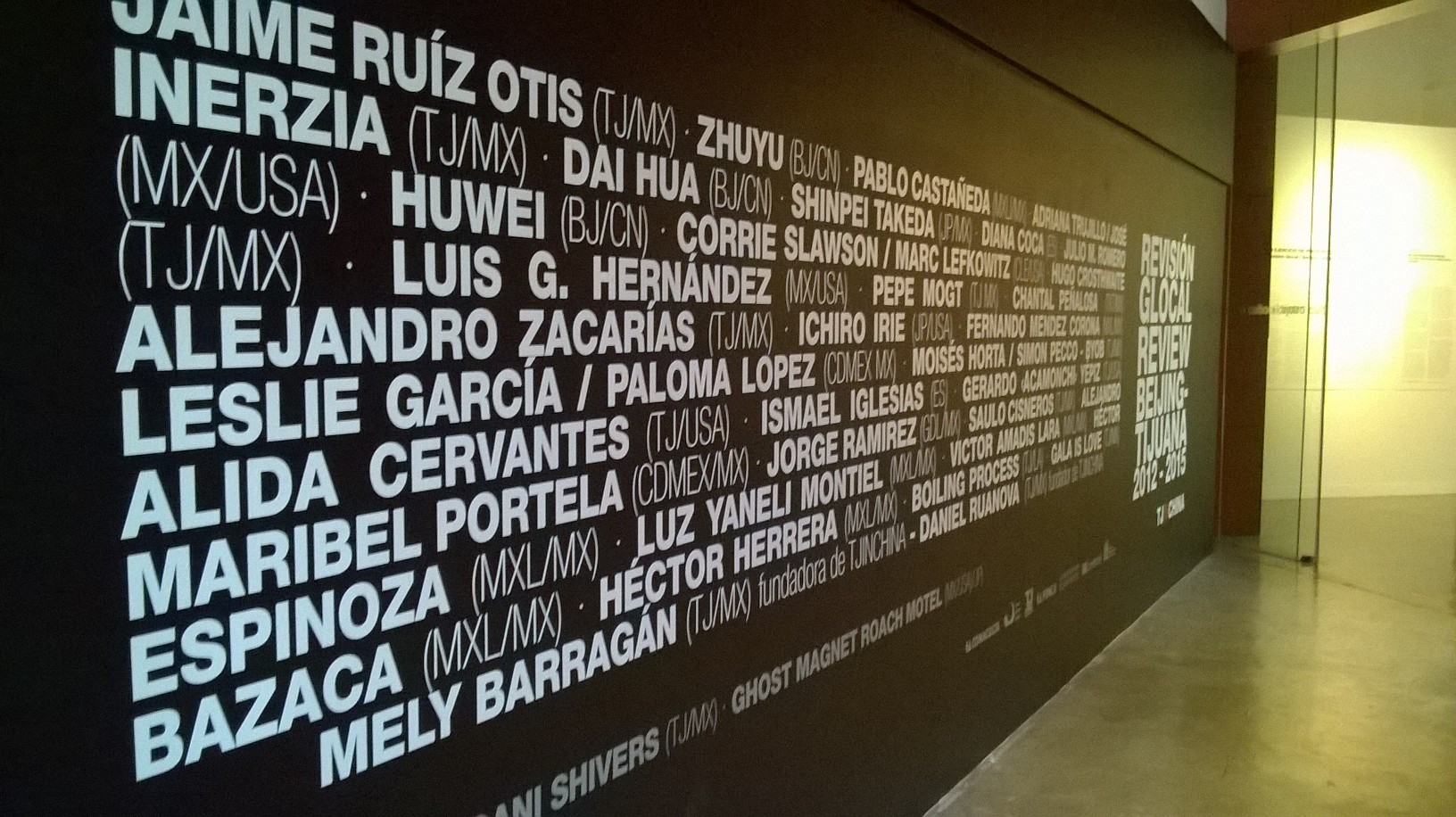
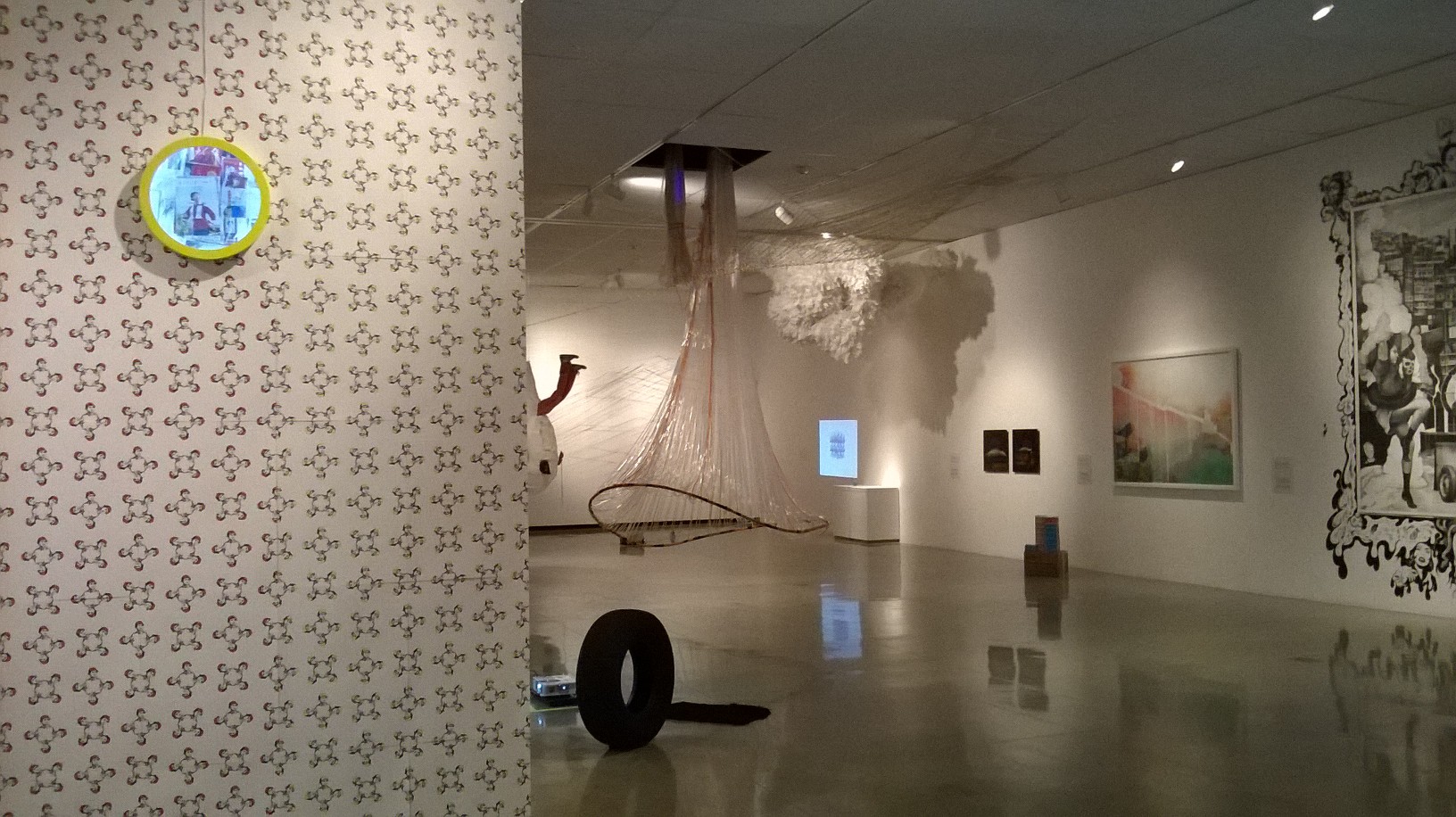
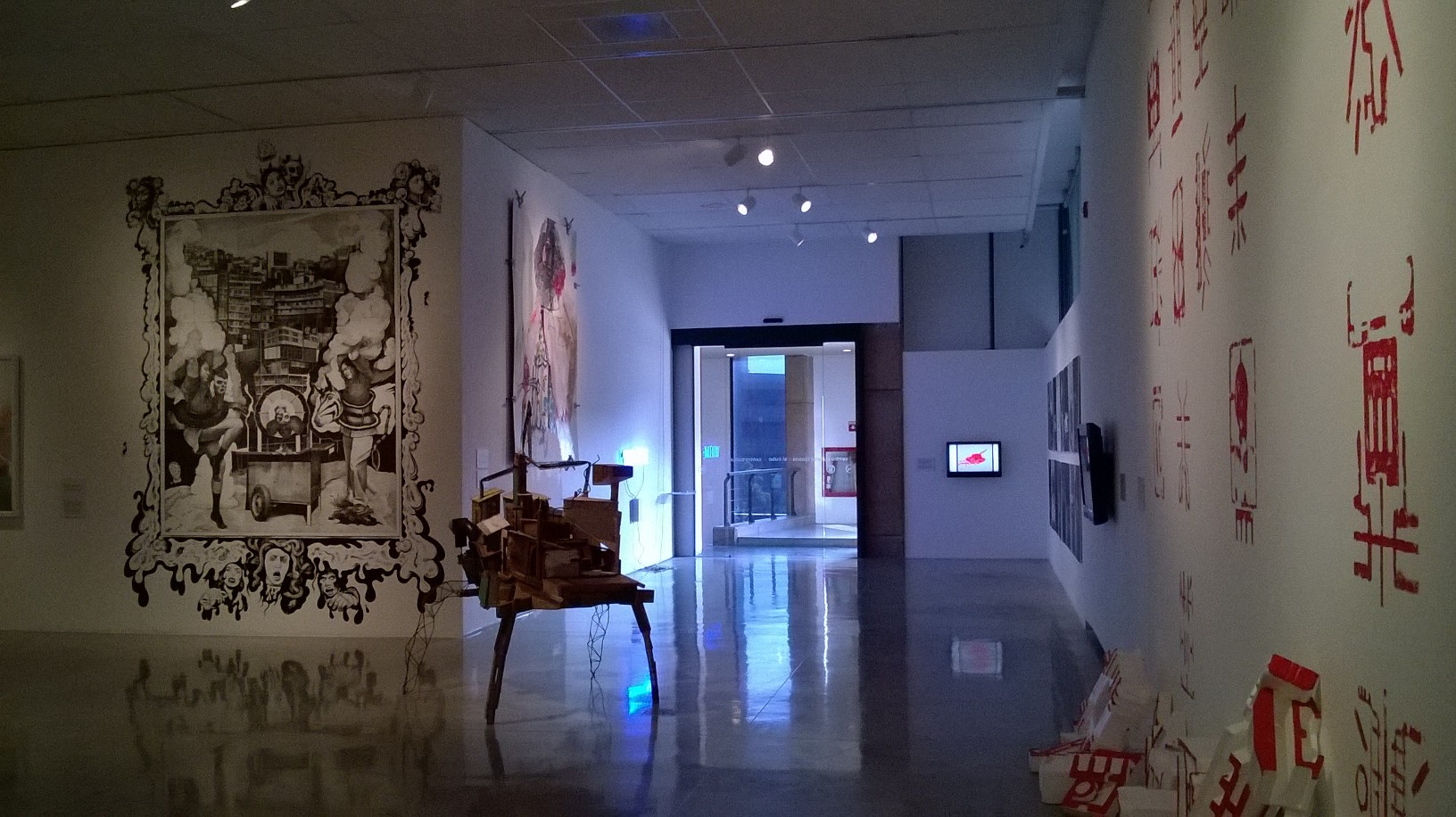
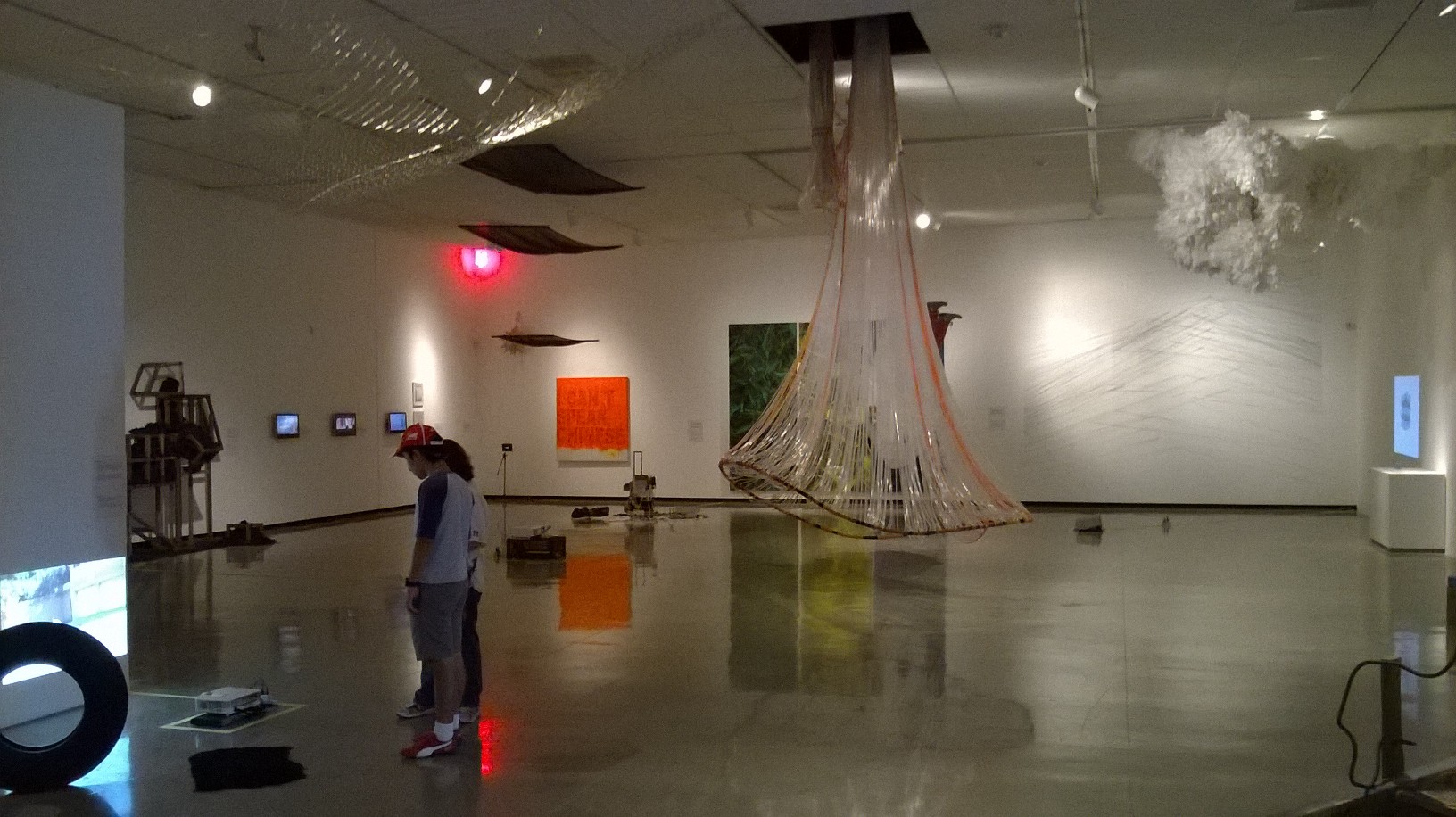
REVISIÓN GLOCAL REVIEW se exhibe en el Centro Cultural Tijuana (CECUT) / EL CUBO Sala 3 hasta mediados de septiembre 2015. El proyecto ofrece al público fronterizo una recopilación de mas de 40 artistas e información generada durante los tres años de operación de TJINCHINA ProjectSpace (de Caochangdi-Beijing a Tijuana); exhibimos una selección de las ideas de tod@s l@s artistas que han participado-colaborado-e-intercambiado ideas con nosotros. Establecemos la idea de lo GLOCAL como nuestra premisa de acción y lo que representa en una ciudad como esta, en el contexto de la cultura tijuanense y su participación en las redes globales de espacios y comunidades artísticas de actualidad.
Desde su establecimiento en el distrito de arte de Caochangdi en la ciudad de Beijing, China en 2012, hasta su inserción en las dinámicas locales del campo artístico tijuanense a principios de 2014, TJ IN CHINA se ha dedicado, subrepticiamente, a proscribir el arte, a expulsarlo de su territorio histórico- cultural, a dejarlo sin patria, para hacerlo formar parte de esa metástasis que opera en el ámbito de las artes a nivel internacional, ahí donde las posibilidades del arte son infinitas, las historias han dejado de ser regionales o nacionales, las localidades difusas y, por lo tanto, las geografías y sus sentidos se han vuelto imprescindibles para la práctica.
Bajo una dinámica de residencias artísticas, el espacio, el proyecto y los modos de operación concebidos por los artistas Mely Barragán y Daniel Ruanova, le inyectan un nuevo sentido a la producción de arte en Baja California, a la manera como los artistas imaginan, producen y difunden sus obras, mismas que se han manifestado en este espacio como un ejercicio de interrupción y una actualización constante de lo que significa hacer arte contemporáneo en nuestro entorno, lo cual ha generado obras que constantemente desafían lo que entendemos por experiencia estética.
La cultura de la residencia artística, permite que creadores de distintas latitudes se inserten en espacios a veces disímiles, a veces similares a sus entornos de origen, con la finalidad de establecer un diálogo entre la historia que traen consigo, la obra que producen, y las experiencias sociales, económicas, políticas y sensoriales que el entorno visitado le ofrece. De este modo, el discurso del artista es trastocado por el entorno que habita temporalmente, y a su vez, el entorno puede ser trastocado por las visiones y perspectivas que dicho artista propone a través de sus obras.
La dinámica de las residencias apunta hacia una tendencia generalizada en el campo del arte, donde los artistas procuran la inserción de su obra en distintas geografías, generando así una dinámica sin precedentes, ya que los circuitos históricos o tradicionales (bienales, galerías, museos o espacios institucionales) dejan de ser los únicos actores en la difusión de las artes; a su vez, permite al artista modos de pensar su localidad desde la globalidad, ya que en el pasado, la difusión de su obra se hallaba circunscrita a un entorno inmediato; una vez que los entornos se diversifican, las maneras de concebir su obra igualmente se desprenden de su “terruño” para buscar su significado más allá de lo que el horizonte les permita ver.
Una posible perspectiva de esta dinámica, es que esta socialización y glocalización en el arte contemporáneo puede producir una red dispersa e indefinida de individuos que no logran adherirse a una visión arte-histórica particular; sin embargo, también podemos decir que la producción artística en nuestra época construye una historia sin precedentes: la historia de un arte global, cuyo germen se encuentra en la localidad que le da voz, cuerpo y biografía a los artistas (en el caso particular de esta exhibición, Beijing y Tijuana), pero que reunido con las voces, cuerpos y biografías de otras latitudes, construyen una historia cuyas raíces no se encuentran ni en las vanguardias ni en las tendencias regionales, ni en las tradiciones formales ni en los avances técnicos y/o tecnológicos, sino en la narrativa personal o histórico-social que cada artista introduce a la percepción global del mundo. Esta es, finalmente, la historia de nuestro arte actual, una escritura en constante proceso, en un presente perpetuo, incesante, efímero y no menos conmovedor.
Lo único que necesitas para adentrarte al significado de estas propuestas, es el más preciado de los tesoros en la actualidad: tiempo. Tiempo para meditar, permitirte un diálogo con lo desconocido para conocerlo mejor, tiempo para pararte frente a una de estas obras y contemplarla con los sentidos abiertos, tiempo para comparar entre formas, perspectivas, técnicas, medios, formas, materiales y temas. Tiempo para ser un niño otra vez. Tiempo para escuchar, ver, sentir lo que quieren decirnos estos artistas.
Si algo podrá atestiguar el espectador, es que esta exhibición se presenta como un escenario abierto, para que las visiones particulares de los artistas puedan apreciarse al unísono. No hay barreras que separen una obra de la otra, todas ellas reclaman el mismo espacio de atención. En todos los casos, vemos recreaciones o replanteamientos de lo que los artistas hicieron durante sus respectivas residencias en TJ IN CHINA. No hay un predominio formal: el video comparte espacio con la pintura, misma que comparte espacio con la instalación, los materiales efímeros están en igualdad de circunstancias con los materiales permanentes. Hay mucha obra en estado de permanente evolución. Manchas urbanas, bestias nobles compuestas de los materiales que desecha nuestro mundo, imágenes en contra de la realidad abyecta, la búsqueda de un lenguaje encriptado universalmente humano y el trazo incesante de caminos encontrados, son algunas de las huellas, índices, visiones y prospectivas que ofrece esta dinámica retrospectiva, sin una localidad única que la defina, sólo la presencia de TJ IN CHINA como cómplice e instigadora de estas obras, suspendidas en el aire fascinante y al mismo tiempo aterrador de la vida contemporánea.
onsite-kinetic-sculptural-installation24 mechanically animated short handle hoes, steel chassis, sprockets, chains, electrical wiring, two 1 horsepower electric motors and timer / Variable dimensions (approx 17´ x 7´ x 5´). Collection and Project commissioned: Luis Peña / Bracero, Cocina de Raíz
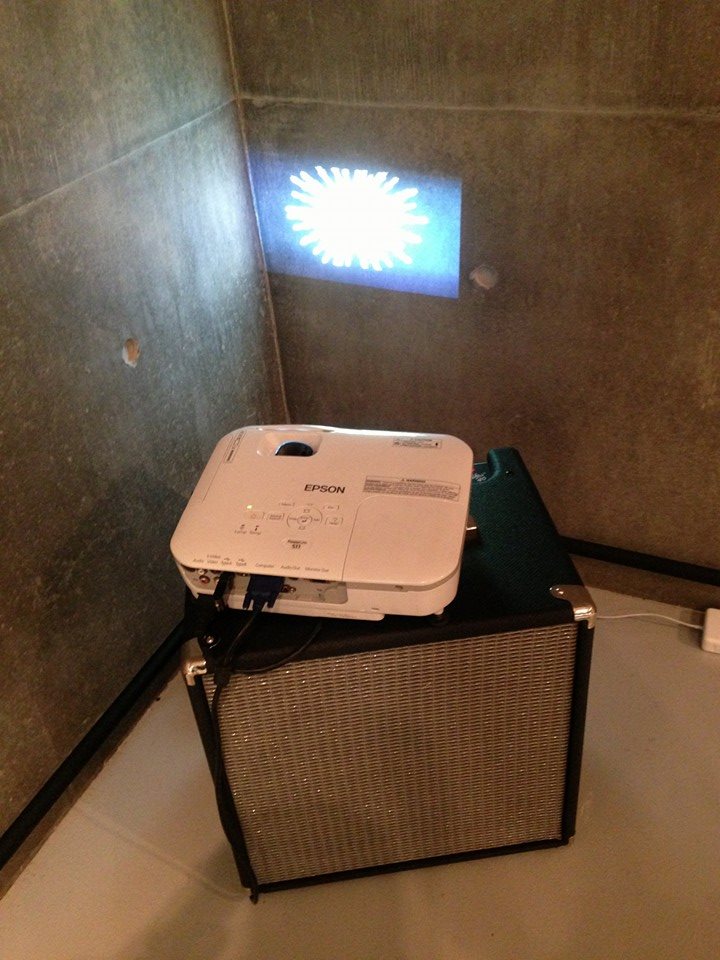
VIDEO: animación generada con esculturas digitales ensambladas con modelos de monumentos locales tijuanenses apropiados de GoogleEarth /animation of digital sculptures assembled with models of local Tijuana landmarks appropriated from GoogleEarth
AUDIO: Colaboración de MOISES HORTA (Ruidosón / Los Macuanos / DJ Nombre Apellido / HEXORCISMOS)
AUDIO DIGITAL A SUBWOOFER PREAMPLIFICADO DE 700Watts CON UN CONO DE 15″ / DIGITAL AUDIO TO SUBWOOFER 700Watts preamp WITH 15 ” CONE
Durac(t)ión: 40:53
Resoluc(t)ión: 1920 x 1080
Video Display Dimensions: max. 30 cm
Codecs: H.264, AAC, Timecode
Color Profile: HD (1-1-1)
Audio Channels: 2
Expuesta en / Shown at:
HERÁLDICA PARA LA FRONTERA NORTE, Exhibición Individual de Daniel Ruanova @ CRGS UdeM / Gate of Creation, San Pedro Garza García, NL, MX. Abril 2015

 _____________________________________________